


Playground Safety Standards: A Practical Guide to Swings, Slides, and Rocking Equipment
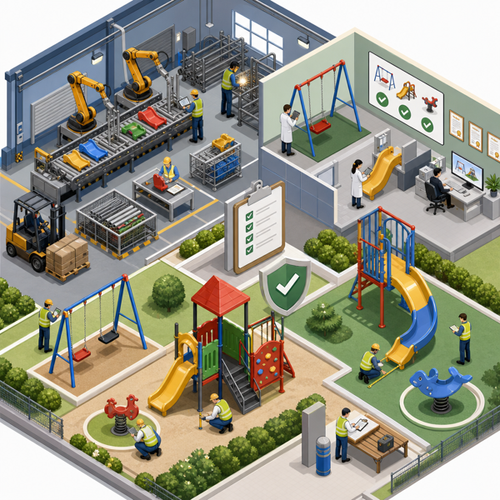
Creating engaging and secure playgrounds is more critical than ever, as modern communities and businesses recognize the value of safe recreational spaces for children. With public demand for quality, safety, and innovation, rigorous international standards are essential for playground equipment such as swings, slides, and rocking devices. In this comprehensive guide, we explore three key standards—SIST EN 1176-2:2008, SIST EN 1176-3:2008, and SIST EN 1176-6:2018—that have become industry benchmarks for playground safety, productivity, and operational excellence. By aligning with these requirements, organizations can drive productivity, enhance security, streamline scaling, and reinforce their reputations in a competitive market.
Overview / Introduction
Playgrounds are more than just fun spaces—they are vital for the healthy development of children, providing opportunities for socialization, exercise, and creativity. As public parks, schools, and private recreational areas strive to offer safe and inclusive play experiences, playground safety standards ensure that equipment is designed, installed, and maintained to minimize risk and maximize enjoyment.
Professionals, municipalities, and commercial venue operators face increasing expectations for playground quality and safety. Adhering to recognized standards not only reduces the risk of accidents and liability but also reassures parents, builds public trust, and supports broader goals such as community well-being and business scaling. In this article, you'll find:
- An overview of critical swing, slide, and rocking equipment standards
- Key requirements and safety guidelines
- Practical steps for compliance and implementation
- Insights into the broader impact of standards on productivity, security, and scalability
Let’s dive into each standard and discover what makes compliance with these playground regulations both a necessity and an opportunity.
Detailed Standards Coverage
SIST EN 1176-2:2008 – Safety Requirements for Swings
Playground equipment and surfacing – Part 2: Additional specific safety requirements and test methods for swings
Swings are iconic features in any playground, but they also present unique safety challenges due to their moving parts and potential for high-impact falls. SIST EN 1176-2:2008 addresses these concerns by specifying strict safety and performance criteria for swings intended for permanent outdoor or indoor installation for children.
What the standard covers:
- Additional safety measures, beyond general playground requirements, tailored specifically for swings
- Requirements for various swing types: single-axis, multiple-axis, single-point, and contact swings
- Recommendations for swing design, placement, and siting (informative annex)
Key requirements and specifications:
- Mandates a minimum ground clearance for swing seats
- Defines clearances between seats and adjoining structures to prevent collision injuries
- Specifies the impact attenuation of swing seats, with tests to ensure resilience against shock
- Sets criteria for dynamic load, structural integrity, and swing framework
- Outlines additional features for swings with special motions, such as rotational axes
Who needs to comply?
- Playground designers and manufacturers
- School and municipal authorities overseeing playground installations
- Commercial entertainment park operators
Practical implications: By following this standard, facility managers ensure that swings minimize entrapment, impact, and collision hazards. Compliance fosters safer play environments, lowers liability, and facilitates insurance and regulatory approvals.
Key highlights:
- Enforced minimum ground and seat clearances
- Mandatory shock testing for swing seating
- Design guidance to balance safety with fun and accessibility
Access the full standard:View SIST EN 1176-2:2008 on iTeh Standards
SIST EN 1176-3:2008 – Safety Requirements for Slides
Playground equipment and surfacing – Part 3: Additional specific safety requirements and test methods for slides
Slides are perennial favorites among children, but their steep angles and slick surfaces can present hazards if not properly engineered. SIST EN 1176-3:2008 provides a framework for designing slides that are fun, accessible, and inherently safe.
What the standard covers:
- Safety and test methods for slides of all shapes and designs meant for permanent playground installation
- Specific considerations for wave slides, embankment slides, free-standing and attachment slides, tunnel slides, and multi-track slides
- Excludes waterslides, rollerways, and inclined parallel bars
Key requirements and specifications:
- Stipulates secure means of access to slides (ladders, stairs, climbing devices)
- Mandates lateral protection and barriers to prevent accidental falls from starting and sliding sections
- Determines minimum slide length, angle, and run-out requirements to allow safe deceleration at the end
- Specifies surface quality to avoid friction burns or injury
- Applies distinct guidelines for unique designs, such as helical (spiral) and tunnel slides
Who needs to comply?
- Playground designers and engineers
- Park planners and facility maintenance teams
- Contractors and suppliers of playground slide equipment
Practical implications: Adhering to this standard minimizes the risk of falls, bumps, and trapping accidents, all while enhancing user confidence. It gives municipalities, schools, and commercial centers the guidance needed to provide slides that appeal to children and reassure adults.
Key highlights:
- Requirements for guarding sections and lateral protections
- Precise definition of impact areas and run-outs for injury prevention
- Rules for the access and exiting of slides to improve flow and safety
Access the full standard:View SIST EN 1176-3:2008 on iTeh Standards
SIST EN 1176-6:2018 – Safety Requirements for Rocking Equipment
Playground equipment and surfacing – Part 6: Additional specific safety requirements and test methods for rocking equipment
Rocking equipment—such as seesaws and multi-seater rockers—introduce dynamic movement in playgrounds while challenging balance and coordination. SIST EN 1176-6:2018 sets safety requirements and testing guidelines tailored for this equipment.
What the standard covers:
- Applies to all forms of playground rocking equipment, with special focus on seesaws
- Definitions and testing for different machine types: axial seesaws, single/multi-point rockers, and rocking seesaws
- Details general and specific criteria for use by children
Key requirements and specifications:
- Regulates free height of fall, and ensures safe clearance under seats and platforms
- Requires robust hand supports, foot rests, and proper anchoring
- Insists on the elimination of pinch and crush hazards around pivots and moving parts
- Calls for assessment of entrapment risks and stipulates minimum free space for falling
- Includes special requirements for stability, hand/foot support measurement, and motion restraint
Who needs to comply?
- Playground operators and equipment manufacturers
- Urban planners and landscape architects
- Recreation facility owners
Practical implications: Facilities following this standard can offer safe, age-appropriate rocking equipment suited to a variety of children’s abilities, significantly reducing accident rates and supporting inclusive design principles.
Key highlights:
- Mandated seat/stand slopes and ground clearance for impact reduction
- Focus on operational stability and anti-entrapment features
- Comprehensive types coverage—axial, spring, multi-point, and overhead rocking devices
Access the full standard:View SIST EN 1176-6:2018 on iTeh Standards
Industry Impact & Compliance
Safety and operational excellence in playground environments depend directly on adherence to established standards like SIST EN 1176-2, 1176-3, and 1176-6. These standards not only protect users but also underpin the sustainable operation and scalability of playgrounds in public and private sectors.
How standards affect businesses:
- Reduce accident rates and personal injury claims
- Enable easier insurance approval and reduce liability exposure
- Enhance brand trust by demonstrating commitment to child safety
- Accelerate approvals in municipal and school procurement processes
- Support business scaling through uniform, repeatable processes and trusted certifications
Compliance considerations:
- Comprehensive documentation of equipment specification and test results
- Ongoing inspection and preventive maintenance as per standard guidance
- Employee training to instill a culture of safety and continuous improvement
- Systematic records to demonstrate conformity during audits or legal reviews
Benefits of adopting these standards:
- Improved playground safety, reducing emergency incidents
- Enhanced operational productivity by minimizing downtime and disruption
- Ability to expand playground networks quickly and consistently
- Greater adaptability for future needs, including accessibility and inclusive design
Risks of non-compliance:
- Increased liability and legal risks in case of accidents
- Higher operational costs from reactive repairs and upgrades
- Negative public perception and eroded trust
- Lost opportunities in tenders, grant funding, or premium business opportunities
Implementation Guidance
How to implement playground standards effectively:
- Start with a gap analysis: Assess existing playground equipment and compare against the latest SIST EN 1176 standards.
- Plan upgrades systematically: Prioritize remedial actions for high-risk equipment, focusing on compliance with ground clearances, impact areas, and anti-entrapment features.
- Engage qualified professionals: Work with certified playground inspectors, experienced designers, and reputable equipment suppliers committed to standard compliance.
- Integrate during design: For new playgrounds, ensure that architects and planners embed compliance requirements into their blueprints and specifications from the outset.
- Establish inspection and maintenance programs: Follow up with regular inspections and proactive maintenance schedules tied to standard provisions.
- Educate and train staff: Equip playground supervisors and maintenance teams with the knowledge to identify risks and document compliance.
- Document and audit: Keep a trail of test reports and compliance reviews to demonstrate due diligence and foster continuous improvement.
Best practices for adopting playground safety standards:
- Use multi-disciplinary teams to evaluate equipment design and siting for maximum safety
- Employ play value analysis alongside risk assessment for an optimal user experience
- Consult informative Annexes for design and site recommendations (as in SIST EN 1176-2)
- Leverage third-party certification and testing for additional assurance
- Stay up to date with standards revisions and sector trends
Resources for organizations:
- Online access to full standards via authoritative sources such as iTeh Standards
- Training workshops and courses for playground safety professionals
- Industry associations and forums for sharing best practices and networking
Conclusion / Next Steps
Safe, productive, and scalable playgrounds don’t happen by accident—they are the result of meticulous planning and strict adherence to proven standards. By implementing the requirements found in SIST EN 1176-2:2008 (for swings), SIST EN 1176-3:2008 (for slides), and SIST EN 1176-6:2018 (for rocking equipment), businesses and municipalities not only protect children but also unlock operational and reputational advantages.
Key takeaways:
- Compliance with playground safety standards is a must in today’s environment
- Broad benefits include accident reduction, liability management, and business scalability
- Implementation should be proactive and integrated from the design stage onward
Recommendations:
- Regularly review and update playground equipment in line with these standards
- Train your teams and maintain comprehensive records to demonstrate compliance
- Explore the full standards, access expert resources, and stay informed of updates via iTeh Standards
Empower your playground projects—make safety, productivity, and growth integral to your approach with these essential standards.
Categories
- Latest News
- New Arrivals
- Generalities
- Services and Management
- Natural Sciences
- Health Care
- Environment
- Metrology and Measurement
- Testing
- Mechanical Systems
- Fluid Systems
- Manufacturing
- Energy and Heat
- Electrical Engineering
- Electronics
- Telecommunications
- Information Technology
- Image Technology
- Precision Mechanics
- Road Vehicles
- Railway Engineering
- Shipbuilding
- Aircraft and Space
- Materials Handling
- Packaging
- Textile and Leather
- Clothing
- Agriculture
- Food technology
- Chemical Technology
- Mining and Minerals
- Petroleum
- Metallurgy
- Wood technology
- Glass and Ceramics
- Rubber and Plastics
- Paper Technology
- Paint Industries
- Construction
- Civil Engineering
- Military Engineering
- Entertainment