

October 2026: New Standard for Electrical Insulating Gloves Enhances Worker Safety
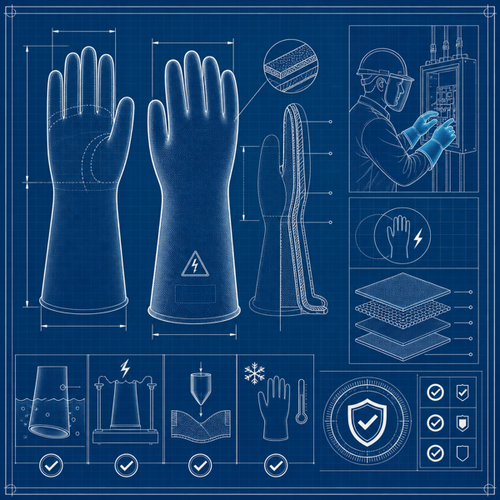
October 2026 Introduces New International Standard for Electrical Insulating Gloves
Worker safety in live electrical environments is a top priority—especially with evolving power grids and heightened emphasis on occupational health. This October, the Environmental Protection, Health Protection, and Safety sector has seen a substantial advancement with the publication of a new international standard: prEN IEC 60903:2025 – Live working – Electrical insulating gloves. This update brings essential changes and new requirements for electrical insulating gloves, impacting manufacturers, utilities, safety engineers, and compliance professionals worldwide.
Overview / Introduction
The Environmental Protection, Health Protection, and Safety sector is foundational to industries managing significant electrical risks—spanning from utilities and industrial maintenance to construction and public infrastructure. Insulating gloves play a critical role by safeguarding personnel carrying out live working tasks and protecting against potentially fatal electric shocks.
International standards such as prEN IEC 60903:2025 establish rigorous, harmonized requirements that manufacturers, suppliers, and end users must meet. By adhering to these specifications, organizations can ensure that products delivered to workers are compliant, reliable, and fit for harsh operational conditions.
In this article, you'll learn:
- What the new standard covers
- Key updates and technical requirements
- Implementation and compliance considerations
- Industry impacts and best practices for integrating the standard into your safety program
Detailed Standards Coverage
prEN IEC 60903:2025 - Live Working: Electrical Insulating Gloves
Live working – Electrical insulating gloves
prEN IEC 60903:2025 is the fourth edition of this internationally recognized standard, setting out comprehensive requirements for electrical insulating gloves and mitts. These gloves are specifically designed to provide hand and arm protection for workers performing tasks on energized equipment—commonly known as live working. The standard addresses gloves with both simple insulation and composite gloves with integrated mechanical protection.
Scope and Applicability
This standard applies to:
- Electrical insulating gloves and mitts (with or without textile lining)
- Composite gloves with integrated mechanical properties
- Gloves used in combination with protective over-gloves and those with standalone mechanical strength
It is relevant for:
- Utilities and electrical grid operators
- Manufacturers and testing laboratories
- Health and safety managers
- Equipment procurement specialists
- Industrial facilities performing live maintenance
Key Requirements and Specifications
Classification System:
- Six voltage ‘classes’: 00 (lowest) to 4 (highest), covering a range of use voltages
- Designation for AC only, DC only, or AC/DC use
- Marking for special properties: acid resistance, oil resistance, ozone resistance, extreme cold, leakage current, and composite (mechanical + electrical protection)
Physical, Mechanical, and Electrical Performance:
- Strict requirements on composition (elastomer type), available sizes, lengths, and maximum thickness
- Mechanical integrity: resistance to puncture, tension set (permanent deformation), tensile strength, abrasion, cutting, tearing
- Dielectric performance: rigorous dielectric proof and withstand tests for each electrical class and use (AC/DC)
- Additional property requirements: resistance to chemicals, oils, environmental factors, cold, and leakage current (for special categories)
Testing Regime:
- Type tests (design validation)
- Sampling and routine tests (production and batch control)
- Visual, dimensional, and mechanical checks
- Marking durability (scrub and solvent resistance)
- Aging and thermal performance testing
- Moisture conditioning and dielectric re-testing
Major Changes from Previous Editions
- DC testing now normative (moved from annex): More robust proof of protection for DC applications
- Explicit identification of electrical use: Gloves now marked for AC only, DC only, or AC/DC, improving selection accuracy
- Segregation of type (design) and post-production (routine) tests
- Improved guidance for visual inspection, inflation, lighting, and marking requirements
- Streamlined moisture conditioning: Removal of post-conditioning drying requirement
- Enhanced marking details on product labels, helping track retesting intervals and manage glove life cycle
Practical Implications for Implementation
- Organizations must ensure gloves meet the new classification and marking schemes
- Routine testing and inspection intervals must align with the revised requirements
- Procurement and specification documents should refer to the 2025 edition standard to avoid legacy stock issues
- Training programs may require updates to introduce new visual inspection and testing criteria to staff
Key highlights:
- Updated voltage class system for both AC and DC applications
- Clearly defined mechanical and environmental test methods for composite gloves
- New, more robust marking/labeling and instructions for use to aid compliance tracking
Access the full standard:View prEN IEC 60903:2025 on iTeh Standards
Industry Impact & Compliance
How This Standard Affects Businesses
The new prEN IEC 60903:2025 introduces several compliance requirements that directly impact organizations involved in the design, manufacturing, procurement, testing, and use of electrical insulating gloves. Key effects include:
- Manufacturers: Must update production lines, testing regimens, and documentation to reflect new type and routine tests, class markings, and labeling standards.
- Utilities and Maintenance Contractors: Should audit existing glove inventory for compliance, update procurement specifications, and track gloves’ electrical use designations to prevent misuse.
- Testing Laboratories: Need to align test methods and accreditations (e.g., ISO/IEC 17025) to include both AC and DC dielectric testing as now required in the main body of the standard.
- Health and Safety Managers: Must ensure risk assessments, operating procedures, and worker training materials are up-to-date with the latest inspection, marking, and storage requirements.
Compliance Timelines
- Immediate for new products and certifications
- Ongoing for batch control, in-service inspection, and re-testing
Benefits of Adopting the New Standard
- Improved worker protection: More robust electrical and mechanical barrier performance
- Global harmonization: Internationally recognized requirements ease trade and collaboration
- Better compliance tracking: Enhanced marking and record-keeping
- Reduced liability: Proven safety specification adherence mitigates legal and insurance risks
Risks of Non-Compliance
- Increased risk of electric shock incidents or glove failures
- Legal penalties and insurance exclusions in case of accidents
- Inventory obsolescence and cost overruns
- Barriers to market access or contract fulfillment
Technical Insights
Common Technical Requirements
The standard sets a series of baseline and advanced technical provisions:
- Voltage Withstand & Proof Levels: Each glove class must demonstrate resistance at specified AC and/or DC test voltages (proof and withstand)
- Material Composition: Use of high-quality elastomer, clarity on lined versus unlined designs
- Mechanical Performance: Minimum standards for flexibility, puncture, tear, and abrasion
- Marking: Durable, visible, and class-distinct labelling to prevent field confusion
- Environmental Resistance: Specified categories for gloves used in environments with acids, oils, ozone, and extreme temperatures
Best Practices for Implementation
- Procurement: Specify the standard and date (prEN IEC 60903:2025) in all new contracts. Avoid purchasing legacy stock unless verified up-to-date.
- Inventory Management: Label and segregate gloves by electrical use (AC/DC) and special categories for faster field access and compliance checking.
- Testing Program: Partner with accredited laboratories and establish regular inspections as mandated by the standard.
- Training: Update worker instructions for use, inspection checklists, and replacement intervals.
- Recordkeeping: Maintain clear logs for testing intervals, inspection outcomes, and marker durability.
Testing and Certification Considerations
- Adopt ISO/IEC 17025 accredited labs for all type, sampling, and routine tests
- Ensure both AC and DC dielectric testing is performed where applicable
- Monitor for changes or addenda to the standard as 2027 approaches (proposed stability date)
Conclusion / Next Steps
prEN IEC 60903:2025 ushers in a new era of safety, clarity, and technical excellence for electrical insulating gloves used in live working environments. This standard’s advanced testing and classification systems allow organizations to better protect workers, comply with global best practices, and streamline procurement and inspection processes.
Key Takeaways:
- The updated standard is vital for all organizations performing live electrical work
- Adoption ensures compliance, reduces risk, and enhances worker confidence
- The new test regimes and marking requirements demand updates across production, procurement, and field operations
Recommendations for Organizations:
- Review glove inventories and testing procedures
- Train staff on updated inspection, use, and selection processes
- Reference the full text standard for technical detail and compliance planning
Explore the complete specification:View prEN IEC 60903:2025 on iTeh Standards
Stay ahead of industry changes—visit iTeh Standards for comprehensive resources, latest updates, and best-in-class international standards in environmental protection, health, and occupational safety.
Categories
- Latest News
- New Arrivals
- Generalities
- Services and Management
- Natural Sciences
- Health Care
- Environment
- Metrology and Measurement
- Testing
- Mechanical Systems
- Fluid Systems
- Manufacturing
- Energy and Heat
- Electrical Engineering
- Electronics
- Telecommunications
- Information Technology
- Image Technology
- Precision Mechanics
- Road Vehicles
- Railway Engineering
- Shipbuilding
- Aircraft and Space
- Materials Handling
- Packaging
- Textile and Leather
- Clothing
- Agriculture
- Food technology
- Chemical Technology
- Mining and Minerals
- Petroleum
- Metallurgy
- Wood technology
- Glass and Ceramics
- Rubber and Plastics
- Paper Technology
- Paint Industries
- Construction
- Civil Engineering
- Military Engineering
- Entertainment