


Examination of Water for Chemical Substances: Essential Standards for Modern Environmental Management
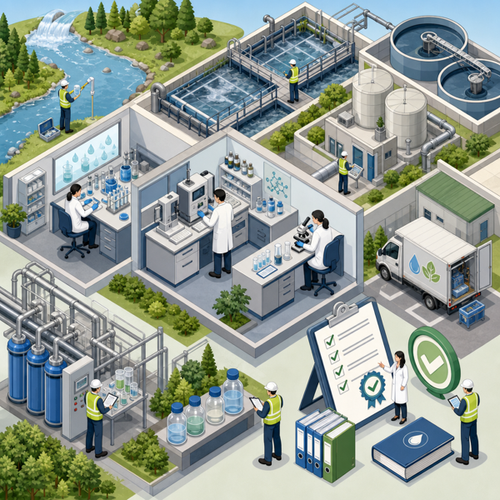
Ensuring clean, safe water is more critical than ever for industries, municipalities, and communities worldwide. With rising concerns about chemical pollution, regulatory compliance, and the push to adopt new water technologies, international standards for examining water for chemical substances have become essential tools for modern business operations. This article explores four cornerstone standards—ISO 18127:2026, ISO 18191:2026, ISO 22032:2026, and ISO/TS 21738:2026—that define robust, reliable methods for water quality assessment. Their implementation not only drives environmental compliance but also enables organizations to enhance productivity, ensure data integrity, improve security, and scale operations sustainably in a rapidly changing landscape.
Overview / Introduction
Water quality is a foundational concern across countless sectors, from municipal utilities to high-tech manufacturing, agriculture, energy, and ecosystem protection. As environmental regulations intensify and the global public becomes more aware of pollutants, businesses face higher expectations for transparency and diligence. The examination of water for chemical substances—whether for emerging contaminants or well-known pollutants—requires validated, harmonized methods to ensure accurate, comparable results.
Why are these standards critical today?
- Rapid technological adoption (e.g., IoT in water monitoring, advanced treatment, and automation) demands accurate baseline data and robust methods.
- Meeting global and regional regulations (such as ISO, EU Directives, EPA guidelines) is only possible with recognized test protocols.
- Investors and stakeholders increasingly demand demonstrable commitment to environmental social governance (ESG) principles and risk mitigation.
- Effective standards lower the risk of environmental incidents, regulatory breaches, and product recalls while supporting productivity and operational scaling.
In the following sections, you’ll find a detailed overview of four key standards governing the chemical examination of water. Whether you’re working in industry, consulting, government, or academia, these standards are must-know references for water quality professionals and management teams adopting new technologies or expanding operations.
Detailed Standards Coverage
ISO 18127:2026 - Determination of Adsorbable Organically Bound Halogens (AOF, AOCl, AOBr, AOI)
Water quality — Determination of adsorbable organically bound fluorine, chlorine, bromine and iodine (AOF, AOCl, AOBr, AOI) — Method using combustion and subsequent ion chromatographic measurement
ISO 18127:2026 provides a comprehensive method for detecting and quantifying organically bound halogens—fluorine, chlorine, bromine, and iodine—that are adsorbable onto activated carbon after combustion and measurable by ion chromatography. This standard is incredibly relevant for quality assurance in settings where halogenated organics may occur, such as wastewater discharge, drinking water systems, surface water monitoring, and industrial process controls.
The method supports:
- Detection limits as low as 2 µg/L for fluorine, 10 µg/L for chlorine, 1 µg/L for both bromine and iodine.
- Analysis of a wide range of matrices including groundwater, surface water, bank filtrate, cooling water, eluates, and samples containing suspended solids.
- Differentiation between dissolved and particulate fractions through filtration and sample pre-processing.
Key requirements and features:
- Sample preparation involving adsorption on activated carbon columns.
- Combustion ion chromatography (CIC) to oxidize organic halogens and subsequently separate and quantify by ion chromatography.
- Calibration and blank management to minimize background interference.
- Specific procedural steps for handling samples with high solids or inorganic halide content.
Who needs to comply:
- Water utilities, environmental laboratories, wastewater treatment plants, industrial sites discharging or utilizing organohalogens.
- Any organization required to report or monitor halogenated organic pollutants.
Implementation implications:
- Adhering to ISO 18127:2026 can enhance organizational transparency and compliance, supporting advanced automation or digitalization of water quality monitoring.
Key highlights:
- Detects sum of organically bound halogens via advanced CIC techniques
- Suits complex sample matrices, including those with suspended solids
- Supports separating dissolved and particulate halogen fractions for more granular results
Access the full standard:View ISO 18127:2026 on iTeh Standards
ISO 18191:2026 - Determination of pHT in Seawater Using m-Cresol Purple
Water quality — Determination of pHT in seawater — Method using the indicator dye m-cresol purple
Accurate pH measurement in seawater is fundamental for ocean monitoring, climate research, and compliance with global marine protection laws. ISO 18191:2026 sets out a validated spectrophotometric protocol for determining seawater pH (more precisely, the pH on the total hydrogen ion scale, or pHT) using the m-cresol purple indicator dye.
This standard enables:
- High-precision determination of oceanic pHT in the range of 7.4–8.2, suitable for normal salinity seawater (20–40 PSU).
- Essential monitoring of marine carbonate systems, particularly relevant for tracking ocean acidification and evaluating the impacts of carbon capture and storage (CCS) technologies.
Key requirements and specifications:
- Use of high-purity, spectrophotometrically characterized m-cresol purple.
- Measurement protocol involving correction for background absorbance and baseline shifts.
- Tight control of sample temperature and salinity during measurement.
- Immediate analysis post-sampling to ensure representativeness and reduce variable impacts.
Who needs to comply:
- Marine research institutions, environmental monitoring agencies, offshore platforms, and industries with ocean-discharge obligations.
- Organizations involved in carbon sequestration, marine resource management, aquaculture, or environmental impact assessment.
Implementation implications:
- Establishing consistent, international-quality data sets for ocean observatories and regulatory submissions.
- Improving reproducibility and comparability of pHT data across research and regulatory scenarios.
Key highlights:
- Harmonized, reproducible protocol for marine pHT using m-cresol purple
- Suitable for both research and regulatory assessments
- Protocols for minimizing operator and instrument errors through calibration and temperature control
Access the full standard:View ISO 18191:2026 on iTeh Standards
ISO 22032:2026 - Measurement of PBDE in Sediment, Particulates, and Biota (GC-MS/MS or GC-HRMS)
Water quality — Determination of polybrominated diphenyl ethers (PBDE) in sediment, suspended particulate matter and biota — Method using gas chromatography coupled with tandem mass spectrometry (GC-MS/MS) or with high resolution mass spectrometry (GC-HRMS)
Polybrominated diphenyl ethers (PBDEs) are persistent organic pollutants known for their use as flame retardants and well-established toxicity. ISO 22032:2026 defines sensitive and reliable methods for measuring PBDEs in water-related matrices: sediment, suspended particulates, and biological tissues using advanced GC-MS/MS or GC-HRMS.
The standard covers:
- Quantification of priority PBDE congeners (e.g., BDE-28 to BDE-209, with tailored limits of quantification for each).
- Sample extraction protocols (Soxhlet, pressurized liquid extraction, cold extraction, etc.), and advanced clean-up to minimize interferences.
- Both manual and automated approaches to suit laboratory resources.
Key requirements and specifications:
- Use of isotope-labeled internal standards for accurate quantification.
- Strict controls on contamination, blank measurement, and matrix effects.
- Flexibility for adapting lower detection limits depending on analytical capability and clean-up methods.
Who needs to comply:
- Environmental labs, industrial dischargers, municipal operators, researchers tracking PBDEs in aquatic systems.
- Any facility under legislative oversight regarding persistent organic pollutants (POPs) in water or sediment.
Implementation implications:
- Supports compliance with stringent wastewater and surface water regulations, including EU Waste Water Treatment Directive.
- Facilitates identification of pollution sources, evaluation of cleanup performance, and ecological risk assessment.
Key highlights:
- Reliable quantification of priority PBDEs in complex matrices
- Advanced mass spectrometry increases sensitivity and selectivity
- Clean-up protocols minimize false positives and matrix effects
Access the full standard:View ISO 22032:2026 on iTeh Standards
ISO/TS 21738:2026 - Active Biomonitoring with In Situ Caged Benthic Amphipods
Water quality — Active biomonitoring method with in situ caged benthic amphipods
Unlike traditional chemical analysis of water samples, ISO/TS 21738:2026 introduces a biological approach to monitoring water quality by measuring bioaccumulation of pollutants in living organisms—in this case, benthic amphipods. With active biomonitoring, organizations can assess integrated, time-weighted exposure to chemicals in natural environments.
The technical specification outlines:
- Selection, conditioning, and acclimatization of test amphipods (typically male specimens for reproductive consistency).
- Field deployment in specially designed, escape-proof cages that ensure water exchange and minimize external variability.
- Protocols for test organism retrieval, survival assessment, and preparation for further chemical analysis (bioaccumulated substances).
- Application for both organic and metal contaminants, suitable for comparative and longitudinal studies.
Key requirements and features:
- Controlled laboratory acclimation and calibration to minimize biological variability.
- Deployment at monitoring stations lacking sufficient indigenous organisms, or for upstream/downstream impact assessment.
- Detailed reporting on species selection, cage design, and exposure conditions.
Who needs to comply:
- Environmental regulators, research organizations, water utilities, and industrial facilities needing to demonstrate ecological impact management and pollution control.
- Project managers responsible for environmental impact assessments (EIAs), especially prior to infrastructure projects, remediation works, or new technology rollout.
Implementation implications:
- Bridges the gap between laboratory analysis and real-world ecological effects, informing smarter management decisions and better risk assessment.
Key highlights:
- Biological approach complements chemical monitoring for fuller risk assessment
- Suits sites where passive biomonitoring (sampling native fauna) isn’t feasible
- Facilitates robust, comparative pollution studies across sites and timeframes
Access the full standard:View ISO/TS 21738:2026 on iTeh Standards
Industry Impact & Compliance
Implementing these water examination standards can profoundly enhance an organization's reputation, operational reliability, and environmental stewardship. The practical benefits include:
- Regulatory Compliance: Mandatory for many industries and regions, standard compliance ensures organizations avoid costly penalties and maintain operating licenses.
- Public Trust and Brand Value: Transparent, science-based water quality data supports community engagement and investor confidence—key for ESG and sustainability reporting.
- Risk Mitigation: Consistent application of proven methods reduces chances of data manipulation, operator errors, and uncontrolled releases of hazardous substances.
- Faster Technology Adoption: Standards create reliable baselines for integrating smart sensors, IoT-enabled data systems, and advanced water treatment processes.
Risks of non-compliance:
- Regulatory enforcement actions, fines, mandatory remediation, or shutdowns
- Loss of contracts, accreditations, or export authorizations
- Environmental incidents resulting in reputational fallout or liability claims
Implementation Guidance
Adopting these complex standards may appear daunting but, with proper planning, organizations can implement them efficiently and effectively. Here are best practices for successful standards adoption:
Gap Analysis and Training:
- Assess current laboratory practices and staff competency against standard requirements.
- Organize targeted training programs, including hands-on workshops in sample handling, analytical instrumentation, and quality assurance.
Method Validation:
- Conduct method validation and proficiency testing as outlined in the respective ISO standards.
- Use internal and external performance checks to ensure measurement consistency.
Quality Assurance and Audits:
- Adopt robust quality control (QC) systems with regular audits and independent verification.
- Maintain traceable records for sample origin, preparation, calibration, and maintenance of analytical instruments.
Resource Allocation:
- Invest in necessary equipment (e.g., ion chromatography, spectrophotometers, GC-MS/MS, field cages, etc.), and ensure timely maintenance.
- Allocate budget for certified reference materials, consumables, and controls.
Stay Updated:
- Monitor updates to international and national standards via platforms like iTeh Standards, ensuring your protocols evolve with the best practices.
Integration with Digital Technology:
- Where possible, integrate laboratory information management systems (LIMS) and IoT-enabled monitors to optimize data flows and support large-scale compliance.
Useful resources:
- iTeh Standards: Comprehensive platform for browsing, purchasing, and tracking international standards.
- Accredited training providers and certified laboratories for consulting and implementation assistance.
Conclusion / Next Steps
The examination of water for chemical substances is not only a regulatory obligation—it's a pivotal requirement for organizational growth, risk management, and sustainable innovation. ISO standards like 18127:2026, 18191:2026, 22032:2026, and TS 21738:2026 combine technical rigor with global credibility, forming the backbone of trustworthy water quality assessment in the 21st century.
Organizations that prioritize implementation of these standards position themselves for optimized productivity, higher security, scalable operations, and enhanced stakeholder confidence. For professionals in environmental management, quality assurance, manufacturing, and research, the path forward is clear: embrace, implement, and continuously update your compliance with international best practices.
What should your organization do next?
- Review your current water examination and monitoring practices against these standards.
- Use the iTeh Standards platform to access the latest documents, training, and resources.
- Foster a culture of environmental integrity, operational excellence, and future-ready compliance in everything you do.
For deeper dives, practical templates, or to purchase the full text of any standard, follow the access links above or explore more at iTeh Standards.
Categories
- Latest News
- New Arrivals
- Generalities
- Services and Management
- Natural Sciences
- Health Care
- Environment
- Metrology and Measurement
- Testing
- Mechanical Systems
- Fluid Systems
- Manufacturing
- Energy and Heat
- Electrical Engineering
- Electronics
- Telecommunications
- Information Technology
- Image Technology
- Precision Mechanics
- Road Vehicles
- Railway Engineering
- Shipbuilding
- Aircraft and Space
- Materials Handling
- Packaging
- Textile and Leather
- Clothing
- Agriculture
- Food technology
- Chemical Technology
- Mining and Minerals
- Petroleum
- Metallurgy
- Wood technology
- Glass and Ceramics
- Rubber and Plastics
- Paper Technology
- Paint Industries
- Construction
- Civil Engineering
- Military Engineering
- Entertainment