


Workplace Atmospheres: Key Standards for Chemical and Biological Exposure Assessment
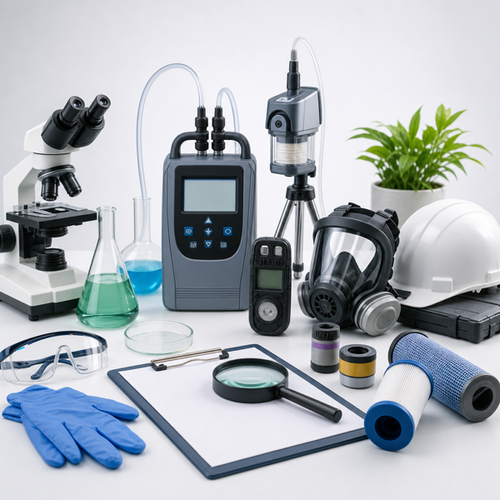
Ensuring high levels of air quality and minimizing exposure to hazardous substances are central pillars of modern workplace health and safety. As businesses expand and regulations become more demanding, adopting robust international standards for monitoring and assessing workplace atmospheres is crucial. In today's dynamic work environments, chemical and biological agents pose nuanced risks—ranging from everyday exposure events to unforeseen accidents. Globally recognized standards, such as SIST EN 14042:2003 and SIST EN 482:2012+A1:2016, offer organizations guidance and requirements for accurate assessment and control. This article unpacks the essentials of these standards and demonstrates how their implementation is not just a regulatory checkbox but a catalyst for productivity, security, and business growth.
Overview / Introduction
Companies across all sectors—manufacturing, healthcare, chemicals, and beyond—are legally and ethically obligated to control and verify employee exposure to hazardous agents. Workplace atmosphere standards answer this call by setting out consistent methods and criteria for measuring air quality and implementing controls.
For professionals and the general public alike, understanding these standards means being able to:
- Recognize the meaning of compliance
- Protect worker well-being
- Enhance a business’s scalability and reputation
In this article, we explore two pivotal European standards shaping occupational hygiene:
- SIST EN 14042:2003: Guidance on assessing exposure to chemical and biological agents at work
- SIST EN 482:2012+A1:2016: General requirements for measuring chemical agent concentrations
By integrating their principles, companies can ensure legal compliance, foster a culture of safety, and make data-driven improvements to their processes.
Detailed Standards Coverage
SIST EN 14042:2003 - Guide for the Application and Use of Procedures for the Assessment of Exposure to Chemical and Biological Agents
Workplace atmospheres – Guide for the application and use of procedures for the assessment of exposure to chemical and biological agents
SIST EN 14042:2003 is an essential reference for any organization assessing workplace exposure to both chemical and biological agents. Its core function is to provide detailed guidance on the selection, installation, maintenance, and use of equipment and methods for determining concentrations of hazardous substances in workplace air. The standard is firmly based on prior leading texts, EN 689 (assessment of chemical agent exposure) and EN 482 (performance of measurement procedures), ensuring it aligns with broader European requirements.
It goes beyond basic compliance by helping users:
- Choose suitable procedures or devices for measurement
- Validate equipment performance through type testing and confirmation from manufacturers
- Understand when re-assessment or periodic measurements are necessary
- Address not only workplace atmospheres but also ambient and indoor air quality assessment
Key requirements span equipment selection, operator training, validation, maintenance, environmental influence, and comprehensive quality assurance. For example, the standard details selection flowcharts for choosing appropriate measurement strategies and explains procedures using detector tubes, pumped samplers, diffusive samplers, and biological agent monitors.
Who Needs to Comply?
- Industrial manufacturers
- Laboratories
- Healthcare environments
- Any employer with chemical or biological hazards
Practical implications include:
- Reduced workplace illness and lost productivity
- Legal defense and regulatory compliance
- Increased confidence in exposure measurement results
Key highlights:
- Comprehensive measurement strategy incorporating EN 689 and EN 482 guidance
- Clear performance criteria for sampling procedures and equipment
- Integrated approach covering chemical and biological hazards, not just one type of exposure
Access the full standard:View SIST EN 14042:2003 on iTeh Standards
SIST EN 482:2012+A1:2016 - General Requirements for the Performance of Procedures for the Measurement of Chemical Agents
Workplace exposure - General requirements for the performance of procedures for the measurement of chemical agents
SIST EN 482:2012+A1:2016 serves as a foundational pillar for reliably measuring chemical agent concentrations in workplace atmospheres. This standard underpins the entire assessment process, defining general performance requirements for all types of measurement procedures, including those for gases, vapours, and particulate matter. Its principles extend across both direct-reading devices and methods with separate sampling and analytical phases.
Some of the core specifications include:
- Requirements for selectivity and unambiguity in measurement results
- Performance thresholds for expanded uncertainty, averaging time, and measuring range (e.g., minimum coverage from 0.1x up to 2x the occupational limit value)
- Applicability to both routine screening and detailed measurements for regulatory comparison
- Guidance for environmental conditions and sample transport or storage
SIST EN 482 stresses that all organizations must use procedures validated for their full measuring range, referencing related standards for specific equipment such as diffusive samplers (EN 838), pumped samplers (EN 1076), and analytical methods for metals and metalloids (EN 13890).
Who Needs to Comply?
- Safety officers and industrial hygienists
- Occupational health services
- Any workplace where chemical exposure is possible
Practical implications include:
- Greater confidence in analytical results and workplace safety
- Facilitated internal and external audits
- Lowered risk of enforcement action or litigation
Key highlights:
- Robust requirements for all measurement steps—from sampling through analysis
- Guidance adaptable across industry sectors and various types of chemical hazards
- Alignment with EU Chemical Agents Directive 98/24/EC for seamless regulatory integration
Access the full standard:View SIST EN 482:2012+A1:2016 on iTeh Standards
Industry Impact & Compliance
Implementing these standards is more than an exercise in legal compliance. In the current regulatory landscape, a proactive approach to air quality management delivers competitive advantage and peace of mind. Utilizing internationally recognized guidelines helps companies:
- Stay ahead of evolving workplace regulations
- Demonstrate due diligence in health and safety risk management
- Minimize costly downtime from accidents or sickness
- Build a safety culture that attracts and retains talent
Conversely, failing to comply with standards like SIST EN 14042 and SIST EN 482 can result in:
- Regulatory penalties and inspections
- Reputational damage
- Increased incidences of occupational illness or injury
- Inefficient processes and elevated business risk
Benefits of Standard Adoption:
- Scalable, repeatable measurement processes
- Increased productivity through healthier, more secure workplaces
- Enhanced stakeholder trust—internally (employees) and externally (customers, authorities)
Implementation Guidance
Adopting workplace atmosphere standards is a strategic process. Here’s how organizations typically approach it:
Assessment: Conduct an initial survey to determine which chemical and biological agents are present and identify relevant procedures (referencing both SIST EN 14042 and SIST EN 482).
Selection of Procedures: Use selection charts and guidelines from EN 14042 to choose suitable sampling and analysis methods, ensuring they meet the performance requirements outlined in EN 482.
Staff Training: Develop training programs covering both standard requirements and practical operation of measurement devices.
Validation and Calibration: Regularly validate measurement procedures and calibrate equipment according to manufacturer and standard guidelines.
Documentation: Implement robust documentation for sample handling, result reporting, and periodic review processes.
Continuous Improvement: Regularly review measurement data and exposure control effectiveness, triggering re-assessments when workplace conditions change.
Best Practices:
- Integrate measurement results into regular health and safety reviews
- Cross-reference equipment and methods against the latest standard updates
- Engage with standard providers—like iTeh Standards—for updates and resources
Conclusion / Next Steps
The workspace of today is as dynamic as the risks it presents. International standards such as SIST EN 14042:2003 and SIST EN 482:2012+A1:2016 serve as invaluable frameworks for protecting employee health, ensuring legal compliance, and streamlining business scalability. Their thorough adoption empowers organizations to confidently meet complex risks and regulatory challenges head-on.
To maximize safety, productivity, and future-readiness:
- Evaluate your current exposure measurement and control systems
- Benchmark against the requirements of SIST EN 14042 and SIST EN 482
- Use resources from iTeh Standards to explore in-depth content and maintain compliance
Stay sustainable, stay secure, stay ahead.
Categories
- Latest News
- New Arrivals
- Generalities
- Services and Management
- Natural Sciences
- Health Care
- Environment
- Metrology and Measurement
- Testing
- Mechanical Systems
- Fluid Systems
- Manufacturing
- Energy and Heat
- Electrical Engineering
- Electronics
- Telecommunications
- Information Technology
- Image Technology
- Precision Mechanics
- Road Vehicles
- Railway Engineering
- Shipbuilding
- Aircraft and Space
- Materials Handling
- Packaging
- Textile and Leather
- Clothing
- Agriculture
- Food technology
- Chemical Technology
- Mining and Minerals
- Petroleum
- Metallurgy
- Wood technology
- Glass and Ceramics
- Rubber and Plastics
- Paper Technology
- Paint Industries
- Construction
- Civil Engineering
- Military Engineering
- Entertainment