


Ball and Plug Valve Standards: Boosting Fluid System Safety, Quality, and Productivity
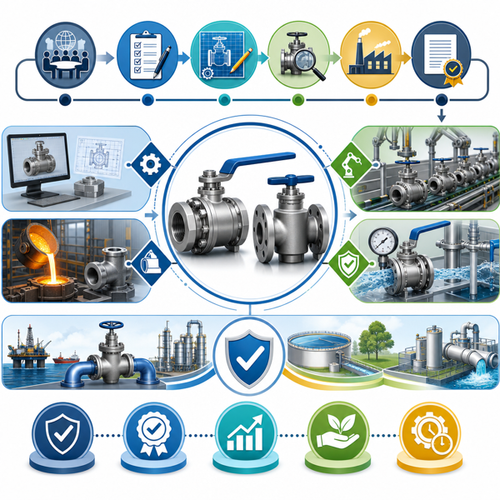
Ball and Plug Valve Standards: Boosting Fluid System Safety, Quality, and Productivity
Ball and plug valves play a crucial role in the safe and efficient control of fluids in residential, commercial, and industrial applications. As industries evolve and demands on plumbing, gas distribution, and fluid control systems intensify, adherence to well-established international valve standards is not just best practice—it has become essential. This article explores three fundamental standards—SIST EN 13828:2004, SIST EN 161:2002, and SIST ISO 7121:2000—that help ensure reliability, safety, productivity, and compliance across diverse fluid system applications. By understanding and implementing these standards, businesses can achieve higher productivity, improved security, and greater scalability.
Overview / Introduction
In today’s world, where building safety, energy efficiency, and operational uptime are paramount, comprehensive standards for ball and plug valves are indispensable. Whether supplying potable water in modern buildings, managing shut-off safety in gas appliances, or controlling heavy-duty flows in industrial settings, the right valves must meet stringent requirements. These standards:
- Ensure product quality and consistency
- Enhance operational safety for users and workers
- Improve system longevity and decrease risk of failure
- Support regulatory compliance and liability protection
This guide will explain what each standard covers, the industries affected, and the practical benefits of compliance—translating technical specifications into actionable value for businesses and the everyday public.
Detailed Standards Coverage
SIST EN 13828:2004 - Ball Valves for Potable Water in Buildings
Building valves - Manually operated copper alloy and stainless steel ball valves for potable water supply in buildings - Tests and requirements
This standard primarily addresses copper alloy and stainless steel ball valves for potable water systems in buildings, covering nominal sizes DN 8 to DN 100, and nominal pressure up to PN 10. The scope covers typical building plumbing temperatures up to 65 °C, with brief tolerance for spikes up to 90 °C.
What does SIST EN 13828:2004 cover?
- Material requirements: Specifies which copper alloys and stainless steels are suitable, ensures materials do not adversely affect drinking water quality, and includes resistance to dezincification.
- Design and Performance: Dictates structural requirements for body, ball, and end connections, mechanical strength, leak prevention, and acoustic (noise) performance.
- Testing Requirements: Lays out standardized mechanical, hydraulic, leak-tightness, endurance, and acoustic test procedures for reliable and documented valve quality.
- Marking: Requires standardized product marking for traceability and user guidance.
Who needs to comply?
- Plumbing manufacturers and suppliers
- Building contractors and engineers
- Facility managers for residential, commercial, and institutional properties
Practical Implications Valves that adhere to SIST EN 13828:2004 consistently deliver safe, clean water with minimal risk of corrosion or unexpected failure—critical for health, scalability in construction, and lifetime cost-effectiveness.
Key highlights:
- Assures valves are safe for potable water through strict material and acoustic standards
- Provides testing protocols for mechanical endurance and leak-proof operation
- Ensures universal marking for clear identification and installation
Access the full standard:View SIST EN 13828:2004 on iTeh Standards
SIST EN 161:2002 - Automatic Shut-Off Valves for Gas Burners and Appliances
Automatic shut-off valves for gas burners and gas appliances
The SIST EN 161:2002 standard sets the requirements for automatic shut-off valves used in gas burners and appliances—with a particular focus on safety and reliability for both domestic and industrial settings. It covers both electrically actuated valves (and those controlled by electrically actuated fluids) with declared working pressures up to 4 bar.
What does SIST EN 161:2002 cover?
- Safety and Construction: Establishes criteria for mechanical and electrical safety, corrosion resistance, tightness, and prevention of accidental leakage or malfunction.
- Performance: Specifies stringent requirements for opening and closing times, actuating force, endurance, leak-proof operation, and compatibility with modern electrical controls.
- Testing: Describes type testing procedures to verify a valve’s conformity with all critical properties, including normal operation, endurance under cycling, and electromagnetic compatibility.
- Marking and Instructions: Mandates detailed marking as well as comprehensive installation, operating, and warning instructions to support safe, correct use.
Who needs to comply?
- Gas appliance manufacturers (boilers, stoves, water heaters)
- System integrators and installers for gas distribution
- Facility managers and operators in residential, commercial, and industrial premises
Practical Implications Compliant shut-off valves provide peace of mind and regulatory compliance for gas installations, reducing risk of gas leaks, fire hazards, and accidents. For businesses, these valves help avoid costly incidents and support large-scale gas supply networks.
Key highlights:
- Ensures automatic closure under power loss or malfunction to protect life and property
- Supports a wide range of fuel gases and electric/electro-fluidic actuation
- Requires type testing for documented reliability and performance
Access the full standard:View SIST EN 161:2002 on iTeh Standards
SIST ISO 7121:2000 - Flanged Steel Ball Valves for Industrial Use
Flanged steel ball valves
SIST ISO 7121:2000 is a foundational international standard for flanged steel ball valves, covering a broad range of nominal sizes (DN 10 to DN 500) and pressures (ISO PN10 to ISO PN100). The valves are designed for demanding industrial applications—including chemical, petrochemical, water treatment, and general manufacturing sectors.
What does SIST ISO 7121:2000 cover?
- Scope and Terminology: Provides definitions for valve types, anti-static design, anti-blow-out stems, full and reduced bore designs, and more.
- Dimensional Requirements: Specifies required body wall thicknesses, face-to-face dimensions, flange compatibility, body port diameters, and minimum neck thickness for pressure safety.
- Materials and Construction: Dictates use of robust steels, corrosion-resistant materials, pressure-tested integrity, and necessary overpressure protections.
- Testing and Marking: Details procedures for pressure testing, marking for traceability, and preparation for dispatch and installation.
Who needs to comply?
- Industrial valve manufacturers
- Petrochemical and process engineering firms
- Water and wastewater infrastructure designers
Practical Implications Following SIST ISO 7121:2000 ensures valves can operate reliably in high-stakes, high-pressure environments where failure is not an option. It enables businesses to scale operations, maintain high uptime, and confidently expand into global markets.
Key highlights:
- Covers a wide range of sizes and pressure ratings—suitable for complex fluid networks
- Requires robust wall thickness and anti-blow-out/anti-static features
- Supports clear marking and comprehensive testing for industrial reliability
Access the full standard:View SIST ISO 7121:2000 on iTeh Standards
Industry Impact & Compliance
Adherence to ball and plug valve standards delivers direct and far-reaching benefits across the fluid systems landscape:
- Enhanced Productivity: Standardized components simplify system design, procurement, and installation, resulting in fewer errors and less downtime.
- Improved Security and Risk Reduction: By setting minimum safety, endurance, and leak-tightness criteria, these standards ensure that valves function reliably even under duress or abnormal conditions.
- Regulatory Compliance and Liability Minimization: Meeting national and international valve requirements helps avoid costly regulatory penalties and enhances organizational credibility with clients, insurers, and authorities.
- Scalability: Standardized interfaces and testing protocols enable systems to be rapidly scaled up, modified, or serviced—vital for fast-growing businesses and infrastructure projects.
- Sustainability & Efficiency: Acoustic and material standards often reduce environmental impacts and waste through longer life cycles and lower chance of contamination (especially for potable water).
Risks of Non-Compliance:
- Increased risk of leaks, failures, gas incidents, or contamination
- Legal and regulatory consequences, including stoppages or sanctions
- Compromised safety for occupants or workers
- Higher maintenance costs and reputational damage
Implementation Guidance
For businesses seeking to implement these standards into their operations, the following practical approaches are recommended:
1. Gap Analysis & Planning
- Compare current valve products and processes against the requirements of SIST EN 13828:2004, SIST EN 161:2002, and SIST ISO 7121:2000.
- Identify areas where existing products or documentation may fall short: materials, marking, testing, or installation guidance.
2. Supplier and Product Qualification
- Source valves from manufacturers certified to the relevant standards.
- Request compliant test reports and marking documentation.
- For critical applications (e.g., gas safety), verify type testing and track records.
3. System Design and Engineering
- Integrate standard-compliant valves into new builds or renovation projects.
- Ensure interface compatibility (flange, thread, or compression connections) as specified in standards.
4. Installation and Commissioning
- Follow standardized installation/operation instructions, including torque values, alignment, and pressure/leak testing.
- Document serial numbers or certification marks for traceability.
- For industrial or gas applications, ensure closed position indicator switches and safety interlocks are functional.
5. Ongoing Maintenance & Training
- Educate maintenance and engineering staff about relevant standards, testing intervals, and failure-mode awareness.
- Schedule periodic testing or inspections as indicated by end-use application and regulations.
6. Resources for Implementation
- Access full standard texts at regulatory libraries or iTeh Standards.
- Leverage supplier technical support and consulting for large-scale or bespoke installations.
- Seek out training programs or certification courses specific to valve types and standards.
Conclusion / Next Steps
Modern buildings, public infrastructure, and high-performance industries rely on the integrity and efficiency of their fluid systems. As this guide has shown, ball and plug valve standards such as SIST EN 13828:2004, SIST EN 161:2002, and SIST ISO 7121:2000 form the bedrock for delivering safe, reliable, and compliant fluid control.
Key takeaways:
- Standards-driven valves boost productivity and safety in water, gas, and industrial applications
- Compliance reduces risks—protecting people, investments, and reputations
- Standards enable businesses to scale and innovate securely
Recommendations for organizations:
- Review and align practices with up-to-date international standards
- Invest in staff training and ongoing compliance auditing
- Explore the full range of ball and plug valve standards available via iTeh Standards to support your technical, safety, and business goals
By leveraging comprehensive valve standards, organizations gain a proactive edge, helping create more resilient, scalable, and future-proof operations in an ever-evolving landscape.
Categories
- Latest News
- New Arrivals
- Generalities
- Services and Management
- Natural Sciences
- Health Care
- Environment
- Metrology and Measurement
- Testing
- Mechanical Systems
- Fluid Systems
- Manufacturing
- Energy and Heat
- Electrical Engineering
- Electronics
- Telecommunications
- Information Technology
- Image Technology
- Precision Mechanics
- Road Vehicles
- Railway Engineering
- Shipbuilding
- Aircraft and Space
- Materials Handling
- Packaging
- Textile and Leather
- Clothing
- Agriculture
- Food technology
- Chemical Technology
- Mining and Minerals
- Petroleum
- Metallurgy
- Wood technology
- Glass and Ceramics
- Rubber and Plastics
- Paper Technology
- Paint Industries
- Construction
- Civil Engineering
- Military Engineering
- Entertainment