


May 2026: New Standard for Plastics Piping System Conformity in Fluid Systems
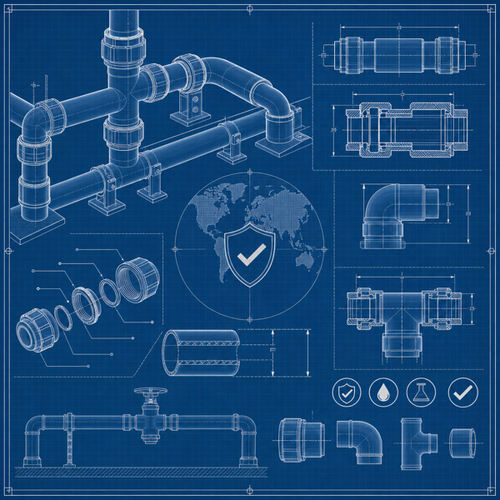
In May 2026, the landscape of standards for the Fluid Systems and Components for General Use sector took a significant step forward with the release of CEN/TS 1329-2:2026. This new technical specification provides detailed guidance for the assessment of conformity in unplasticized poly(vinyl chloride) (PVC-U) plastics piping systems used for soil and waste discharge within building structures. As the industry continues to emphasize product reliability and regulatory compliance, this standard marks a pivotal update that professionals in plumbing, construction, and quality management must understand. This article offers a thorough overview of the newly published standard, its requirements, and practical implications for industry stakeholders.
Overview / Introduction
Fluid systems and components play an essential role in the functionality and safety of modern buildings. Whether used for waste, drainage, or soil discharge, the performance and reliability of piping systems are critical to infrastructure integrity. International standards, such as those provided by CEN, enable organizations to ensure uniform product quality, enhanced safety, and seamless compliance with regional regulations. The new standard, CEN/TS 1329-2:2026, focuses on assessment of conformity for PVC-U piping systems, representing an important advancement for quality assurance and market certification in the sector.
In this article, you'll learn:
- What the latest standard covers and its specific requirements
- Key changes and technical details
- Who needs to comply and why it matters
- Implementation guidance and industry impact
Detailed Standards Coverage
CEN/TS 1329-2:2026 - Assessment of Conformity for PVC-U Soil and Waste Piping Systems
Plastics piping systems for soil and waste discharge (low and high temperature) within the building structure - Unplasticized poly(vinyl chloride) (PVC-U) - Part 2: Assessment of conformity
This technical specification provides comprehensive requirements and recommendations for manufacturers wishing to assess the conformity of their PVC-U piping systems designed for soil and waste discharge within building structures, at both low and high temperature conditions. The document is intended to be integrated within the manufacturer’s quality plan, supporting compliance with EN 1329-1:2026 (product specification) and facilitating the path toward certification.
Scope and Applicability
The standard applies to:
- Manufacturers of PVC-U pipes, fittings, and assemblies for soil and waste discharge in building constructions
- Products intended for a broad range of temperatures and challenging operational environments
- Organizations preparing for national or European certification processes
Key Requirements and Specifications
CEN/TS 1329-2:2026 sets forth a detailed framework for assessing the conformity of both the materials and finished products:
- Quality management system integration: Requires manufacturers to implement quality plans aligned with EN ISO 9001 principles
- Testing regime: Outlines a minimum test matrix—including type testing (TT), batch release testing (BRT), process verification testing (PVT), and audit testing (AT)—to assure continued product compliance
- Use of recyclates: Specifies that type tests must be performed both on virgin and maximum-recyclate-content formulations for products incorporating recycled materials
- Certification readiness: Details processes for establishing certification with recognized bodies compliant with EN ISO/IEC 17065 and EN ISO/IEC 17020
Products and assemblies are assessed for:
- Material identification (PVC-U content, recyclate content)
- Physical and mechanical properties (appearance, color, geometrical characteristics, internal pressure resistance, impact resistance, Vicat softening temperature, degree of gelation)
- Compliance marking
Practical Implications for Implementation
- Quality plans must include detailed measures for type testing and sampling procedures
- Batch release and process verification frequencies are specified, especially if recyclates are used, ensuring traceability and repeatability in production
- Certification bodies require robust documentation and demonstration of compliance before awarding certification marks
- Manufacturers benefit from a clear blueprint to align production and quality assurance procedures with European and international expectations
Notable Changes from Previous Edition (2021)
The 2026 version introduces several significant updates:
- Alignment with the new Assessment of Conformity (AoC) template
- Clarified procedures and required testing for products containing recyclates
- New guidance on batch and process testing frequencies for recyclate-inclusive formulations
- Updated references and harmonization with EN 1329-1:2026
Key highlights:
- Comprehensive testing matrix for conformity assessment
- Explicit guidance for recycled-content products
- Enhanced quality plan integration for certification readiness
Access the full standard:View CEN/TS 1329-2:2026 on iTeh Standards
Industry Impact & Compliance
The implementation of CEN/TS 1329-2:2026 will reshape how manufacturers and stakeholders approach quality management in fluid systems for general use:
- Enhanced reliability: Ensures that soil and waste piping systems perform consistently under both low and high temperature conditions
- Increased market access: Certification based on this standard will be required in many European and global markets
- Regulatory alignment: Companies adopting this standard are better positioned for future regulatory changes and harmonization across regions
Compliance Considerations and Timelines
- Manufacturers must update quality plans and testing protocols promptly to reflect new requirements
- Certification bodies will expect immediate alignment for new certifications, with grace periods for existing certified products typically determined by authorities
- Neglecting adoption can result in market access restrictions and increased liability for non-conforming products
Benefits of adopting these standards:
- Streamlined certification processes
- Reduced risk of product failure and warranty claims
- Improved stakeholder confidence and customer assurance
- Optimized operational efficiency and cost control via clear testing guidelines
Risks of non-compliance:
- Loss of access to regulated markets
- Increased scrutiny by regulators and supply chain partners
- Elevated risk of costly recalls or remediation efforts
Technical Insights
Common technical requirements mandated by the standard include:
- Material consistency: Rigid controls on ingredient sourcing, batching, and recyclate management
- Sampling protocols: Enforced grouping by diameter and fitting type for representative testing, as outlined in the test matrix
- Multi-level testing: Products must undergo initial type tests, regular batch and process verification, and random audit tests, especially if changes in design, formulation, or site occur
- Documentation: Detailed test records and traceability are essential for both internal quality assurance and external certification
Implementation Best Practices:
- Integrate quality planning: Ensure all production sites and lines have adopted the latest quality protocols and documentation requirements
- Train staff: Equip production, quality, and testing personnel with training on updated conformity assessment and sampling methods
- Liaise with certification bodies: Engage early with notified bodies familiar with EN ISO/IEC 17065 and 17020 expectations for guidance and pre-audits
- Review recyclate sourcing and usage: Implement robust control and documentation, as products with recyclates are subject to expanded test criteria
Testing and certification considerations:
- Establish internal or third-party laboratory capacities compliant with test frequencies and record-keeping expectations
- Schedule regular reviews to stay ahead of revisions and evolving requirements
- Leverage digital traceability tools for seamless documentation and audit support
Conclusion / Next Steps
The May 2026 introduction of CEN/TS 1329-2:2026 sets a new benchmark for the assessment of conformity in PVC-U piping systems for soil and waste applications. To stay ahead, organizations should:
- Review and incorporate the new requirements into their operational quality plans
- Communicate changes throughout their teams and supply chains
- Initiate re-certification efforts for products sold in regulated markets
Staying informed and proactive will ensure not only compliance but also sustained market competitiveness and product excellence.
Ready to explore the full details and strengthen your compliance?
Access the full standard:View CEN/TS 1329-2:2026 on iTeh Standards
For more on the latest international standards for fluid systems and piping components, visit iTeh Standards.
Categories
- Latest News
- New Arrivals
- Generalities
- Services and Management
- Natural Sciences
- Health Care
- Environment
- Metrology and Measurement
- Testing
- Mechanical Systems
- Fluid Systems
- Manufacturing
- Energy and Heat
- Electrical Engineering
- Electronics
- Telecommunications
- Information Technology
- Image Technology
- Precision Mechanics
- Road Vehicles
- Railway Engineering
- Shipbuilding
- Aircraft and Space
- Materials Handling
- Packaging
- Textile and Leather
- Clothing
- Agriculture
- Food technology
- Chemical Technology
- Mining and Minerals
- Petroleum
- Metallurgy
- Wood technology
- Glass and Ceramics
- Rubber and Plastics
- Paper Technology
- Paint Industries
- Construction
- Civil Engineering
- Military Engineering
- Entertainment