


Understanding Key Road Transport Standards: Enhancing Safety, Automation, and Smart Infrastructure
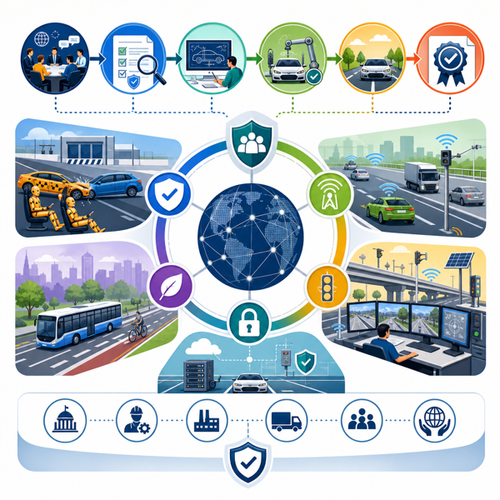
The landscape of road transport is rapidly evolving, shaped by breakthroughs in automation, connectivity, and smart infrastructure. For businesses and organizations aiming to stay competitive while embracing new technologies—such as electronic fee collection systems, automated driving, and intelligent streetlighting—adherence to the latest international standards is not just a recommendation, but a crucial requirement. This article will guide you through four of the most significant ISO standards for road transport, explaining their impact, practical requirements, and the compelling reasons every forward-thinking organization should implement them. Understanding and adopting these standards help drive efficiency, fortify security, and enable scaling, all while ensuring interoperability and legal compliance in a future-oriented sector.
Overview / Introduction
Modern road transport systems face new challenges and opportunities, including the integration of digital billing technologies, advanced vehicle automation, and smart urban infrastructure. International standards provide the essential frameworks that underpin these technological advances, offering structured requirements, interoperability, and safety mechanisms crucial for public trust and operational success.
In this comprehensive overview, we’ll demystify four pivotal standards in road transport:
- ISO 21719-1:2026: Electronic fee collection — Personalization of on-board equipment
- ISO 23792-1:2026: Intelligent transport systems — Motorway chauffeur systems (MCS) – Framework and general requirements
- ISO 23792-2:2026: Intelligent transport systems — MCS – Requirements and test procedures for discretionary lane change
- ISO/TR 19482:2026: Intelligent transport systems — Smart streetlighting management platform — Overview and use cases
Whether you’re adapting business models to digital toll systems, implementing Level 3 vehicle automation, or rolling out smart infrastructure for safer roads, this guide will clarify the standards, requirements, and best practices you need for successful, compliant, and scalable solutions.
Detailed Standards Coverage
ISO 21719-1:2026 – Electronic Fee Collection: Personalization of On-Board Equipment
Electronic fee collection — Personalization of on-board equipment (OBE) — Part 1: Framework
This standard lays the groundwork for integrating and personalizing on-board equipment (OBE) in electronic fee collection (EFC) systems. Designed to secure and streamline digital toll collection and user identification, ISO 21719-1:2026 creates a universal framework for how OBEs are personalized to vehicles and drivers.
What the Standard Covers
ISO 21719-1 defines a framework of functions and data exchanges involved in the OBE personalization process. The personalization phase is where unique vehicle and user data is securely loaded onto the OBE before deployment—enabling toll enforcement, user authentication, and service customization.
Key requirements include:
- Defining the personalization architecture (the link between personalization equipment and OBE)
- Securing data exchange through authentication and encryption mechanisms
- Managing who is responsible for which stage in the process
- Ensuring data integrity, privacy, and system interoperability regardless of hardware or communication media
The standard is essential for:
- Toll system operators
- Manufacturers and suppliers of OBEs and related systems
- Service providers engaged in digital road user charging
Practical Implications
Implementing ISO 21719-1 ensures OBEs are securely linked to their users, reducing fraud, supporting operational outsourcing, and enabling seamless integration across national and service-provider boundaries. By standardizing the core functions and security measures, businesses can outsource personalization, adopt different hardware, and scale toll services without compromising performance or interoperability.
Key highlights:
- Standard architecture for OBE personalization
- Security functions: encryption, access protection, authenticators
- Cross-compatibility and interoperability for diverse systems
Access the full standard:View ISO 21719-1:2026 on iTeh Standards
ISO 23792-1:2026 – Automated Motorway Chauffeur Systems: Framework and General Requirements
Intelligent transport systems — Motorway chauffeur systems (MCS) — Part 1: Framework and general requirements
In the age of connected and autonomous vehicles, Level 3 motorway chauffeur systems (MCS) mark a significant leap for road transport automation. ISO 23792-1:2026 delivers a comprehensive framework, specifying core functionalities, operating conditions, and safety criteria for these advanced driving systems.
What the Standard Covers
This standard specifies the essential requirements, operating domains, and test procedures for MCS that perform the entire dynamic driving task (DDT) on limited-access motorways, subject to a fallback-ready user (FRU). It covers:
- System states and transitions (from disengaged to fully autonomous and back)
- Minimum performance requirements for detecting objects and responding to events
- Procedures for issuing user intervention requests and managing disengagement
- Functional boundaries: ensuring operation only within defined conditions (Operational Design Domain)
- Human-machine interface (HMI) and user information systems
- System monitoring, misuse countermeasures, and fail-safe responses
Applicable to all developers, manufacturers, and integrators of automated driving systems for light vehicles, the standard ensures that performance and safety are not left to chance.
Practical Implications
Adopting ISO 23792-1 equips organizations to launch MCS features that are reliable, consistent, and legally defensible. It supports the safe transfer of control between automated systems and human users and forms the foundation for interoperability—necessary as automotive suppliers, tech companies, and authorities collaborate globally.
Key highlights:
- Comprehensive operational framework for Level 3 automation
- Specifies performance, security, and human interaction requirements
- Prescribes test procedures for verifying systems
Access the full standard:View ISO 23792-1:2026 on iTeh Standards
ISO 23792-2:2026 – Automated Lane Change: Requirements and Testing for Motorway Chauffeurs
Intelligent transport systems — Motorway chauffeur systems (MCS) — Part 2: Requirements and test procedures for discretionary lane change
As vehicles become more autonomous, their ability to safely change lanes without human intervention is one of the most complex and safety-critical functions. ISO 23792-2:2026 addresses this by standardizing discretionary lane change (DLC) functionalities for motorway chauffeur systems.
What the Standard Covers
This standard details the requirements for discretionary (non-mandatory) lane changes and the rigorous test procedures used to assess conformity. DLC enables features such as overtaking or navigating around obstacles while maintaining the overall safety envelope defined in ISO 23792-1.
It addresses:
- System state management during lane changes
- Sensor and detection requirements for adjacent traffic and gaps
- Performance criteria for lane change maneuvers under various traffic situations
- Driver interface requirements: how and when the vehicle notifies the fallback-ready user (FRU)
- Robust failure detection and appropriate fallbacks or operation aborts
Applicable to all manufacturers and developers of MCS solutions, focusing on Level 3 automation.
Practical Implications
With ISO 23792-2, organizations can launch advanced driver-assistance features with greater confidence, backed by recognized procedures for gap detection, vehicle dynamics, and communication. As lane change scenarios are critical for highway safety, standardized requirements help minimize risks, ensure user trust, and support regulatory compliance.
Key highlights:
- Defines the entire lane change decision and maneuver process
- Sets out system, sensor, and user communication requirements
- Includes detailed and repeatable test procedures for validation
Access the full standard:View ISO 23792-2:2026 on iTeh Standards
ISO/TR 19482:2026 – Smart Streetlighting Management for Traffic Safety
Intelligent transport systems — Smart streetlighting management platform for road traffic safety enhancement — Overview and use cases
Digital transformation in road transport isn’t just about vehicles; infrastructure plays a crucial role. This technical report introduces a smart streetlighting management platform (SSMP), illustrating its design through best-practice use cases and outlining implementation models for enhanced road safety.
What the Standard Covers
ISO/TR 19482 presents a real-world case (drawing on the Korean implementation) of SSMP. It:
- Details SSMP’s system architecture: centre platform, local platforms, and intelligent edge units (IEUs)
- Describes the hardware (e.g. sensors, CCTV, radar, RWIS), software, and data flows
- Catalogs priority service areas: crosswalks, crossroads, school zones, tunnels, and bridges
- Provides multiple use cases for traffic incident detection (e.g., jaywalking, illegal stops, pedestrian movement, speed and parking violations)
- Explains methods for warning delivery: visual, auditory, and digital channels for real-time alerts
This report is a versatile guide for municipalities, smart city planners, infrastructure authorities, and vendors considering similar solutions.
Practical Implications
Implementing SSMP in line with ISO/TR 19482 can transform basic streetlights into intelligent safety platforms. With real-time detection, analytics, and alerting, cities can dramatically reduce traffic incidents, improve pedestrian and vehicle safety, and gather actionable data for traffic management. The modular approach means easier scaling and seamless integration with other smart infrastructure initiatives.
Key highlights:
- Comprehensive model for smart, sensor-driven streetlighting
- Real-world use case clusters for high-risk zones
- Framework for implementing and scaling platform-based traffic safety solutions
Access the full standard:View ISO/TR 19482:2026 on iTeh Standards
Industry Impact & Compliance
Adopting international road transport standards brings significant advantages—but non-compliance can expose organizations to legal penalties, technical incompatibilities, or loss of trust. Here’s why these standards are a must for businesses integrating new technologies:
How These Standards Affect Businesses
- Legal and regulatory adherence: Many regions mandate compliance with ISO and similar standards for public systems or vehicle deployments.
- Market access and scaling: Organizations can expand their services across borders more easily, thanks to the uniform frameworks and requirements.
- Cost savings and efficiency: Standardization prevents costly custom developments and supports outsourcing, modularization, and re-use.
- Security and privacy: Requirements for data protection, user authentication, and failure management help safeguard sensitive systems and data.
- Productivity and innovation: Well-implemented standards allow teams to focus on value-adding enhancements, rather than bespoke, redundant engineering.
Risks of Non-Compliance
- Legal or regulatory setbacks
- Incompatibility with partners or technology providers
- Increased risk of breaches, failures, or unsafe events
- Higher maintenance costs
- Lower customer and user trust
Implementation Guidance
Achieving compliance and maximizing the benefits of these road transport standards requires a considered approach. Here’s how organizations can streamline adoption and future-proof their operations:
Common Implementation Approaches
- Gap analysis: Review existing systems and processes; identify where requirements are met and where changes are needed.
- Stakeholder engagement: Involve technical, operational, and legal teams to scope impacts and responsibilities.
- Incremental rollout: Pilot new functions and platforms in limited environments before scaling up.
- Interoperability and integration testing: Use the prescribed test procedures and scenarios.
- Continuous monitoring and updates: Standards evolve; maintain compliance and performance over time.
Best Practices
- Early planning: Integrate standards into the earliest design phases.
- Training: Educate teams on requirements and compliance procedures.
- Partnerships: Work with vendors and service providers familiar with international road transport standards.
- Documentation: Maintain clear records for audits and continuous improvement.
- Monitor changes: Follow standardization bodies and regulatory updates.
Resources for Organizations
- Access to full standards on iTeh Standards
- Industry forums and working groups
- Certification and testing labs
Conclusion / Next Steps
Across road transport, standards like ISO 21719-1, ISO 23792-1, ISO 23792-2, and ISO/TR 19482 provide the scaffolding necessary for safe, efficient, and innovative mobility systems. For businesses, authorities, and technology providers, they are a passport to scalable deployment, cross-border expansion, and public trust.
Key takeaways:
- Standards are enablers—not barriers—when implementing technology-driven solutions
- They secure operations, improve productivity, and facilitate scaling
- Non-compliance introduces risks, from technical failures to legal exposure
Recommendations:
- Evaluate which standards are most relevant to your operations or projects
- Use this guide as a reference point for compliance planning
- Regularly consult sources like iTeh Standards for updates and detailed documentation
Ready to future-proof your road transport initiatives? Explore the standards above and make compliant, forward-thinking implementation a strategic advantage for your organization.
Categories
- Latest News
- New Arrivals
- Generalities
- Services and Management
- Natural Sciences
- Health Care
- Environment
- Metrology and Measurement
- Testing
- Mechanical Systems
- Fluid Systems
- Manufacturing
- Energy and Heat
- Electrical Engineering
- Electronics
- Telecommunications
- Information Technology
- Image Technology
- Precision Mechanics
- Road Vehicles
- Railway Engineering
- Shipbuilding
- Aircraft and Space
- Materials Handling
- Packaging
- Textile and Leather
- Clothing
- Agriculture
- Food technology
- Chemical Technology
- Mining and Minerals
- Petroleum
- Metallurgy
- Wood technology
- Glass and Ceramics
- Rubber and Plastics
- Paper Technology
- Paint Industries
- Construction
- Civil Engineering
- Military Engineering
- Entertainment