


A Practical Guide to Biological Evaluation Standards for Medical Devices
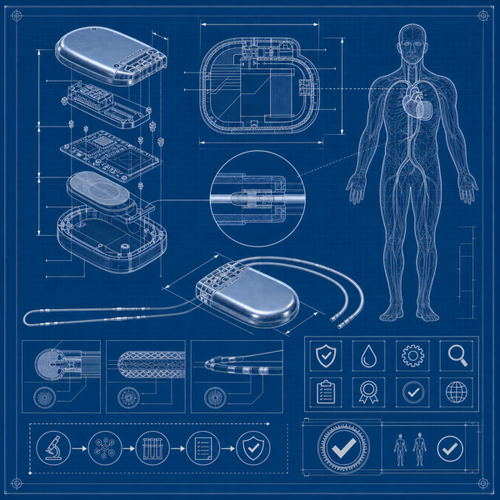
Medical devices touch almost every aspect of modern medicine, from simple wound dressings to complex implantable technologies. Yet, with their proliferation comes a fundamental question: are these devices safe for human use? The answer lies in a rigorous framework known as the biological evaluation of medical devices—a set of standards designed to safeguard patients and users by assessing the compatibility, safety, and effectiveness of all materials that contact the body. This article explores three key standards—SIST EN ISO 10993-1:2009, SIST EN ISO 10993-1:2010/AC:2010, and SIST EN ISO 10993-1:2021—that together set the international benchmark for biological evaluation in health care. We will explain in accessible language what these standards entail, why they are indispensable for modern businesses, and how adherence translates to enhanced productivity, robust security, and global scalability.
Overview / Introduction
Health care is evolving rapidly, with new materials and device designs pushing the boundaries of what’s possible in diagnosis and treatment. However, the introduction of any medical device—whether used externally or implanted—carries not just a promise of improved health, but also potential risks if biological compatibility is not assured.
Biological evaluation standards serve as the backbone for legal compliance, patient safety, and innovation in medical technology. They ensure each component of a medical device has been scientifically examined for biocompatibility, meaning it does not cause harm or unacceptable reactions in the human body. As health care providers, manufacturers, and regulators seek to scale up innovation while maintaining strict controls, these standards become indispensable tools for:
- Demonstrating regulatory compliance
- Streamlining device development
- Enhancing market trust and patient safety
- Expanding access to global markets
In this article, we break down what you need to know about three essential standards for biological evaluation of medical devices. By the end, you’ll understand not just what each covers, but also why businesses today cannot afford to ignore them.
Detailed Standards Coverage
SIST EN ISO 10993-1:2009 – The Foundation of Biological Evaluation
Biological evaluation of medical devices - Part 1: Evaluation and testing (ISO 10993-1:2003)
This standard is the foundational document in the ISO 10993 series, providing a structured approach to evaluating the biocompatibility of medical devices. Its core focus is to safeguard human health by offering a science-based process for understanding how medical devices interact with the human body. This involves assessing materials—polymers, metals, ceramics, and more—intended for use in the construction of medical devices.
Key aspects the standard addresses include:
- General principles: Laying out why and how biological evaluation should occur, emphasizing human safety.
- Categorization of devices: Grouping devices by the nature and duration of body contact (e.g., surface, implant, transient vs. permanent contact), crucial for selecting the right tests.
- Test selection: Guiding manufacturers in choosing suitable chemical, toxicological, and physical property tests to evaluate the device’s safety profile.
Who needs to comply? Manufacturers of medical devices that come into direct or indirect contact with humans—whether for diagnosis, therapy, or support—must follow these guidelines. It’s aimed at both simple and complex devices, including dental tools, implants, and single-use consumables.
Implementation means building a documented, logical protocol for testing, involving expert decision-making and consistent review, especially when device materials or designs change.
Notable features:
- Links to EU Directives 93/42/EEC for broader regulatory alignment
- Focuses on minimizing unnecessary animal testing
- Offers a comprehensive test selection matrix
Access the full standard:View SIST EN ISO 10993-1:2009 on iTeh Standards
SIST EN ISO 10993-1:2010/AC:2010 – Technical Corrigendum & Risk Management
Biological evaluation of medical devices - Part 1: Evaluation and testing within a risk management process - Technical Corrigendum 1 (ISO 10993-1:2009/Cor 1:2010)
Released as a technical corrigendum, this update to the base 2009 standard introduces the principle of integrating biological evaluation into a comprehensive risk management process. This aligns biocompatibility with ISO’s wider framework for risk assessment, ensuring that safety is not a single event but a continuous, managed process.
Key elements include:
- Risk management integration: Mandates incorporating biological evaluation into the overall risk management plan of the manufacturer, in line with ISO 14971.
- Gap analysis and additional data identification: Requires manufacturers to systematically review existing data, identify gaps threatening biological safety, and procure or generate new data as necessary.
- Emphasis on relevant information sources: Encourages exhaustive reviews of all available material data and prior testing, minimizing unnecessary duplication of work.
Who is affected? The corrigendum is vital for device manufacturers with established quality and risk management systems, regulatory professionals, and safety assessors.
In practice, it makes biological testing smarter and more targeted by focusing on actual risks posed by materials, device construction, or patient exposure. It also ties in the need to update evaluations whenever a device’s material, design, or intended use changes—a key step in scaling innovation without sacrificing safety.
Key highlights:
- Formalizes integration with risk management standards
- Drives efficient, data-driven biological assessment
- Strengthens alignment with international regulatory expectations
Access the full standard:View SIST EN ISO 10993-1:2010/AC:2010 on iTeh Standards
SIST EN ISO 10993-1:2021 – Risk Management, Modernization, and Global Alignment
Biological evaluation of medical devices - Part 1: Evaluation and testing within a risk management process (ISO 10993-1:2018, including corrected version 2018-11)
This most recent edition provides the most advanced, globally harmonized approach to biological evaluation yet published. It builds on the earlier iterations by offering more explicit risk-based guidance and a structured way to plan, conduct, and document all aspects of biological safety for medical devices.
Key requirements and specifications:
- Comprehensive risk management process: Mandates that biological evaluation be fully integrated into an organization’s risk management program (per ISO 14971)—a best practice for all modern medical device development.
- Significantly expanded device categorization: Clarifies and modernizes groupings for surface-contact, externally communicating, and implant devices, customizing test recommendations for each.
- Explicit handling of novel materials and extended risks: Incorporates updated approaches for evaluating nanomaterials, absorbable substances, and device aging factors, as well as breakage or degradation risks over a medical device’s lifetime.
- Clear exclusion of infectious pathogen risks: Focuses strictly on non-infectious hazards (chemical, physiological), directing readers to other standards for microbiology.
Who must comply? All organizations manufacturing, importing, or distributing medical devices that contact patient or user body tissue—across implants, external devices, reusable consumables, and personal protective equipment.
Practical implications:
- Encourages gap analysis, literature review, and endpoint selection as a continuous, logical process, not one-time tasks.
- Updates the endpoints and tests for current scientific and technical knowledge—particularly crucial for innovation and for devices facing ever more complex regulatory demands.
- Allows companies to build robust safety files that enable global market access.
Key highlights:
- Incorporates the latest scientific knowledge and global regulatory expectations
- Covers all device types and risk levels, fostering scalability
- Modernizes the biological evaluation process using risk management best practices
Access the full standard:View SIST EN ISO 10993-1:2021 on iTeh Standards
Industry Impact & Compliance
Adhering to the ISO 10993-1 family delivers concrete business benefits:
- Global regulatory acceptance: These standards form the basis for CE marking in Europe, FDA submissions in the US, and compliance in Asia-Pacific regions, dramatically simplifying international market entry.
- Risk reduction: By using a rigorous risk assessment and management framework, the chance of unforeseen biological hazards and costly recalls is minimized.
- Market credibility: Compliance reassures patients, clinicians, and business partners, helping to build trust and reduce barriers to adoption.
- Sustainable productivity and scaling: A standardized framework enables predictable, repeatable development and testing processes, cutting costs and timelines when scaling up.
Neglecting compliance can lead to:
- Market access restrictions and product bans
- Expensive litigation and damage to reputation
- Regulatory actions and device recalls
Implementation Guidance
While the standards provide the backbone, successful adoption relies on thoughtful, consistent implementation. Here are best practices for organizations:
- Embed biological evaluation in early design: Begin assessments as early as possible, involving cross-functional teams (R&D, regulatory, clinical).
- Document every decision: Build a living file covering material selection, test rationale, and all data gathered—this is critical for audits and market submissions.
- Use a risk-based approach: Focus resources on endpoints most relevant to the device type, intended use, and duration of contact.
- Leverage existing data and literature: Avoid redundant animal or clinical testing by referencing reliable published data where appropriate.
- Review regularly: Whenever materials, design, or processes change, reassess biological safety to keep in step with the standard’s requirements.
- Invest in training: Ensure all relevant staff are educated in the principles and evolving expectations of ISO 10993-1.
- Partner with accredited labs: Use only recognized and accredited test laboratories for biological evaluation testing to satisfy regulatory demands.
Additional resources:
- International online standards libraries, such as iTeh Standards, for access and updates
- Regulatory guidance (FDA, EMA, MHLW)
- Professional courses and certification in medical device risk management
Conclusion / Next Steps
Biological evaluation of medical devices is no longer just a regulatory checkbox—it is a strategic imperative for the modern health care business. The ISO 10993-1 series offers more than test lists; it provides a comprehensive, risk-based framework that fosters innovation, safety, and global competitiveness. Embracing these standards helps businesses achieve streamlined compliance, scalable operations, and above all, a reputation for putting patient safety first.
Key takeaways:
- Biological evaluation standards ensure that medical devices are safe, effective, and market-ready.
- Compliance enhances productivity, reduces business risk, and supports scaling across international borders.
- Implementing the latest versions (including risk management updates) is critical for business growth and reputation.
Next steps:
- Review your current device evaluation processes against the latest standards outlined above.
- Encourage ongoing staff education and update internal quality systems.
- Explore the full text of each standard directly using the links provided—iTeh Standards offers authoritative versions and expert resources.
By investing in robust, standards-driven evaluation processes, health care businesses can drive innovation, improve device safety, and excel in a competitive, rapidly changing market.
Categories
- Latest News
- New Arrivals
- Generalities
- Services and Management
- Natural Sciences
- Health Care
- Environment
- Metrology and Measurement
- Testing
- Mechanical Systems
- Fluid Systems
- Manufacturing
- Energy and Heat
- Electrical Engineering
- Electronics
- Telecommunications
- Information Technology
- Image Technology
- Precision Mechanics
- Road Vehicles
- Railway Engineering
- Shipbuilding
- Aircraft and Space
- Materials Handling
- Packaging
- Textile and Leather
- Clothing
- Agriculture
- Food technology
- Chemical Technology
- Mining and Minerals
- Petroleum
- Metallurgy
- Wood technology
- Glass and Ceramics
- Rubber and Plastics
- Paper Technology
- Paint Industries
- Construction
- Civil Engineering
- Military Engineering
- Entertainment