


July 2026: New Health Care Technology Standards for Device Processing, Dental & Optical Safety
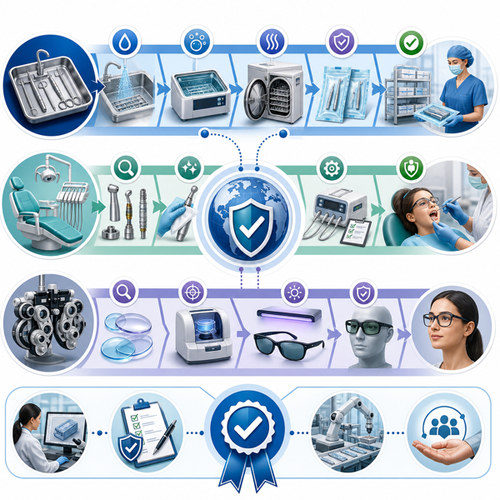
The July 2026 publication cycle brings a robust update to international standards in health care technology. This month, three key standards have been released, setting new expectations for the safe processing of reusable medical devices, performance verification of dental polymerization equipment, and durability of optical coatings on spectacle lenses. These updates are poised to help manufacturers, health care providers, and quality managers maintain regulatory compliance, ensure patient safety, and accelerate innovation across the industry.
Overview
Health care technology relies heavily on standardized approaches for patient safety, process reliability, and consistent product performance. International standards serve as critical references—defining requirements for manufacturers, processing facilities, and service providers in developing, validating, and using health care products and technologies. By aligning practices with the latest standards, organizations can not only meet global regulatory demands but also demonstrate a commitment to quality and improved health outcomes.
In this article, you will learn about:
- The scope and implications of the July 2026 standards update
- Technical requirements and testing methodologies introduced or revised
- Practical impacts for compliance, procurement, and day-to-day operations
- Best practices for implementation and risk management
- How to access these standards for further details
Detailed Standards Coverage
CEN ISO/TS 17664-3:2026 – Guidance on Cleaning Classification for Reusable Medical Devices
Processing of health care products – Information to be provided by the medical device manufacturer for the processing of medical devices – Part 3: Guidance on the designation of a reusable medical device to a cleaning classification (ISO/TS 17664-3:2026)
This technical specification provides detailed guidance on grouping reusable medical devices according to cleaning classification categories. The framework supports manufacturers and health care processing facilities in establishing compatible cleaning processes, risk assessments, and validation routines based on product design and clinical use.
Scope & Key Requirements:
- Applies to all reusable medical devices except single-use pre-sterile and textiles
- Guidance on attributing devices to product families based on geometry, materials, and clinical application
- Explains the assignment of product families to cleaning processes, both manual (M1, M2, M3) and automated (A1, A2, A3)
- Manufacturers are encouraged to define master products for worst-case validation within each family
- Elevates the role of risk analysis when adapting or developing alternative cleaning protocols
Who Needs to Comply:
- Medical device manufacturers defining and validating processing instructions
- Hospitals and central sterile processing departments
- Third-party reprocessors responsible for thorough device cleaning
Practical Implications:
- Enables systematic grouping to streamline cleaning validation and workflow design
- Assures compliance with labelling and IFU requirements per global regulatory regimes
- Promotes safer, more efficient processing of increasingly complex reusable instruments
Notable Changes:
- Enhanced alignment with leading regulations and ISO terminology
- Explicit pathways for classifying complex geometries and material combinations
- Clearer differentiation between cleaning and microbiocidal processes
Key highlights:
- Classification of devices into cleaning categories based on design and use
- Structured risk analysis for cleaning validation
- Explicit guidance for selecting master products during validation
Access the full standard:View CEN ISO/TS 17664-3:2026 on iTeh Standards
EN ISO 10650:2026 – Powered Polymerization Activators for Dentistry
Dentistry – Powered polymerization activators (ISO 10650:2026)
EN ISO 10650:2026 sets critical specifications for powered polymerization activators used at the dental chairside. These devices, including quartz-tungsten-halogen and LED lamps, are necessary for curing dental polymer-based materials—impacting restorative, orthodontic, and preventive procedures.
Scope & Key Requirements:
- Covers polymerization activators operating in the 380 nm to 515 nm wavelength range
- Suitable for battery, mains, or dental unit-powered devices; excludes lasers and plasma arc devices
- Performance criteria for radiant exitance, emission spectrum, and operating controls
- Specifies rigorous test methods—spectrometry and filter-based protocols—to verify compliance
- Mandates manufacturer information on blue-light hazards, recommended protective filtering devices, and clear IFUs
- Requirements for packaging, marking, and traceability
Who Needs to Comply:
- Dental device manufacturers (curing lights makers)
- Dental clinics, orthodontic practices, and procurement teams
- Regulatory authorities overseeing product safety
Practical Implications:
- Ensures sufficient curing performance for all dental polymer-based materials
- Enhances clinical safety by addressing blue-light retinal hazards
- Updates marking, packaging, and user instructions to reflect current best practices
Notable Changes from Previous Edition:
- Expanded test methods and performance benchmarks for new device types
- Updated protocol for blue-light safety and protective eyewear recommendations
- Enhanced manufacturer obligations for IFU revision tracking
Key highlights:
- Precise technical benchmarks for safe, effective curing devices
- Mandated blue-light hazard mitigation measures
- New instructions for dental team safety and improved IFUs
Access the full standard:View EN ISO 10650:2026 on iTeh Standards
EN ISO 8980-4:2026 – Anti-Reflective and Hydrophobic Coating Performance for Spectacle Lenses
Ophthalmic optics – Uncut finished spectacle lenses – Part 4: Specifications and test methods for the properties of anti-reflective coatings and hydrophobic coating (ISO 8980-4:2026)
EN ISO 8980-4:2026 modernizes the requirements for anti-reflective and hydrophobic coatings on spectacle lenses. The standard defines both optical and durability requirements, ensuring lenses deliver long-lasting, high-quality performance against environmental stresses—and are easy to clean for users.
Scope & Key Requirements:
- Applies to uncut, finished spectacle lenses with anti-reflective and/or hydrophobic coatings
- Optical criteria: Defines luminous and mean reflectance thresholds (<2.5% for AR coatings)
- Hydrophobic coatings must feature a static contact angle ≥90° (water repellency)
- Prescribes durability testing—including environmental cycling and rubbing sequences—to ensure coatings remain effective over time
- Excludes requirements and test methods covered in other standards in the ISO 8980 series
Who Needs to Comply:
- Lens manufacturers and suppliers
- Procurement specialists for ophthalmic equipment
- Optical labs and eye care providers offering coated lenses
Practical Implications:
- Higher assurance of anti-reflective clarity and water repellency for spectacle lens users
- Simplifies procurement and quality control through standardization
- Strengthened claims for product marketing and regulatory registration
Notable Changes:
- Introduction of hydrophobic lens property requirements and test methods
- Modernized definitions and updated durability testing protocols
- Clarified reporting and performance validation for multiple coating types
Key highlights:
- Quantifiable AR and hydrophobic performance targets
- Robust durability testing to ensure long-term coating effectiveness
- Comprehensive optical and non-optical requirements
Access the full standard:View EN ISO 8980-4:2026 on iTeh Standards
Industry Impact & Compliance
The July 2026 health care technology standards introduce pivotal updates that affect every facet of the sector:
- Manufacturers must reassess design protocols, cleaning validation, user instructions, and product performance guarantees to align with the latest requirements.
- Procurement and Quality Teams benefit from greater clarity when vetting equipment for compliance, ensuring fewer post-market issues and streamlined supplier qualification.
- Clinicians and Facilities gain standardized workflows for device processing and improved safety from new hazard mitigation requirements.
Compliance Considerations:
- Transition periods may apply; immediate action is recommended to review IFUs, technical files, and quality management systems.
- Non-compliance can result in product recalls, patient safety incidents, failed audits, or exclusion from key markets.
- Early adoption positions organizations as quality leaders and reduces supply chain disruptions during regulatory transitions.
Benefits of Adoption:
- Enhanced patient and staff safety
- Improved product reliability and performance
- Smoother audit and regulatory approval processes
- Increased trust from clients and stakeholders
Technical Insights
Across these standards, several technical requirements and best practices emerge:
- Systematic Device Classification: For cleaning, group devices based on design, materials, and use (ISO/TS 17664-3:2026) to facilitate streamlined, validated workflows.
- Performance Verification: Powered dental devices (EN ISO 10650:2026) and coated lenses (EN ISO 8980-4:2026) must pass specific test protocols. Use calibrated instruments, validated test methods, and maintain records for compliance.
- Instructions for Use: IFUs must clearly reflect validated processes, hazards, and appropriate personal protective equipment, such as blue-light safety shields (EN ISO 10650:2026).
- Durability Testing: Both hydrophobic and anti-reflective coatings require cyclical environmental exposure and rubbing tests, ensuring real-world durability and performance.
- Record-Keeping: Maintain thorough documentation of cleaning classifications, process validations, device performance, and test results for audit trails and regulatory review.
Conclusion & Next Steps
The July 2026 release of these three standards represents a significant advancement in health care technology, addressing key regulatory, technical, and end-user challenges. Professionals across the sector—whether in manufacturing, clinical environments, procurement, or regulatory oversight—should review these changes thoroughly and update their processes and quality management systems accordingly.
Key Takeaways: - Three fresh standards now set the bar in device processing, dental, and optics safety. - Implementation requires cross-functional collaboration: regulatory, technical, and business. - Failure to comply could result in operational risk and regulatory actions.
Recommendations:
- Download and study the new standards through iTeh Standards platform.
- Update internal procedures, staff training, and compliance documentation.
- Engage with industry forums and regulatory bodies for transition support.
- Continuously monitor for additional updates and harmonized guidance.
Stay ahead of health care technology innovation and compliance—explore the full text and resources for these and all related standards at iTeh Standards.
Categories
- Latest News
- New Arrivals
- Generalities
- Services and Management
- Natural Sciences
- Health Care
- Environment
- Metrology and Measurement
- Testing
- Mechanical Systems
- Fluid Systems
- Manufacturing
- Energy and Heat
- Electrical Engineering
- Electronics
- Telecommunications
- Information Technology
- Image Technology
- Precision Mechanics
- Road Vehicles
- Railway Engineering
- Shipbuilding
- Aircraft and Space
- Materials Handling
- Packaging
- Textile and Leather
- Clothing
- Agriculture
- Food technology
- Chemical Technology
- Mining and Minerals
- Petroleum
- Metallurgy
- Wood technology
- Glass and Ceramics
- Rubber and Plastics
- Paper Technology
- Paint Industries
- Construction
- Civil Engineering
- Military Engineering
- Entertainment