


Transfusion, Infusion, and Injection Equipment Standards: Ensuring Safety and Reliability in Healthcare
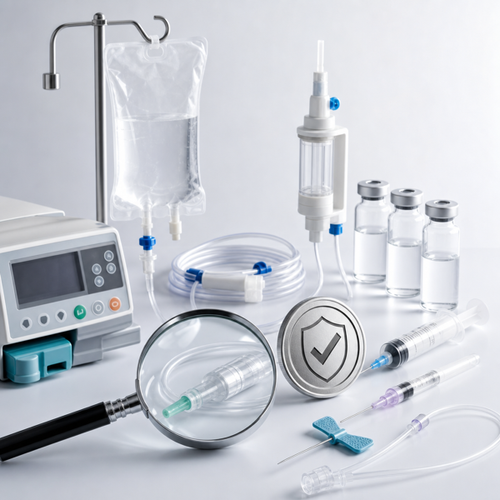
Healthcare technology today is rapidly advancing, fundamentally changing the way treatments are delivered to patients. Safety, reliability, and interoperability have become non-negotiable requirements, especially in transfusion, infusion, and injection equipment. This article explores two important international standards—SIST EN ISO 21649:2010 and SIST EN ISO 80369-1:2011—which underpin the safe design and usage of medical injectors and connectors. Whether you are a healthcare professional, manufacturer, or work in the medical device supply chain, understanding and applying these standards is no longer optional: it is a must for security, patient safety, productivity, and scalable growth in modern healthcare operations.
Overview / Introduction
The health care landscape relies on highly specialized equipment for the administration of medicines, fluids, and gases. Whether in hospitals, rehabilitation centers, remote clinics, or home care, infusion and injection procedures are carried out every second worldwide. The safety and functional performance of devices like needle-free injectors and small bore connectors directly affect both provider efficiency and patient well-being.
International standards, such as those developed by ISO and implemented nationally as SIST EN ISO in Europe, set rigorous guidelines to ensure design, compatibility, and risk management are fully addressed. With the growing complexity of health care delivery and increasing focus on patient safety, these standards now form the backbone of regulatory compliance and operational best practice for businesses in the sector.
In this article, we provide an accessible yet comprehensive guide to two essential standards:
- SIST EN ISO 21649:2010 — Needle-free injectors for medical use: Requirements and test methods
- SIST EN ISO 80369-1:2011 — Small bore connectors for liquids and gases in healthcare applications: General requirements
You’ll discover what each standard covers, key technical and user requirements, real-world business benefits, and practical advice on implementation—all in easy-to-understand language for both experts and the general public.
Detailed Standards Coverage
SIST EN ISO 21649:2010 - Needle-Free Injectors for Medical Use
Needle-free injectors for medical use – Requirements and test methods (ISO 21649:2006)
What This Standard Covers and Its Scope
SIST EN ISO 21649:2010 establishes the essential safety, performance, and testing requirements for needle-free injection systems intended for human use. These may be single-use or multiple-use devices, designed for clinics, hospitals, or even personal at-home use by patients. The focus is on systems that deliver medications without penetrating the skin with a needle—drastically reducing needle-stick injuries, infection risk, and pain.
The standard applies primarily to injectors with a removable or permanent dose chamber (sometimes referred to as a cartridge, ampoule, syringe, capsule, or disc) and their associated accessories. It distinguishes itself from other standards by not covering devices that penetrate the skin (such as needles or micro-needles), inhalers, patches, or devices for sonic/electromagnetic drug delivery. Instead, it focuses on mechanical injectors where the medication is propelled through the skin using high pressure without a needle.
Key Requirements and Specifications
- Dose Accuracy and Performance: Specifies how much variation is acceptable in the dose delivered. For low-volume injections (up to 0.2 ml), the expelled dose must be precise within ± 0.01 ml; for higher volumes, within ± 5%.
- Biocompatibility and Material Safety: All components in contact with the medication or skin must comply with ISO 10993 for biological safety.
- User Indication and Safety: Devices must clearly indicate when they are ready to inject and when a dose has been delivered, reducing the chances of misuse.
- Prevention of Premature Actuation: Design must prevent unintentional firing to protect both the user and the patient.
- Durability: Devices are tested for consistency after exposure to varying temperatures, lifetime operation cycles, vibration, shock, and both mechanical and electrical disturbances.
- Sterilization and Hygiene: Components intended to be sterile must undergo validated sterilization procedures.
- Acoustic Limits: To protect patients, maximum sound levels during actuation are specified.
- Clear Instructions for Use: Manufacturers must provide precise instructions, including any warnings if certain criteria (like noise limits) are exceeded.
Who Needs to Comply?
- Manufacturers and suppliers of needle-free injectors for clinical, hospital, pharmacy, and at-home patient use.
- Regulatory and quality assurance personnel in health care device companies.
- Healthcare providers using needle-free injection technologies.
Practical Implications for Implementation
Compliance means following robust design, material selection, testing, and labeling workflows. Manufacturers must ensure traceability and provide clinical data supporting device performance. For healthcare providers, specifying compliant products reduces procurement risks and aligns with international best practice, facilitating cross-border trade and patient transfer.
Notable Features
- Promotes consistent, reproducible medication delivery for improved treatment outcomes.
- Strong focus on user and patient safety (visual/tactile indicators, prevention of accidental firing).
- Integrates environmental resilience (thorough testing against real-world conditions).
- Uniquely narrows the scope to needle-free systems, facilitating innovation without prescribing detailed construction methods.
Key highlights:
- Dose accuracy within strict tolerances for safety
- Rigorous testing for all-use environments
- Visual and tactile user safety features
Access the full standard:View SIST EN ISO 21649:2010 on iTeh Standards
SIST EN ISO 80369-1:2011 - Small Bore Connectors for Liquids and Gases in Healthcare Applications
Small bore connectors for liquids and gases in healthcare applications – Part 1: General requirements (ISO 80369-1:2010)
What This Standard Covers and Its Scope
SIST EN ISO 80369-1:2011 sets out comprehensive general performance and design requirements for medical small-bore connectors. These connectors are essential components across a wide variety of medical devices used for conveying fluids or gases—think intravenous lines, respiratory circuits, feeding tubes, and more.
The core aim is to eliminate the potentially life-threatening risk of misconnections—especially when devices from different clinical applications could accidentally be connected (for example, joining an enteral feeding line to an intravenous system). The standard is specified for several clinical applications, including:
- Breathing systems and driving gases
- Enteral and gastric feeding
- Urethral and urinary systems
- Limb cuff inflation
- Neuraxial (spinal/epidural)
- Intravascular and hypodermic applications
Key Requirements and Specifications
- Non-Interconnectability: Ensures connectors for different applications cannot physically connect, using unique geometry and dimensions.
- Material Properties: Mandates use of rigid or semi-rigid materials, tested to defined standards for durability and performance.
- Risk Management: Requires manufacturers to document and assess risks according to ISO 14971, applying comprehensive usability engineering.
- Testing Methodology: Includes a methodology for verifying connectors cannot be misconnected either within a device or between devices of different applications.
- Compatibility with Existing Infrastructure: Clear exclusions for existing connector systems (such as ISO 5356 for anaesthesia) to prevent overlap or dangerous connections.
- Design and Validation Procedures: Provides a stepwise approach to propose and validate new connector designs, ensuring continual evolution aligned with new use cases and technologies.
Who Needs to Comply?
- Designers, engineers, and manufacturers of devices with fluid or gas conveyance for human use.
- Hospitals, clinics, and procurement departments responsible for device safety compliance.
- Regulatory agencies overseeing medical device approval and facility licensing.
Practical Implications for Implementation
Organizations must ensure all relevant devices use specifically designed, application-unique connectors and verify non-interconnectability during procurement and servicing. Manufacturers should embed these design features from the start, leveraging the standard's structured approach for proposals, risk evaluation, and validation.
Notable Features
- Reduces risk of fatal misconnections (e.g., preventing enteral nutrition from being mistakenly injected intravenously).
- Mandates robust, modular risk management integration.
- Supports ongoing revision and application expansion through procedural guidance.
Key highlights:
- Unique connector designs per medical application to prevent mix-ups
- Strong focus on risk assessment and usability
- Comprehensive coverage of clinical fluid and gas pathways
Access the full standard:View SIST EN ISO 80369-1:2011 on iTeh Standards
Industry Impact & Compliance
How These Standards Affect Healthcare Businesses
Transfusion, infusion, and injection equipment standards are about more than legal compliance; they drive real-world improvements in patient safety, risk management, and operational efficiency. By adhering to standards like SIST EN ISO 21649:2010 and SIST EN ISO 80369-1:2011, manufacturers and healthcare providers benefit from:
- Improved Safety Outcomes: Reducing risk of medication errors (wrong route, wrong dose) and accidental injuries.
- Regulatory Alignment: Meeting international and regional medical device regulations, supporting global market access and reducing potential legal liabilities.
- Operational Consistency and Productivity: Operators can work with predictable, standardized equipment, ensuring seamless workflow and reducing uncertainty.
- Brand and Reputation Gain: Demonstrating a strong commitment to quality and safety, increasing trust among patients, practitioners, and partners.
- Business Scaling and Innovation: Standards-based systems make it easier to integrate new products, evolve existing ones, and scale up operations without constant revalidation.
Risks of Non-Compliance
- Higher possibility of adverse patient events and associated legal or financial ramifications.
- Problems with market access, product recalls, or withdrawal from healthcare procurement lists.
- Lower trust and reputation in the market, leading to decreased business opportunities.
Implementation Guidance
Navigating the technical details of health care standards can feel daunting, but a structured approach makes successful adoption achievable for any organization.
Common Implementation Approaches
- Gap Analysis: Assess current products, processes, and documentation against standard requirements. Identify any shortfalls or compliance gaps.
- Design and Development Controls: Integrate requirements into design specifications and verification protocols from the earliest stage.
- Supplier and Material Qualification: Ensure that all materials and subcomponents meet specified biocompatibility and safety requirements.
- Testing and Validation: Conduct or commission robust testing according to prescribed methods in the standards, maintaining thorough records.
- Staff Training: Implement comprehensive user training, focusing both on technical requirements and practical device handling.
- Labeling and Instructions: Review or revise product labeling, warnings, and user documentation as specified.
- Risk Management Integration: Maintain ongoing risk assessment following ISO 14971 principles, with continual updates as products, use contexts, or regulations evolve.
- Post-market Surveillance: Set up systems for monitoring product performance and incident feedback to support ongoing compliance and improvement.
Best Practices for Adopting These Standards
- Cross-functional Collaboration: Bring together engineering, regulatory, clinical, and quality teams from the outset.
- Periodic Training and Refreshers: Ensure all relevant staff stay updated, especially as standards are revised.
- External Certification and Audits: Engage with third-party auditors or certification bodies to validate implementation and build market confidence.
- Continuous Improvement: Use incident data, audits, and feedback to iterate and enhance product and process compliance continuously.
Resources for Organizations
- Full-text Standards and Guidance: Obtain the latest official versions via reputable platforms like iTeh Standards.
- ISO and IEC Technical Committees: Periodically publish guidance, FAQs, and training materials for member organizations.
- Regulatory Authority Portals: National and supranational agencies often release updates, interpretation notes, and implementation tips.
- Industry Groups and Networks: Associations such as AdvaMed, MedTech Europe, and local medtech clusters frequently offer peer networking, benchmarking, and alerts on best practices and changes in the regulatory environment.
Conclusion / Next Steps
Adopting internationally recognized standards for transfusion, infusion, and injection equipment is an investment in patient safety, regulatory certainty, and business success. SIST EN ISO 21649:2010 and SIST EN ISO 80369-1:2011 are foundational to any manufacturer’s or healthcare provider’s quality infrastructure. Their requirements—focusing on dose accuracy, safety, and system compatibility—directly support productive, secure, and scalable operations, whether you’re innovating new medical devices or selecting equipment for your healthcare facility.
Key Takeaways
- Implementing these standards mitigates operational risk and improves treatment outcomes.
- Strengthens your market position by aligning with future-proof best practices.
- Offers concrete, practical steps for integrating standard requirements into everyday workflows.
Recommended Actions
- Assess your current product and device portfolio for compliance with these key standards.
- Engage stakeholders—from engineers to procurement—to champion standards-driven improvement.
- Access the full standards for in-depth requirements and consult with regulatory experts as needed.
Stay ahead of healthcare’s evolving safety and performance expectations by making international standards central to your business strategy. Explore, evaluate, and implement the right standards for your context today: visit iTeh Standards for official standards access and ongoing updates.
Categories
- Latest News
- New Arrivals
- Generalities
- Services and Management
- Natural Sciences
- Health Care
- Environment
- Metrology and Measurement
- Testing
- Mechanical Systems
- Fluid Systems
- Manufacturing
- Energy and Heat
- Electrical Engineering
- Electronics
- Telecommunications
- Information Technology
- Image Technology
- Precision Mechanics
- Road Vehicles
- Railway Engineering
- Shipbuilding
- Aircraft and Space
- Materials Handling
- Packaging
- Textile and Leather
- Clothing
- Agriculture
- Food technology
- Chemical Technology
- Mining and Minerals
- Petroleum
- Metallurgy
- Wood technology
- Glass and Ceramics
- Rubber and Plastics
- Paper Technology
- Paint Industries
- Construction
- Civil Engineering
- Military Engineering
- Entertainment