


Certification Essentials: Standards for Automatic Identification and Data Capture Techniques
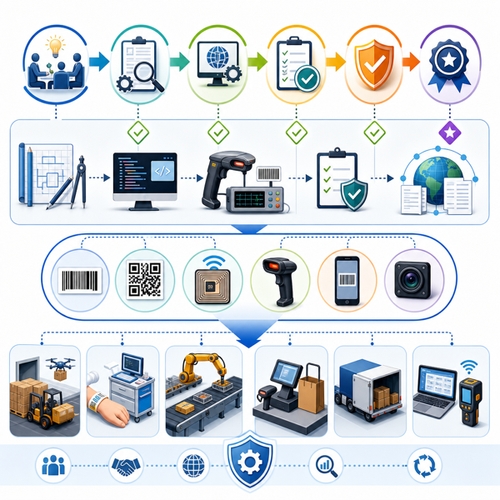
The world of information technology relies heavily on automatic identification and data capture techniques (AIDC) to streamline operations, enhance data accuracy, secure traceability, and support scalable business models. As organizations look to boost productivity, security, and efficiency, adherence to robust, internationally-recognized standards for AIDC has become not only a mark of certification excellence but a practical necessity. In this article, we delve into four of the most critical ISO and ISO/IEC standards that form the backbone of modern AIDC certification: from RFID tyre tag coding to high-capacity ADC syntax, PDF417 barcode symbology, and direct part marking guidelines.
Implementing these standards empowers businesses to automate data capture securely, drive productivity, and adapt quickly to changing requirements—cornerstones of resilient, future-ready enterprises.
Overview / Introduction
In today's interconnected, data-driven marketplace, automatic identification and data capture (AIDC) technologies such as barcodes, RFID, and direct part marking have moved from specialized applications to essential business infrastructure. Whether it's tracking automotive parts, managing warehouse inventories, ensuring compliance in aerospace, or safeguarding product authenticity, AIDC standards deliver the framework for:
- Reliable and interoperable data exchange
- Enhanced automation and reduced error rates
- Streamlined regulatory and industry certification
- Enterprise-wide scalability
This article equips readers with key insights into four foundational AIDC standards, explaining their objectives, requirements, and real-world implications without excessive technical jargon. By the end, you'll understand not only which standards matter most for certification but also why adopting these standards improves operational resilience and competitive advantage across sectors.
Detailed Standards Coverage
ISO 20910:2019 – RFID Tyre Tag Coding
Full Standard Title: Coding for radio frequency identification (RFID) tyre tags
ISO 20910:2019 is the definitive standard for encoding data on radio frequency identification (RFID) tyre tags. It describes the terms, definitions, general requirements, and detailed data structures necessary to ensure globally unique identification, verification, and traceability of tyres—a critical concern for manufacturers, wholesalers, fleets, and regulatory bodies.
The scope of ISO 20910:2019 includes:
- Defining four RFID memory banks: Reserved (passwords), UII (unique item identifier), TID (tag ID), and User memory.
- Detailing the construction of the UII using the industry-recognized SGTIN-96 format, leveraging the global GS1 company prefix system.
- Setting standards for data interchangeability between optical codes (such as Data Matrix and QR) and RFID tags, maintaining compatibility with global IT systems and workflows.
- Specifying security features (e.g., locking and permalock of memory banks) to prevent unauthorized data changes.
Who needs to comply?
- Tyre manufacturers, distributors, and resellers
- Fleet operators, retreaders, and regulatory agencies
- Any organization tracking tyre lifecycles or ensuring regulatory compliance
By implementing ISO 20910:2019, organizations ensure interoperable, tamper-resistant, and efficient traceability across global supply chains. This is instrumental for inventory control, recall management, and performance analytics, resulting in time and cost savings, better compliance, and risk reduction.
Key highlights:
- Robust data structure for unique tyre identification (UII)
- Clear guidelines for RFID tag memory management and security
- Seamless integration with GS1 and global data systems
Access the full standard:View ISO 20910:2019 on iTeh Standards
ISO/IEC 15434:2025 – Syntax for High-capacity ADC Media
Full Standard Title: Information technology — Automatic identification and data capture techniques — Syntax for high-capacity ADC media
ISO/IEC 15434:2025 establishes a common framework for encoding and transferring complex messages and multiple data fields using high-capacity AIDC media. These include advanced barcodes (e.g., Data Matrix, PDF417), RFID tags, smart cards, and contact memories—the communication backbone for automated manufacturing, transportation, healthcare, and logistics systems.
Key requirements and areas covered include:
- Structured syntax for data transfer, regardless of the physical AIDC medium
- Format indicators that signal the type of data structure (such as GS1, ANSI, Unicode/JSON, EDI, and binary data)
- Standardized message enveloping, ensuring accurate parsing, mapping, and decoding of multi-field data
- Mutual compatibility for both suppliers and recipients, allowing reliable data exchange across diverse systems
Who needs to comply?
- IT solution providers developing AIDC-enabled applications
- Manufacturers and system integrators using high-capacity identification
- Industries requiring multisource and multi-format data consolidation (e.g., distribution centers, healthcare, asset custody, air travel)
Practical implementation ensures that enterprises can automate data entry, reduce manual input errors, and flexibly map data fields from any high-capacity identifier into internal systems. With support for JSON and digital signatures, this latest edition streamlines modern data workflows—including verification and cross-platform interoperability.
Key highlights:
- Unified syntax for multi-field data exchange across technologies
- Format indicators supporting numerous industry standards (GS1, X12 EDI, JSON)
- Enhanced scalability and automation for enterprise integration
Access the full standard:View ISO/IEC 15434:2025 on iTeh Standards
ISO/IEC 15438:2015 – PDF417 Bar Code Symbology Specification
Full Standard Title: Information technology — Automatic identification and data capture techniques — PDF417 bar code symbology specification
ISO/IEC 15438:2015 sets forth the rules and definitions for the PDF417 barcode symbology—a high-density, two-dimensional barcode widely applied in logistics, asset management, identification documents (e.g., driver’s licenses), tickets, and inventory control. The specification covers everything from encoding rules and symbol formatting to error correction mechanisms, making PDF417 an industry favorite for storing large data volumes in machine-readable form.
Key aspects include:
- Comprehensive structure for encoding text, numeric, and binary information efficiently within the barcode
- Support for macro-symbols and multi-part data transfer
- Advanced error detection and correction algorithms, maximizing readability even in harsh conditions
- Reference decoding algorithms and symbol quality testing protocols
- Application options for secure identity management or logistics labeling
Who needs to comply?
- Developers of barcode hardware and software readers/writers
- Organizations using PDF417 codes for legal, regulatory, or operational identification
- Any business aiming to enhance data density and readability in labeling applications
By conforming to ISO/IEC 15438:2015, enterprises guarantee interoperability and future-proofing for their identification systems, reducing vendor lock-in while enhancing system reliability and traceability.
Key highlights:
- Detailed symbology specification for robust, versatile barcode applications
- Support for error correction and compaction, maximizing data throughput
- Standards-based approach to barcode quality, security, and vendor interoperability
Access the full standard:View ISO/IEC 15438:2015 on iTeh Standards
ISO/IEC TR 24720:2008 – Guidelines for Direct Part Marking (DPM)
Full Standard Title: Information technology — Automatic identification and data capture techniques — Guidelines for direct part marking (DPM)
ISO/IEC TR 24720:2008 provides in-depth guidance for applying permanent, machine-readable symbols directly onto products, components, and assets—a practice known as direct part marking (DPM). DPM is essential where traditional labels or tags may not survive the application environment or where robust traceability through a product’s lifecycle is required (such as aerospace, defense, and mobility sectors).
The report covers:
- Methods for both intrusive (e.g., laser etch, dot peen, abrasive) and non-intrusive (e.g., inkjet, cast, mold, laser bonding) marking
- Considerations for material compatibility, surface preparation, and protective coatings
- Symbol quality metrics and verification procedures to ensure accurate decoding
- Guidance on human-readable markings, marking locations, and lifecycle requirements
Who needs to comply?
- Manufacturers in sectors with traceability, recall, or authentication requirements
- Maintenance, repair, and overhaul (MRO) organizations
- Industries where environmental durability demands permanent machine-readable IDs
Applying DPM guidelines improves product authentication, simplifies recalls, and cements traceability across supply chains, supporting secure identification throughout a component’s operational life.
Key highlights:
- Practical marking method recommendations by material and environment
- DPM symbol quality, verification, and equipment setup guidance
- Detailed process selection tables for metals and non-metals
Access the full standard:View ISO/IEC TR 24720:2008 on iTeh Standards
Industry Impact & Compliance
Adhering to AIDC standards isn't simply a matter of checking a compliance box—it's a strategic investment in business continuity, operational transparency, and sustainable scaling. Here’s how these standards impact organizations:
- Streamlined Certification: Unified standards enable quicker, easier certification with regulatory agencies, facilitating global commerce and market entry.
- Improved Data Security: Features such as memory locking/permalocking for RFID and robust error correction in barcodes guard against unauthorized changes and data corruption.
- Efficiency Gains: Automation of data capture reduces manual entry, cuts costs, and accelerates supply chain throughput.
- Enhanced Traceability: Unique identifiers at the item or part level support total lifecycle management, efficient recalls, and precise asset tracking.
- Interoperability & Vendor Flexibility: Standards-based systems make it easier to mix-and-match technology providers and scale without reengineering backbone processes.
- Risk Mitigation: Non-compliance may lead to operational silos, recall difficulties, regulatory fines, or even loss of market access.
Businesses in sectors such as manufacturing, logistics, pharmaceuticals, automotive, aviation, and defense increasingly view compliance with automatic identification and data capture techniques as essential for protecting brand value and operational reputation.
Implementation Guidance
For organizations embarking on or upgrading AIDC and certification initiatives, best practices include:
- Standards Mapping: Survey your current data capture workflows against relevant standards. Identify legacy systems or proprietary formats that may require migration.
- Integrated Pilot Projects: Start with a confined pilot using a single standard (e.g., ISO 20910:2019 for tyre management), then expand rollout to minimum-viable processes.
- Vendor Collaboration: Select implementation partners that demonstrate strict standards alignment and interoperability testing (e.g., barcode scanner vendors supporting PDF417 per ISO/IEC 15438:2015).
- Training & Awareness: Equip teams with practical training on standards requirements—especially production, IT, and quality control staff.
- Testing & Verification: Regularly verify AIDC symbols and tags for compliance with quality and data integrity requirements. Leverage built-in test procedures in standards such as PDF417 and DPM.
- Documentation & Traceability: Document coding structures (such as UII schemes or ADC message syntax) to ensure auditability for certifications or regulatory reviews.
Resources for Organizations:
- iTeh Standards (https://standards.iteh.ai) for full original texts, updates, and expert guidance
- Industry trade groups (GS1, MH10, IEEE) for practical frameworks
- Accredited certification bodies for audit-ready compliance
Conclusion / Next Steps
In a landscape where digital transformation is accelerating, automatic identification and data capture standards are foundational to operational agility, regulatory compliance, and scalable growth. The four covered standards—ISO 20910:2019, ISO/IEC 15434:2025, ISO/IEC 15438:2015, and ISO/IEC TR 24720:2008—offer comprehensive, proven guidelines covering RFID, barcoding, data syntax, and permanent part marking.
Key Takeaways:
- Certification to these standards boosts productivity and data security.
- Standardized processes reduce costs, minimize errors, and simplify audits.
- Interoperability, traceability, and future preparedness are achievable through committed adoption.
Recommendation: Organizations of all sizes—especially those handling manufacturing, supply chain logistics, regulated goods, or asset management—should conduct a standards gap analysis and prioritize implementation. Staying informed and certified using the latest automatic identification and data capture techniques protects operational reputation and primes your business for secure, scalable growth.
Ready to dive deeper? Explore all information technology standards and subscribe to updates on iTeh Standards.
Categories
- Latest News
- New Arrivals
- Generalities
- Services and Management
- Natural Sciences
- Health Care
- Environment
- Metrology and Measurement
- Testing
- Mechanical Systems
- Fluid Systems
- Manufacturing
- Energy and Heat
- Electrical Engineering
- Electronics
- Telecommunications
- Information Technology
- Image Technology
- Precision Mechanics
- Road Vehicles
- Railway Engineering
- Shipbuilding
- Aircraft and Space
- Materials Handling
- Packaging
- Textile and Leather
- Clothing
- Agriculture
- Food technology
- Chemical Technology
- Mining and Minerals
- Petroleum
- Metallurgy
- Wood technology
- Glass and Ceramics
- Rubber and Plastics
- Paper Technology
- Paint Industries
- Construction
- Civil Engineering
- Military Engineering
- Entertainment