


Modern Identification Cards and Biometrics: Essential Standards for Security, Trust, and Interoperability
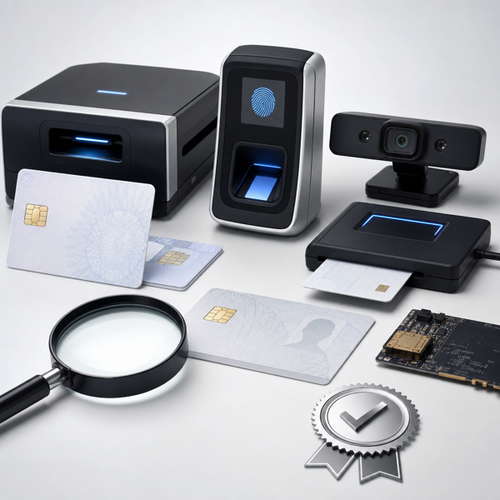
Modern Identification Cards and Biometrics: Essential Standards for Security, Trust, and Interoperability
Welcome to a new era of personal identification, where digital security, trust, and interoperability are foundational. As businesses and governments worldwide accelerate digital transformation, the importance of robust and standardized frameworks for identity cards, chip cards, and biometric solutions has never been greater. This comprehensive guide covers three critical international standards that shape the landscape of secure identity management and biometric technologies. Understanding and implementing the CEN/TS 17489-5:2025, CEN/TS 18212-3:2026, and CEN/TS 18212-5:2026 standards is not just wise—it's essential for boosting security, efficiency, and scalability across public and commercial sectors.
Overview / Introduction
In today's rapidly digitizing world, information technology forms the backbone of every industry. Nowhere is this more evident than in personal identification and biometric solutions. Secure, standardized approaches to identity management aren't merely regulatory checkboxes—they underpin public trust and enable cross-border interoperability for everything from travel and banking to healthcare and public administration.
With identity fraud, cyberattacks, and data privacy concerns on the rise, modern standards like those developed by CEN set the benchmark for robust, scalable, and trustworthy digital identity solutions. This article provides an in-depth, easy-to-digest analysis of three pivotal standards:
- CEN/TS 17489-5:2025: Trust establishment and management processes for secure breeder documents.
- CEN/TS 18212-3:2026: Methodology for evaluating biometric product functionality.
- CEN/TS 18212-5:2026: Face biometrics product requirements and evaluation scenarios.
You’ll learn:
- How these standards enhance security and productivity
- The main requirements and evaluation strategies
- The importance for businesses, governments, and end-users
- Practical considerations for adoption and compliance
Detailed Standards Coverage
CEN/TS 17489-5:2025 - Trust in Secure European Breeder Documents
Personal identification - Secure and interoperable European breeder documents - Part 5: Trust establishment and management processes
What this standard covers and its scope:
CEN/TS 17489-5:2025 sets out guidelines for trust establishment and management of breeder documents—such as birth, death, and marriage certificates—across European Union member states and affiliated countries. Breeder documents are foundational proofs of identity, vital for acquiring passports, residence permits, and official identity cards.
The standard’s objective is twofold:
- Uniformity: To establish a common, internationally recognized set of formats (printed and digital) for breeder documents, promoting both security and interoperability.
- Fraud Prevention: To minimize identity fraud by strengthening the link between breeder documents and subsequent identity documents.
Key requirements and specifications:
- Human dimension: Emphasizes that modern identity management supports human rights (property, privacy, freedom of movement, and access to government services), enabling efficient e-services.
- Security framework: Links document issuance to national civil registration systems, ensuring only verified identities are recognized; addresses the risk of counterfeit/fraudulent documents enabling identity theft or financial crimes.
- Methodology: Specifies a structured process involving gap analysis, implementation checklists, cross-agency reporting (Declaration of Implementation), and continual assessment for improvement.
- Categories of adoption and implementation: Provides a matrix approach for tracking which implementation objectives and methods have been met, allowing flexibility for national variation but ensuring a harmonized minimum.
Who needs to comply:
- Civil registries and authorities issuing breeder documents
- National and regional governments
- Agencies responsible for passports and ID cards
- Public sector organizations requiring secure identity proofing
Practical implications:
- Greater security and interoperability in cross-border identification
- Simplified checks and faster onboarding for citizens and residents
- Foundations for e-government services and cross-sector e-identity trust
Notable features:
- Detailed checklist covering logistics, human resources, technical controls, and issuance processes
- Alignment with European and UN principles for civil status documents
- Focus on data quality, transparency, and preventing document-based fraud
Key highlights:
- Establishes trust and security in primary legal identity documents
- Supports digital and printed formats for broad cross-border acceptance
- Explicitly addresses identity fraud risks in civil registration and document issuance
Access the full standard:View CEN/TS 17489-5:2025 on iTeh Standards
CEN/TS 18212-3:2026 - Functionality Evaluation for Biometric Products
Personal identification - Requirements for biometric products - Part 3: Functionality evaluation methodology
What this standard covers and its scope:
CEN/TS 18212-3:2026 establishes a comprehensive methodology for assessing the functionality and security of biometric products. It is technology-agnostic, supporting various modalities such as facial recognition, fingerprints, and iris scans. Its scope extends from test data collection, scenario-based and technology-based evaluations, to parameters for pass/fail and error reporting.
Key requirements and specifications:
- Evaluation framework: Defines three evaluation phases (with focus on phases 2 and 3):
- Phase 2: Performance testing under realistic and technology-driven scenarios.
- Phase 3: Assessment of resistance to attack (e.g., presentation/impersonation attacks).
- Test definitions: Introduces standardized vocabulary (such as Test, Trial, Subject, Setting, and Artefact) to ensure repeatable, auditable, and transparent evaluations.
- Data handling and privacy: Enforces adherence to GDPR and other personal data protection legislation during biometric testing and evaluation.
- Compliance with international standards: Aligns with ISO/IEC 19795 and ISO/IEC 30107, covering performance testing and presentation attack detection.
- Customizable profiles: Enables evaluation criteria to be tailored to specific applications (e.g., border control, banking, mobile devices) via standardized Application Profiles (APs).
Who needs to comply:
- Biometric system manufacturers and integrators
- Certification bodies and quality assurance organizations
- Customers deploying biometric authentication (government, enterprise, finance)
- Regulatory and compliance officers overseeing biometric deployments
Practical implications:
- Robust, comparable evaluation of biometric product performance
- Due diligence for procurement and deployment in critical applications
- Enhanced resistance to spoofing, fraud, and evolving attack methods
- Basis for harmonized certification and cross-border recognition of biometric components
Notable features:
- Includes technology and scenario-based evaluation methodologies
- Stresses the importance of machine-learning-based biometric evaluation
- Recommends continual improvement and re-evaluation
Key highlights:
- Universal, vendor-neutral framework for evaluating biometric technologies
- Direct support for GDPR compliance and personal data protection
- Incorporates attack resistance and real-world testing for robust security
Access the full standard:View CEN/TS 18212-3:2026 on iTeh Standards
CEN/TS 18212-5:2026 - Advanced Face Biometric Requirements and Evaluation
Personal identification - Requirements for biometric products - Part 5: Face biometrics
What this standard covers and its scope:
CEN/TS 18212-5:2026 dives deep into face biometrics—the most widely adopted modality in digital identity today. It provides the precise evaluation methodologies, scenarios, and assessment parameters necessary for certifying the security, performance, and interoperability of facial recognition products.
Key requirements and specifications:
- Comprehensive test structures:
- Technology evaluation: Lab-based accuracy and recognition performance
- Scenario evaluation: Real-world case studies (e.g., remote onboarding, access control)
- Vulnerability assessment: Defense against presentation attacks (photos, videos, masks, morphing, makeup)
- Application profiles: Includes detailed, stepwise assessment templates for use in digital wallets, remote onboarding, access control, and more.
- Assurance levels: Categorizes security/performance into levels (Basic, Substantial, High) per the EU Cybersecurity Act
- Operational variables: Tests performance under varied lighting, expression, device types, and demographic diversity
- Presentation Attack Detection (PAD): Specifies tests to guard against spoofing—including advanced anti-spoofing methods
Who needs to comply:
- Vendors developing facial recognition and face biometric solutions
- Public and private sector organizations deploying face-based authentication (e.g., airports, banks, e-Government)
- Certification bodies, compliance officers, and security architects
Practical implications:
- Ensures fairness, accuracy, and anti-bias in biometric face recognition
- Mitigates vulnerabilities to spoofing and impersonation attacks
- Facilitates secure, auditable remote onboarding and digital ID use cases
Notable features:
- Emphasizes multiple attack scenarios (videos, masks, data injection)
- Includes annexed profiles for specific sectors (such as digital identity wallets)
- Stresses inclusivity and diversity in test crews and evaluation data
Key highlights:
- Highly detailed assessment for fair, secure, and interoperable facial biometrics
- Defense against numerous real-world and adversarial attacks
- Sector-specific templates for rapid, compliant deployment across industries
Access the full standard:View CEN/TS 18212-5:2026 on iTeh Standards
Industry Impact & Compliance
How these standards affect businesses:
The adoption of robust standards for identification cards, chip cards, and biometrics transforms both public and private sectors, delivering benefits across finance, travel, government, healthcare, education, and beyond. Key impacts include:
- Enhanced Trust: Uniform breeder documents and standardized biometrics instill certainty for all stakeholders—citizens, officials, and partners.
- International Interoperability: Cross-border recognition of identity cards and biometric systems supports seamless trade, travel, and e-governance.
- Fraud Mitigation: Standardized procedures make it exponentially harder for bad actors to exploit gaps in document issuance or biometric authentication.
- Regulatory Compliance: Aligns processes with GDPR, the EU Cybersecurity Act, and sector-specific mandates, minimizing legal and reputational risks.
Compliance considerations:
- Data protection: Ensuring biometric data and personal information is processed and stored under privacy-by-design principles.
- Certification and auditing: Organizations deploying biometric systems must be ready for external assessments based on these standards.
- Continuous improvement: With technology and threats evolving rapidly, periodic review and update of policies and systems is essential.
Benefits of adopting these standards:
- Faster onboarding for users and customers
- Higher public trust in digital services
- Improved scalability for multinational rollouts
- Fewer incidents of identity fraud and data breaches
Risks of non-compliance:
- Increased risk of identity theft, fraud, and operational disruption
- Regulatory penalties and inability to operate across borders
- Loss of reputation and erosion of customer trust
Implementation Guidance
Common implementation approaches:
- Gap Analysis: Start with a thorough review of current practices against the requirements outlined in the standards, focusing on document security, biometric data handling, and evaluation procedures.
- Stakeholder Engagement: Coordinate between IT, compliance, legal, HR, and business units. Many requirements—especially around breeder documents and biometric modalities—cross departmental boundaries.
- Adopt Application Profiles: Tailor implementation by selecting relevant application profiles; follow provided checklists, test sequences, and assurance levels.
- Data Protection Measures: Ensure strong encryption, strict access controls, and privacy measures aligned with GDPR and sectoral regulations.
- Third-Party Audits and Certifications: Engage with certified testing laboratories and conformity assessment bodies familiar with these standards for unbiased system evaluations.
- Training and Awareness: Educate all operational personnel about the new procedures, security risks, and user privacy considerations.
- Iterative Evaluation: Perform regular, scheduled re-evaluations, especially for biometric systems updated with new machine learning models or deployed in new scenarios.
Best practices for adoption:
- Document every decision and deviation from the standard (as referenced in CEN/TS 17489-5)
- Maintain up-to-date inventories of all identity documents and biometric products in use
- Regularly test systems against adversarial scenarios (attack resistance, presentation attacks)
- Implement inclusive evaluation—addressing demographic diversity and avoiding algorithmic bias
- Participate in industry forums and public consultations for up-to-date best practices
Resources for organizations:
- Official standards and guidance from CEN, ISO, and IEC
- Online repositories and regulatory advice from iTeh Standards
- Whitepapers, webinars, and case studies on successful implementation
- Consultancy and auditing services specializing in identification and biometric security
Conclusion / Next Steps
In a world where secure, scalable, and interoperable identification systems are mission-critical, these CEN standards are cornerstones for your organization’s digital trust and legal compliance. Whether you’re a government agency modernizing civil registries, a financial institution deploying biometric onboarding, or a tech vendor building the next generation of digital identity products, understanding and applying these specifications is vital.
Key takeaways:
- Standards like CEN/TS 17489-5:2025, CEN/TS 18212-3:2026, and CEN/TS 18212-5:2026 are essential for building strong, secure, and future-proof identification and biometric systems.
- Adopting these guidelines boosts your organization’s productivity, public trust, and compliance—while reducing exposure to fraud, legal, and operational risks.
- A structured, principle-driven, and inclusive approach—backed by regular testing, staff training, and third-party audits—will ensure maximum benefit from your investment.
Recommendations for organizations:
- Deep dive: Review the original standards on iTeh Standards and engage with experts for guidance.
- Plan phased adoption: Use gap analysis and pilot projects before wide-scale rollout.
- Stay updated: Monitor new releases, sector regulations, and industry best practices, given the fast-moving nature of digital identity and biometrics.
Take control of your digital identity future—explore, adopt, and innovate with the latest standards for identification cards and biometrics at iTeh Standards.
Categories
- Latest News
- New Arrivals
- Generalities
- Services and Management
- Natural Sciences
- Health Care
- Environment
- Metrology and Measurement
- Testing
- Mechanical Systems
- Fluid Systems
- Manufacturing
- Energy and Heat
- Electrical Engineering
- Electronics
- Telecommunications
- Information Technology
- Image Technology
- Precision Mechanics
- Road Vehicles
- Railway Engineering
- Shipbuilding
- Aircraft and Space
- Materials Handling
- Packaging
- Textile and Leather
- Clothing
- Agriculture
- Food technology
- Chemical Technology
- Mining and Minerals
- Petroleum
- Metallurgy
- Wood technology
- Glass and Ceramics
- Rubber and Plastics
- Paper Technology
- Paint Industries
- Construction
- Civil Engineering
- Military Engineering
- Entertainment