


Unlocking IT Security Success: Key Standards for Evaluation, Management, and PII Deletion
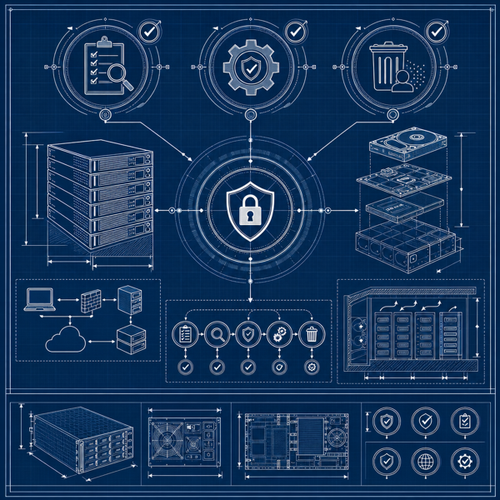
Unlocking IT Security Success: Key Standards for Evaluation, Management, and PII Deletion
In our interconnected world, robust information security isn’t just for tech giants—every organization, regardless of sector or size, must protect its digital assets, manage sensitive information, and comply with evolving legal expectations. International IT security standards play a pivotal role in helping businesses achieve these goals, ensuring confidentiality, integrity, and availability from the ground up. In this comprehensive guide, we delve into three crucial standards shaping today’s security and privacy landscape: kSIST FprEN ISO/IEC 18045:2026, kSIST FprEN ISO/IEC 27000:2026, and SIST EN ISO/IEC 27555:2025. Together, these frameworks provide the foundation for secure scaling, effective compliance, and improved productivity in organizations worldwide.
Overview / Introduction
Information technology forms the backbone of modern business, making information security a shared concern across all industries. Global threats—ransomware, insider risks, compliance violations—are ever-present and rapidly evolving. International standards provide a common language and trusted methods to:
- Evaluate IT security objectively
- Build and maintain information security management systems (ISMS)
- Ensure the secure handling and deletion of personally identifiable information (PII)
Why standards matter:
- Consistency and trust: Standards offer repeatable processes and proven methodologies for tackling complex security challenges.
- Legal alignment: Compliance with standards demonstrates a proactive approach to regulatory obligations.
- Productivity and scaling: A standardized approach reduces confusion, streamlines training, and supports secure business growth.
In this article, you'll gain a user-friendly understanding of each standard, its unique approach, target audiences, requirements, and practical ways these standards can transform your IT security posture.
Detailed Standards Coverage
kSIST FprEN ISO/IEC 18045:2026 — Mastering IT Security Evaluation
Information security, cybersecurity and privacy protection – Evaluation criteria for IT security – Requirements and methodology for IT security evaluation (ISO/IEC FDIS 18045:2025)
The kSIST FprEN ISO/IEC 18045:2026 standard stands as the definitive methodology for evaluating IT security. Closely linked with the ISO/IEC 15408 series (the Common Criteria), it details the minimum actions required by evaluators conducting security assessments of IT products and systems. Its rigorous framework extends from initial planning to the final verdict, ensuring evaluations are systematic, repeatable, and trustworthy.
What the Standard Covers
This standard describes a structured process for IT security evaluation, supporting diverse applications such as software, hardware, and integrated systems. It places particular emphasis on:
- The relationship between ISO/IEC 15408 criteria and its own methodology
- Defining roles and responsibilities during evaluations
- Managing evaluation evidence and outputs
- Providing templates and documentation requirements for evaluators
Key Requirements and Specifications
Practically, the standard requires organizations or evaluators to:
- Systematically assess protection profiles, security targets, and security claims
- Verify the implementation and architecture of security functions
- Apply specific technical sub-tasks (e.g., for lifecycle support, flaw remediation, delivery processes)
- Document evidence and results comprehensively, ensuring transparency
Who Needs to Comply?
- Evaluation facilities (e.g., accredited labs)
- IT product vendors undergoing certification
- Systems integrators and security consultants
- Any organization pursuing certification of a security product or system to international standards
Practical Implications for Implementation
Adopting this standard ensures evaluations are repeatable, thorough, and recognized internationally—critical for global market access and customer trust. The strict methodology removes subjectivity, reducing the risk of overlooked vulnerabilities or non-compliance.
Notable Features:
- Step-by-step evaluation tasks and sub-activities
- Clearly defined verdicts and outputs for each evaluation phase
- Supports reuse of certified protection profiles
Key highlights:
- Specifies roles, responsibilities, and task flows in security evaluation
- Ensures lifecycle and development processes are rigorously reviewed
- Provides linkage with global Common Criteria certification schemes
Access the full standard:View kSIST FprEN ISO/IEC 18045:2026 on iTeh Standards
kSIST FprEN ISO/IEC 27000:2026 — Foundation for Information Security Management Systems
Information security, cybersecurity and privacy protection – Information security management systems – Overview (ISO/DIS 27000:2025)
Serving as the entry point for the globally recognized ‘ISO/IEC 27000 family,’ kSIST FprEN ISO/IEC 27000:2026 lays out the key principles and concepts of information security management systems (ISMS). It explains the rationale and structure underpinning the essential controls, governance, and continuous improvement required to protect critical business information in line with evolving threats and stakeholder expectations.
What the Standard Covers
This horizontal document provides:
- Clear definitions for foundational terms (confidentiality, integrity, availability, risk, control)
- Core information security concepts: risk management, objectives, continual improvement
- Structure and relationships among ISMS-related standards (e.g., ISO/IEC 27001, 27002, 27005)
- An overview of best practices for establishing, implementing, maintaining, and improving an ISMS
Key Requirements and Specifications
Organizations are guided to:
- Integrate information security into overall business processes
- Adopt a process approach, involving all relevant stakeholders
- Continuously identify, assess, and treat security risks
- Select and apply controls that align with business and regulatory needs
Who Needs to Comply?
- All organizations seeking to establish or improve an ISMS
- IT and security managers, compliance officers, C-level executives
- Outsourcing partners and cloud service providers
- Industries with regulatory requirements for security (finance, healthcare, telecom, etc.)
Practical Implications for Implementation
Adopting kSIST FprEN ISO/IEC 27000:2026 lays the intellectual and procedural groundwork for robust, scalable, and auditable security practices. Its focus on risk-based management ensures organizations can prioritize and allocate resources effectively, support regulatory compliance, and seamlessly scale security as the business grows.
Notable Features:
- Concise, easily understood definitions
- Visual mapping of how different ISMS standards fit together
- Updated to reflect the latest in cybersecurity and privacy protection
Key highlights:
- Establishes the ‘why’ and ‘how’ for ISMS frameworks
- Promotes integration with business objectives and continual improvement
- Supports multi-standard and sector-specific implementations
Access the full standard:View kSIST FprEN ISO/IEC 27000:2026 on iTeh Standards
SIST EN ISO/IEC 27555:2025 — Guidelines for Secure PII Deletion
Information security, cybersecurity and privacy protection – Guidelines on personally identifiable information deletion (ISO/IEC 27555:2021)
In an era dominated by privacy regulations and increasing consumer awareness, SIST EN ISO/IEC 27555:2025 fills a vital gap by guiding organizations in the proper deletion of personally identifiable information (PII). This standard helps ensure organizations don’t just protect PII during its lifecycle, but also develop and enforce consistent policies for its erasure when no longer required.
What the Standard Covers
The standard presents a detailed framework for:
- Naming and categorizing clusters of PII
- Defining deletion rules and periods
- Assigning roles and responsibilities for PII deletion
- Proper documentation and recordkeeping
- Managing exceptions, backups, and manual deletion processes
Key Requirements and Specifications
Organizations must:
- Harmonize PII deletion terminology and processes
- Set and document clear retention and deletion periods for each PII cluster
- Develop deletion classes and rules (e.g., standard vs. regular deletion periods)
- Maintain an auditable record of deletion policies and procedures
- Ensure roles and accountability are defined (e.g., PII controller, data processors)
Who Needs to Comply?
- Any organization that processes, stores, or handles PII (from startups to government agencies)
- Privacy and compliance teams, HR, legal departments
- IT administrators managing systems with PII storage
Practical Implications for Implementation
By following the guidelines of SIST EN ISO/IEC 27555:2025, organizations can:
- Demonstrate compliance with privacy laws (e.g., GDPR, CCPA)
- Reduce data breach risks from unnecessary PII retention
- Empower individuals’ rights, such as the ‘right to be forgotten’
- Standardize PII handling across business units and systems
Notable Features:
- Framework for consistent deletion regardless of technology platform
- Emphasis on documentation, transparency, and accountability
- Guidance on retaining only necessary PII and efficient deletion rules
Key highlights:
- Clarifies legal, technical, and operational deletion boundaries
- Addresses archives, backups, and special retention scenarios
- Supports risk-based, auditable PII handling
Access the full standard:View SIST EN ISO/IEC 27555:2025 on iTeh Standards
Industry Impact & Compliance
Adoption of these IT security standards offers organizations significant advantages while also helping mitigate challenging risks.
How These Standards Affect Businesses
- Enhanced Trust: Independently validated security and data deletion processes assure clients and partners.
- Regulatory Compliance: Standards-based approaches harmonize with global privacy and security laws, reducing legal exposure.
- Competitive Advantage: Certification and demonstrable compliance open new markets and reassure stakeholders.
Compliance Considerations
- Audit Readiness: Using globally recognized standards makes audits more predictable and less disruptive.
- Cross-border Operations: International standards simplify compliance when operating or trading internationally.
- Data Subject Rights: Particularly for PII, standards like EN ISO/IEC 27555 facilitate fulfillment of rights such as access and erasure.
Benefits of Adopting These Standards
- Increased Productivity: Codified processes reduce manual errors, staff confusion, and duplicated efforts.
- Scalability: Secure, standardized, and repeatable methods enable safe business growth, even in highly regulated industries.
- Resilience: Advanced risk assessment, continuous improvement, and rigorous evaluation decrease downtime and losses from incidents.
Risks of Non-Compliance
- Legal Penalties: Regulatory fines and reputational damage from data breaches or improper PII handling
- Operational Disruption: Security incidents from weak evaluation or management undermine business continuity
- Lost Opportunities: Failure to meet partner or customer security benchmarks can block deals or projects
Implementation Guidance
Common Implementation Approaches
- Top-Down Commitment: Senior leadership must endorse investment in security, management systems, and privacy controls.
- Gap Assessment: Evaluate current processes against each standard’s requirements to identify areas for improvement.
- Policy Definition: Develop and document clear, achievable policies covering security evaluation, ISMS, and PII deletion.
- Training and Role Assignment: Educate staff and assign responsibility for each area—e.g., evaluation, risk management, deletion compliance.
- Technical Controls: Deploy tools to support evidence gathering (for evaluation), risk monitoring (for ISMS), and data deletion (PII management).
- Continuous Review: Use ongoing assessments and audit findings to update policies and improve processes.
Best Practices for Adopting These Standards
- Start with ISO/IEC 27000: Build an understanding of ISMS concepts, then deepen with more specific standards.
- Integrate Risk Management: Use structured, risk-based approaches to prioritize resource allocation and remediation activities.
- Document Rigorously: Maintain clear records of all decisions, evaluations, and deletion activities, enabling transparency and auditability.
- Automate Where Possible: Employ modern data lifecycle management and security tools to enforce policies efficiently.
Resources for Organizations
- iTeh Standards Platform: Access the full text, related documents, and updates for each standard
- Professional Training: Engage with accredited training and certification bodies for skill development
- Consultants and External Auditors: Use third-party expertise for complex implementations or preparing for certification
- Community and Forums: Collaborate with peers through industry groups and online communities focusing on IT security and privacy compliance
Conclusion / Next Steps
As cyber threats, privacy expectations, and regulatory demands continue to mount, no organization can afford to ignore the power of international standards in shaping a trustworthy, scalable, and efficient IT security posture. kSIST FprEN ISO/IEC 18045:2026, kSIST FprEN ISO/IEC 27000:2026, and SIST EN ISO/IEC 27555:2025 each play a distinct, synergistic role—from objective security evaluation, to holistic security management, to lawful and systematic PII deletion.
Key takeaways:
- Implementing these standards not only ensures compliance but drives productivity, operational resilience, and business growth.
- Engage leadership, train staff, and document processes to maximize your return on investment in IT security.
- Monitoring international standards will help your organization stay ahead of evolving compliance requirements and industry best practices.
Ready to strengthen your security and privacy posture?
- Explore the full text of each standard through iTeh Standards (see individual backlinks above for immediate access).
- Initiate a standards gap assessment in your organization today.
- Stay connected—subscribe or follow iTeh Standards for the latest developments and expert guidance in IT security compliance.
Categories
- Latest News
- New Arrivals
- Generalities
- Services and Management
- Natural Sciences
- Health Care
- Environment
- Metrology and Measurement
- Testing
- Mechanical Systems
- Fluid Systems
- Manufacturing
- Energy and Heat
- Electrical Engineering
- Electronics
- Telecommunications
- Information Technology
- Image Technology
- Precision Mechanics
- Road Vehicles
- Railway Engineering
- Shipbuilding
- Aircraft and Space
- Materials Handling
- Packaging
- Textile and Leather
- Clothing
- Agriculture
- Food technology
- Chemical Technology
- Mining and Minerals
- Petroleum
- Metallurgy
- Wood technology
- Glass and Ceramics
- Rubber and Plastics
- Paper Technology
- Paint Industries
- Construction
- Civil Engineering
- Military Engineering
- Entertainment