


Understanding IT Standards for Industrial Communications & Numerical Welding Simulation
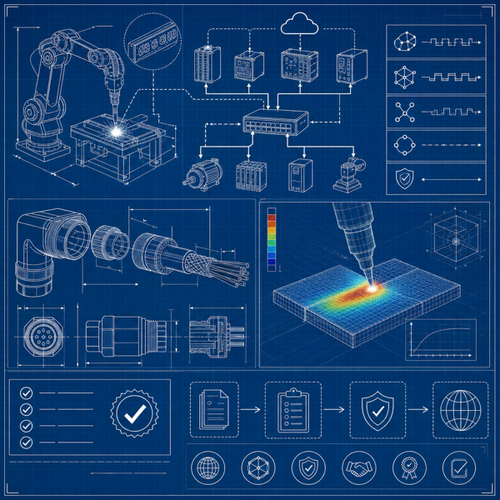
Industrial IT applications have undergone a transformative shift, guided by internationally recognized standards that ensure seamless communication, process automation, and reliable modeling for complex engineering tasks. In today’s fiercely competitive industrial landscape, the adoption of information technology standards isn’t just best practice—it’s a must for any business aiming to boost productivity, enhance security, and scale operations efficiently. This article introduces two critical standards: SIST EN 50325-1:2003, which underpins robust controller-device communications via CAN protocols, and SIST EN ISO 18166:2026, which governs reliable execution and documentation in numerical welding simulation. Together, they address foundational challenges in industrial automation and digital manufacturing, facilitating interoperability, resilience, and accuracy throughout the lifecycle of industrial systems.
Overview / Introduction
The industrial sector’s embrace of digital transformation has made IT applications in industry central to everyday operations. With increasing connectivity among devices, higher levels of automation, and demanding requirements for safety and efficiency, standards shape how organizations design, implement, and manage their technology-dependent processes.
Implementing relevant IT standards:
- Reduces integration complexity
- Ensures interoperability between heterogeneous systems
- Provides frameworks for security, error detection, and validation
- Supports compliance with legal and stakeholder requirements
- Enables technology scaling without risking reliability or safety
In this guide, you’ll discover how two significant standards—covering industrial communications and numerical process simulation—serve as the backbone of modern industrial IT infrastructure. You’ll learn their scopes, technical requirements, and how compliance delivers real-world business value.
Detailed Standards Coverage
SIST EN 50325-1:2003 – General Requirements for Industrial Communications Subsystem Based on ISO 11898 (CAN)
Industrial communications subsystem based on ISO 11898 (CAN) for controller-device interfaces — Part 1: General requirements
What does it cover?
SIST EN 50325-1:2003 sets foundational requirements for controller-device interfaces that rely on ISO 11898—better known as CAN (Controller Area Network)—to enable secure, efficient communication among industrial switchgear, controlgear, controllers, and peripheral devices (such as programmable logic controllers, PCs, and more). Its scope embraces the communication protocol stack, electrical and mechanical characteristics, as well as the EMC (electromagnetic compatibility) and functional tests necessary for reliable, robust operation.
Key requirements and specifications:
- Defines common terminology and structural layout for subsequent CAN-based interface standards (e.g., DeviceNet, SDS, CANopen)
- Specifies minimum requirements: documentation, usage in real industrial products, multi-vendor availability, and open commercial access
- Details EMC and electrical test protocols—referencing EN 61000 family—to verify device performance under industrial interference
- Provides mechanisms for transmission error detection and interoperability across vendor solutions
- Outlines the ability to directly power devices from the network and function reliably in machine-level harsh environments
Who needs to comply?
- Manufacturers of low-voltage switchgear, controllers, and automation devices
- Industrial system integrators
- OEMs developing or specifying controller-device networks
- Operators of facilities where reliable control communication is mission-critical (factory automation, process industries, automotive assembly, etc.)
Practical implications for implementation: Adopting SIST EN 50325-1:2003 ensures plug-and-play compatibility and avoids duplicated qualification tests for each new hardware or integration project. Organizations benefit from cost savings (by minimizing redundant wiring), reduced downtime (via built-in diagnostics and error detection), and improved flexibility to expand or reconfigure control systems.
Notable features:
- Open, stable, and widely accepted CAN protocols, supporting multi-vendor systems
- Test routines referencing EMC and performance standards for industrial resilience
- Flexible data exchange—allowing programmable priorities and efficient traffic management
- Mechanisms for simultaneous diagnostics, configuration, and messaging
Access the full standard:View SIST EN 50325-1:2003 on iTeh Standards
SIST EN ISO 18166:2026 – Numerical Welding Simulation: Execution and Documentation
Numerical welding simulation - Execution and documentation (ISO 18166:2026)
What does it cover?
SIST EN ISO 18166:2026 establishes the execution, validation, verification, and documentation requirements for numerical welding simulation in computational welding mechanics (CWM). Applicable to thermal and mechanical finite element analyses (FEA) of arc, laser, and electron beam welding, it offers frameworks for assessing crucial outcomes like residual stresses, distortions, and the structural integrity of welded components.
Key requirements and specifications:
- Specifies creation of geometry/mesh, assignment of material properties, definition of boundary and initial conditions, and simulation strategy development
- Outlines mandatory data for simulation: welding procedures, physical setup, process parameters, metallic properties, and fabrication records
- Provides detailed steps for problem formulation, including identification of quantities of interest and dominant physical phenomena
- Prescribes use of scientific computation tools (SCTs) capable of mesh refinement, phase transformation modeling, and coupled thermal-mechanical analysis
- Requires thorough model verification (e.g., mesh sensitivity, code verification) and robust validation against experimental or reference data
- Mandates comprehensive documentation of simulation objectives, input assumptions, material databases, computational parameters, and result analysis
Who needs to comply?
- Welding engineers and analysts conducting numerical simulations
- Manufacturers of welded structures, especially in safety-critical sectors (aerospace, automotive, construction, energy)
- Industrial R&D teams performing testing, prototyping, or design validation
- Providers of FEA software and scientific computation tools
Practical implications for implementation: Adhering to SIST EN ISO 18166:2026 ensures that simulation outputs are trustworthy, reproducible, and suitable for decision-making regarding weld design, repair, or code compliance. With clearly structured documentation and validation processes, it also streamlines peer review and regulatory approval, lowering risk and avoiding costly errors or rework.
Notable features:
- Holistic coverage of simulation planning, data requirements, execution, and post-processing
- Explicit guidance on mesh design, boundary conditions, parameter sensitivity, and uncertainty quantification
- Annexes with templates and supplementary information for tool benchmarking, experimental validation, and reporting
Access the full standard:View SIST EN ISO 18166:2026 on iTeh Standards
Industry Impact & Compliance
How These Standards Affect Businesses
Across the spectrum of industrial operations, compliance with information technology standards delivers tangible competitive advantages. By following frameworks like SIST EN 50325-1:2003 and SIST EN ISO 18166:2026, organizations ensure seamless data exchange, reliable modeling, and the ability to scale or adapt processes with minimal risk.
Key business impacts include:
- Enhanced Productivity: Reduced integration and troubleshooting time due to clear interface definitions, reusable protocols, and trustworthy simulation results.
- Increased Security and Resilience: EMC, error detection, and documented validation procedures guard against failures affecting safety, quality, or uptime.
- Regulatory and Market Compliance: Streamlined certification and acceptance by partners, clients, and regulators who mandate proven adherence to recognized standards.
- Interoperability and Scalability: Incorporating multi-vendor components or upgrading technology becomes straightforward when systems conform to common standards.
- Cost Control: Efficient commissioning, reduced change-management overhead, and prevention of failures or defects through thorough validation reduce direct and indirect costs.
Risks of Non-Compliance:
- Increased integration costs due to incompatible proprietary solutions
- Exposure to data loss, network errors, or safety incidents due to insufficient error controls or untested interfaces
- Delays in product launches and regulatory approval
- Loss of market access in sectors or geographies that require standards compliance
- Reduced ability to future-proof operations
Implementation Guidance
Complying with these IT standards is best achieved through systematic planning and structured project management. Here are some best-practice recommendations for organizations:
Common Implementation Approaches:
- Gap Assessment: Review current processes, technologies, and documentation to identify non-compliant areas and prioritize upgrades.
- Stakeholder Training: Ensure engineers, IT teams, and end-users understand standard requirements and the rationale for compliance.
- Vendor Selection: Prefer technologies and partners that demonstrate alignment with EN/ISO standards and provide appropriate certification and documentation.
- Test & Validation Procedures: Integrate required tests (EMC, performance, validation cases) into regular quality assurance and commissioning activities.
- Documentation: Use standard templates and maintain thorough records of installation, configuration, modeling choices, and simulation results as per the standard.
- Continuous Improvement: Monitor updates to standards, gather user feedback, and apply lessons learned to new projects.
Resources for Organizations:
- iTeh Standards – The authoritative repository for international standards, supporting up-to-date access and implementation guidance
- Industry consortia – Groups like CAN in Automation (CiA) for technical communities around interface standards
- Software Providers – FEA and SCT vendors offering compliant tools and support
- Professional Training – Courses on industrial communication protocols, simulation methodologies, and regulatory compliance
Conclusion / Next Steps
Key Takeaways:
- Implementing industry-focused IT standards such as SIST EN 50325-1:2003 and SIST EN ISO 18166:2026 ensures robust, interoperable automation and accurate modeling for critical operations.
- Compliance boosts productivity, security, and scaling potential—while reducing integration risk and supporting regulatory acceptance.
- Both standards offer clear requirements, practical guidelines, and templates that facilitate smooth deployment and ongoing best practice.
Recommendations for Organizations:
- Start by assessing compliance gaps in current device communications and simulation workflows
- Invest in staff training and select certified partners
- Integrate standard-based requirements into procurement, QA, and project lifecycles
- Monitor iTeh Standards and other trusted resources for ongoing standard updates
Modernizing your industrial IT foundation is a continuous journey—but aligning with internationally recognized standards secures your competitive advantage. Explore the detailed requirements in the linked standards, harness their frameworks, and stay ahead of the curve in digital transformation.
Categories
- Latest News
- New Arrivals
- Generalities
- Services and Management
- Natural Sciences
- Health Care
- Environment
- Metrology and Measurement
- Testing
- Mechanical Systems
- Fluid Systems
- Manufacturing
- Energy and Heat
- Electrical Engineering
- Electronics
- Telecommunications
- Information Technology
- Image Technology
- Precision Mechanics
- Road Vehicles
- Railway Engineering
- Shipbuilding
- Aircraft and Space
- Materials Handling
- Packaging
- Textile and Leather
- Clothing
- Agriculture
- Food technology
- Chemical Technology
- Mining and Minerals
- Petroleum
- Metallurgy
- Wood technology
- Glass and Ceramics
- Rubber and Plastics
- Paper Technology
- Paint Industries
- Construction
- Civil Engineering
- Military Engineering
- Entertainment