


IT Standards for Smarter Operations: Waste, Wireless Charging, Safety, and Road Weather Systems
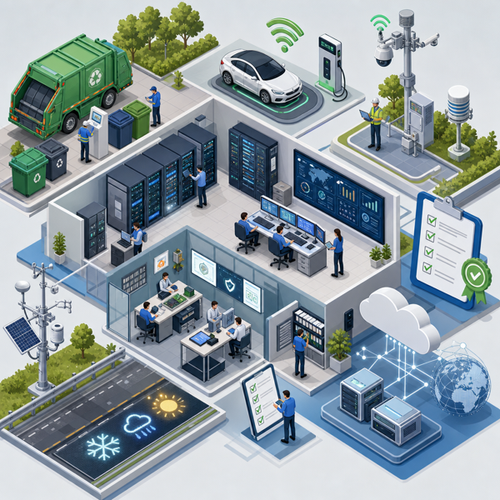
In today’s digitized and interconnected world, the need for robust information technology (IT) standards extends well beyond the tech sector—touching vital areas such as waste management, agricultural machinery, wireless charging, and road weather data. These domains rely on international standards not just for regulatory compliance, but as core pillars of business efficiency, security, reliability, and scalability. This article explores four influential IT-related standards, unraveling their technicalities, practical importance, and tangible benefits for organizations aiming to stay ahead in an ever-evolving landscape.
Overview / Introduction
Industries across the spectrum are experiencing a digital transformation, underpinned by advances in data exchange, mobile IT systems, safety protocols, and real-time sensor integration. From managing urban waste quickly and efficiently, to ensuring road safety during winter, wireless power transfer for modern devices, and safeguarding agricultural machinery, standards are the connective tissue enabling seamless operations.
Deploying such standards is no longer optional; it is a strategic imperative. Adhering to recognized IT standards boosts interoperability, protects sensitive information, enables automation, and drives business scaling. In this article, we unravel:
- The scope and core requirements of four key standards shaping IT applications in other fields
- How implementing these guidelines leads to smarter workflows, higher productivity, and better risk management
- Practical tips for businesses and organizations seeking compliance—and competitive edge
Detailed Standards Coverage
SIST EN 18158:2026 - Waste Management: Mobile IT Systems and the XML Interface Office-Mobile
Waste management - Mobile IT systems - Requirements for the XML interface Office-Mobile
Modern waste collection isn’t just about trucks on the road—it’s a digitally orchestrated interplay between office-based management solutions and mobile collection units. SIST EN 18158:2026 sets forth a standardized framework for the digital exchange of data between waste management offices and mobile units (including those following EN 840, EN 13071, and EN 1501).
The standard focuses on the structure and requirements for an XML-based interface—defining how job data, performance, status messages, and operational information are communicated between dispatchers and vehicles. While it deliberately does not dictate the transmission technology, it ensures that any office system and mobile IT device can understand and process the data unambiguously.
Businesses using registered offices and mobile disposal units can:
- Easily plan, track, and invoice collection jobs
- Maintain up-to-date personnel lists, unloading points, transponder data, and messages in real time
- Streamline accounting and auditing with comprehensive order and status reports
Key highlights:
- XML schema for job planning, execution, reporting, and status
- Object-based data structures for roles such as MasterData, OrderPlan, OrderReport, and StatusReport
- Standardized vocabularies and enumerations for seamless interoperability
Access the full standard:View SIST EN 18158:2026 on iTeh Standards
SIST EN IEC 63563-10:2026 - Qi Specification v2.0 Part 10: Magnetic Power Profile (MPP) System
Qi Specification version 2.0 - Part 10: Mpp system specification (IEC 63563-10:2025)
The wireless power transfer revolution is changing how we charge devices—from smartphones to wearables, and soon, cars and industrial sensors. SIST EN IEC 63563-10:2026 defines the Magnetic Power Profile (MPP), an extension of Qi’s widely adopted Baseline Power Profile (BPP). This technical standard enables manufacturers to create devices (power transmitters and receivers) that are interoperable at higher power levels, ensuring compatibility within the ever-growing Qi ecosystem.
This specification covers:
- Detailed coil system models and design for both transmitters (PTx) and receivers (PRx)
- Rigorous authentication protocols for device verification
- Power delivery tuning, object detection, load transients, and side effect mitigation
- Data communication requirements at the physical layer (FSK and ASK modulation)
With Qi MPP, equipment manufacturers and integrators ensure devices are future-proofed, support extended charging speeds, and align with global market expectations. For businesses, this translates to:
- Reliable, fast wireless charging products
- Lower integration costs and faster time-to-market
- Enhanced user trust and product safety
Key highlights:
- Interoperable specifications for high-power, multi-device wireless charging
- Security protocols for authentication and safe operation
- Comprehensive guidelines for electromagnetic compatibility and foreign object detection (FOD)
Access the full standard:View SIST EN IEC 63563-10:2026 on iTeh Standards
SIST EN ISO 25119-2:2023 - Concept Phase of Safety-Related Agricultural and Forestry Control Systems
Tractors and machinery for agriculture and forestry - Safety-related parts of control systems - Part 2: Concept phase (ISO 25119-2:2019)
Safety is non-negotiable in agriculture and forestry, sectors where modern machinery is increasingly automated and reliant on electronic control systems. SIST EN ISO 25119-2:2023 sets the international best practice for the concept phase of developing safety-related parts of control systems (SRP/CS) in tractors and related equipment.
The standard is crucial for equipment designers, manufacturers, and fleet operators. It outlines structured steps to:
- Define safety objectives
- Assess risks (through hazard and risk analysis)
- Develop safety architectures for electronic, programmable electronic, and related systems
- Allocate functional safety requirements to hardware and software subsystems
Notably, the standard covers electrical, electronic, and programmable electronic systems (E/E/PES), excluding purely mechanical, hydraulic, or pneumatic components. It addresses malfunctions due to electromagnetic interference, failure of protective systems, and diagnostic considerations.
Key highlights:
- Requirements and work products for the concept phase of SRP/CS
- Guidance on hazard identification, risk assessment, and assignment of safety goals
- Roadmap for system design compatible with ISO 12100 and future compliance
Access the full standard:View SIST EN ISO 25119-2:2023 on iTeh Standards
SIST-TS CEN/TS 15518-4:2024 - Winter Maintenance: Road Weather Information Systems (RWIS) Test Methods
Winter maintenance equipment - Road weather information systems - Part 4: Test methods for stationary equipment
Accurate real-time data from road weather information systems (RWIS) makes winter roads safer, reduces operational costs, and empowers authorities to respond proactively to hazards. SIST-TS CEN/TS 15518-4:2024 standardizes laboratory qualification methods for stationary components (such as sensors, controllers, and terminals) used in RWIS.
This technical specification details:
- Experimental setups and result analysis for embedded and remote road/weather sensors
- Test procedures for temperature, humidity, water film thickness, ice detection, wind speed and direction, visibility, precipitation, and more
- Certification rules, material setup guidelines, and objective, reproducible data capture
The scope ensures that every qualifying component performs reliably and accurately, even in harsh winter conditions, thus supporting critical infrastructures.
Key highlights:
- Comprehensive test methodologies for lab qualification of RWIS sensors and systems
- Protocols for both embedded and remote sensor technologies
- Strict requirements for result analysis, consistency, and traceability
Access the full standard:View SIST-TS CEN/TS 15518-4:2024 on iTeh Standards
Industry Impact & Compliance
The adoption of these information technology standards yields profound industry benefits, while also ensuring compliance with global norms and regional regulations:
For Businesses and Public Authorities:
- Increased Productivity: Automation of data flows and standard operation procedures reduces manual errors, boosts throughput, and enables rapid scaling of services.
- Enhanced Security and Data Integrity: Adherence to standards like XML schemas and authentication protocols mitigates cybersecurity risks and guarantees correct, verified data transfers.
- Interoperability: Standardized interfaces (such as those in waste management and wireless charging) facilitate seamless integration of disparate systems and equipment, both in-house and from multiple vendors.
- Regulatory Compliance: Conformance to accepted standards supports compliance with EU Directives, ISO norms, and health-and-safety mandates, reducing legal exposure and opening doors to new markets.
Risks of Non-Compliance:
- Operational inefficiency (manual workarounds, data silos)
- Legal liabilities and insurance complications
- Increased business risk from system failures or inaccurate reporting
- Barriers to market entry and customer trust
Implementation Guidance
Translating these standards from theory to practice need not be daunting. Here’s how organizations can approach implementation:
1. Assess Current Systems
- Benchmark existing processes and infrastructure against the requirements outlined in these standards.
- Identify gaps in data structures, interface protocols, and safety or testing processes.
2. Develop an Implementation Roadmap
- Prioritize compliance areas based on business impact, risk, and regulatory landscape.
- Form cross-functional teams involving IT, operational, and compliance experts.
3. Use Approved Tools and Technologies
- Ensure all software, sensors, and devices meet the technical specs and certification regimes defined in the standards.
- For XML interfaces and wireless charging, use compatible libraries and validated hardware.
4. Train Personnel and Document Workflows
- Conduct targeted training on new data standards, safety protocols, and testing procedures.
- Maintain comprehensive documentation for audits and continuous improvement.
5. Leverage Support from Industry Bodies
- Engage with your national standards committees and relevant industry groups for updates and implementation guidance.
- Use the iTeh Standards platform as an authoritative resource for standard revisions, best practices, and certification pathways.
Conclusion / Next Steps
International IT standards such as SIST EN 18158:2026, SIST EN IEC 63563-10:2026, SIST EN ISO 25119-2:2023, and SIST-TS CEN/TS 15518-4:2024 are shaping industries once deemed remote from IT. From data-driven waste collection and robust wireless charging products to safeguarding agricultural machinery and reliably monitoring winter road conditions, these standards are indispensable for organizations seeking productivity, security, and scalability.
Key recommendations:
- Treat standards implementation as a long-term investment in operational excellence and competitive advantage
- Stay proactive, not just reactive, in your compliance and digital transformation strategies
- Explore each standard in full detail on iTeh Standards to leverage their value to the maximum
By embracing these guidelines today, businesses can future-proof their operations—ensuring smoother workflows, safer environments, and sustainable growth in an increasingly digital world.
Categories
- Latest News
- New Arrivals
- Generalities
- Services and Management
- Natural Sciences
- Health Care
- Environment
- Metrology and Measurement
- Testing
- Mechanical Systems
- Fluid Systems
- Manufacturing
- Energy and Heat
- Electrical Engineering
- Electronics
- Telecommunications
- Information Technology
- Image Technology
- Precision Mechanics
- Road Vehicles
- Railway Engineering
- Shipbuilding
- Aircraft and Space
- Materials Handling
- Packaging
- Textile and Leather
- Clothing
- Agriculture
- Food technology
- Chemical Technology
- Mining and Minerals
- Petroleum
- Metallurgy
- Wood technology
- Glass and Ceramics
- Rubber and Plastics
- Paper Technology
- Paint Industries
- Construction
- Civil Engineering
- Military Engineering
- Entertainment