


Smart Standards for Safer, Greener, and Smarter Transport: A Guide to IT in Mobility and Industrial Hygiene
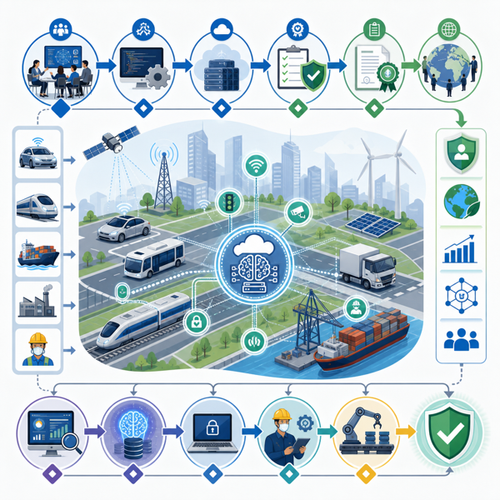
Today’s transport industry is rapidly evolving. Cities strive for sustainability, digital platforms transform logistics, and smart mobility solutions are becoming essential for both business success and public welfare. To keep pace and ensure secure, productive, and scalable growth, organizations must turn to internationally recognized standards. This article explores three pivotal IT standards—ISO 16483:2026, ISO 39004:2026, and ISO 6029-2:2026—which define the future of sustainable mobility, road traffic safety, and intelligent transport system integration. Discover how embracing these standards can increase productivity, enhance security, and help your business or city efficiently scale in a dynamic environment.
Overview / Introduction
Information Technology is revolutionizing the way people and goods move. Digital transformation in the transport sector brings smarter urban mobility, integrated platforms, real-time positioning, and new safety paradigms. But with such sweeping changes come new questions: How do cities measure the sustainability of their mobility solutions? What should service providers do to protect drivers and users in the platform economy? How can seamless positioning be achieved across complex, multimodal journeys?
This guide unpacks the latest internationally agreed standards for IT in transport, focusing on:
- Sustainable mobility and digital governance (with measurable indicators)
- Work-related road traffic safety in digital platform models
- Seamless positioning in intelligent, multimodal environments
You will learn what each standard covers, how to implement them, and why they’re now essential for businesses, municipalities, and the broader public. Whether you manage transport policy, oversee digital mobility services, or invest in smart city solutions, understanding these standards is now vital for staying competitive and compliant.
Detailed Standards Coverage
ISO 16483:2026 – Framework for Sustainable Urban Mobility Performance
Sustainable mobility and transportation — Digital governance — Indicators
ISO 16483:2026 sets out a structured framework for cities, municipalities, and local authorities to create and measure indicators that drive sustainable mobility. It’s not just about ticking boxes—it’s about meaningfully tracking how your transportation systems serve your community’s sustainability goals.
What does this standard cover?
- Methodologies for developing relevant sustainable mobility indicators
- Measurement domains for urban and intercity travel, for both people and goods
- Digital governance requirements for tracking and reporting performance
- Integration with ISO 37101 and ISO 16481 (sustainability and strategic mobility standards)
- Applicability for any city size or location, supporting global benchmarking
Key requirements and specifications:
- Identification and classification of indicators under three main categories:
- Sustainability of mobility (attractiveness, environment, resilience, social cohesion, well-being)
- Implementation of mobility projects (tracking objectives, transformation, execution)
- Performance of mobility solutions (efficiency of cluster requirements, gap analysis)
- Building a comprehensive dashboard of indicators, featuring initial status, objectives, and measured evolution
- Principles for ongoing monitoring, gap analysis, and corrective action
Who should comply?
- Urban and regional transport authorities
- City planners and policy makers
- Sustainability coordinators
- IT platform providers supporting municipal mobility
Practical implications:
- Cities can benchmark their mobility projects against international best practices
- Enables data-driven decision-making aligned with global sustainability targets
- Supports transparent reporting and citizen engagement
- Aids in funding allocation, business case development, and project justification
Notable features:
- Consistent mapping to recognized sustainability frameworks
- Sample indicator templates for direct implementation
- Focus on lifecycle, inclusivity (vulnerable populations), and digital data integration
Key highlights:
- Standardizes sustainability measurement for public and intercity transport
- Drives continuous improvement and public accountability
- Scalable for cities of any size, from global metropolises to small towns
Access the full standard:View ISO 16483:2026 on iTeh Standards
ISO 39004:2026 – Road Traffic Safety Good Practice for Digital Service Providers
Road traffic safety — Good practice for service providers using digital platform
The way people work and travel is increasingly shaped by digital platforms—think ride-hailing, on-demand deliveries, and gig economy apps. ISO 39004:2026 provides a comprehensive set of good practices enabling service providers to minimize road traffic risks, safeguard drivers, and protect other road users in this new economy.
What does this standard cover?
- Guidance on robust road traffic safety (RTS) management for all digital platform service providers
- Best practices for e-hailing, p-hailing, and any logistics or mobility service using digital interfaces
- Practical approaches for risk management, training, and stakeholder engagement
- Supports any provider aiming to go beyond compliance and demonstrate leadership in road safety
Key requirements and specifications:
- Implementation of a clear RTS policy embedded into business management
- Driver management systems (competency, health and fitness, safe behaviors)
- Vehicle safety standards: maintenance, suitability, and safety features
- Route management and monitoring (including environment and road conditions)
- Routine safety campaigns and periodic driver training
- Emergency preparedness and incident investigation guidelines
- Ongoing performance evaluation and public engagement
Who should comply?
- Digital mobility and delivery platform companies (e.g., ride-hailing, food/parcel delivery)
- Corporate fleet operators using digital platforms for logistics
- ITS and mobility startup founders
- Policy makers regulating platform-based transport
Practical implications:
- Lower risk of costly and reputation-damaging crashes
- Improved driver welfare and reduced turnover
- Enhanced customer trust
- Opportunity for alignment with ISO 39001 for formal RTS certification
Notable features:
- Leverages the Plan-Do-Check-Act (PDCA) continuous improvement model
- Covers roles of all stakeholders: providers, drivers, customers, merchants, senders, and public
- Recommends integration of technology advances (real-time tracking, driver coaching, vehicle diagnostics)
Key highlights:
- Adopts best practices proven to reduce workplace driving incidents
- Flexible: suitable for large platforms and small businesses alike
- Supports a proactive, safety-first culture
Access the full standard:View ISO 39004:2026 on iTeh Standards
ISO 6029-2:2026 – Seamless Multimodal Positioning for Intelligent Transport
Intelligent transport systems — Seamless positioning for multimodal transportation in ITS stations — Part 2: Nomadic and mobile device dataset for positioning data fusion
Digital navigation, real-time journey planning, and seamless transfers between transport modes are only possible when accurate, robust positioning underpins the system. ISO 6029-2:2026 defines technical and operational requirements for fusing data from mobile devices, vehicles, and infrastructure to provide reliable indoor/outdoor positions in multimodal journeys.
What does this standard cover?
- Requirements for sensor data fusion across three domains: nomadic devices (personal), mobility (vehicles), and infrastructure (roadside)
- Data formats and exchange protocols for seamless position, velocity, and time (PVT) information
- Use cases for data communication between devices and systems in different environments (outdoor, indoor, transition zones)
- Guidelines for handling GNSS-denied scenarios (e.g., tunnels, underground stations)
Key requirements and specifications:
- Modular architecture for integrating data from satellites (GNSS), IMUs, LiDAR/radar, Wi-Fi/Bluetooth, and more
- Robust protocols for data exchange between personal devices, vehicles, and infrastructure
- Sensor selection, calibration, and fusion algorithm recommendations
- Performance criteria for data quality, timeliness, and security
- Quality of service (QoS) benchmarks and error modeling strategies
Who should comply?
- ITS solution developers and system integrators
- Urban mobility platform providers
- Transport authorities and planners implementing smart transport infrastructure
- Mobility-as-a-Service (MaaS) operators
Practical implications:
- Guarantees real-time, reliable navigation for complex journeys
- Enables leave-no-user-behind inclusion (essential for disabled travelers)
- Facilitates secure and privacy-aware location-based services
- Enhances fraud prevention, incident response, and interoperability
Notable features:
- Covers both required and recommended data for each device domain
- Explicit provisions for data security and privacy (GDPR/HIPAA-aware)
- Technical annexes with implementation guidance and sample code
Key highlights:
- Provides the backbone for next-generation integrated mobility
- Supports global interoperability in multimodal, smart-city contexts
- Drives accuracy, efficiency, and user trust in ITS deployments
Access the full standard:View ISO 6029-2:2026 on iTeh Standards
Industry Impact & Compliance
Embracing these IT standards is no longer optional for organizations involved in mobility, transport governance, or digital mobility service provision. Compliance ensures:
- Transparent, data-driven decision-making aligning with sustainability and safety goals
- Enhanced public trust and reduced regulatory risk
- Validated approaches to security, privacy, and system reliability
- Streamlined scaling of digital and multimodal transport services
Main benefits of adoption:
- Productivity gains: Automated measurement, data-pooling, and integration cut manual work and enable smarter resource allocation.
- Security and privacy: Robust protocols and clear guidance reduce vulnerability to data breaches and ensure compliance with GDPR and other frameworks.
- Scalability: Modular, future-proof frameworks support cities and providers as their needs grow and evolve.
- Risk reduction: By implementing best practices, organizations dramatically lower their risk of accidents, public backlash, or failed projects.
Risks of non-compliance:
- Missed funding opportunities
- Reputational harm or legal sanctions
- Inability to compete or partner at the international level
Implementation Guidance
Successfully implementing these standards requires:
- Top-down commitment—Management buy-in and policy setting is critical. Assign responsible leaders and ensure sufficient resources.
- Realistic gap analysis—Review your current state against standard requirements. Identify gaps in digital governance, traffic safety protocols, and positioning system capabilities.
- Staff and stakeholder training—Conduct awareness campaigns and operational training sessions for different user groups, from project planners to drivers.
- Technology and infrastructure upgrades—Adopt suitable software platforms and hardware that meet data capture, fusion, and reporting specifications.
- Engagement and feedback—Involve end users, including drivers and travelers, in pilot programs. Use feedback to iterate and improve your implementations.
- Continuous monitoring—Deploy dashboards and performance analytics to track progress against KPIs and evolving risks.
Best practices for organizations:
- Use open standards and interoperable systems to avoid vendor lock-in
- Prioritize data protection (privacy by design)
- Leverage automation for indicator tracking and KPI reporting
- Build in incident response and corrective action mechanisms
- Regularly review new versions of the standards and stay up to date via trusted resources (like iTeh Standards)
Resources:
- Staff training modules for digital governance and safety culture
- Sample dashboards for sustainable mobility indicators
- Open-source software and middleware supporting sensor data fusion in ITS
- Partnerships with industry bodies and peer cities/organizations
Conclusion / Next Steps
The future of mobility is digital, data-driven, and integrated. By adopting ISO 16483:2026, ISO 39004:2026, and ISO 6029-2:2026, cities, digital platforms, and service providers unlock measurable gains in sustainability, safety, and operational excellence.
Key takeaways:
- International IT standards provide a common language and framework for progress
- Adopting these standards increases productivity, improves security, and future-proofs your operations
- Compliance is achievable for organizations of any size, offering competitive advantages in funding, partnerships, and public trust
Recommendations:
- Review each standard in full to understand detailed requirements
- Engage with stakeholders early and often
- Use scalable, interoperable digital tools
- Stay informed about evolving standards and guidance from recognized authorities
Ready to take the next step? Explore, review, and partner through the iTeh Standards portal. Leverage these best practices to drive your projects and keep your business, city, or organization ahead in the new era of digital mobility and industrial hygiene.
Categories
- Latest News
- New Arrivals
- Generalities
- Services and Management
- Natural Sciences
- Health Care
- Environment
- Metrology and Measurement
- Testing
- Mechanical Systems
- Fluid Systems
- Manufacturing
- Energy and Heat
- Electrical Engineering
- Electronics
- Telecommunications
- Information Technology
- Image Technology
- Precision Mechanics
- Road Vehicles
- Railway Engineering
- Shipbuilding
- Aircraft and Space
- Materials Handling
- Packaging
- Textile and Leather
- Clothing
- Agriculture
- Food technology
- Chemical Technology
- Mining and Minerals
- Petroleum
- Metallurgy
- Wood technology
- Glass and Ceramics
- Rubber and Plastics
- Paper Technology
- Paint Industries
- Construction
- Civil Engineering
- Military Engineering
- Entertainment