


Essential Language Standards in Information Technology: Fortran, SQL, and POSIX Explained
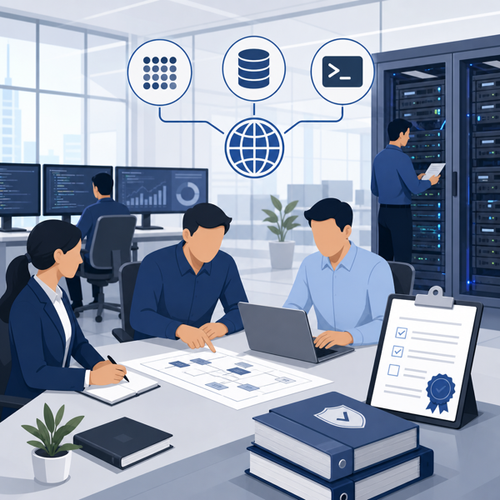
In the digital era, the diversity and complexity of programming languages and system interfaces make international standards critical for successful software engineering. For organizations adopting new technologies, these standards ensure compatibility, security, and efficiency—from legacy-supported scientific computing languages like Fortran, through intricate database queries with SQL, to the universal operating system interface defined by POSIX. In this overview, we examine four pivotal standards in the "Languages used in information technology" field, shedding light on their requirements and benefits for businesses committed to innovation and operational excellence.
Overview / Introduction
Information Technology is the backbone of modern business, powering everything from online services to advanced data analytics. As organizations increasingly rely on complex applications communicating across diverse platforms, the need for common frameworks and interoperable environments becomes paramount. This is where international standards for programming languages and operating system interfaces come in.
These standards—crafted by leading bodies like ISO, IEC, and IEEE—define precise specifications for language constructs, command interpretations, and interoperability protocols. By adopting such standards, businesses:
- Ensure cross-vendor and cross-platform compatibility
- Reduce development and maintenance costs
- Improve application reliability and scalability
- Strengthen IT security and compliance
- Future-proof investments as technologies evolve
In this article, you'll gain a clear and practical understanding of four foundational standards: the Fortran base language corrigendum, two SQL-focused database guidance documents, and the comprehensive POSIX operating system interface.
Detailed Standards Coverage
ISO/IEC 1539-1:2023/Cor 1:2026 – Fortran Base Language Technical Corrigendum
Programming languages — Fortran — Part 1: Base language — Technical Corrigendum 1
For over six decades, Fortran has played a central role in scientific and engineering computing. The standard ISO/IEC 1539-1 outlines the core syntax and semantics of Fortran’s base language. This 2026 corrigendum clarifies and corrects nuanced technical points, ensuring programs behave predictably and securely across platforms.
Key areas addressed include the behavior of intrinsic modules—specifically the correction of the IEEE_SCALB function in the IEEE_ARITHMETIC module for alignment with IEEE arithmetic standards. It also updates rules for coarrays (Fortran's parallel computing construct), restricting certain unsafe pointer usages that could risk data integrity in distributed memory scenarios.
Impacted organizations include:
- Scientific laboratories and research institutions
- High-performance computing (HPC) centers
- Enterprises maintaining or migrating legacy Fortran applications
Implementation involves reviewing codebases for deprecated constructs (like coindexed objects with pointer subcomponents) and aligning floating-point operations as prescribed. These measures enhance portability, numerical accuracy, and runtime safety—critical for reliable scientific results.
Key highlights:
- Fixes for IEEE arithmetic module conformance
- Restricts pointer usage in parallel structures
- Precisely defines coarray correspondence and allocation behavior
Access the full standard:View ISO/IEC 1539-1:2023/Cor 1:2026 on iTeh Standards
ISO/IEC 19075-2:2021/Cor 1:2026 – SQL Guidance: Time-Related Information
Information technology — Guidance for the use of database language SQL — Part 2: Time-related information — Technical Corrigendum 1
Modern applications—especially those in finance, logistics, and IoT—depend on precise and standardized handling of temporal data. The ISO/IEC 19075-2 series offers implementation guidance for databases using SQL to manage time-related information, such as timestamps, intervals, and scheduling data.
This 2026 corrigendum corrects and supplements the foundational guidance, ensuring developers and DBAs interpret SQL functions and data types for time consistently, which is essential for:
- Ensuring time-sensitive transactions are reliable and auditable
- Scheduling automation across distributed systems
- Handling complex timezone and daylight savings scenarios
Target users include businesses running:
- Global transactional databases
- Cloud services requiring coordinated universal time (UTC) tracking
- Compliance-driven sectors like banking and insurance
Implementation generally means updating SQL query logic, verifying database schemas comply with the corrected time functions, and reinforcing best practices for time zone handling and event ordering.
Key highlights:
- Clarifies SQL time functions and timestamp handling
- Enhances guidance for temporal data portability
- Addresses ambiguous cases in SQL server implementations
Access the full standard:View ISO/IEC 19075-2:2021/Cor 1:2026 on iTeh Standards
ISO/IEC 19075-5:2021/Cor 1:2026 – SQL Guidance: Row Pattern Recognition
Information technology — Guidance for the use of database language SQL — Part 5: Row pattern recognition — Technical Corrigendum 1
Detecting patterns in business data—such as sequences of stock prices, fraud signatures, or IoT sensor trends—requires advanced analytical SQL features. ISO/IEC 19075-5 is dedicated to row pattern recognition, a powerful SQL extension that allows for expressive pattern-based queries.
The 2026 corrigendum updates example syntax and fixes ambiguities around matching rules (e.g., ALL ROWS PER MATCH SHOW EMPTY MATCHES), ensuring software systems parse and execute predictive analytics queries correctly. These clarifications directly support:
- Data scientists automating event pattern recognition
- Financial analysts tracking trading patterns
- Security teams scripting anomaly detection in database logs
Implementation demands that organizations’ analytics databases and SQL engines adhere strictly to the revised syntax and operational semantics, allowing consistent and portable data mining workflows.
Key highlights:
- Updated syntax for complex pattern matching
- Clear guidance for handling empty and unmatched data sets
- Ensures interoperability for advanced SQL analytics
Access the full standard:View ISO/IEC 19075-5:2021/Cor 1:2026 on iTeh Standards
ISO/IEC/IEEE 9945:2026 – POSIX Base Specifications, Issue 8
Information technology — Portable Operating System Interface (POSIX™) Base Specifications, Issue 8
POSIX is synonymous with open system compatibility. The POSIX standard, now in its eighth major release, dictates a common set of operating system interfaces—covering command interpreters (shells), system calls, utilities, and C-language headers—to guarantee that applications and scripts run reliably across compliant UNIX-like systems.
The 2026 edition is a comprehensive update, integrating prior corrigenda and aligning with the latest transport, error handling, threading, and job control patterns. Key beneficiaries include:
- Software vendors building cross-platform applications
- Enterprises deploying heterogeneous server farms
- Compliance-driven sectors (e.g., defense, telecommunications)
Implementing POSIX ensures that in-house and third-party software runs as anticipated on any certified system. Its adoption directly supports cost-effective scaling, operational robustness, and simplifies IT security management by reducing unpredictability between execution environments.
Key highlights:
- Standardizes APIs, shells, and command utilities
- Details advanced job control and I/O conventions
- Addresses system error recovery and portability issues
Access the full standard:View ISO/IEC/IEEE 9945:2026 on iTeh Standards
Industry Impact & Compliance
International standards in programming languages and system interfaces have a profound impact on the IT industry. Adhering to ISO, IEC, and IEEE guidelines drives:
- Regulatory Compliance: Many regulatory regimes now expect IT systems to rely on standardized, audited components. Non-compliance may result in liability, security vulnerabilities, and increased operational risk.
- Interoperability: Using standardized language behavior and interfaces ensures seamless data and process integration across platforms, vendors, and cloud/on-premises environments.
- Security Posture: Standards embed best practices for safe memory management, error handling, and sandboxing, reducing exploit surfaces and data leakage risks.
- Productivity and Portability: Developers spend less time debugging environment-specific issues, accelerating project delivery and reducing total cost of ownership.
- Scalable Innovation: With common foundations, organizations can confidently adopt new technologies (e.g., cloud migration, containerization, IoT integration) without rewriting massive codebases.
Failing to comply can leave businesses exposed to unforeseen compatibility issues, security lapses, and technical debt—a costly scenario as systems grow and regulations tighten.
Implementation Guidance
Deploying these standards within your organization is best approached as a structured IT governance initiative. Here are some practical steps and best practices:
- Gap Analysis: Conduct an audit of your current systems, libraries, and codebases to identify areas not aligned with the current versions of Fortran, SQL, or POSIX standards.
- Training and Awareness: Ensure developers, DBAs, sysadmins, and architects are familiar with the latest specifications—consider professional development or certification.
- Modernization Projects: For legacy environments, create phased modernization plans, updating compilers, libraries, and database engines to compliant versions.
- Integration Testing: Implement continuous integration (CI) pipelines to verify application and system compliance as part of your DevOps process.
- Vendor Management: Require software and service vendors to demonstrate adherence to relevant standards in their products.
- Documentation and Change Management: Maintain up-to-date technical documentation on which versions and facets of each standard you implement. Track changes as specs evolve.
Recommended resources for organizations:
- Official ISO, IEC, IEEE documentation and training
- iTeh Standards platform for latest international standard text and interpretation (https://standards.iteh.ai)
- Community forums and working group bulletins
- Consultation with enterprise architects experienced in standards-driven development
Conclusion / Next Steps
International standards such as those for Fortran, SQL, and POSIX form the foundation for robust, interoperable, and future-ready information technology infrastructures. By embracing these guidelines, businesses foster scalable innovation, streamline regulatory compliance, and secure their applications against technical and operational risks.
For IT leaders, developers, and architects, the path forward is clear: continually monitor the evolution of these standards, train your teams, and leverage authoritative resources such as iTeh Standards. This ensures your technology investments remain resilient, productive, and ready for the next wave of digital transformation.
Stay ahead—explore the detailed specifications and implementation guides for each standard at standards.iteh.ai, and make standards-driven excellence a core pillar of your IT strategy.
Categories
- Latest News
- New Arrivals
- Generalities
- Services and Management
- Natural Sciences
- Health Care
- Environment
- Metrology and Measurement
- Testing
- Mechanical Systems
- Fluid Systems
- Manufacturing
- Energy and Heat
- Electrical Engineering
- Electronics
- Telecommunications
- Information Technology
- Image Technology
- Precision Mechanics
- Road Vehicles
- Railway Engineering
- Shipbuilding
- Aircraft and Space
- Materials Handling
- Packaging
- Textile and Leather
- Clothing
- Agriculture
- Food technology
- Chemical Technology
- Mining and Minerals
- Petroleum
- Metallurgy
- Wood technology
- Glass and Ceramics
- Rubber and Plastics
- Paper Technology
- Paint Industries
- Construction
- Civil Engineering
- Military Engineering
- Entertainment