

September 2026: New IEC Standard Transforms Air Cleaner Gas-Phase Testing
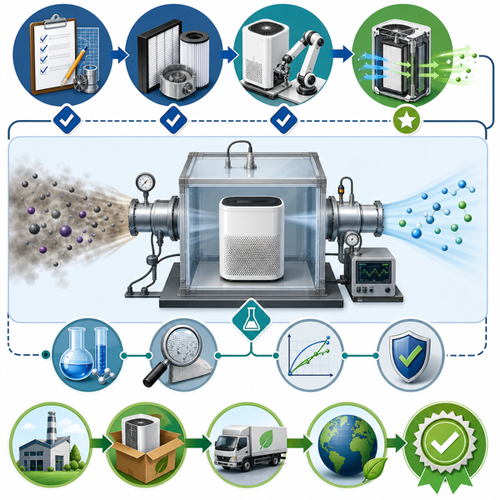
Ensuring cleaner indoor air is an ongoing challenge for manufacturers and users of household and similar electrical air cleaning appliances. The Fluid Systems and Components for General Use sector takes a major leap forward this September 2026 with the release of a significant new international specification: IEC 63086-2-2:2026. This standard introduces dedicated methods to rigorously measure gas-phase pollutant reduction, reflecting a growing need for standardized validation of air cleaner performance. For industry professionals, compliance teams, engineers, and quality assurance experts, this development marks a critical step in both market differentiation and regulatory alignment.
Overview / Introduction
Fluid systems and components—especially those designed for domestic air purification—are at the centre of health, safety, and environmental quality concerns. As urbanization increases and more time is spent indoors, the ability of air cleaning appliances to effectively reduce gas-phase pollutants (like volatile organic compounds, ammonia, formaldehyde, and nitrogen dioxide) is under intense scrutiny.
International standards ensure that products meet minimum safety, performance, and reliability criteria, providing a level competitive field for manufacturers and confidence for end users and regulators. In this timely update, you’ll learn:
- What the new IEC 63086-2-2:2026 standard covers
- Key requirements and technical highlights
- Implications for compliance, testing, and certification
- How this changes the landscape for manufacturers, compliance officers, and other industry stakeholders
Detailed Standards Coverage
IEC 63086-2-2:2026 - Measuring Gas-Phase Pollutant Reduction in Air Cleaners
Household and Similar Electrical Air Cleaning Appliances – Method for Measuring the Performance – Part 2-2: Particular Requirements for Determination of Gas-Phase Pollutant Reduction
The latest edition of IEC 63086-2-2:2026 stakes out a rigorous, repeatable procedure to assess how effectively electrically powered air cleaners reduce specific gas-phase pollutants. It’s part of the broader IEC 63086 series, which aims to harmonize testing methods across product categories, and is the first to exclusively target gas-phase contaminant mitigation—such as VOCs, aldehydes, aromatic and aliphatic hydrocarbons, terpenes, ammonia, and nitrogen dioxide.
Scope & Application: This standard is tailored for:
- Electrically powered air cleaners used in homes and similar environments (offices, schools, etc.)
- Products designed to reduce gas-phase (not just particulate) pollutants
- Manufacturers aiming to make valid performance claims in markets or regulatory settings
Key requirements and specifications include:
- Test gases: Defines six major pollutant groups and representative test gases—formaldehyde, toluene, n-heptane, d-limonene, ammonia, and nitrogen dioxide
- Test chamber conditions: Detailed criteria for test chamber airflow, concentration, recirculation, and background purity
- Concentration measurement: Integrates different analytical methods (HPLC, GC/MS, CLA, etc.) for specific gases, ensuring result accuracy
- Decay rate measurement: Outlines both natural and total decay rates (including device under test), and methodically separates natural chamber decay from device performance
- Clean Air Delivery Rate (CADR): The central performance metric, now determined for specific gas-phase pollutants
- Calculation and reporting: Robust statistical treatment for regression results, outlier handling, minimum/maximum measurable rates, and full disclosure in test reporting
Who should comply:
- Appliance manufacturers (product development, QA, R&D)
- Testing laboratories and certification bodies
- Regulatory compliance officers
- Procurement specialists (to ensure vendor claims are validated)
Practical implications:
- Objective comparison of products’ pollutant removal capability
- Enables valid marketing claims for gas-phase pollution reduction
- Aids regulators and buyers in setting specification thresholds
- Provides a harmonized protocol for third-party testing
Key highlights:
- Standardizes selection and use of representative indoor air pollutants for repeatable, global testing
- Unifies the measurement protocol for Clean Air Delivery Rate (CADR) in gas-phase pollutant removal
- Details best practices for avoiding cross-contamination and test interference between different gases
Access the full standard:View IEC 63086-2-2:2026 on iTeh Standards
Industry Impact & Compliance
What does the new standard mean for businesses? For product manufacturers and testing labs, IEC 63086-2-2:2026 becomes the new benchmark against which household air cleaner claims are validated. Adoption will be essential for:
- Product certification in many regulated and voluntary markets
- Competitive differentiation: Only products tested to this standard can credibly claim performance for gas-phase pollutant reduction
- Regulatory compliance: Authorities may use this as a reference for indoor air quality mandates
Compliance timelines:
- New products launched from Q4 2026 onwards may require certification to the new standard
- Existing products may be grandfathered in some markets, but upgrades or renewals likely need compliance
Benefits of adoption:
- Demonstrates transparent, scientific product claims
- Facilitates acceptance in international procurement and regulatory processes
- Reduces risk of litigation or product recall due to unsupported marketing
Risks of non-compliance:
- Barriers to market entry, especially for large institutional buyers
- Lack of competitive edge against certified alternatives
- Potential enforcement action where unsubstantiated claims are made
Technical Insights
Common Technical Requirements Across Fluid System Standards
Although this edition focuses on gas-phase pollutant testing, common threads run through modern air cleaning appliance standards:
- Chamber-based testing ensures consistent environmental control
- High-purity chemical sourcing for reference gases and test setups
- Standardized measurement endpoints (e.g., CADR)
- Explicit reporting and documentation requirements for traceability
Implementation Best Practices
- Pre-test chamber cleaning: Critical to avoid background contamination
- Sequential vs. parallel gas testing: Sequence matters to prevent chemical interaction and cross-contamination; test gases may require separate runs unless otherwise specified
- Instrument calibration: Regular alignment with reference gases boosts confidence in results
- Changeable filters: Ensure the device is in optimal working condition for each run; if not possible, operate with chamber ventilation until safe background levels are reached
Testing and Certification Considerations
- Choosing representative gases: Select those most relevant to the intended use environment and marketing claims
- Documentation: Ensure all deviations from the standard methods (e.g., initial concentrations, alternative analytical techniques) are clearly reported
- Third-party validation: Strongly encouraged for claims in regulated or competitive markets
Conclusion / Next Steps
IEC 63086-2-2:2026 signals a major step toward harmonized, globally accepted standards for household air cleaning appliances’ gas-phase pollutant removal. For manufacturers, lab professionals, and compliance teams, following this updated specification means greater credibility, market access, and customer confidence.
Key takeaways:
- IEC 63086-2-2:2026 sets the international baseline for gas-phase pollution reduction in air cleaners
- Success hinges on accurate, repeatable testing of key gas-phase contaminants
- Early adoption provides regulatory and market advantages
Recommended Actions:
- Access the full IEC 63086-2-2:2026 standard and incorporate its procedures in your testing protocols
- Update product development and QA processes to target the specified pollutant removal criteria
- Engage with certification bodies to align with best practices and ensure valid claims
- Stay informed on further updates in the IEC 63086 series for comprehensive compliance
Explore this and other international standards in fluid systems and air quality at iTeh Standards. Stay ahead of evolving compliance needs, and deliver verified indoor air quality to your customers.
Categories
- Latest News
- New Arrivals
- Generalities
- Services and Management
- Natural Sciences
- Health Care
- Environment
- Metrology and Measurement
- Testing
- Mechanical Systems
- Fluid Systems
- Manufacturing
- Energy and Heat
- Electrical Engineering
- Electronics
- Telecommunications
- Information Technology
- Image Technology
- Precision Mechanics
- Road Vehicles
- Railway Engineering
- Shipbuilding
- Aircraft and Space
- Materials Handling
- Packaging
- Textile and Leather
- Clothing
- Agriculture
- Food technology
- Chemical Technology
- Mining and Minerals
- Petroleum
- Metallurgy
- Wood technology
- Glass and Ceramics
- Rubber and Plastics
- Paper Technology
- Paint Industries
- Construction
- Civil Engineering
- Military Engineering
- Entertainment