

Latest Cardiac Defibrillator Safety Standard Released – September 2026 Update
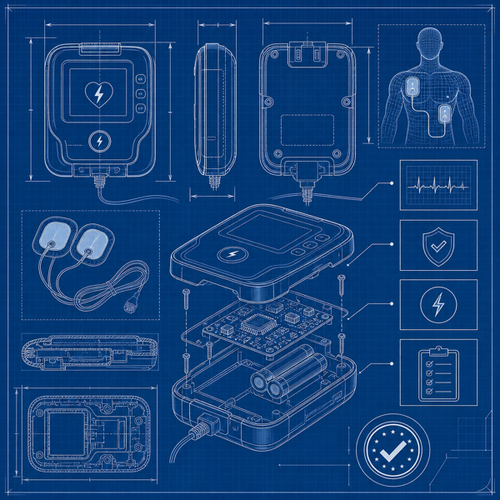
The landscape of medical device regulation continues to evolve in 2026, with health care technology professionals facing new obligations to ensure patient safety and device reliability. This September, a crucial update—the latest edition of IEC 60601-2-4:2010—brings medical electrical equipment standards, specifically for cardiac defibrillators, firmly into alignment with modern clinical practices and technical expectations. Covering expanded safety and performance criteria, the revised international standard sets a new benchmark for compliance and innovation.
Overview / Introduction
In the realm of health care technology, standards are not just checklists—they are life-saving blueprints. Cardiac defibrillators, vital for restoring heart rhythms in emergencies, must meet the strictest global safety and performance demands. The September 2026 publication of IEC 60601-2-4:2010 reflects the sector’s commitment to continuous improvement, aligning requirements with up-to-date medical and technical practices. This article outlines what’s changed, what’s required, and what professionals must know to effectively implement these standards in their organizations.
Detailed Standards Coverage
IEC 60601-2-4:2010 – Essential Safety and Performance for Cardiac Defibrillators
Medical electrical equipment – Part 2-4: Particular requirements for the basic safety and essential performance of cardiac defibrillators
IEC 60601-2-4:2010 is the international reference for ensuring that cardiac defibrillators deliver reliable, effective therapy during cardiac emergencies while protecting patients and operators from electrical, mechanical, and environmental hazards. This third edition not only supersedes the 2002 version, but also evolves substantially to keep pace with both the parent IEC 60601-1:2005 framework and advancing defibrillation technologies.
Scope and Key Requirements
IEC 60601-2-4:2010 applies to all types of cardiac defibrillators—manual or automated (AEDs)—designed to treat potentially fatal cardiac arrhythmias via an electrical pulse delivered through external or internal electrodes. The scope does not include implantable devices or standalone cardiac monitors not integral to AED rhythm detection.
Central to this standard are comprehensive risk management processes, rigorous verification of essential performance (including the accuracy and consistency of energy delivery), and meticulous marking, documentation, and operator guidance.
Key requirements include:
- Conformance with the basic safety principles and essential performance mandates of modern medical devices
- Enhanced electrical safety protocols, such as limits to patient leakage currents and robust isolation mechanisms
- Performance testing for durability under frequent and infrequent use scenarios, including battery discharge/recharge cycles and operational readiness
- Dielectric strength and insulation requirements for all high-voltage components and cables
- Alarm systems and usability measures to prevent inadvertent discharges and ensure clear, actionable operator instructions
- Robust environmental protections against spillage, moisture ingress, and sterilization requirements for reusable electrodes and accessories
Target Audience
This standard is mandatory for medical device manufacturers, electrical engineers, clinical engineers in hospitals, regulatory compliance teams, and health care institutions involved in the selection, maintenance, and procurement of cardiac defibrillators.
Notable Changes from the Previous Edition
- Alignment with IEC 60601-1:2005 and the new IEC/ISO directive structures
- Reorganized clause numbering and terminology updates for compatibility with the broader IEC 60601 family
- Additional and revised tests for dielectric strength, battery performance, mechanical flexing of cables, and alarm systems
- Clarification of requirements for automated external defibrillators (AEDs), including pre-programmed energy sequences and rhythm recognition detectors
- Stricter documentation, marking, and labelling requirements—covering everything from electrode expiry dates to environmental tolerances and operator warnings
- Detailed technical performance data publication, including waveform analysis and explicit energy accuracy tolerances
Key highlights:
- Clearly defined essential performance tests for energy delivery accuracy and rhythm recognition
- Enhanced risk management incorporation and usability guidance for real-world scenarios
- Greater transparency through detailed labelling and documentation obligations
Access the full standard:View IEC 60601-2-4:2010 on iTeh Standards
Industry Impact & Compliance
The revised cardiac defibrillator standard profoundly affects manufacturers, importers, and operators. Hospitals, ambulance services, and clinicians now have a clearer technical framework ensuring devices are both safe and effective in life-critical moments.
Compliance considerations:
- Manufacturers must rigorously validate design updates and coordinate with independent testing laboratories for type approval
- Device purchases should reference the new edition to avoid obsolescence or regulatory risk
- Maintenance policies must incorporate expanded periodic checks, instructions for use updates, and operator training aligned with the new risk management provisions
- Timelines for implementation will be dictated by national regulatory authorities, but early adoption is highly recommended to reduce liability
Benefits of adopting the standard:
- Assurance of optimal device performance during emergency resuscitation
- Reduced risk of adverse events related to electrical hazards or operator error
- Recognition of compliance facilitates international market access
Risks of non-compliance:
- Increased liability exposure in the event of patient harm
- Barriers to certification, procurement, or market entry in regulated jurisdictions
- Potential for device recalls or operational disruptions
Technical Insights
Common Technical Requirements Across the Standard
Organizations must focus on:
- Ensuring energy delivery accuracy within ±3 J or ±15% of the set value, tested across patient impedance ranges from 25 Ω to 175 Ω
- Battery reliability under real-world conditions, including comprehensive provisions for rechargeable and disposable battery scenarios, with explicit indications and minimum residual capacity after replacement alerts
- Strict dielectric strength and insulation resistance testing for high-voltage parts, safeguarding against catastrophic faults, even under single-fault conditions
- Flexibility and durability of cables and connectors, ensuring reliability under repeated stress and sterilization cycles
- Audible and visual alarm systems that cannot be muted or bypassed, providing unambiguous notice of impending shock delivery
Best Practices for Implementation
- Integrate the standard into early product design: Early compliance avoids costly redesigns and ensures device competitive advantage.
- Conduct thorough risk analysis: Regularly update risk management files to reflect clinical feedback, incident reports, and evolving use cases.
- Test to worst-case scenarios: Lab assessments must simulate high cycle discharges, depleted batteries, and challenging environmental conditions.
- Document and train: Ensure operators and maintenance staff fully understand the revised instructions and periodic maintenance protocols.
- Engage with certified testing labs: Leverage external expertise for both pre-market compliance and production consistency auditing.
Testing and Certification Considerations
- Demonstrate compliance with energy accuracy, dielectric strength, environmental resistance, and alarm systems
- Maintain detailed technical files to support regulatory submissions and market surveillance
- Include full reports on rhythm detection sensitivity, specificity, and predictive values for AED functionality
- Account for national deviations and additional requirements when marketing across borders
Conclusion / Next Steps
The September 2026 release of IEC 60601-2-4:2010 marks a pivotal moment for health care technology, adapting cardiac defibrillator safety and performance standards to current clinical, technical, and regulatory realities. Early adoption is the surest way to mitigate operational risk, sustain access to global markets, and, most importantly, safeguard patients during cardiac emergencies.
Key recommendations:
- Review current product portfolios and clinical practices against the updated requirements
- Update procurement specifications, quality management systems, and staff training to integrate the new standard
- Stay engaged with standards bodies and industry forums for emerging guidance and best practices
For the full text and to ensure complete compliance, access the official publication: View IEC 60601-2-4:2010 on iTeh Standards
Explore more international health care technology standards at iTeh Standards, and stay ahead of regulatory change.
Categories
- Latest News
- New Arrivals
- Generalities
- Services and Management
- Natural Sciences
- Health Care
- Environment
- Metrology and Measurement
- Testing
- Mechanical Systems
- Fluid Systems
- Manufacturing
- Energy and Heat
- Electrical Engineering
- Electronics
- Telecommunications
- Information Technology
- Image Technology
- Precision Mechanics
- Road Vehicles
- Railway Engineering
- Shipbuilding
- Aircraft and Space
- Materials Handling
- Packaging
- Textile and Leather
- Clothing
- Agriculture
- Food technology
- Chemical Technology
- Mining and Minerals
- Petroleum
- Metallurgy
- Wood technology
- Glass and Ceramics
- Rubber and Plastics
- Paper Technology
- Paint Industries
- Construction
- Civil Engineering
- Military Engineering
- Entertainment