


August 2026: New ISO Chemical Safety Standard for Child Care Products
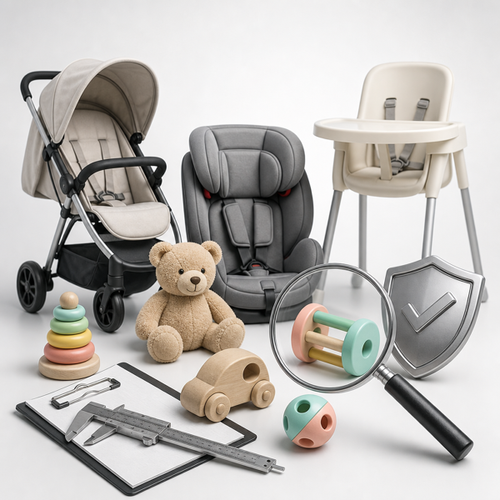
In August 2026, the safety and quality landscape for child care products advanced with the publication of a pivotal new international standard: ISO/TS 24929-3:2026, Child care articles — General safety — Part 3: Chemical hazards. Designed for manufacturers, compliance officers, quality managers, and procurement professionals across the domestic and commercial equipment, entertainment, and sports industry, this specification establishes a robust global framework for mitigating chemical risks in child care articles. With increasing scrutiny on chemical safety and regulatory expectations, the introduction of this standard elevates consumer protection and sets a clear benchmark for product stewardship in markets worldwide.
Overview
Child care articles—from feeding bottles to bassinets—are critical to the wellbeing and development of young children, but also present some of the highest risks if hazardous chemicals are present. The sector, spanning domestic and commercial equipment used at home and in professional settings, relies heavily on international standards to ensure these products are both effective and safe.
Standards like ISO/TS 24929-3:2026 address the industry's growing demand for rigorous evaluation of chemical safety, reflecting new understandings of exposure routes and evolving regulatory trends. This article provides a detailed guide to the new specification, highlighting who is impacted, the technical requirements, and implementation best practices.
Detailed Standards Coverage
ISO/TS 24929-3:2026 – Chemical Safety Requirements for Child Care Articles
Child care articles — General safety — Part 3: Chemical hazards
ISO/TS 24929-3:2026 is the latest addition to the ISO 24929 series and significantly strengthens the chemical safety framework for child care products. This technical specification establishes core principles and methods for classifying child care articles based on their chemical hazards, as well as the behavioral and physiological characteristics of children. It provides a robust methodology for risk assessment, including exposure routes (ingestion, dermal, inhalation), and specifies general safety indicators that apply to all child care articles, regardless of the specific product category.
Scope and Applicability
The standard applies broadly to all child care articles designed for or likely to be used by children—spanning feeding utensils, soothers, bathroom supplies, early education products, protective equipment, sleeping products, and transportation products. While recognizing that unique chemical hazards may be present for specific product categories (addressed in their own standards), ISO/TS 24929-3:2026 defines general chemical safety requirements and principles for managing unknown products and substances as well.
Key Requirements and Specifications
- Product Classification: Child care articles are classified by material type, accessibility, function, size, volume or mass, and children’s behaviors (e.g., mouthing, touching, inhaling). This nuanced classification helps tailor chemical controls to how children of various ages actually use products.
- Risk Assessment: The standard requires a detailed assessment of chemical hazards leveraging toxicological data, exposure risk based on children’s development, and all potential routes of exposure. Chemicals of concern are prioritized based on their risk and prevalence in materials like plastic, rubber, fabric, leather, coatings, and resin-bonded wood.
- Hazardous Chemical Restrictions:
- Migration of Elements: Maximum migration limits are set for antimony, arsenic, barium, cadmium, chromium, lead, mercury, and selenium in child care article materials, using established ISO 8124-3 procedures.
- Phthalate Control: Stringent content limits for various phthalates (including DEHP, DBP, BBP, DINP, DIDP, DNOP, and DIBP) in accessible plasticized materials, per ISO 8124-6 test methods, are specified.
- Azo Colorants: Bans aromatic amines derived from azo colorants above 30 mg/kg in textiles and leathers with child contact, referencing ISO 14362 and ISO 17234 series procedures.
- PAHs (Polycyclic-Aromatic Hydrocarbons): Restricts listed PAHs (including BaP, BeP, BaA, Chrysen, etc.) in rubber components to no more than 0.5 mg/kg, per the AfPS-GS-2019-01-PAK protocol.
- Formaldehyde: Sets strict emission limits for fabrics (20 mg/kg), leathers, and resin-bonded woods, using ISO 14184-1 and ISO 12460-1 determination methods.
- Sampling and Testing: Representative sampling and material separation are required to ensure compliance. Comprehensive test reports must detail the product identity, hazardous substances tested, test procedures, and any deviations.
- Exposure Considerations: The document provides guidance on classifying risk based on children’s developmental levels, mouthing frequency, physical accessibility, and anthropometric data, referencing exposure durations and salivation data.
Who Needs to Comply
- Manufacturers and Suppliers of child care products across domestic and commercial (hospital, nursery, retail, rental) domains
- Quality and Safety Managers responsible for product compliance and certification
- Testing Laboratories assessing chemical content in child care articles
- Procurement Professionals sourcing compliant products for commercial and institutional use
Practical Implications
- Establishes a harmonized baseline for chemical safety globally, facilitating international trade and market access
- Supports legal compliance with regional safety regulations that reference ISO standards
- Enhances consumer confidence and reduces recall risk by preventing hazardous chemical exposure
Notable Advancements
- Integrates exposure route, behavioral, and physiological data into hazard assessment
- Places strong emphasis on the relationship between general and product-specific standards for adaptation
- Specifies actions for handling unknown materials and substances, providing futureproofing as the industry evolves
Key highlights:
- Comprehensive classification and chemical hazard assessment for all child care articles
- Specific migration and content limits for elements, phthalates, azo colorants, PAHs, and formaldehyde
- Clear, replicable regimes for sampling, testing, and reporting compliance
Access the full standard:View ISO/TS 24929-3:2026 on iTeh Standards
Industry Impact & Compliance
The publication of ISO/TS 24929-3:2026 directly affects business practices throughout the supply chain for child care articles. Firms must ensure that their design, sourcing, and manufacturing processes strictly adhere to the chemical requirements and testing protocols outlined in the standard. Compliance is essential for legal market access in many regions, as custom authorities and market surveillance agencies may reference these requirements in enforcement.
Compliance Considerations and Timelines:
- Implementation Period: Organizations should audit their existing products and materials, align their testing regimes, and train teams on the new requirements—starting immediately upon publication.
- Documentation: Maintain robust, auditable test records and declarations of conformity for all affected products.
- Supply Chain Coordination: Engage with materials suppliers to verify upstream compliance, especially regarding new or changed chemical limits.
Benefits of Adoption:
- Stronger brand reputation through commitment to child safety
- Fewer product recalls and reduced liability
- Smoother market access in countries referencing ISO norms
Risks of Non-Compliance:
- Increased legal exposure and risk of penalty
- Loss of access to regulated markets
- Erosion of consumer trust and potential reputational damage
Technical Insights
Common Technical Requirements:
- Universal restrictions on specific chemicals regardless of product type
- Focus on maximum migration/content rates per material (measured in mg/kg)
- Sampling and material separation protocols to ensure representative test results
Implementation Best Practices:
- Conduct Comprehensive Material Inventories: Map all materials and suppliers to ensure traceability and rapid compliance assessment.
- Integrate Chemical Safety in Design: Involve regulatory and hazard experts in product development for early-stage risk identification and mitigation.
- Establish Regular Testing Regimes: Set up scheduled (and unscheduled) batch tests using ISO-specified test methods across all critical chemical parameters.
- Continuous Training: Ensure technical, design, and procurement teams are updated on evolving standards and chemical risks.
Testing and Certification Considerations:
- Partner with accredited laboratories familiar with ISO methodologies
- Require suppliers to provide third-party certification or test data reflecting the limits in ISO/TS 24929-3:2026
- Maintain test records in alignment with the standard’s reporting provisions for at least the product lifetime or as mandated by jurisdictional law
Conclusion & Next Steps
The release of ISO/TS 24929-3:2026 in August 2026 signifies a major step forward in global child care product safety, helping the industry proactively address chemical risk with rigor and transparency. Organizations are urged to:
- Review current product lines and supply chains for conformity with new chemical limits
- Adopt the sampling and reporting protocols in their quality systems
- Engage with stakeholders and suppliers to cascade compliance requirements
Staying ahead of regulatory expectations is more critical than ever in the domestic and commercial equipment, entertainment, and sports sector. To maintain market access and build lasting brand trust, professionals should familiarize themselves with ISO/TS 24929-3:2026 and leverage authoritative resources like iTeh Standards for ongoing updates and access to the latest international standards.
For more detailed information and access to the complete requirements and test protocols, professionals are encouraged to consult the standard directly:
Access the official specification:View ISO/TS 24929-3:2026 on iTeh Standards
Categories
- Latest News
- New Arrivals
- Generalities
- Services and Management
- Natural Sciences
- Health Care
- Environment
- Metrology and Measurement
- Testing
- Mechanical Systems
- Fluid Systems
- Manufacturing
- Energy and Heat
- Electrical Engineering
- Electronics
- Telecommunications
- Information Technology
- Image Technology
- Precision Mechanics
- Road Vehicles
- Railway Engineering
- Shipbuilding
- Aircraft and Space
- Materials Handling
- Packaging
- Textile and Leather
- Clothing
- Agriculture
- Food technology
- Chemical Technology
- Mining and Minerals
- Petroleum
- Metallurgy
- Wood technology
- Glass and Ceramics
- Rubber and Plastics
- Paper Technology
- Paint Industries
- Construction
- Civil Engineering
- Military Engineering
- Entertainment