


June 2026 Civil Engineering Standards: Railway and Bituminous Materials Updates
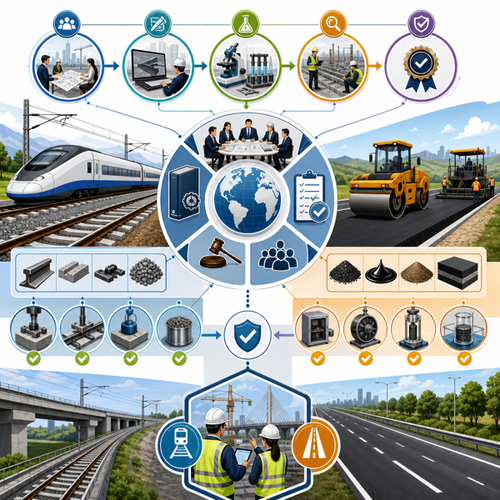
Civil engineering professionals have new benchmarks to consider with the publication of two significant European standards in June 2026. Whether working in railway infrastructure or road construction, engineers, quality managers, and compliance teams will find the latest updates in EN 16431:2026 and prEN 12697-27 essential for quality assurance, durability, and compliance in current and future projects. This release marks a leap in both railway and road materials standards, addressing contemporary challenges such as durability under heavy loads, best practices in sampling, and advanced quality control measures.
Overview / Introduction
Civil engineering connects the world, providing vital infrastructure such as railways and roads. At the heart of dependable infrastructure are industry standards—comprehensive documents that encode best practices, specify testing methodology, and safeguard public and worker safety. In this context, the June 2026 publication of new and revised standards brings fresh guidance for critical aspects of railway sleepers/bearers and bituminous road materials, ensuring that modern engineering meets increasing demands for quality, performance, and sustainability.
In this article you’ll learn:
- The scope and requirements of EN 16431:2026 (hollow sleepers and bearers for railways)
- Key changes and best practices introduced in prEN 12697-27 (sampling of bituminous mixtures)
- Who should comply and implementation tips
- Compliance and technical insights for civil engineering projects
Detailed Standards Coverage
EN 16431:2026 - Railway Applications – Infrastructure – Hollow Sleepers and Bearers
Full Title: Railway applications - Infrastructure - Hollow sleepers and bearers
EN 16431:2026 is a comprehensive standard specifying the technical and procedural requirements for hollow sleepers and bearers used in ballasted track with Vignole rails. It is particularly relevant for rail infrastructure projects seeking enhanced cable management, system integration (for switches, crossings, and detection systems), and structural performance under demanding conditions. The standard is applicable to both ballasted and ballastless tracks, with custom requirements for the latter cases.
Key aspects of the standard include:
- Design criteria for hollow sleepers/bearers (minimum 50% hollow cross-section)
- Mechanical, functional, electrical, and environmental requirements
- Testing protocols for homologation and quality control, including bending, pull-out, repeated load, and field performance tests
- Updated alignment with fastening system standards (notably EN 13481-7 series and EN ISO 22074 series)
- Enhanced procedures covering acceptance and ongoing manufacturing quality
- Traceability and requirements for dimensional, mechanical, and electrical properties
The revision supersedes EN 16431:2014, incorporating valuable field experience and aligning with new developments in fastening systems, test methods, and acceptance criteria. Clients—including railway authorities, track manufacturers, contractors, and suppliers of railway components—must ensure adherence to the updated requirements for design, procurement, and maintenance operations.
Key highlights:
- Expanded scope to integrate the newest fastening system standards and field learnings
- Detailed requirements for structure, environment, and durability under real-world conditions
- Rigorous quality control and traceability throughout the product lifecycle
Access the full standard:View EN 16431:2026 on iTeh Standards
Implementation and Compliance:
- Primarily impacts railway infrastructure designers, manufacturers, contractors, and operators
- Essential for ensuring longevity and safety of modern track infrastructure, especially where cable integration and system housing within sleepers/bearers is necessary
- Upgrades procedures for homologation, field, and manufacturing quality control
- Ensures compatibility with latest switch and crossing technologies, promoting best-in-class railway operation
Notable Differences from Previous Version:
- New clauses on interfacing and acceptance for advanced fastening systems
- Improved test and acceptance procedures reflecting real-world installation and maintenance experiences
- Additional focus on field testing and data feedback into the quality system
prEN 12697-27 - Bituminous Mixtures – Test Methods – Part 27: Sampling
Full Title: Bituminous mixtures - Test methods - Part 27: Sampling
prEN 12697-27 addresses the critical issue of representative sampling of bituminous mixtures—an essential practice for quality assurance in road and infrastructure construction. This revision consolidates and clarifies recommended methods for obtaining and handling samples from various sources, including lorry deliveries, plant stockpiles, pavers, and compacted roadways.
The standard is vital for both laboratory and site teams responsible for sampling, testing, and validation of bitumen-based materials. It prescribes best practices to ensure results accurately reflect the physical properties and composition of materials as used in roads and paved areas.
Scope and topics include:
- Apparatus selection for sampling depending on aggregate size and material format (shovel, scoop, tubes, coring)
- Procedures for collecting, combining, and packaging increments and bulk samples
- Sampling at different stages: plant, transport, pre-placement, and laid/compacted material
- Marking, logging, and packaging protocols, especially for samples containing water
- Updated procedures for sampling coated chippings and dried mixes
This edition, which is expected to supersede EN 12697-27:2017, includes more robust provisions for the marking and packaging of samples and clarifies sampling at multiple points in the supply chain.
Key highlights:
- Comprehensive guidance for sampling bituminous mixtures in all typical scenarios
- Clarified roles of increments, bulk, spot, and laboratory samples for precise testing
- Enhanced packaging and reporting methods, with particular attention to moisture-sensitive samples
Access the full standard:View prEN 12697-27 on iTeh Standards
Implementation and Compliance:
- Applicable to construction firms, laboratory technicians, quality assurance teams, and road authorities
- Ensures that testing is based on correctly drawn and preserved samples, reducing the risk of misleading results or material failures
- Supports traceability and repeatability in construction quality assessments
Notable Differences from Previous Version:
- Improved sample packaging methods, especially for materials containing water
- Expanded details for new sampling contexts and operational best practices
Industry Impact & Compliance
The publication of these standards directly boosts civil engineering sector resilience and performance.
Organizational Impact:
- For railway projects, early alignment to EN 16431:2026 regulations minimizes risk and assures future-proofing against enhanced safety, reliability, and interoperability criteria. This is particularly salient where hollow sleepers and bearers provide essential infrastructure for advanced signaling and point systems.
- For roadbuilders and laboratories, adhering to prEN 12697-27 ensures material properties are accurately assessed, fostering better construction outcomes and minimizing rework due to faulty materials.
Compliance Considerations:
- NEW requirements such as improved quality controls, field testing, and traceability demand internal process updates.
- Procurement contracts should reference the current version of each standard, ensuring suppliers and contractors deliver to the latest quality requirements.
- Timelines: As national standards bodies adopt these European Standards, companies must phase out previous versions (EN 16431:2014 and EN 12697-27:2017) by the effective withdrawal dates set by CEN.
Benefits of Adoption:
- Enhanced longevity and performance of infrastructure assets
- Reduced liability from avoidable failures and non-conforming installations
- Smoother project audits and regulatory inspections
- Strengthened reputation through commitment to best practice
Risks of Non-Compliance:
- Project delays due to failed quality checks or additional remediation
- Liability for safety and performance issues
- Higher long-term maintenance costs and operational disruptions
Technical Insights
Common Requirements & Themes: Both standards reflect the growing emphasis on precise testing and quality management throughout the infrastructure lifecycle:
- Traceability: Mandated on both sample/material and end product, supporting future reviews and audits
- Repeatability & Objectivity: Prescribed methods avoid subjective practices, raising result reliability
- Environmental Adaptation: Both offer tests or procedures relating to temperature, moisture, and site impacts
- Documentation: Comprehensive logging and reporting requirements standardize recordkeeping for legal and quality assurance needs
Implementation Best Practices:
- Train staff in new procedures as early as possible to embed best practices
- Update internal quality management systems to reference new standard numbers, version dates, and detailed requirements
- Use digital tools for sampling logs and traceability wherever feasible
- For railway projects, engage suppliers early to ensure full homologation of fastenings and infrastructure per EN 16431:2026
- For bituminous mixtures, routinely audit field sampling and packaging practices against prEN 12697-27 guides
Testing & Certification:
- Engage certified testing labs that can demonstrate up-to-date compliance to the revised standards
- Periodically review supplier certifications and traceability mechanisms to identify gaps or risks
Conclusion / Next Steps
June 2026 marks a pivotal moment for civil engineering professionals focused on quality, safety, and regulatory alignment. Both EN 16431:2026 and prEN 12697-27 present essential technical frameworks to support advanced railway and road infrastructure.
Key Takeaways:
- Stay current: update project specifications and procurement policies to refer to the new standards
- Train teams on revised procedures for sampling, testing, and product acceptance
- Use iTeh Standards as your reliable source for the latest versions, supporting documentation, and guidance
For forward-thinking organizations, now is the moment to integrate these requirements into your projects and quality systems. Explore the full texts available via iTeh Standards, and subscribe for updates to ensure your teams remain at the forefront of quality and compliance.
Categories
- Latest News
- New Arrivals
- Generalities
- Services and Management
- Natural Sciences
- Health Care
- Environment
- Metrology and Measurement
- Testing
- Mechanical Systems
- Fluid Systems
- Manufacturing
- Energy and Heat
- Electrical Engineering
- Electronics
- Telecommunications
- Information Technology
- Image Technology
- Precision Mechanics
- Road Vehicles
- Railway Engineering
- Shipbuilding
- Aircraft and Space
- Materials Handling
- Packaging
- Textile and Leather
- Clothing
- Agriculture
- Food technology
- Chemical Technology
- Mining and Minerals
- Petroleum
- Metallurgy
- Wood technology
- Glass and Ceramics
- Rubber and Plastics
- Paper Technology
- Paint Industries
- Construction
- Civil Engineering
- Military Engineering
- Entertainment