

Civil Engineering Standards: September 2026 Updates Redefine Rail, Soil, and Piping Practices
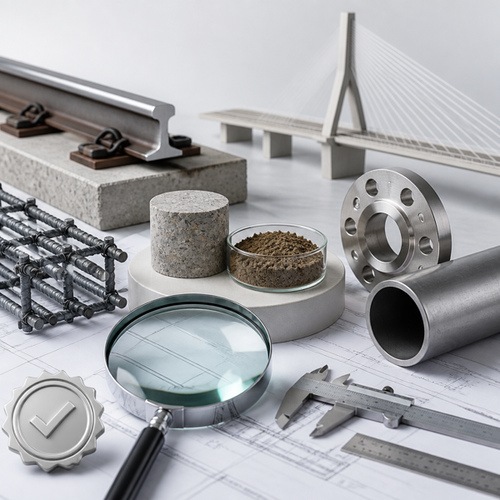
In September 2026, the civil engineering sector saw the release of four groundbreaking international standards that will influence project quality, compliance, and innovation across rail infrastructure, geotechnical earthworks, and water management. These updates reflect evolving industry demands for safety, durability, and environmental performance, and they require attention from civil engineers, quality managers, compliance officers, and procurement specialists aiming for robust regulatory alignment. The standards—EN 16727-2-1, EN 17542-4, EN 17542-5, and ISO 12051—span topics from railway noise barrier fatigue to advanced laboratory soil testing and high-performance piping. Below, we provide a comprehensive review of their scopes, requirements, and implications for practice.
Overview / Introduction
Civil engineering underpins the development and maintenance of critical infrastructure, from railways and foundations to water supply networks. Robust standards ensure safety, reliability, and environmental compatibility while streamlining procurement and interoperability. Whether testing soil collapsibility or defining pipe characteristics for potable water, these standards unify technical practices, reduce project risks, and guide compliance in an ever-more demanding regulatory landscape.
This article provides a practical, in-depth overview of four critical standards published in September 2026. Readers will gain insights into updated mechanical testing methods for railway noise barriers, sophisticated laboratory procedures for soil collapse and swelling, and a new specification for modified PVC-M pressure pipes. Key takeaways include technical requirements, industry impact, compliance strategies, and implementation best practices.
Detailed Standards Coverage
EN 16727-2-1:2026 – Mechanical Performance of Railway Noise Barriers under Dynamic Loads
Railway applications – Track – Noise barriers and related devices acting on airborne sound propagation – Non-acoustic performance – Part 2-1: Mechanical performance under dynamic loadings due to passing trains – Resistance to fatigue
Railway networks rely on noise barriers not only for acoustic protection but also for mechanical integrity under the relentless stress of high-speed trains. EN 16727-2-1:2026 defines comprehensive requirements for verifying both ultimate and serviceability limit states, focusing on fatigue resistance of noise barriers and their components. The document introduces analytical methods, test procedures, and guidance for fatigue verification not always covered by existing Eurocodes, ensuring long-term structural safety alongside optimal noise reduction.
The standard outlines three verification procedures:
- A: Small-sample tests to define detail categories (especially where Eurocodes are insufficient)
- B: Tests on global elements for fatigue limit assessment
- C: Full-scale tests simulating representative dynamic loadings from passing trains
Target stakeholders include rail infrastructure owners, design consultants, barrier system manufacturers, and quality assurance teams involved in railway construction or modernization projects. Implementation will require alignment with site-specific parameters (train speed, barrier proximity, wind zone) and coordination with Eurocodes (EN 1990, EN 1992, EN 1993, EN 1999).
Notable changes from the 2018 version include enhanced guidance on combining analytical assessments with empirical testing, improved test protocols, and expanded criteria for torsional and fatigue behaviors—reflecting lessons learned from in-service barrier performance.
Key highlights:
- Comprehensive fatigue verification covering local and global components
- Clear test methods for dynamic loading, including inertia and torsion
- Incorporates learnings for different material combinations (steel, aluminum, composite)
Access the full standard:View EN 16727-2-1:2026 on iTeh Standards
EN 17542-4:2026 – Test Method for Measurement of Collapse Potential of Soils
Earthworks – Geotechnical laboratory tests – Part 4: Test method for measurement of collapse potential of soils
Soil collapse is a critical risk factor in foundation engineering, road construction, and underground works, especially in regions prone to desiccation or sudden inundation. EN 17542-4:2026 delivers a standardized laboratory method for measuring one-dimensional collapse in unsaturated soils upon wetting. It introduces both the collapse index and the collapse potential—two parameters essential for characterizing project site soils and anticipating settlement post-construction.
The method is applicable to both undisturbed and remolded soil specimens, ensuring broad usability for site investigation, material selection, and quality control. The test details apparatus setup, specimen preparation, dimensional measurement protocols, and interpretation/reporting procedures.
This standard targets geotechnical laboratories, civil design engineers, infrastructure owners, and earthworks contractors. Its adoption enhances the accuracy of soil behavior prediction, reducing the risk of unexpected settlement and structural instability.
Key highlights:
- Standardized process for collapse testing under oedometer conditions
- Applicability to a wide range of soil types and sample conditions
- Improved reporting for clearer communication between laboratories and design teams
Access the full standard:View EN 17542-4:2026 on iTeh Standards
EN 17542-5:2026 – Measurement of One-Dimensional Swelling of Soils Under Oedometric Condition
Earthworks – Geotechnical laboratory tests – Part 5: Test method for measurement of one-dimensional swelling of soils under oedometric condition
Swelling soils (such as clays) can endanger earthworks, platforms, and foundations through expansion upon wetting. EN 17542-5:2026 describes reference laboratory methods for measuring swelling pressure, swelling index, and constrained swelling pressure in soils using oedometric equipment. The procedures are applicable to undisturbed, remoulded, recompacted, or reconstituted specimens, providing flexibility for both laboratory and field-derived samples.
The standard defines three complementary test methods:
- A: Swelling pressure determination
- B: Axial swelling index under defined vertical stress
- C: Constrained swelling pressure after wetting
It details everything from specimen preparation to displacement measurements, offering best practices for producing reproducible results. The outcomes enable engineers to make informed soil selection and remedial decisions during earthwork platform design.
Users include geotechnical labs, consulting engineers, civil contractors, and asset owners facing swelling soils or embankment expansion risks. Conforming to EN 17542-5:2026 helps prevent deformation-related failures and ensures safer, more reliable infrastructure.
Key highlights:
- Defines swelling parameters under practical field-simulated conditions
- Detailed specimen handling for maximum reliability
- Harmonized with updated sampling, water content, and density test standards
Access the full standard:View EN 17542-5:2026 on iTeh Standards
ISO 12051:2026 – Modified PVC-M Piping Systems for Pressurized Water and Drainage
Plastics piping systems for water supply and drainage and sewerage under pressure — Modified poly(vinyl chloride)(PVC-M) pipe
Water supply, drainage, and sewerage infrastructure increasingly rely on high-performance plastics. ISO 12051:2026 advances this trend with requirements for impact-resistant modified PVC (PVC-M) pipes and joints for pressurized systems. This standard addresses needs for enhanced ductility, predictable behavior under stress, and long-term durability—especially in installations where pipes are buried or used above ground (but not exposed to direct sunlight).
Key provisions address material composition, dimensional and mechanical characteristics, colour coding, pressure classification, and end-use marking. The standard also governs specimen preparation, impact resistance, ring stiffness, pressure rating, and jointing procedures for a full spectrum of water temperatures (≤ 45°C).
The standard is aimed at pipe manufacturers, utilities, plumbing engineers, and contractors responsible for the procurement and installation of water mains, service pipes, and pressurized drainage lines. It aligns with international best practices and national regulations, guiding purchasers on customizing selection to project needs.
Key highlights:
- Mandates high-impact, ductile material formulations for safety and longevity
- Covers both socketed and plain-end pipes for versatile applications
- Specifies robust marking and documentation for traceability and regulatory compliance
Access the full standard:View ISO 12051:2026 on iTeh Standards
Industry Impact & Compliance
The late-2026 civil engineering standards collectively enhance infrastructure resilience and operational safety. For railways, EN 16727-2-1:2026 ensures that noise barriers remain mechanically robust throughout their service life, reducing the risk of failure and costly maintenance. For geotechnical works, EN 17542-4 and EN 17542-5 enable more accurate site characterization, support smarter foundation designs, and help prevent post-construction settlements or failures due to swelling soils. ISO 12051:2026, meanwhile, raises the bar for reliability and versatility in water supply and drainage systems, supporting broad regulatory acceptance and reducing risk of in-service failures.
Compliance considerations:
- Timely integration into design and procurement processes is critical
- Staff should be trained on new test procedures and documentation requirements
- Non-compliance can result in project delays, safety hazards, or penalties from oversight bodies
- Early adoption may provide competitive advantages in tenders and market positioning
Benefits for organizations:
- Demonstrates commitment to safety, sustainability, and quality
- Reduces lifecycle costs by minimizing rework and premature failures
- Simplifies technical due diligence and contractual specification
Risks of non-compliance:
- Potential for catastrophic infrastructure failures
- Legal and financial liabilities
- Damage to organizational reputation
Technical Insights
Across the four standards, several technical themes and requirements emerge:
- Verification and Testing: All encourage thorough performance validation under simulated operating conditions, be it dynamic fatigue testing for noise barriers or precise laboratory measurements for soils and piping.
- Sample Integrity: Correct sample preparation—undisturbed for field realism or remolded for material studies—is pivotal for test reliability.
- Material Compatibility: EN 16727-2-1 and ISO 12051 emphasize the need for material-specific design, whether in composite noise barriers or impact-modified plastics.
- Documentation: Detailed reporting requirements both streamline quality assurance and aid regulatory review.
Implementation best practices:
- Develop or update internal laboratory protocols to match the new specifics for soil tests (collapse, swelling).
- For railway projects, integrate new fatigue test benchmarks into barrier design and procurement checklists.
- Ensure procurement documents for piping systems reference ISO 12051:2026 and confirm supplier compliance with impact and mechanical property testing.
- Use harmonized standards for international project bids to avoid rework due to local compliance gaps.
Testing and certification:
- Accredited laboratories and manufacturers should prepare to offer compliance certificates based on the new standards' test regimes.
- Early engagement with certification bodies can identify necessary upgrades to existing quality management systems.
Conclusion / Next Steps
September 2026 represents a pivotal moment in civil engineering standards development. To remain at the forefront of industry best practice, organizations should:
- Audit current workflows and materials for alignment with these new standards
- Educate engineering, procurement, and laboratory teams on revised test protocols and design criteria
- Proactively update project documentation to reference the new versions
- Leverage resources like iTeh Standards to access authoritative content, guidance, and technical support
By staying current, civil engineering professionals can deliver safer, more enduring, and regulatory-compliant infrastructure—while helping to shape tomorrow’s built environment.
Categories
- Latest News
- New Arrivals
- Generalities
- Services and Management
- Natural Sciences
- Health Care
- Environment
- Metrology and Measurement
- Testing
- Mechanical Systems
- Fluid Systems
- Manufacturing
- Energy and Heat
- Electrical Engineering
- Electronics
- Telecommunications
- Information Technology
- Image Technology
- Precision Mechanics
- Road Vehicles
- Railway Engineering
- Shipbuilding
- Aircraft and Space
- Materials Handling
- Packaging
- Textile and Leather
- Clothing
- Agriculture
- Food technology
- Chemical Technology
- Mining and Minerals
- Petroleum
- Metallurgy
- Wood technology
- Glass and Ceramics
- Rubber and Plastics
- Paper Technology
- Paint Industries
- Construction
- Civil Engineering
- Military Engineering
- Entertainment