

September 2026 Construction Materials Standards: Key Updates and New Specifications
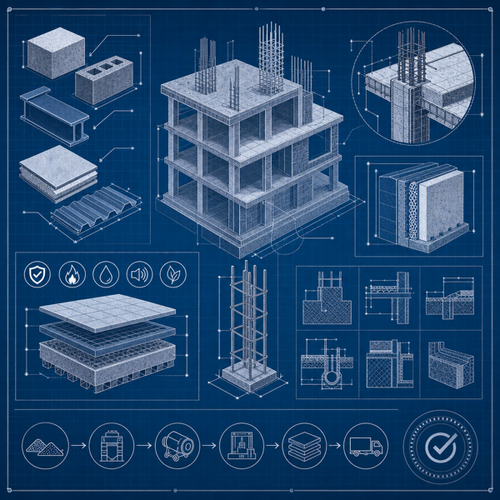
September 2026 Brings Major Updates to Construction Materials Standards
September 2026 marks a pivotal moment for the construction industry, as three critical standards have been published, introducing new technical requirements and compliance measures for building products. With advances in materials engineering, regulatory shifts, and an ongoing drive for sustainability, these latest standards from CEN are set to reshape how buildings are designed, constructed, and assessed. This article highlights the key changes in precast autoclaved aerated concrete, steel sandwich panels, and indirectly heated unvented hot water storage technology—equipping professionals with the knowledge to stay ahead in compliance, quality, and innovation.
Overview: Raising the Bar in Construction Materials
The Construction Materials sector is built on the foundation of robust, safe, and sustainable products. Standards play a vital role, offering clear specifications and requirements for manufacturers, engineers, quality managers, and procurement specialists. They ensure building products perform as intended, comply with regulations, and support public and environmental well-being.
In September 2026, three key standards were published:
- EN 12602:2026 - Precast Autoclaved Aerated Concrete Products
- EN 1993-7:2026 - Eurocode 3: Steel Structures—Sandwich Panels
- prEN 12897-1 - Indirectly Heated Unvented Hot Water Storage Tanks: General Specifications & Test Methods
This article provides a comprehensive analysis of each standard, how they impact the construction industry, and practical steps for successful adoption.
Detailed Standards Coverage
EN 12602:2026 - Precast Autoclaved Aerated Concrete Products
Full Standard Title: Precast Autoclaved Aerated Concrete Products
Scope and Purpose
EN 12602:2026 sets out detailed requirements for prefabricated reinforced elements made from autoclaved aerated concrete (AAC), with dry densities ranging from 250 to 1000 kg/m³. Whether manufactured in a factory or temporary on-site plants, these products include wall, roof, floor components, beams, piers, cladding, box culverts (non-structural), and elements for noise barriers.
The standard is intended for:
- Solid, hollow core, and multilayer wall, floor, and roof elements (structural or non-structural)
- Retaining walls and structural piers, including those in contact with soil or groundwater
- Non-loadbearing cladding elements and noise barriers
Key Requirements and Specifications
EN 12602:2026 covers:
- Material properties: Specifies AAC composition, compressive strength, dry density, modulus of elasticity, and shrinkage
- Mechanical performance: Includes testing for flexural, longitudinal, and transverse loads, as well as joint rigidity
- Fire performance: Class declaration for reaction and resistance to fire, both with and without testing
- Thermal and acoustic performance: Methods for assessing conductivity, insulation, and sound absorption
- Water performance: Permeability, resistance factor, and release of dangerous substances
- Durability: Freeze-thaw resistance, corrosion protection, and life cycle assessments
- Factory production control: Systems for verifying constancy of performance, including initial and ongoing inspections
The document includes revised and new requirements over its superseded 2016 edition:
- Updated terminology, clause structure, and environmental sustainability
- Expanded normative references and adaptation to current European regulations
- Refined requirements for acoustic, fire, and thermal performance
Target Audience
- Building product manufacturers
- Structural, civil, and design engineers
- Specifiers and procurement professionals
- Quality and compliance managers
Implementation Manufacturers must ensure products conform through full compliance testing, including factory production control, performance verifications, and clear documentation for declarations of performance (DoP). Custom and off-the-shelf products are both covered, with specific attention to environmental data and emissions.
Key highlights:
- Enhanced requirements for thermal, acoustic, and fire testing
- Life-cycle and sustainability criteria now mandatory for DoP
- Broader product types and configurations included
Access the full standard:View EN 12602:2026 on iTeh Standards
EN 1993-7:2026 - Eurocode 3: Design of Steel Structures - Part 7: Sandwich Panels
Full Standard Title: Eurocode 3 - Design of Steel Structures - Part 7: Sandwich Panels
Scope and Purpose
EN 1993-7:2026 introduces design principles for structural and self-supporting systems made of sandwich panels. These panels feature steel or stainless steel faces bonded to an insulating core (in line with EN 14509), used extensively in roofs, internal and external walls, and ceilings for buildings.
Key Requirements and Specifications
This Eurocode part:
- Supplements general Eurocode 3 provisions for steel structures
- Applies to sandwich panels as per EN 14509-1 and EN 14509-2
- Addresses the design for resistance, serviceability, durability, and fire
- Specifies design under: permanent, variable, temperature, and seismic actions
- Provides verification methods using partial factors and load combination principles
- Introduces formulae and methodologies for buckling, wrinkling, and overall system stability
- Includes criteria for design assisted by testing, especially for seismic influences
- Details durability, fastening, and connection requirements
Assumptions and Referencing
EN 1993-7 operates in concert with:
- EN 1990: Basis of design
- EN 1991: Actions on structures
- EN 14509: Insulating sandwich panels specification
It permits national annexes for adjusting regulatory parameters specific to jurisdictional requirements.
Target Audience
- Structural design engineers (steel structures sector)
- Panel and façade system manufacturers
- Construction project managers
- Regulatory bodies and certification agencies
Practical Implications The standard ensures safe, efficient, and regulatory-compliant design of sandwich panels, addressing new construction technologies and increased demands for energy efficiency and resilience. It enables cross-border harmonization across Europe and integration into digital design and BIM workflows.
Key highlights:
- First Eurocode part exclusively for sandwich panels
- Promotes reliable designs under seismic, fire, and extreme environmental actions
- Allows tailored compliance via National Annexes
Access the full standard:View EN 1993-7:2026 on iTeh Standards
prEN 12897-1 - Water Supply: Indirectly Heated Unvented (Closed) Hot Water Storage Tanks – Part 1
Full Standard Title: Water Supply - Indirectly Heated Unvented (Closed) Hot Water Storage Tanks - Part 1: General Specifications and Common Test Methods
Scope and Purpose
prEN 12897-1 defines the general requirements, construction rules, and testing procedures for indirectly heated, unvented hot water storage tanks up to 2,000 liters, used in potable water systems at pressures between 0.05 and 1.0 MPa. These tanks are fitted with safety and control devices designed to prevent the stored water temperature from reaching 95°C. The standard also recognizes backup immersion heaters.
Key Requirements and Specifications
- Construction: Mandates inspection access, drainage, and standardized hydraulic connections
- Safety Systems: Details temperature and pressure control, including:
- Non-resettable energy cut-out devices
- Pressure/temperature relief valves
- Expansion provisions and backflow prevention
- Mechanical Performance:
- Pressure testing for tanks and primary heaters at 2x design pressure
- Durability via cyclic testing (20,000 or 100,000 cycles, based on system configuration)
- Special requirements for double-walled heaters to prevent contamination
- Marking and Identification: Requires permanent labeling for identification, pressure ratings, volume, and standing loss
- Conformity and Testing: Outlines compliance via type tests, production tests, and factory production control. Criteria include volume, durability, heat exchanger performance, and conformity evaluation
- Environmental and Health Protection: Direct references to EU energy labelling and ecodesign regulations, as well as anti-contamination measures
Target Audience
- Appliance and tank manufacturers
- Building mechanical engineers
- Installers and maintenance contractors
- Regulatory authorities
Implementation Manufacturers and suppliers are to ensure full conformity through rigorous initial type, production, and factory control testing. Systems must be appropriately marked and supplied with adequate documentation for installation and safe operation.
Key highlights:
- Unified test methodology for durability and safety
- Permanent labelling and full traceability
- Direct integration with EU ecodesign and energy labelling requirements
Access the full standard:View prEN 12897-1 on iTeh Standards
Industry Impact & Compliance
How These Standards Affect Businesses
The adoption of these updated standards brings significant implications for construction businesses, manufacturers, and project stakeholders:
- Regulatory Assurance: Aligning with current legal requirements and supporting CE marking and market access, especially for European and international infrastructure projects.
- Quality & Performance: Improved design and material performance, especially with respect to fire, durability, acoustics, and sustainability.
- Safety & Environmental Protection: Enhanced consumer and occupational safety, reduced environmental impact, and responsible resource usage.
- Market Competitiveness: Products certified to the latest standards gain a competitive edge with increased customer trust and broader market reach.
Compliance Considerations and Timelines
- Immediate Assessment: Organizations should review their product lines, documentation, and QA processes in light of the new requirements, especially where older versions are superseded.
- Production Adjustments: Manufacturers may need to implement new testing practices, update production controls, and retrain personnel to ensure ongoing compliance.
- Documentation & DoP: Declarations of Performance must reflect updated specifications, notably for sustainability, acoustic, and fire properties (EN 12602:2026).
- Certification & Testing: Accredited third-party and internal labs should be consulted to verify conformity with new test methods, particularly for innovative AAC products and complex sandwich panel assemblies.
Risks of Non-Compliance
- Market Access Loss: Inability to sell or specify non-compliant goods, especially in regulated public procurement markets in the EU.
- Penalties and Delays: Non-compliance can cause costly redesigns, legal penalties, or project delays.
- Safety and Liability: Increased exposure to claims from defective or unsafe product performance.
Technical Insights
Common Technical Requirements Across the Standards
- Material and Mechanical Performance: Rigorous testing for strength, durability, and resistance to fire, water ingress, and environmental stresses.
- Sustainability and Environmental Conformity: Life cycle analysis, reduced hazardous substances, and energy-efficient product requirements.
- Traceability: Mandated documentation and marking for regulatory, warranty, and insurance purposes.
- Integrated Testing and Factory Control: Requirement for robust QA/QC systems, frequently incorporating ISO 9001 or equivalent frameworks.
Implementation Best Practices
- Gap Analysis: Compare current products, processes, and documentation to the new requirements—identify gaps early.
- Staff Training: Educate engineering, production, and compliance staff on updated test methods, documentation, and marking rules.
- Supplier Management: Ensure upstream materials (e.g., AAC, steel, composite cores) and component suppliers conform to the referenced base standards (e.g., EN 14509, EN 1487).
- Design Review and Simulation: Incorporate the latest Eurocode calculation methods and validate design assumptions with appropriate software or specialist consultation.
- Prepare DoPs and Declarations: Align all product declarations, certifications, and user documentation with the updated standards’ scope and data fields.
Testing and Certification Considerations
- Use accredited laboratories following the exact test sequences and performance benchmarks specified.
- Document every stage of the control process, especially where cyclic/durability testing or fire resistance simulations are required.
- Maintain clear chains of custody for test results and factory production control records.
Conclusion and Next Steps
Key Takeaways:
- September 2026 sees transformative changes in standards for autoclaved aerated concrete, steel sandwich panel design, and hot water storage safety.
- The new versions introduce advanced requirements for performance, fire safety, acoustic insulation, environmental impact, durability, and traceability.
- Adopting these standards ensures regulatory compliance, ongoing market relevance, and added value for clients and end-users.
Recommendations:
- Stay informed: Regularly monitor updates from CEN and industry bodies via platforms like iTeh Standards
- Conduct a gap analysis: Assess and upgrade processes, products, and technical files now.
- Train teams and refresh your supply chain: Get ahead by ensuring everyone in your organization understands what’s changed and why it matters.
- Engage with experts: Where possible, consult with standards specialists and certifiers to streamline the transition.
Ready to learn more? Explore each standard directly, access expert resources, and ensure your construction projects lead with quality, safety, and sustainability:
EN 12602:2026 on iTeh Standards
Stay up to date with all the latest construction materials standards at iTeh Standards, your trusted source for international building and safety benchmarks!
Categories
- Latest News
- New Arrivals
- Generalities
- Services and Management
- Natural Sciences
- Health Care
- Environment
- Metrology and Measurement
- Testing
- Mechanical Systems
- Fluid Systems
- Manufacturing
- Energy and Heat
- Electrical Engineering
- Electronics
- Telecommunications
- Information Technology
- Image Technology
- Precision Mechanics
- Road Vehicles
- Railway Engineering
- Shipbuilding
- Aircraft and Space
- Materials Handling
- Packaging
- Textile and Leather
- Clothing
- Agriculture
- Food technology
- Chemical Technology
- Mining and Minerals
- Petroleum
- Metallurgy
- Wood technology
- Glass and Ceramics
- Rubber and Plastics
- Paper Technology
- Paint Industries
- Construction
- Civil Engineering
- Military Engineering
- Entertainment