


July 2026: New Standards for Electrical Relays and Hybrid Indoor Cables Announced
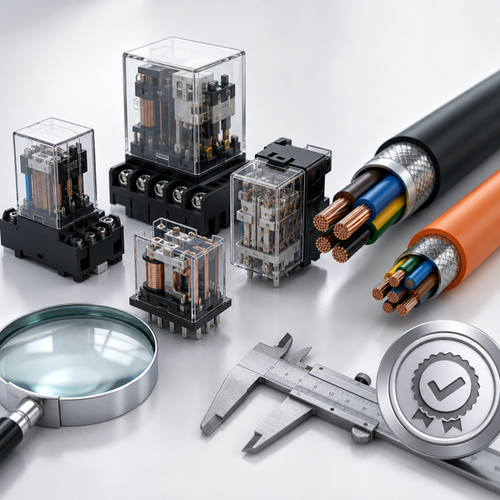
July 2026: New Standards for Electrical Relays and Hybrid Indoor Cables Announced
In July 2026, two pivotal standards have been released in the electrical engineering sector, significantly impacting areas of relay safety and advanced cabling. EN IEC 63522-41:2026 addresses insulation coordination in electrical relays, while IEC 62807-2:2026 delivers a sectional specification for hybrid indoor communication cables. These updates advance safety, reliability, and performance benchmarks in industries ranging from manufacturing automation to digital infrastructure.
Overview
The electrical engineering field depends heavily on rigorous international standards to ensure interoperability, reliability, and safety of equipment and installations. As industry innovation accelerates, new and revised standards help organizations align their processes and products with the highest levels of quality assurance and compliance. This article reviews the technical details, key requirements, and practical effects of the two newest standards—focusing on insulation coordination in relays and specifications for hybrid communication cables—equipping engineers, compliance officers, and quality managers with the actionable information needed for successful adoption.
Detailed Standards Coverage
EN IEC 63522-41:2026 – Insulation Coordination for Electrical Relays
Electrical Relays - Tests and Measurements - Part 41: Tests and Measurement Procedures - Insulation Coordination
Scope and Purpose:
EN IEC 63522-41:2026 establishes the guidelines and requirements for insulation coordination in electromechanical elementary relays, solid state, time, force-guided, and reed relays—including hybrid switching solutions. By focusing on insulation coordination, the standard mitigates the risk of electrical shock and ensures operational integrity even in demanding or polluted environments. The guidelines also cover relevant measurement and test procedures to verify relay insulation systems.
Key Requirements and Specifications:
- Clearances and Creepage Distances: Detailed formulas and tables are provided to determine minimum distances between conductive parts to withstand expected voltages and environmental pollution.
- Types of Insulation Defined: The standard distinguishes between functional, basic, supplementary, double, and reinforced insulation, specifying requirements for each. This ensures proper protection in case of single insulation failures.
- Measurement Methods: Methods for assessing clearances and creepage distances are covered, referencing both direct measurement and impulse voltage withstand tests.
- Reference Standards: Incorporates guidelines from IEC 60664 series and relies on test methods from multiple IEC documents (e.g., IEC 60068 for environmental conditions).
- Application Scenarios: Provisions are adapted for various temperature and pollution degrees, ensuring flexibility across manufacturing and application environments.
Who Needs to Comply:
- Relay manufacturers
- OEMs in industrial automation, automotive, and infrastructure
- Quality managers overseeing relay compliance
- System integrators specifying relays for hazardous or sensitive applications
Practical Implementation: Complying with EN IEC 63522-41:2026 will typically involve revisiting relay product design, updating quality assurance processes, and aligning type tests with new measurement and reporting criteria. Special consideration must be given to insulation material selection and environmental classification for installations.
Notable Changes: As an updated part of the IEC 61810 and 63522 series, this standard integrates lessons from prior editions and current best practices, especially in addressing micro-disconnection and pollution degree adaptations.
Key highlights:
- Comprehensive definition of insulation types and test procedures
- Specific requirements for clearances and creepage, tailored to pollution environment
- Enhanced focus on relay contact separation and circuit safety
Access the full standard:View EN IEC 63522-41:2026 on iTeh Standards
IEC 62807-2:2026 – Indoor Hybrid Communication Cables Sectional Specification
Hybrid Communication Cables - Part 2: Indoor Hybrid Cables - Sectional Specification
Scope and Purpose:
IEC 62807-2:2026 provides a comprehensive framework for the design, construction, performance, and testing of hybrid communication cables used indoors. These cables combine optical fibers with copper conductors—such as coaxial, paired, or quad elements—supporting both data and low-voltage currents in advanced communications systems for customer premises and network infrastructure.
Key Requirements and Specifications:
- Design and Construction: Specifies materials, structure, identification, and allowed combinations of optical and electrical transmission elements.
- Performance Requirements: Covers optical (attenuation, cut-off wavelength), electrical (DC resistance, isolation, return loss), and mechanical (tensile, crush, impact, bending) characteristics, along with environmental (temperature cycling, flame resistance, smoke density) properties.
- Test Methods: Aligns with standardized testing—for optical, mechanical, and electromagnetic compatibility—referencing a wide range of IEC and ISO documents.
- Quality Assurance & Packaging: Provides instructions for packaging procedures and criteria for batch acceptance and ongoing quality checks.
- Applications: Restricted to power distribution for communication equipment—not for grid power supply—ensuring safe use in network and data center environments.
- MICE Classifications: Fully integrates MICE (Mechanical, Ingress, Climatic, Electromagnetic) requirements from ISO/IEC 11801-1, supporting robust cable performance in various building environments.
Who Needs to Comply:
- Cable manufacturers and cable assembly houses
- Network infrastructure planners
- Data center facility engineers
- Project managers for building automation and smart infrastructure
- Installers working with structured cabling in commercial and critical facilities
Practical Implementation: The standard’s requirements will inform product development (material selection, design validation), supply chain criteria, and installation practices. Adoption will often necessitate close coordination between procurement, quality control, and onsite installation teams, particularly for system integration and post-installation testing.
Notable Changes: This is a dedicated new sectional specification (Part 2), providing clarity and granularity for indoor applications where hybrid cabling is vital for converged infrastructure and smart building deployments.
Key highlights:
- Comprehensive requirements for both optical and copper elements in hybrid cables
- Explicit environmental and fire safety specifications for indoor use
- Full alignment with leading structured cabling and performance standards
Access the full standard:View IEC 62807-2:2026 on iTeh Standards
Industry Impact & Compliance
Impact on Businesses and Projects
- Relay Manufacturers: Enhanced insulation coordination requirements may trigger design changes and new type tests. This could also result in differentiated products suitable for higher safety and performance claims.
- Cabling Providers: Adopting IEC 62807-2:2026 helps manufacturers align with the highest degree of reliability—a growing demand as indoor and smart environments become more complex and interconnected.
- System Integrators and End Users: These standards support better risk management, safety, and predictable system functionality, making it easier to plan maintenance, ensure regulatory approval, and reduce downtime.
Compliance Considerations
- Transition Timelines: Organizations should begin aligning their production and documentation with these standards now, as compliance windows are typically set within 12–24 months of publication.
- Certification Requirements: Many markets or tenders will now require evidence of compliance, adding competitive advantage for early adopters.
- Benefits of Adopting:
- Greater product reliability and fewer failures
- Reduced liability from safety or quality incidents
- Improved reputation and broader market access
Risks of Non-Compliance
- Limited access to regulated and international markets
- Increased risk of product recalls due to safety issues
- Higher total cost due to corrective actions or redesign
Technical Insights
Common Technical Themes
- Testing and Verification: Both standards place a heavy emphasis on robust, repeatable test procedures—from voltage withstand and environmental cycling to high-precision attenuation and mechanical shock.
- Environmental Resilience: Provisions such as pollution degree classification, fire, smoke, and halogen acid gas requirements ensure safety and longevity across diverse installation environments.
- Material and Design Guidance: Specific instruction on insulation types, cable construction, and compatible materials streamlines procurement and improves interoperability.
Best Practices for Implementation
- Early Gap Analysis: Review current products and processes against the new requirements, and identify necessary changes before full implementation deadlines.
- Integrated Process Approach: Involve engineering, testing, procurement, and compliance teams from the outset to avoid late-stage redesigns.
- Documentation and Recordkeeping: Meticulously document test results, compliance checks, and design modifications for traceability and audit readiness.
- Third-Party Collaboration: Leverage independent test labs where required and stay actively engaged with certification bodies.
Testing and Certification Considerations
- For Relays: Incorporate updated insulation testing as a routine part of quality assurance and release criteria.
- For Cables: Conduct detailed cross-testing of hybrid configurations to capture all optical and electrical parameters under expected environmental conditions. Monitor for evolving testing references as the standards cite a broad set of IEC norms for compliance.
Conclusion / Next Steps
These newly published standards—covering relay insulation coordination and hybrid cabling—represent a significant step forward for safety, performance, and compliance in electrical engineering. Organizations are advised to review the full text of EN IEC 63522-41:2026 and IEC 62807-2:2026, assess their current products and protocols, and plan for timely adoption. With robust implementation, companies can realize tangible benefits in risk reduction, competitive positioning, and operational peace of mind.
Recommended Actions:
- Download and study the full standards texts via iTeh Standards.
- Conduct internal training for engineering and quality teams.
- Initiate compliance assessments and product redesigns where necessary.
- Stay engaged with iTeh Standards for future technical updates and industry guidance.
For comprehensive access to these and other vital international standards, visit iTeh Standards.
Categories
- Latest News
- New Arrivals
- Generalities
- Services and Management
- Natural Sciences
- Health Care
- Environment
- Metrology and Measurement
- Testing
- Mechanical Systems
- Fluid Systems
- Manufacturing
- Energy and Heat
- Electrical Engineering
- Electronics
- Telecommunications
- Information Technology
- Image Technology
- Precision Mechanics
- Road Vehicles
- Railway Engineering
- Shipbuilding
- Aircraft and Space
- Materials Handling
- Packaging
- Textile and Leather
- Clothing
- Agriculture
- Food technology
- Chemical Technology
- Mining and Minerals
- Petroleum
- Metallurgy
- Wood technology
- Glass and Ceramics
- Rubber and Plastics
- Paper Technology
- Paint Industries
- Construction
- Civil Engineering
- Military Engineering
- Entertainment