


July 2026: New Electrical Safety Standard for Insulating Matting in Environmental Protection
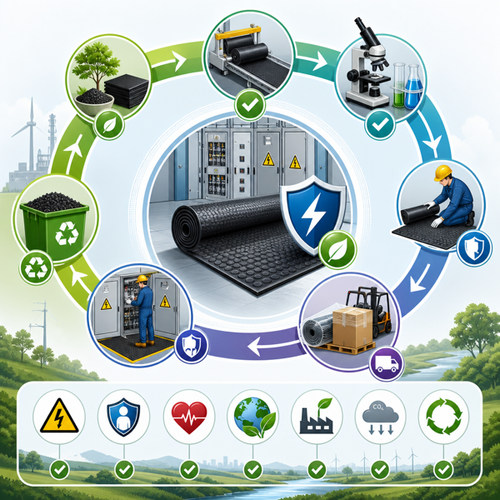
The July 2026 publication of a new international standard, FprEN IEC 61111:2026 – Live working - Electrical insulating matting, marks a significant advancement in safety for environments where protection against electrical hazards is critical. Targeting industries focused on environmental protection, occupational health, and workplace safety, this document serves as a pivotal resource for organizations striving to achieve the highest levels of compliance and worker safety. With only one—but highly influential—standard released in this period, the industry now has refreshed guidance to tackle the practical and technical challenges of electrical hazard prevention in live working conditions.
Overview / Introduction
In modern industrial and utility environments, ensuring electrical safety remains paramount to protect workers and infrastructure. Standards not only provide a baseline for legal and regulatory compliance but also offer practical frameworks that improve reliability, risk management, and operational outcomes.
The new FprEN IEC 61111:2026 standard addresses the needs of professionals responsible for specifying, procuring, and maintaining personal protective equipment (PPE) for live working scenarios. Electrical insulating matting is a frontline defense for personnel in power generation, distribution, industrial maintenance, and utility services—making adherence to this standard vital for both safety and regulatory reasons.
In this article, you will discover:
- The revised scope and technical specifics of electrical insulating matting
- Key requirements, classifications, and testing methods
- Compliance impacts and industry implications
- Best practices for implementation and ongoing risk management
- How to access the full official standard for in-depth application
Detailed Standards Coverage
FprEN IEC 61111:2026 – Live Working: Electrical Insulating Matting
Live working - Electrical insulating matting (FprEN IEC 61111:2026)
Scope and Purpose: The FprEN IEC 61111:2026 standard specifies the requirements and testing regimes for flexible electrical insulating matting used to protect workers operating on or near energized electrical installations. Matting covered by this standard is designed for use at system voltages up to 36,000 V AC and, where relevant, up to 54,000 V DC for combined AC/DC-rated products. Its purpose is to prevent dangerous current flow through the worker to ground by providing a robust, reliable insulating barrier.
Key Requirements and Specifications:
- Electrical Classification: Matting is classified into five classes (0–4), defined by maximum use voltages (1,000 to 36,000 V AC / 1,500 to 54,000 V DC). Each class is suited for different live working environments and risks.
- Physical Characteristics: Matting must be manufactured from flexible elastomeric or thermoplastic materials. Performance includes slip resistance (via corrugated or diamond-surfaced designs), strict dimensional tolerances, and resistance to mechanical, environmental, and chemical stresses (acids, oils, low/extr. low temperature).
- Marking & Traceability: Each mat must be clearly and durably marked with manufacturer identification, standard reference, date of manufacture, class designation, and applicable voltage/categorization. Rolls must be marked at least every 0.6 meters.
- Testing & Performance: Complies with rigorous mechanical and dielectric testing: puncture resistance (>70 N), slip resistance, dielectric proof and withstand voltage testing, thermal resistance, aging, and chemical resistance. Type tests are organized with conditions mirroring real-world operating environments (ambient temps: -25°C to +55°C; -40°C to +55°C for category C; humidity, atmospheric pressure controlled).
- Packaging & Instructions: Products are supplied in protective packaging with essential markings and comprehensive instructions, including guidelines for use, maintenance, disposal, and periodic proof testing (see in-service care annexes).
Who Needs to Comply:
- Electrical and utility companies (transmission and distribution)
- Industrial and manufacturing facilities with energized electrical equipment
- Maintenance/service organizations and electrical contractors
- Labs, test houses, and quality assurance professionals evaluating PPE
Practical Implementation and Notable Updates: This edition introduces substantive updates compared to previous versions (2009):
- Expanded scope and clarity on AC/DC vs. AC-only products
- Enhanced product marking for safety and traceability
- Updated slip resistance and puncture tests for real-world durability
- Refined requirements for materials and surface irregularities, tolerating only those not impacting electrical/mechanical protection
- Inclusion of environmental considerations across the product lifecycle, encouraging sustainable procurement and responsible disposal
Key highlights:
- Distinct electrical classes for tailored live working protection up to 36,000 V AC / 54,000 V DC
- Rigorous mechanical and dielectric performance criteria (puncture, slip, aging, acid/oil resistance)
- Color-coded and durable product markings for quick field identification
Access the full standard:View FprEN IEC 61111:2026 on iTeh Standards
Industry Impact & Compliance
The publication of FprEN IEC 61111:2026 directly impacts multiple industry sectors where live working protocols are essential. The new standard aligns with contemporary regulatory frameworks for occupational health and safety, providing:
- Clearer guidance for procurement: Organizations can confidently specify electrical insulating matting products that comply with harmonized European and international expectations.
- Enhanced risk management: The improved mechanical and dielectric testing protocols, plus strict marking and documentation requirements, simplify verification during safety audits and maintenance cycles.
- Defined compliance timelines: Adopters should immediately start transitioning to matting that meets the latest requirements, updating risk assessments and procurement processes accordingly. Given the standard’s intended stability period until 2029, early adoption ensures forward compliance and operational continuity.
- Mitigated liability: Demonstrating use of compliant equipment is a strong defense against potential workplace incident litigation, regulatory enforcement, and insurance claims related to electrical shock hazards.
- Operational benefits: Improved reliability and lifecycle of matting products reduce downtime and costs associated with premature failure or inadequate protective barriers.
Risks of Non-Compliance:
- Regulatory penalties and work stoppages
- Increased likelihood of workplace accidents and severe injuries or fatalities
- Insurance coverage issues
- Damage to organizational reputation and stakeholder trust
Technical Insights
Common Technical Requirements:
- Dielectric Integrity: All products must withstand voltage proof and withstand tests per their class—ensuring safety even in high-voltage conditions.
- Mechanical Robustness: Testing for puncture (force >70 N) and slip resistance mirrors workplace demands; failure in these tests means a product cannot be certified.
- Material Consistency: Only non-conductive, elastomeric or thermoplastic materials with proven resistance to environmental influences are accepted. Surface irregularities allowable only if they do not compromise protection.
- Identification & Traceability: Matting must show clear and durable markings—critical for quick on-site verification and traceability during inspections or in the event of failure analysis.
Implementation Best Practices:
- Begin with a thorough risk assessment for all live working scenarios.
- Procure insulating matting compliant with FprEN IEC 61111:2026, ensuring correct class and size for the voltage exposure levels.
- Inspect all matting on receipt and before each use (visual checks, verification of markings, and condition).
- Conduct and document periodic proof tests (as recommended in the standard’s annexes and instructions for use).
- Establish protocols for storage, maintenance, cleaning, and disposal to maximize product lifecycle and retain compliance.
Testing and Certification:
- Only matting tested per the detailed protocols in Section 5 of the standard (type tests, dielectric, mechanical, aging, thermal, and chemical) can be shipped or used.
- Certification should be demonstrated via third-party test reports or certificates of conformity aligned with FprEN IEC 61111:2026.
- Maintain all documentation for audit and incident investigation purposes.
Conclusion / Next Steps
The FprEN IEC 61111:2026 standard represents a robust update to the framework for live working safety in environmental protection and occupational health. By providing stringent test protocols, modernized material requirements, and clear compliance pathways, it ensures that organizations can both protect workers and meet their regulatory obligations.
Key takeaways:
- Early adoption reduces future risk and aligns with best practices in health and safety management.
- Procurement strategies must update to ensure only standard-compliant products are purchased and installed.
- Ongoing inspection and testing are essential—refer to the full standard and manufacturer instructions for complete operational protocols.
Recommendations for Organizations:
- Review current electrical safety PPE inventories for compliance gaps.
- Engage with qualified suppliers and labs for certified insulating matting.
- Train staff on the updated requirements and inspection procedures.
Stay at the forefront of workplace safety and regulatory compliance—access the full standard, monitor updates at iTeh Standards, and ensure your teams are protected against electrical hazards.
Categories
- Latest News
- New Arrivals
- Generalities
- Services and Management
- Natural Sciences
- Health Care
- Environment
- Metrology and Measurement
- Testing
- Mechanical Systems
- Fluid Systems
- Manufacturing
- Energy and Heat
- Electrical Engineering
- Electronics
- Telecommunications
- Information Technology
- Image Technology
- Precision Mechanics
- Road Vehicles
- Railway Engineering
- Shipbuilding
- Aircraft and Space
- Materials Handling
- Packaging
- Textile and Leather
- Clothing
- Agriculture
- Food technology
- Chemical Technology
- Mining and Minerals
- Petroleum
- Metallurgy
- Wood technology
- Glass and Ceramics
- Rubber and Plastics
- Paper Technology
- Paint Industries
- Construction
- Civil Engineering
- Military Engineering
- Entertainment