

Electrical Engineering Standards: Key September 2026 Updates for Batteries, Fuse-Holders, Short-Circuit Currents, and DGA
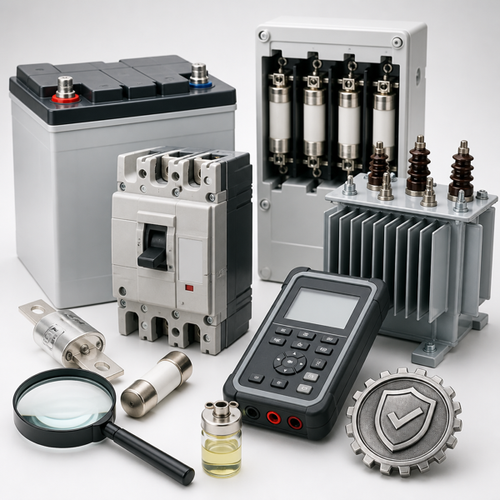
Electrical engineering professionals are facing a transformative September 2026 with the release of four landmark international standards. These new publications serve as the foundation for enhanced industrial safety, operational reliability, and technical excellence across multiple electrical domains—including energy storage, overcurrent protection, power system modeling, and transformer insulation diagnostics. Whether you are a design engineer, compliance manager, or quality supervisor, staying current with these updates ensures your operations are compliant, resilient, and future-ready.
Overview / Introduction
The electrical engineering sector underpins virtually every facet of modern infrastructure and technology. International standards in this field promote global interoperability, equipment safety, and reliable system performance. As new technologies emerge and operational contexts evolve, standards are revised or introduced to address novel risks, streamline testing, clarify requirements, and introduce best practices.
This article walks electrical engineering professionals through the essential updates from September 2026. It explains what’s new in four pivotal standards—covering secondary batteries, fuse-holders, three-phase short-circuit currents, and dissolved gas analysis in transformer esters. Readers will learn about each standard’s purpose, main requirements, who must comply, and the practical and compliance implications for the industry.
Detailed Standards Coverage
IEC 60622:2026 – Sealed Nickel-Cadmium Prismatic Rechargeable Cells and Batteries for Industrial Applications
Secondary cells and batteries containing alkaline or other non-acid electrolytes - Sealed nickel-cadmium prismatic rechargeable cells and batteries for use in industrial applications
This fourth edition of IEC 60622:2026 is an authoritative specification for sealed nickel-cadmium (NiCd) prismatic secondary single cells and battery systems deployed in a wide range of industrial applications. Its scope encompasses marking, designation, dimensions, mechanical and electrical testing, operational requirements, and criteria for performance and safety.
What does IEC 60622:2026 cover?
IEC 60622:2026 details mandatory standards for:
- Cell & battery system designation and marking (including structure, type, and terminal formats)
- Electrical performance—including robust charge/discharge protocols at standard and extreme temperatures, rapid charge characteristics, charge retention, pulse power, and cycling endurance
- Mechanical robustness, storage, venting, electrolyte retention, and overcharge safety
- Optional performance evaluations for cells designed for rapid, high cycling, or operation at temperature extremes
- Battery system construction, usage classes, and additional components like heaters, cut-off switches, and information systems
Key changes in this edition:
- Characterization options for performance at very low/high temperatures
- Enhanced guidance for CCCV charge (IU curve) methodology
- New provisions to evaluate rapid charge and high cycling cells
- Updated tests and endurance cycles for industrial reliability
This edition is crucial for battery manufacturers, integrators of backup and stationary power systems, operators of industrial vehicles, telecom infrastructure providers, and any organization specifying energy storage for critical processes or harsh environments. Quality managers must ensure their NiCd cells and batteries now conform to the latest type approval and batch acceptance test protocols, including documentation and end-of-life performance.
Key highlights:
- Comprehensive charge/discharge and endurance protocols
- Specific test sequences for type and batch approval
- Optional performance characterizations for extreme use cases
Access the full standard:View IEC 60622:2026 on iTeh Standards
IEC 60127-6:2023 – Miniature Fuse-Holders for Miniature Fuse-Links
Miniature fuses – Part 6: Fuse-holders for miniature fuse-links
The third edition (plus Amendment 1, 2026-09) of IEC 60127-6:2023 defines international safety and performance criteria for fuse-holders used in conjunction with miniature cartridge fuse-links. This includes compatibility with various fuse-link types specified in other IEC parts and is vital for protecting electric appliances and electronics, especially those intended for indoor use.
Scope and Purpose
- Specifies classifications, ratings, and marking rules for miniature fuse-holders
- Establishes requirements for protection against electric shock—with three defined protection categories (PC1, PC2, PC3)
- Provides detailed dimensions, mechanical strength, mounting configurations, and compatibility instructions with fuse-links
- Stipulates clearances, creepage distances, insulation resistance, dielectric strength, and impulse withstand voltage
- Mandates endurance, vibration, and thermal resistance testing to ensure operational safety and reliability
What’s New in this Edition?
- Increased maximum rated current from 16A to 25A
- Newly incorporated references to universal modular and special application fuse-links
- Updated marking locations and clarification of rated values
- Revised tables for voltage, current, power, insulation, and mechanical properties
This standard is critical for manufacturers of electrical and electronic appliances, panel builders, PCB designers, and component suppliers. It demands stricter design, manufacturing, and approval processes to prevent electric shock, overheating, or device failure due to improper fuse-holder selection or installation.
Key highlights:
- Enhanced protection against electric shock with specific categories
- Mechanical, thermal, and endurance testing guidance
- Compatibility requirements for a comprehensive range of fuse-link types
Access the full standard:View IEC 60127-6:2023 on iTeh Standards
EN IEC 60909-0:2026 – Short-Circuit Currents in Three-Phase AC Systems: Calculation of Currents
Short-circuit currents in three-phase AC systems – Part 0: Calculation of currents
EN IEC 60909-0:2026 is the definitive reference for calculating maximum and minimum short-circuit currents in both low and high-voltage three-phase AC power systems. Accurate short-circuit current calculation is foundational for designing, operating, and protecting transmission and distribution networks and for ensuring electrical safety in industrial and utility environments.
What this Standard Covers
- Provides a practical, validated methodology for calculating bolted (maximum) and minimum short-circuit currents at any network point
- Models balanced and unbalanced faults (three-phase, line-to-line, and line-to-earth)
- Includes updated formulas for initial, peak, symmetrical breaking, and steady-state short-circuit currents
- Details equipment modeling for overhead lines, cables, transformers (two- and three-winding), reactors, capacitors, network feeders, synchronous and asynchronous machines, and power electronic converters
- Offers annexes for practical calculation examples, database references, and factor derivations
Key Updates for 2026 Edition
- Restructuring of chapters, especially on equipment modeling (now more accessible for software implementation)
- Clarified symbols, sub/superscripts, and calculation sequences
- Modernized test assumptions for grid-integrated renewables and advanced converter-fed equipment
Utility engineers, system designers, grid consultants, and safety officers will need to read and apply these updated methods during protection coordination studies, equipment ratings selection, and incident analyses for both new and retrofitted networks up to 550 kV. Non-compliance could result in equipment damage, safety risks, or regulatory penalties.
Key highlights:
- Comprehensive, standardized approach for short-circuit analysis
- Applicability from substation and industrial power to extra-high-voltage grids
- Usable as a basis for further arc flash and protection settings analyses
Access the full standard:View EN IEC 60909-0:2026 on iTeh Standards
EN IEC 63585:2026 – Interpretation of Dissolved Gas Analysis (DGA) in Natural and Synthetic Esters
Interpretation of dissolved gas analysis (DGA) in natural and synthetic esters
Designed as the go-to reference for transformer operators and asset managers, EN IEC 63585:2026 delivers a comprehensive guideline for interpreting dissolved gas analysis (DGA) results in transformers and similar electrical equipment filled with natural or synthetic ester insulating liquids. Ester-based liquids are increasingly preferred for their environmental benefits and high fire points, but require specialized diagnostic standards distinct from those used with mineral oils.
What This Standard Provides
- Diagnostic interpretation schemes for faults using DGA in ester-filled transformers
- Guidance on typical gas generation mechanisms under electrical and thermal stresses
- Established percentile-based gas concentration guides for key fault gases (H₂, CH₄, CO, etc.)
- Algorithms for fault type identification (partial discharge, thermal, electrical discharges) using established ratio methods
- Procedures for detecting abnormal gas-increase rates, trend analysis, and regression approaches
- Practical real-world examples and database references for effective engineering judgment
Advantages and Who Should Use It
This guide is essential for:
- Transformer fleet managers, utility researchers, and predictive maintenance teams tasked with diagnosing developing faults and planning timely maintenance
- Operators in renewable energy and grid modernization projects where esters are widely deployed
- Laboratories and OEMs providing oil-sample testing and analytics
The guidance bridges the gap between general gas-in-oil standards and the specific analytical challenges and opportunities for ester-filled equipment, promoting safer, longer, and more reliable transformer operation.
Key highlights:
- Fault type identification tailored for natural and synthetic esters
- Actionable DGA concentration thresholds based on international experience
- Practical case histories for diagnostics and risk assessment
Access the full standard:View EN IEC 63585:2026 on iTeh Standards
Industry Impact & Compliance
Electrical engineering organizations across manufacturing, utilities, infrastructure, and industrial assets must act swiftly to integrate these new requirements. The September 2026 updates call for:
- Reviewing all product and system specifications for conformity with updated tests, measurements, and performance records
- Aligning procurement and supplier quality agreements to the latest test and acceptance regimes (especially crucial for batteries and fuse-holders)
- Updating design, installation, and commissioning protocols to ensure electrical protection coordination and safe operation (notably for short-circuit current studies)
- Implementing advanced monitoring and diagnostics for transformers using DGA in ester-based insulation, which reduces asset risk and enhances reliability
Compliance timelines will primarily depend on local regulatory adoption but global market entry will increasingly depend on adherence to these standards. Early adoption helps reduce liability, ensure product acceptance, and position organizations as leaders in safety and innovation.
Benefits of compliance:
- Improved product and system safety
- Reduced operational risk and downtime
- Higher asset lifecycle value through smarter diagnostics
- Increased customer and stakeholder trust
Risks of non-compliance:
- Legal penalties or loss of certification
- Financial losses from recalls or equipment failures
- Safety hazards for staff and end-users
Technical Insights
Several technical themes are central across these standards:
- Rigorous type and batch testing: Consistent, repeatable test sequences for performance verification.
- Advanced diagnostic algorithms: Use of percentile thresholds, trend analysis, and regression tools for real-time transformer health checks.
- Comprehensive protection analysis: Unified methodologies for short-circuit current calculation, spanning conventional AC equipment to grid-connected converters.
- Material and environmental advances: Adapting standards for new insulating liquids (esters), higher power ratings, and harsher operational environments.
- Documentation and traceability requirements: Emphasized in battery and fuse-holder standards, ensuring clear evidence of conformity and test outcomes.
Implementation best practices include:
- Proactive product design reviews involving engineering, compliance, and procurement teams
- Regular training on the updated standards for operational, maintenance, and testing personnel
- Systematic upgrading of design support tools (e.g., short-circuit calculation software)
- Leveraging DGA monitoring systems that align with ester-specific interpretation guidance
Testing and Certification:
- Engage with accredited labs for third-party verification and batch acceptance
- Utilize manufacturer self-certification only when internal capabilities fully match standard requirements
- Confirm all installed or newly supplied components are marked and documented as per the updated standards to avoid warranty issues or field failures
Conclusion / Next Steps
The September 2026 standards update for electrical engineering marks a pivotal moment for technical and quality professionals worldwide. With new technical frameworks for batteries, fuse-holders, grid fault current modeling, and advanced transformer diagnostics, organizations must act now to align specifications, train teams, and modernize their compliance management.
Key Takeaways:
- Four robust standards affecting core equipment and diagnostics
- Enhanced safety, performance, and conformity requirements
- New technical options and practical methodologies in each domain
Recommended actions:
- Audit your current product lines, designs, and procedures for conformity gaps
- Engage technical, procurement, and compliance teams to review and implement updates
- Explore the full standards at iTeh Standards, ensuring your documentation, processes, and tools are fully up to date
- Stay connected with standardization bodies for early insight into future changes
For continued compliance and technical leadership, bookmark iTeh Standards and subscribe to our updates.
Categories
- Latest News
- New Arrivals
- Generalities
- Services and Management
- Natural Sciences
- Health Care
- Environment
- Metrology and Measurement
- Testing
- Mechanical Systems
- Fluid Systems
- Manufacturing
- Energy and Heat
- Electrical Engineering
- Electronics
- Telecommunications
- Information Technology
- Image Technology
- Precision Mechanics
- Road Vehicles
- Railway Engineering
- Shipbuilding
- Aircraft and Space
- Materials Handling
- Packaging
- Textile and Leather
- Clothing
- Agriculture
- Food technology
- Chemical Technology
- Mining and Minerals
- Petroleum
- Metallurgy
- Wood technology
- Glass and Ceramics
- Rubber and Plastics
- Paper Technology
- Paint Industries
- Construction
- Civil Engineering
- Military Engineering
- Entertainment