

Electronics Standards Update: Key Innovations Released in September 2026
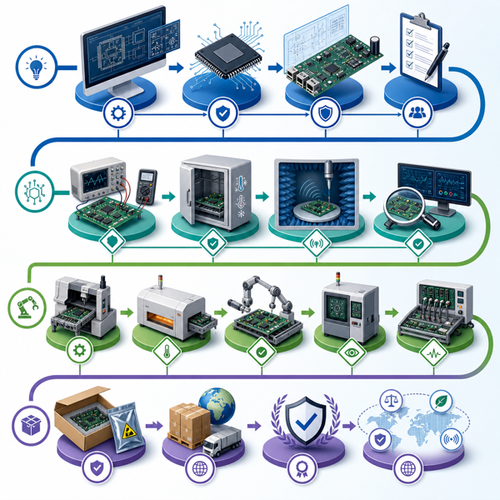
Electronics professionals have significant updates to consider this September 2026, with the release of four influential international standards. These newly published documents span from wearable device sensor methods to advanced reliability for power semiconductors, extending to surface mount resistor specifications and electromagnetic compatibility (EMC) assessments for integrated circuit transceivers. These standards signal major progress for manufacturers, design engineers, and quality managers invested in safety, performance, and regulatory alignment.
Overview
The electronics sector continues to advance at a rapid pace, with quality, interoperability, and safety as persistent drivers for innovation. International electronics standards ensure that components, devices, and systems function as intended under diverse operational and environmental contexts. By defining precise requirements and consistent evaluation methods, these standards minimize risks, support market access, and foster innovation.
In this comprehensive update, you'll find detailed coverage of the latest standards:
- Rigorous test methods for wearable electromyography sensors
- Guidelines for reliability qualification of semiconductor power modules
- Updated criteria for SMD low-power film resistors
- EMC evaluation techniques for CXPI transceivers in integrated circuits
These releases will impact device development teams, system integrators, and compliance-focused organizations across sectors like medical technology, automotive electronics, industrial automation, and consumer products.
Detailed Standards Coverage
EN IEC 63203-403-1:2026 - Test Method for Surface Electromyography Sensors in Wearables
Wearable Electronic Devices and Technologies – Part 403-1: Test Method of Surface Electromyography Sensors on Forearm and Hand for Wearable Applications
This newly published standard specifies robust test methods for evaluating surface electromyography (sEMG) sensors, crucial for wearable applications that decipher movement intentions of the forearm and hand. These sensors are predominantly used in innovative areas such as virtual reality controls, robotics, unmanned aerial vehicles, and smart home automation.
Scope and Requirements:
- Non-medical sEMG sensors that interpret voluntary muscle contractions
- Comprehensive classification covering sensor electrode types (dry, semi-dry, wet), channel configurations, and fixation techniques
- Operational test instructions including subject selection, skin preparation, sensor placement, baseline noise, SNR, distinguishability, and repeatability
- Technical specifications on sampling rates, noise filtering (20-450 Hz & 50/60 Hz), and wireless or internal signal transmission
- In-depth reporting structure for capturing testing context, setup, and results
Who Needs to Comply:
- Manufacturers of wearable electronic devices
- Developers of gesture-based controls and virtual reality interfaces
- Organizations integrating or specifying non-medical sEMG technologies
Practical Implications:
- Standardizes verification methods for reliable and replicable performance in consumer and industrial wearable technologies
- Supports early-phase product validation by reducing signal artefacts and ensuring consistency in real-world use
- Not intended for medical diagnostics or therapeutic sEMG sensors
Key highlights:
- Defines active and passive sEMG sensor criteria and classification system
- Details test environment controls and subject eligibility requirements
- Establishes robust, replicable test reports for transparency and traceability
Access the full standard:View EN IEC 63203-403-1:2026 on iTeh Standards
EN IEC 63287-3:2026 – Reliability Qualification Plans for Power Semiconductor Modules
Semiconductor Devices – Generic Semiconductor Qualification Guidelines – Part 3: Guidelines for Reliability Qualification Plans for Power Semiconductor Module
This essential standard establishes robust qualification plan guidelines for the reliability of power semiconductor modules—critical building blocks in electric vehicles, industrial machines, and energy conversion systems. These guidelines proactively address failure modes from early life to wear-out, supporting safer and more predictable operational life spans.
Scope and Requirements:
- Applies to multichip, non-clamped power semiconductor modules (excluding modules with control circuits or those for medical, military, or aerospace applications)
- Standardizes reliability qualification to address expected quality grades by application (e.g., automotive, industrial, consumer)
- Requires structured approaches for early, random, and wear-out failure determination using statistical models (e.g., bath-tub curve)
- Stipulates accelerated and stress testing (thermal cycling, voltage screening, humidity, gate oxide integrity, etc.)
- Outlines procedures for gate screening, failure distribution analysis, and wear-out verification
Who Needs to Comply:
- Semiconductor manufacturers and module suppliers
- Industry players in automotive, energy, and industrial electronics sectors
- Quality assurance and reliability engineering professionals
Practical Implications:
- Ensures reliability targets are met for the intended operating environment and use period
- Facilitates responsible lifecycle management, reducing risk of catastrophic field failures
- Provides transparent qualification pathways for compliance documentation and market acceptance
Key highlights:
- Defines application-specific quality grades for reliability testing
- Includes step-by-step guidance for accelerated lifetime and stress tests
- Incorporates advanced gate oxide breakdown and voltage screening methodology
Access the full standard:View EN IEC 63287-3:2026 on iTeh Standards
IEC 60115-8-10:2026 – SMD Low-Power Film Resistors Specification
Fixed Resistors for Use in Electronic Equipment – Part 8-10: Blank Detail Specification: Surface Mount (SMD) Low-Power Film Resistors for Assembly on Circuit Boards, for General Electronic Equipment, Classification Level G
The latest edition of IEC 60115-8-10 delivers a comprehensive blank detail specification for surface mount (SMD) low-power film resistors, built for modern circuit board assembly in a wide range of electronic products. This document is foundational for drafting detail specifications tailored to specific SMD resistor types and performance levels.
Scope and Requirements:
- Provides a standardized template for specifying SMD low-power film resistors at classification level G per IEC 60115-1:2020
- Mandates dimensional, performance, and testing parameters, including:
- Resistance values, tolerances, temperature coefficients
- Endurance, overload, ESD, thermal cycling, and climatic sequence testing
- Detailed visual acceptance and marking criteria (for components and packaging)
- Solderability tests for both traditional lead-bearing and modern lead-free assembly techniques
- Supports qualification approval procedures and ongoing quality conformance inspection
Who Needs to Comply:
- Manufacturers and suppliers of SMD resistors for general electronics
- PCB designers and assembly houses
- Component certification bodies and procurement professionals
Practical Implications:
- Ensures component efficacy and reliability across a range of board assembly operations
- Reduces field failures caused by inconsistent specifications or quality lapses
- Streamlines regulatory and client requirements for component verification
Key highlights:
- Updated to include dual solderability testing for leaded/lead-free assembly
- Introduces granular visual inspection criteria
- Provides explicit packaging, marking, and traceability requirements
Access the full standard:View IEC 60115-8-10:2026 on iTeh Standards
EN IEC 62228-7:2026 – EMC Evaluation for CXPI Transceivers
Integrated Circuits – EMC Evaluation of Transceivers – Part 7: CXPI Transceivers
A cornerstone release for the automotive and industrial integration of CXPI (Clock Extension Peripheral Interface) networks, this standard specifies detailed methods for evaluating the electromagnetic compatibility of CXPI transceivers embedded in integrated circuits.
Scope and Requirements:
- Applicable to ICs with CXPI transceivers (used in automotive, industrial communication, and signal networks)
- Specifies test and measurement setups for electromagnetic emission, immunity, impulse immunity, and direct ESD
- Defines evaluation criteria for both functional and unpowered modes
- Provides sample reporting structures, status classes, and test signal setups
- Covers requirements for coupling ports, coupling networks, and test configurations for diverse CXPI IC types
Who Needs to Comply:
- Semiconductor companies designing integrated circuit CXPI transceivers
- Automotive and industrial electronics OEMs integrating or validating CXPI modules
- EMC engineers and compliance managers
Practical Implications:
- Ensures robust interoperability and signal integrity for real-world EMC hazards
- Mitigates risk of communication failure or misoperation under electromagnetic disturbance
- Streamlines homologation and type approval processes for automotive electronics
Key highlights:
- Comprehensive EMC testing frameworks for both RF emissions and immunity
- Includes guidance for ESD, impulse immunity, and recommended test circuits
- Replaces previous 2022 edition, updating requirements for better alignment with modern automotive needs
Access the full standard:View EN IEC 62228-7:2026 on iTeh Standards
Industry Impact & Compliance
Adopting these new electronics standards will have a measurable effect on design, manufacturing, procurement, and compliance operations:
- Short-term impact: Organizations must update procurement specifications, quality protocols, and in-house testing approaches.
- Medium-term impact: Suppliers and OEMs who certify their products to these new standards will benefit from improved market acceptance, fewer warranty claims, and a stronger reputation for reliability.
- Compliance considerations:
- Early assessment and integration of updated requirements into design cycles
- Alignment of documentation and reporting with new standard templates
- Partnering with accredited laboratories for advanced test protocols when internal capacity is limited
- Anticipation of updated customer and regulatory requirements referencing these editions
- Risks of non-compliance: Delayed product launches, increased field failures, exposure to liability due to recalled or non-conforming products, and hindered access to international markets.
Benefits of adoption:
- Lower total lifecycle costs through reduced defects and longer product longevity
- Streamlined homologation and certification processes
- Enhanced interoperability, enabling participation in broader technology ecosystems
- Improved customer and stakeholder confidence in product safety and performance
Technical Insights
Common Technical Requirements
- Robustness: Stress and reliability testing (thermal, electrical, mechanical)
- Signal integrity: Noise immunity, SNR targets, and filtering specifications
- Environment: Compliance with wide-ranging climatic and operational conditions
- Documentation: Structured, reproducible reporting for test results and traceability
- Component marking, packaging, and solderability: To ensure automated handling and defect minimization
Implementation Best Practices
- Gap analysis: Review existing practices and specifications versus new standard requirements
- Test plan development: Establish internal or third-party test protocols per clause-level requirements
- Process updates: Integrate new acceptance criteria for incoming materials and production batches
- Staff training: Ensure quality, engineering, and procurement teams are briefed on the new requirements
- Continuous improvement: Use feedback from audits and test reports to refine product and process quality further
Testing and Certification Considerations
- Utilize accredited laboratories for reliability and EMC testing where required
- Leverage process automation and digital traceability to ensure all specifications (marking, solderability, performance) are captured
- Maintain full documentation sets for future compliance verification and customer audits
Conclusion & Next Steps
This September 2026 release cycle marks a leap forward for electronics standards globally. From wearable technology to power electronics, SMD components, and integrated circuit performance, these standards will shape the foundation for next-generation devices and systems.
Key takeaways:
- New guidelines are stricter, more detailed, and aligned with current technology and market needs
- Early adoption will support regulatory compliance, reputation enhancement, and business competitiveness
- Continuous monitoring of standards development ensures long-term readiness
Recommendations:
- Begin by reviewing each standard's implications on your current products and processes
- Engage with supply chain partners and in-house engineering to draft action plans for compliance
- Stay subscribed to authoritative updates from iTeh Standards and international standards organizations
Explore the full list of September 2026 electronics standards and access the latest documents at iTeh Standards. Stay ahead of regulatory and industry trends for your organization's success.
Categories
- Latest News
- New Arrivals
- Generalities
- Services and Management
- Natural Sciences
- Health Care
- Environment
- Metrology and Measurement
- Testing
- Mechanical Systems
- Fluid Systems
- Manufacturing
- Energy and Heat
- Electrical Engineering
- Electronics
- Telecommunications
- Information Technology
- Image Technology
- Precision Mechanics
- Road Vehicles
- Railway Engineering
- Shipbuilding
- Aircraft and Space
- Materials Handling
- Packaging
- Textile and Leather
- Clothing
- Agriculture
- Food technology
- Chemical Technology
- Mining and Minerals
- Petroleum
- Metallurgy
- Wood technology
- Glass and Ceramics
- Rubber and Plastics
- Paper Technology
- Paint Industries
- Construction
- Civil Engineering
- Military Engineering
- Entertainment