


Electrostatics Compliance Verification Standard Updated – June 2026 Release
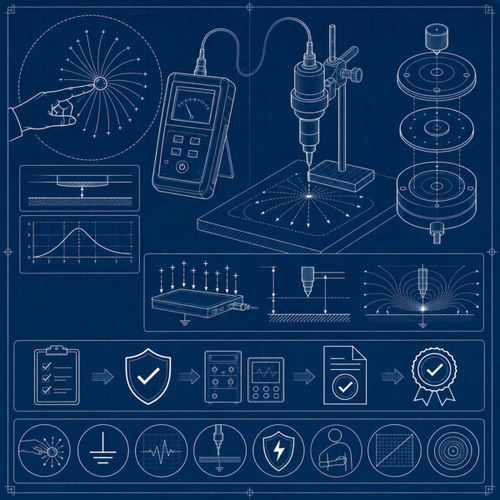
As the measurement and electronics industries continue to evolve, effective management of electrostatic discharge (ESD) remains a top concern for facilities that design, manufacture, and handle sensitive electronic devices. In June 2026, the International Electrotechnical Commission (IEC) published a significant update: IEC TS 61340-5-4:2026, focusing on practical compliance verification for ESD control programs. This release marks a substantial revision, addressing crucial needs in test methods, equipment requirements, and procedures for ensuring ongoing ESD protection.
Overview
Metrology and Measurement for Electrostatics is vital not only for product quality and reliability but also for worker safety and regulatory compliance in electronics manufacturing, laboratories, and related sectors. Standards like IEC TS 61340-5-4 provide organizations with a blueprint for systematically verifying the effectiveness of their ESD controls.
In this article, we dive into the new edition of IEC TS 61340-5-4, covering its major updates, practical applications, technical requirements, and the broader industry implications. Readers will leave with actionable insights and a clear understanding of how to align their compliance practices with the latest international expectations.
Detailed Standards Coverage
IEC TS 61340-5-4:2026 – Compliance Verification in ESD Control Programs
Electrostatics – Part 5-4: Protection of Electronic Devices from Electrostatic Phenomena – Compliance Verification
The newly updated IEC TS 61340-5-4:2026 sets the foundation for compliance verification in ESD (Electrostatic Discharge) control programs. This technical specification describes practical testing methods and conditions for ESD control items, supporting industries that require precise ESD management—including electronics manufacturing, assembly, testing labs, clean rooms, and other facilities handling ESD-sensitive devices (ESDS).
Scope and Objectives
IEC TS 61340-5-4 focuses squarely on compliance verification—the operational checking of ESD controls (such as wrist straps, flooring, garments, racks, and mobile equipment) as used in the field, rather than under controlled laboratory qualification conditions. It provides:
- Step-by-step test procedures for evaluating ESD control items in real-world usage
- Recommendations for test equipment selection, calibration, and ongoing verification
- Guidance for troubleshooting common verification or instrumentation issues
- Flexibility for organizations to adopt, adapt, or supplement the suggested procedures to match their specific ESD program requirements, as long as these adaptations are clearly documented within their plan
Importantly, product qualification (i.e., laboratory performance validation) is excluded from this document; the focus is strictly on ongoing field verification.
Key Requirements and Specifications
This edition introduces several important updates and refinements:
- Significant technical revision: Content is fully updated and reformatted, with enhanced clarity and breadth
- Comprehensive procedures for verifying ESD control items, including grounding and bonding systems, personnel and footwear systems, EPA (ESD Protected Area) conditions, and more
- Detailed test equipment guidance: Specifies standards for resistance meters, field meters, electrodes, voltmeters, and various probes—including calibration and verification criteria
- Annexes: Offer practical advice on test frequency, equipment verification, troubleshooting, and specifics for challenging cases (garments, footwear, hand tools, mobile equipment, gloves, and continuous monitoring devices)
Organizations can either adopt the procedures as written or tailor them to their internal ESD control plans—provided that any deviations in methodology or equipment are meticulously documented for audit and traceability.
Who Needs to Comply?
IEC TS 61340-5-4 is relevant for:
- Electronics manufacturers and assemblers
- Semiconductor facilities
- Research laboratories
- Calibration and metrology centers
- Repair and service organizations
- Any workplace with an ESD-sensitive environment (EPA)
Quality managers, ESD coordinators, compliance officers, and engineering teams will find this standard particularly beneficial for aligning practice with international expectations and customer requirements.
Implementation and Notable Changes
Effective implementation means integrating these procedures into daily, weekly, or monthly verification routines, depending on the item and risk profile of your operation. Notable changes from previous versions include:
- Comprehensive technical overhaul and full content reformat
- Clear distinction between qualification testing and compliance verification
- Stronger emphasis on field-adapted, non-disruptive, and repeatable testing methods
- Broader and deeper equipment-specific criteria
- Expanded troubleshooting guidance for both test items and instruments
Key highlights:
- Field-oriented, repeatable test methods for all ESD-critical items
- Updated equipment specifications and procedural guidance
- Flexibility to adapt procedures, provided documentation is robust
Access the full standard:View IEC TS 61340-5-4:2026 on iTeh Standards
Industry Impact & Compliance
Why This Standard Matters for Your Business
Adherence to IEC TS 61340-5-4:2026 is a key factor in maintaining effective ESD protection and audit readiness across the electronics and measurement sector. This standard provides the structure and rigor necessary to:
- Guarantee ongoing protection of ESD-sensitive devices throughout handling and processing
- Satisfy global regulatory and customer audit requirements
- Minimize the risks of production losses and latent device failures due to undiagnosed ESD issues
- Enable easier troubleshooting in the event of test failures or anomalies
- Document compliance for both internal policies and external certifications
Compliance Considerations
Organizations adopting this new specification should:
- Update ESD control program documentation to reference IEC TS 61340-5-4:2026, including test plans, equipment lists, and personnel roles
- Train personnel in correct usage of updated procedures and equipment
- Audit and calibrate test equipment regularly as per the expanded recommendations
- Schedule and record compliance verification routines in alignment with Annex A (for frequency guidance) and industry best practices
- Review and document any deviations or procedural adaptations used within the organization
Benefits of adoption include:
- Reliable operation of critical ESD controls
- Reduced downtime and improved first-pass yield rates
- Greater confidence during customer or regulatory inspections
- Enhanced organizational reputation for quality and reliability
Risks of non-compliance:
- Increased likelihood of latent or catastrophic ESD damage to devices
- Potential audit failures and loss of market access
- Product recalls or warranty costs associated with ESD failures
- Reputational harm due to poor quality controls
Technical Insights
Common Technical Requirements
Across the procedures outlined in IEC TS 61340-5-4, certain technical requirements and best practices apply universally:
- Pre-test equipment verification: Every measurement relies on the accuracy, range, and calibration status of the instruments used. Annex B provides practical, stepwise verification instructions for key equipment types (resistance meters, field meters, ohmmeters, voltmeters, footwear electrodes, and more).
- Repeatability and reproducibility: Testing must be conducted without altering or cleaning the ESD control item beforehand to reflect true as-found conditions.
- Field suitability: All tests are designed to be non-destructive and minimally disruptive to normal operations.
- Documentation: Every compliance test and any procedural deviation must be recorded in detail, ensuring traceability and facilitating troubleshooting.
Implementation Best Practices
- Integrate routine compliance verification into facility maintenance or quality assurance schedules.
- Train operators and maintenance staff on both the procedures and the rationale for each test—reducing user error and improving overall program outcomes.
- Use equipment that meets or exceeds the specification for measurement range and accuracy. If custom electrodes or alternatives are used for unique items, document their specifications and justification as required by the standard.
- Take advantage of the guidance on troubleshooting, which includes resolving common issues such as equipment drift, faulty leads, or contamination on measurement electrodes.
Testing and Certification Considerations
IEC TS 61340-5-4 does not directly provide for product or system certification, but its adoption and meticulous use of its procedures will support successful quality audits and, depending on regional or industry-based schemes, may facilitate third-party certification for ESD programs under ISO, IEC, or customer requirements.
For companies already certified under IEC 61340-5-1 or similar standards, adoption of IEC TS 61340-5-4:2026 for compliance verification significantly strengthens the integrity of your ESD management system.
Conclusion & Next Steps
The June 2026 release of IEC TS 61340-5-4:2026 signals a renewed focus on robust, practical, and traceable verification of ESD controls across the electronics and metrology industries. The standard’s detailed procedures, updated test equipment guidance, and comprehensive troubleshooting information empower organizations to:
- Enhance ESD protection through scientifically rigorous, field-adapted test procedures
- Meet the expectations of customers, regulators, and quality assurance programs worldwide
- Align documentation and daily practice with the latest international requirements
Recommendations for organizations:
- Download and review the full standard
- Train ESD compliance personnel to the updated methods
- Review and update your compliance verification plans and documentation
- Evaluate and calibrate your test equipment inventory
- Schedule a gap analysis or internal audit against the new specification’s requirements
Access the full standard and stay updated:View IEC TS 61340-5-4:2026 on iTeh Standards
Stay ahead in electrostatics and measurement control by incorporating the latest IEC guidance—your reputation, product reliability, and customer trust depend on it.
Categories
- Latest News
- New Arrivals
- Generalities
- Services and Management
- Natural Sciences
- Health Care
- Environment
- Metrology and Measurement
- Testing
- Mechanical Systems
- Fluid Systems
- Manufacturing
- Energy and Heat
- Electrical Engineering
- Electronics
- Telecommunications
- Information Technology
- Image Technology
- Precision Mechanics
- Road Vehicles
- Railway Engineering
- Shipbuilding
- Aircraft and Space
- Materials Handling
- Packaging
- Textile and Leather
- Clothing
- Agriculture
- Food technology
- Chemical Technology
- Mining and Minerals
- Petroleum
- Metallurgy
- Wood technology
- Glass and Ceramics
- Rubber and Plastics
- Paper Technology
- Paint Industries
- Construction
- Civil Engineering
- Military Engineering
- Entertainment