

September 2026: New Standards Advance Energy and Heat Transfer Engineering
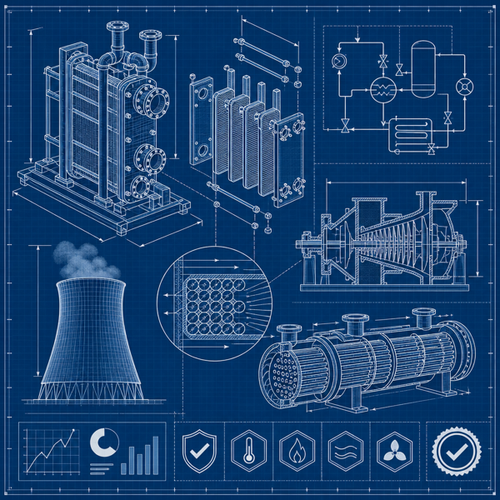
September 2026 Sees Significant Energy and Heat Transfer Engineering Standards Updates
The Energy and Heat Transfer Engineering sector advances rapidly, and regulatory frameworks must keep pace. September 2026 brings the publication of five new international standards that address modern challenges in heat pump safety, test methodologies, solar collector field performance, innovative building-integrated photovoltaics, and critical nuclear reactor safety. These standards—spanning the latest safety protocols, performance evaluation, and technical testing procedures—signal a substantial step forward for industry professionals seeking both compliance and cutting-edge efficiency.
Overview / Introduction
Energy and Heat Transfer Engineering underpins much of today's sustainable infrastructure, from residential heating and cooling systems to industrial-scale solar and nuclear applications. As governments and organizations seek improved safety, energy efficiency, and reliability, international standards serve as both benchmarks and catalysts for technological innovation.
This article will guide you through:
- The essential features and requirements of each new standard
- Key implications for manufacturers, energy operators, designers, procurement specialists, and compliance teams
- Insights on streamlined implementation and compliance
Whether your focus is gas-fired heat pumps, solar fields, the integration of photovoltaics in buildings, or the stringent requirements of nuclear safety, these standards will shape the next generation of energy technology.
Detailed Standards Coverage
EN 16905-2:2026 – Safety for Gas-Fired Endothermic Engine Driven Heat Pumps
Gas-fired Endothermic Engine Driven Heat Pumps – Part 2: Safety
EN 16905-2:2026 sets out comprehensive safety requirements, test conditions, and methods for gas-fired endothermic engine driven heat pumps (GEHP) intended for outdoor installation. These heat pumps play a vital role in space heating, cooling, and refrigeration, with applicability across commercial and industrial ambits.
This standard is part of a robust series that together covers terminology, test methods, calculation of performance, and electrical safety. EN 16905-2 focuses on:
- Ensuring safety under a range of operating conditions, with specific maximum heat input and pressure criteria.
- Design and material specifications, including soundness, insulation, withstand voltage, temperature limits, and other critical mechanical and electrical protections.
- Coverage is limited to appliances with fully automatic controls, closed refrigerant systems, and detailed operator instructions, ensuring safe and consistent performance for appliances with a heat input up to 70 kW.
- Compliance is required for a detailed range of gas categories as defined in EN 437:2021, and coordination with safety and ecodesign directives under EU regulations is reinforced.
Notably, this standard aligns with and, where necessary, references EN 60335, EN 378, and other pivotal documents, emphasizing interoperability and safety in system design. Updates from EN 16905-2:2020 include editorial/technical changes and enhanced alignment with EU ecodesign requirements.
Key highlights:
- Comprehensive safety and marking requirements for GEHP appliances
- Detailed risk assessment and abnormal operation scenarios
- Integration with current European Union directives
Access the full standard:View EN 16905-2:2026 on iTeh Standards
EN 16905-4:2026 – Test Methods for Gas-Fired Heat Pumps
Gas-fired Endothermic Engine Driven Heat Pumps – Part 4: Test Methods
EN 16905-4:2026 specifies the precise test methods and test conditions necessary to evaluate the rating and performance of GEHPs. This enables consistent validation of efficiency and seasonal performance for units up to 70 kW, especially crucial for products marketed in highly regulated environments.
Core requirements include:
- Methods for determining heating/cooling capacities, engine heat recovery, auxiliary energy factors, and gas utilization efficiency
- Specification of test apparatus, calibration procedures, and uncertainty assessments
- Testing protocols for both cyclical and non-cyclical operation, as well as for various standby modes and crankcase heater consumption
- Annexes detailing calorimeter, air enthalpy, and water enthalpy methods—offering multiple approaches to accurate energy measurement
This standard is vital for laboratories, manufacturers, and certifiers pursuing type-testing and rating of GEHP appliances, supporting compliance with ecodesign and market entry requirements.
Key highlights:
- Unified calculation and testing procedures for performance rating
- Measurement criteria adapted for various system configurations and modes
- Comprehensive reporting guidelines for test results
Access the full standard:View EN 16905-4:2026 on iTeh Standards
ISO 24194:2026 – Solar Energy Collector Fields: Performance Check
Solar Energy — Collector Fields — Check of Performance
ISO 24194:2026 delivers a robust framework for verifying the performance of solar thermal collector fields. As utility-scale solar heating proliferates, ensuring that installed collector fields deliver expected output is essential for project viability and long-term returns.
The standard introduces three performance check procedures:
- Power Check: Compares measured thermal output of collector fields to calculated expectations using irradiance data. Multiple levels of accuracy are available, reflecting different equipment and maintenance thresholds.
- Daily Yield Check: Establishes a method for daily energy yield estimation, considering operating restrictions and environmental factors.
- Annual Yield Check: Enables performance comparison at the annual scale, considering comprehensive factors such as shadowing, angle of incidence, and operational interruptions.
Applicable to most collector types addressed by ISO 9806—including flat plate, evacuated tube, and concentrating collectors (with explicit exceptions and limitations)—ISO 24194 sharpens project assurance, maintenance, and performance contracting for utility managers and developers.
Key highlights:
- Three scalable procedures for energy performance verification
- Precise criteria for measurement accuracy, sensor requirements, and data handling
- Clear reporting formats for regulatory and commercial assurance
Access the full standard:View ISO 24194:2026 on iTeh Standards
IEC/TS 63092-3:2026 – Methodology for Solar Heat Gain of Building-Integrated Photovoltaics
Photovoltaics in Buildings — Part 3: Determination Methodology for the Solar Heat Gain Coefficient of Building-Integrated Photovoltaic Modules
This new technical specification outlines a versatile and repeatable procedure for determining the solar heat gain coefficient (SHGC or g value) of building-integrated photovoltaic (BIPV) modules. As BIPVs become more prevalent in sustainable construction, accurate assessment of their thermal impact is vital for energy modeling and compliance with building codes.
The standard covers:
- Calorimetric test methods (hot box or cooled plate), referencing ISO 19467 series for established protocols
- Procedures for evaluating the g value under both open circuit and maximum power point operation of PV modules
- Applicability to a wide range of PV technologies and colored BIPV modules, considering variations in cell area ratios and material assemblies
- Reporting requirements for ensuring traceability and comparability across module designs
Energy consultants, architects, and BIPV manufacturers must apply this methodology to obtain reliable, code-compliant data on the solar factor or total solar energy transmittance of integrated groups.
Key highlights:
- Calorimetric approach accounts for real-world operation and dynamic energy capture
- Harmonization with both IEC and ISO frameworks for comprehensive applicability
- Integrates with building energy performance standards and modeling software
Access the full standard:View IEC/TS 63092-3:2026 on iTeh Standards
ISO 17838-1:2026 – Emergency Core Cooling System Strainer Design in PWR Nuclear Power Plants
Reactor Technology — Design and Performance Evaluation of the Emergency Core Cooling System Strainer in Pressurized Water Reactor Nuclear Power Plants — Part 1: General Principles
Public and regulatory confidence in nuclear energy depends heavily on robust, reliable cooling systems. ISO 17838-1:2026 provides international requirements and good practice for the design and evaluation of Emergency Core Cooling System (ECCS) strainers in pressurized water reactor (PWR) nuclear power plants.
This standard details:
- The key steps in ECCS strainer design, from safety requirement identification through to comprehensive safety assessment
- Head loss and bypass testing protocols, essential for ensuring debris does not compromise core cooling during Design Basis Accidents (DBA), Design Basis Events (DBE), or Design Extension Conditions (DEC)
- Guidance on minimizing debris source term (DST) and maximizing system resilience in post-accident conditions
- Verification steps for core integrity and downstream equipment protection
Applicability extends beyond PWRs, as the principles can inform filtration systems in other nuclear reactor types. Nuclear engineers and safety managers should integrate these requirements early in design and during plant life extension projects.
Key highlights:
- Sequential process steps and logical relationships for effective ECCS strainer design
- Detailed requirements for testing, analysis, and safety assessment
- Insight into best practices for filtration systems and accident mitigation
Access the full standard:View ISO 17838-1:2026 on iTeh Standards
Industry Impact & Compliance
The newly published standards shape the future of energy systems in tangible ways:
- Achieving Compliance: Organizations need to review existing practices, particularly where regulatory certification or CE marking is required (e.g., EU Ecodesign). Aligning with the latest safety and testing specifications is increasingly mandatory for market access and operational approvals.
- Implementation Timelines: Early adoption is encouraged. Manufacturers, operators, and project managers should anticipate likely national transpositions and updated compliance deadlines for products and installations.
- Market and Technical Benefits:
- Improved safety, reliability, and efficiency of heating, cooling, and renewable systems
- Enhanced credibility in tenders and project proposals
- Readier access to financing and insurance as risk profiles improve with demonstrable compliance
- Non-Compliance Risks: Failure to comply can result in regulatory penalties, denied market access, operational downtime, and increased liability in the event of incidents or failure.
Technical Insights
Examining the technical foundation of these standards reveals considerable benefits and challenges:
- Consistency and Interoperability: By defining precise test methods and safety requirements (as in EN 16905 and IEC/TS 63092-3), the standards ensure uniformity across products and installations.
- Performance Verification: Reliable measurement methods for collector fields and BIPVs (ISO 24194, IEC/TS 63092-3) support performance contracting, warranty validation, and operations & maintenance best practices.
- Specialist Requirements: Nuclear standards such as ISO 17838-1 address the unique interplay between mechanical, hydraulic, and chemical behavior in accident conditions, making robust design and testing far more actionable.
Implementation Best Practices
- Gap Analysis: Assess your organization's current products, installations, and protocols against the new standard requirements. Identify areas where documentation, procedures, or hardware need upgrading.
- Staff Training: Ensure personnel—especially those involved in design, quality, and compliance—are up-to-date with the new methods, terminology, and reporting forms.
- Testing and Certification: Engage with accredited test laboratories familiar with the referenced methods. Incorporate required marking and documentation practices.
- Supplier and Stakeholder Engagement: Communicate new compliance expectations upstream and downstream in your supply chain, fostering a culture of best practice throughout the project or product lifecycle.
Conclusion / Next Steps
September 2026 marks a pivotal advance in Energy and Heat Transfer Engineering with five influential international standards. These documents support innovation in heat pump systems, renewable energy integration, and nuclear safety—driving both performance and regulatory assurance across a dynamic industry landscape.
Recommendations for organizations:
- Download and review relevant standards in full
- Conduct internal compliance and readiness checks
- Collaborate with certification bodies and industry peers to implement best practices
- Stay engaged with iTeh Standards for timely updates and new releases
The standards referenced in this article position your organization on the leading edge of energy technology. For full compliance documentation, implementation guidance, and authoritative resources, be sure to access the detailed specifications provided via iTeh Standards.
Categories
- Latest News
- New Arrivals
- Generalities
- Services and Management
- Natural Sciences
- Health Care
- Environment
- Metrology and Measurement
- Testing
- Mechanical Systems
- Fluid Systems
- Manufacturing
- Energy and Heat
- Electrical Engineering
- Electronics
- Telecommunications
- Information Technology
- Image Technology
- Precision Mechanics
- Road Vehicles
- Railway Engineering
- Shipbuilding
- Aircraft and Space
- Materials Handling
- Packaging
- Textile and Leather
- Clothing
- Agriculture
- Food technology
- Chemical Technology
- Mining and Minerals
- Petroleum
- Metallurgy
- Wood technology
- Glass and Ceramics
- Rubber and Plastics
- Paper Technology
- Paint Industries
- Construction
- Civil Engineering
- Military Engineering
- Entertainment