

September 2026 Standards Update: Essential Changes for Environmental Protection and Safety
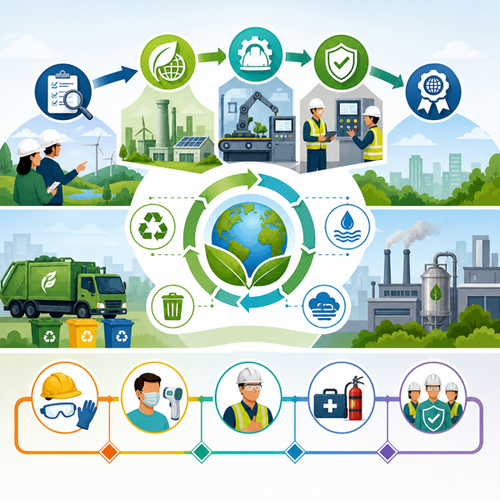
Staying current with evolving regulations is mission-critical for professionals engaged in environmental protection, health, and safety. September 2026 brings a collection of newly published standards—spanning personal protective equipment, building systems, information technology infrastructure, assistive technology, and sustainable mobility—each poised to shape best practices for organizations worldwide. In this Part 1 coverage of the month’s releases, we explore five influential standards that establish new benchmarks for safety, performance, and environmental responsibility.
Overview
Environmental protection and workplace safety are core priorities for modern enterprises. Standards play a vital role in guiding organizations through complex regulatory landscapes while safeguarding employees, infrastructure, and the public. Whether the focus is on advanced personal protective equipment, secure and efficient building systems, sustainable IT solutions, accessible environments, or next-generation smart mobility, adherence to recognized standards ensures reliable performance and ongoing compliance.
This article delivers:
- An introduction to five newly released standards
- Technical overviews and practical implications
- Compliance recommendations and industry impact analysis
- Key takeaways for ensuring robust implementation
Detailed Standards Coverage
EN 15090:2026 - Footwear for Firefighters
Footwear for Firefighters (CEN)
EN 15090:2026 sets new minimum requirements and testing procedures for three carefully defined types of firefighter footwear, covering fire suppression, rescue operations, and hazardous materials emergencies. The standard expands on previous editions to address not only generic performance but also requirements for customized insocks and tailored fittings—recognizing the need for ergonomic solutions that enhance protection and comfort during complex field missions.
Key requirements include:
- Classification of footwear by material and use type (outdoor, fire suppression, chemical hazard settings)
- Enhanced thermal insulation, radiant heat, and flame resistance
- Chemical resistance and permeability testing for hazardous environments
- Compression and mechanical strength testing for toe protection
- Updated marking and manufacturer instructions for transparent communication
Notably, EN 15090:2026 reflects sweeping revisions from its predecessor, EN 15090:2012. These encompass rigorous new testing parameters, clarified tolerances, revised outsole and insock requirements, and integration of a full annex on customized footwear. Organizations must review these changes to ensure supply chain compliance and frontline safety.
Key highlights:
- Covers advanced thermal and chemical hazards in multiple intervention scenarios
- Introduces ergonomic and customized footwear requirements
- Comprehensive update enhancing clarity and safety effectiveness
Access the full standard:View EN 15090:2026 on iTeh Standards
EN IEC 62820-1-2:2026 - Building Intercom Systems Using IP
Building Intercom Systems — Part 1-2: System Requirements - Building Intercom Systems Using the Internet Protocol (IP) (CLC)
As building automation advances, resilient communication systems are a foundational safety feature. EN IEC 62820-1-2:2026 specifies up-to-date technical requirements for building intercom systems leveraging Internet Protocol (IP), serving both residential and commercial applications. This standard supplements previous work by providing performance benchmarks, function descriptions, and rigorous test methods.
Core requirements now address:
- Network and information security (access control, data integrity)
- Audio and video performance (loudness, delay, echo, image quality, frame rate, lip sync)
- Environmental and electrical testing procedures
- Subjective and objective assessment criteria for intercom clarity and reliability
Revisions from EN 62820-1-2:2017 introduce higher expectations for audio-visual quality and security, reflecting modern threats and user expectations. System integrators and facility managers must update purchasing, configuration, and maintenance protocols to remain compliant.
Key highlights:
- IP-based system specifications for comprehensive, scalable intercoms
- Enhanced network security and audio/video performance metrics
- Streamlined compliance with the latest building safety codes
Access the full standard:View EN IEC 62820-1-2:2026 on iTeh Standards
EN ISO/IEC 14763-5:2026 - IT Cabling Implementation and Sustainability
Information Technology – Implementation and Operation of Customer Premises Cabling – Part 5: Sustainability (CLC)
Sustainability is no longer an afterthought in IT infrastructure planning. EN ISO/IEC 14763-5:2026 delivers a comprehensive blueprint for maximizing sustainability across the lifecycle of customer premises cabling. The guidance extends from cabling design and selection, through installation and waste management, to the skill sets needed for responsible operation.
Key requirements and recommendations:
- Sustainable cabling design criteria to minimize environmental impact
- Best practices for selecting, packaging, transporting, and installing cabling and related materials
- Detailed approaches for waste reduction, reuse, recycling, and management
- Transparency in documentation and planning
- Training and skill development requirements for all personnel involved
Organizations deploying or upgrading IT cabling systems for offices, critical facilities, or industrial environments must align with these criteria to fulfill emerging regulatory and stakeholder expectations. This standard supports greener procurement, improved resource efficiency, and ongoing performance.
Key highlights:
- Promotes design and operational sustainability across entire cabling lifecycles
- Addresses packaging, transportation, installation, and disposal of IT infrastructure
- Emphasizes workforce competency for sustainable operations
Access the full standard:View EN ISO/IEC 14763-5:2026 on iTeh Standards
IEC 63087:2026 - Assistive Listening Devices and Systems for Active Assisted Living
Assistive Listening Devices and Systems for Active Assisted Living (IEC)
Accessibility and inclusion are key pillars of modern safety and health. IEC 63087:2026 defines robust requirements for assistive listening systems (ALS), ensuring effective communication and audio enhancement for users of hearing aids, cochlear implants, and similar devices. The standard covers a range of environments, from public spaces to transportation and private facilities.
Essential provisions include:
- System design for optimal signal quality, minimal audio delay, and user-friendly interoperability
- Requirements for coverage, intelligibility, and privacy
- Guidance on integrating ALS with emergency communications, entertainment systems, and education platforms
- Testing protocols for audio quality, magnetic induction loops, and compliance assessment
IEC 63087:2026 also provides practical recommendations for training, maintenance, and effective signage, enabling organizations to create more inclusive environments and meet relevant accessibility legislation.
Key highlights:
- Broad applicability: public, private, domestic, and transport installations
- Comprehensive performance metrics for clarity, latency, and interoperability
- Supports compliance with global accessibility regulations and best practices
Access the full standard:View IEC 63087:2026 on iTeh Standards
ISO 17748-3:2026 - Data Exchange for EV-Based Demand Response
Intelligent Transport Systems — Energy-Based Green ITS Services for Smart City Mobility Applications via Nomadic and Mobile Devices — Part 3: Data Exchange Requirements for Electric Vehicle (EV)-Based Demand Response Charging Services (ISO)
This forward-thinking standard supports smart city sustainability by detailing technical and procedural requirements for data exchange in electric vehicle (EV)-based demand response (DR) charging. ISO 17748-3:2026 defines how EVs, nomadic devices (such as smartphones), city cloud systems, charging stations, and service providers collaborate to manage energy demand dynamically.
Key focus areas:
- Interfaces for DR and reverse DR (demand increase when excess renewable energy is available)
- Data sets and processing requirements for efficient, secure transactions
- Communication protocols and actor definitions (EV, nomadic device, smart city cloud, charging station, provider)
- Integrating DR services for both load reduction (shortages, pollution events) and load increase (renewable surplus)
By enabling real-time, coordinated participation of electric vehicles in grid management, this standard accelerates clean energy integration, improves grid resiliency, and encourages broader adoption of green mobility practices.
Key highlights:
- Establishes smart city-wide data exchange requirements for EV charging
- Supports demand response under routine and emergency scenarios
- Fosters integration of mobility, ICT, and grid infrastructure for carbon reduction
Access the full standard:View ISO 17748-3:2026 on iTeh Standards
Industry Impact & Compliance
Impact on Organizations and Operations
The September 2026 wave of standards sets new requirements for risk mitigation, environmental stewardship, accessibility, and connected infrastructure. Key impacts include:
- Increased safety and resilience: Enhanced PPE and ALS standards directly reduce risk and promote user wellbeing.
- Sustainability as a core principle: IT and mobility standards require sustainability to be integrated into planning, sourcing, and daily operations.
- Complexity in procurement and maintenance: Updated performance, marking, and testing rules affect both specification and quality assurance procedures.
- Regulatory compliance: Failure to align with new standards can result in liability exposure, nonconformance penalties, and reputational risk.
Compliance Considerations
- Timeline: Organizations are encouraged to review compliance by Q2 2027, as national and EU transpositions will soon follow.
- Assessment: Conduct a thorough gap analysis contrasting current practice with the specifications detailed in each standard.
- Documentation: Maintain transparent records of compliance efforts—this is especially vital for sustainability and safety audits.
Benefits
- Reduced workplace and operational risks
- Enhanced brand reputation and stakeholder trust
- Alignment with global sustainability and accessibility goals
Technical Insights: Common Requirements and Best Practices
Across these standards, several technical themes emerge:
- Rigorous Testing and Performance Measurement: All standards emphasize robust test methods—thermal resistance, loudness and delay for intercom/ALS, sustainability metrics for IT.
- Lifecycle Planning: From product design (footwear, cabling) to lifecycle management (waste, skill development, system maintenance), a holistic approach is now expected.
- Interoperability and Security: IP-based systems, data exchange specifications, and network security are recurring requirements.
- Inclusive and Sustainable Solutions: Both accessibility (ALS) and environmental sustainability (IT cabling, EV charging) are core expectations, requiring technical, operational, and workforce adaptations.
Implementation Best Practices:
- Engage cross-functional teams (safety, procurement, facility IT, HR) early in the compliance process
- Update internal policies and procurement specifications to match new standard language
- Schedule ongoing audits and employee training against key technical requirements
Testing and Certification:
- Consider third-party certification for PPE and building systems
- Leverage manufacturer and integrator support for system-level testing
- Use certified installers and providers for IT cabling and ALS installations
Conclusion / Next Steps
September 2026 marks a decisive moment for professionals in environmental protection and safety. The five new standards covered here significantly raise the bar for PPE, building communications, IT sustainability, accessibility, and smart city energy management. To maintain compliance, protect assets, and lead in sustainability and safety, organizations must:
- Conduct detailed reviews and gap assessments against each standard
- Update operational and procurement practices
- Foster internal training on new technical requirements
- Engage with reliable standards sources for ongoing insights
For the latest documentation, implementation tools, and regulatory briefings, explore each standard in detail at iTeh Standards.
Stay tuned for Part 2 of this series covering additional high-impact standards shaping the future of environmental and occupational safety.
Categories
- Latest News
- New Arrivals
- Generalities
- Services and Management
- Natural Sciences
- Health Care
- Environment
- Metrology and Measurement
- Testing
- Mechanical Systems
- Fluid Systems
- Manufacturing
- Energy and Heat
- Electrical Engineering
- Electronics
- Telecommunications
- Information Technology
- Image Technology
- Precision Mechanics
- Road Vehicles
- Railway Engineering
- Shipbuilding
- Aircraft and Space
- Materials Handling
- Packaging
- Textile and Leather
- Clothing
- Agriculture
- Food technology
- Chemical Technology
- Mining and Minerals
- Petroleum
- Metallurgy
- Wood technology
- Glass and Ceramics
- Rubber and Plastics
- Paper Technology
- Paint Industries
- Construction
- Civil Engineering
- Military Engineering
- Entertainment