


July 2026 Standards for Environmental Protection and Safety: LNG, Radiation, Firefighting, Textiles
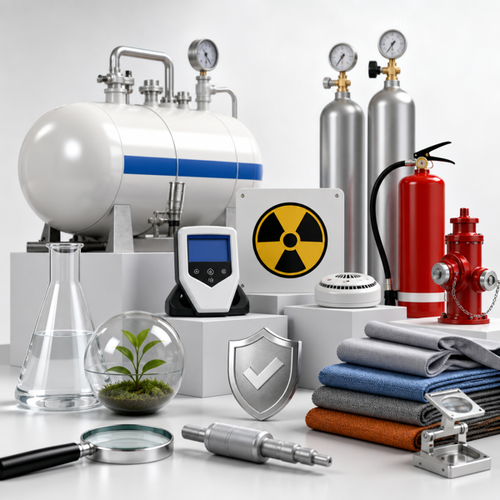
Staying ahead in environmental protection and safety means keeping track of evolving standards that impact compliance, operations, and sustainability. In July 2026, five significant international standards were published, covering greenhouse gas emission quantification, state-of-the-art radiation measurement, advanced firefighting equipment, and the circular economy in textiles. Together, these standards provide robust frameworks for reducing environmental footprint, enhancing safety, and aligning business practices with regulatory and market expectations.
Overview / Introduction
Environmental protection and health and safety are pivotal for organizations across diverse industries. Standards in this space ensure that operations do not harm the environment, people, or future generations. Compliance means more than simply meeting regulations—it’s about demonstrating corporate responsibility, operational excellence, and readiness for global supply chains demanding high sustainability standards.
In this article (Part 4 of 8 for July 2026), we detail five newly published standards, focusing on:
- Accurate greenhouse gas (GHG) measurement for the liquefied natural gas (LNG) chain
- Uncertainty determination in radiation protection instrumentation
- Safety and performance requirements for firefighting devices (water nozzles and foam devices)
- General guidance for implementing circular economy principles in textiles
Professionals will gain insight into what’s new, who these standards affect, and how to approach implementation.
Detailed Standards Coverage
EN ISO 6338-2:2026 – GHG Emissions Calculation for Natural Gas to LNG Plants
Calculations of Greenhouse Gas (GHG) Emissions Throughout the Liquefied Natural Gas (LNG) Chain – Part 2: Natural Gas Production and Transport to LNG Plant (ISO 6338-2:2024)
This standard establishes a consistent, auditable methodology for calculating greenhouse gas emissions in upstream natural gas production and transportation to LNG plants. Its scope embraces:
- Onshore and offshore drilling, gas processing, and pipeline transport to the liquefaction plant
- Associated product facilities, with proper GHG allocation
- Commissioning, start-up, and restarts, but excludes construction or decommissioning phases
- All relevant emissions sources including flaring, combustion, cold and process vents, leaks, and imported energy use
- Emissions quantification for CO₂, CH₄, N₂O, and fluorinated gases (including Scope 1, 2, and 3)
Key requirements include step-by-step GHG inventory development, source allocation, preferred units of measure, and robust reporting instruments. The standard references ISO 6338-1 for principles, and ties directly to ISO 14064-1 and ISO 14044 for methods and definitions. Facilities must report emissions at least annually and use recommended measurement and estimation techniques.
This is particularly relevant for:
- LNG and natural gas producers
- Oil & gas value chain operators
- Energy consultants and verifiers
- Sustainability managers and GHG reporting specialists
Implementation ensures accurate GHG accounting, crucial for regulatory compliance and voluntary reporting frameworks.
Key highlights:
- Covers complete upstream GHG emissions, including difficult-to-measure sources
- Defines allocation across mixed-use facilities
- Supported by standardized instrumentation guidelines
Access the full standard:View EN ISO 6338-2:2026 on iTeh Standards
IEC TS 62461:2026 – Uncertainty in Radiation Protection Measurement
Radiation Protection Instrumentation – Determination of Uncertainty in Measurement
IEC TS 62461:2026 provides comprehensive guidance on assessing uncertainty in ionizing radiation measurements—an essential element for health protection, dosimetry, and regulatory enforcement. The document translates ISO/IEC Guide 98-3:2008 (GUM) and its Monte Carlo Supplement for radiation applications, offering:
- Analytical and probabilistic (Monte Carlo) approaches for uncertainty determination
- Worked examples in external dosimetry, radon monitoring, and neutron dose measurement
- Clarifications for important parameters, such as decision threshold and detection limits per ISO 11929
Applicability spans:
- Health physics, safety and compliance officers in nuclear plants and research labs
- Calibration laboratories and dosimetry services
- Regulatory inspectors and technical assessors
Key advantages include improved confidence in measurement results, risk-based compliance, and decision-making support for when a measured result truly indicates exposure above the zero threshold.
This edition supersedes the previous IEC TR 62461 (2015) and integrates:
- Minor corrections
- New examples for decision threshold and detection limit determination
Key highlights:
- Both analytical and Monte Carlo uncertainty methods for radiation
- Stepwise examples for practical application
- New guidance on decision thresholds and limits
Access the full standard:View IEC TS 62461:2026 on iTeh Standards
FprEN 15767-2:2026 – Firefighting Support: Water Nozzles
Portable Equipment for Projecting Extinguishing Agents and Firefighting Support Operations – Portable Monitors – Part 2: Water Nozzles
FprEN 15767-2:2026 sets advanced requirements for manual water nozzles (including those using fire extinguishing additives) used in portable firefighting monitors. The standard covers:
- Classification, safety, mechanical and hydraulic performance
- Testing procedures: ergonomic operation, flow rates, throw distance, leak-tightness, and reliability under heat/frost
- Equipment marking, maintenance, and user instructions
It standardizes design and performance for:
- Fire service professionals
- Manufacturers of portable firefighting monitors
- Procurement and maintenance teams in facilities management
Notably, it does not apply to nozzles manufactured before publication, ensuring focus on next-generation products.
Significant editorial and technical updates include metrics for effective throw, operating force requirements, enhanced safety checks, and rigorous flush capability to clear debris during firefighting.
Key highlights:
- Ergonomic and safe operation under firefighting conditions
- Explicit requirements for throw distance and flow consistency
- Flush feature to handle debris without nozzle shutdown
Access the full standard:View FprEN 15767-2:2026 on iTeh Standards
FprEN 15767-3:2026 – Firefighting Support: Foam Devices
Portable Equipment for Projecting Extinguishing Agents and Firefighting Support Operations – Portable Monitors – Part 3: Foam Devices
Extending from general requirements, this standard specifies performance and safety criteria for foam devices on portable firefighting monitors. Scope includes:
- Devices for aspirating air and projecting low-expansion foam, and induction of foam concentrate
- Ergonomics, material robustness, hydraulic characteristics, operational classification, and marking
- Mandatory instructions and maintenance guidelines
Target audience:
- Fire and rescue services
- Emergency response planners
- Equipment manufacturers and facility safety managers
Updated from EN 15767-3:2010, this edition adds formal definitions (e.g. foam nozzle, foam tube), eliminates obsolete specifications, and incorporates thorough material and performance verifications.
Key highlights:
- Covers all safety and operational requirements for foam delivery equipment
- Supports compatibility with modern firefighting additives and foams
- Enhances test and verification procedures for foam device reliability
Access the full standard:View FprEN 15767-3:2026 on iTeh Standards
CEN/TS 18272-1:2026 – Circular Economy in Textiles
Textiles – Circular Economy for Textile Products – Part 1: General Principles and Guidance
This technical specification responds to the urgent need for sustainability in the textile sector, articulating actionable guidance for embedding circular economy principles. It applies across:
- All textile products and non-textile components (excluding leather, fur, footwear)
Main coverage includes:
- Circularity principles—minimizing resource use, preventing waste, circulating materials at highest value, regenerating nature
- Product design frameworks, circular business models, and digitalization for traceability/assessment
- R-strategies: refuse, rethink, reduce, reuse, repair, refurbish, remanufacture, repurpose, recycle, recover
- Lifecycle perspective, technical and biological cycles, and reverse logistics
Relevant for:
- Textile manufacturers and brands
- Sustainability strategists and procurement teams
- Researchers and policy developers in circular economy
It aligns with key EU directives (e.g., Sustainable and Circular Textiles Strategy, Ecodesign for Sustainable Products Regulation) and global sustainability frameworks. The guidance supports reporting under the EU Green Deal, Green Claims Directive, and Corporate Sustainability Reporting Directive (CSRD).
Key highlights:
- Practical framework for transitioning to circular textiles
- Tools for material flow management and end-of-life strategies
- Supports compliance with the latest EU and global sustainability standards
Access the full standard:View CEN/TS 18272-1:2026 on iTeh Standards
Industry Impact & Compliance
The launch of these standards marks a decisive step forward for organizations committed to environmental protection and workplace safety. Their adoption:
- Reduces risk and provides legal defensibility in regulatory audits
- Enhances operational transparency for supply chain partners
- Enables more robust and internationally recognized sustainability reporting
- Positions companies for access to new markets and public procurement opportunities
Compliance considerations:
- Assess existing protocols and update them to align with the latest standard requirements
- Engage qualified professionals for GHG measurement, radiation operations, and firefighting equipment evaluation
- Use the published guidance to map your transition to circular business models—especially in textiles
- Set implementation timelines in step with regulatory cycles and stakeholder requirements
Benefits of adoption:
- Reduced environmental impact and improved occupational health
- Streamlined certification and audit processes
- Stronger stakeholder confidence and reputation management
Risks of non-compliance:
- Potential legal penalties and lost certifications
- Reputational damage among customers and partners
- Loss of market access, especially in regulated or public procurement sectors
Technical Insights
Across these standards, common best practices include:
- Data accuracy: Use standardized measurement/estimation methods to ensure traceability and repeatability in reporting (critical for GHGs and radiation dose).
- Instrument calibration and maintenance: Regular verification against international standards for both environmental and safety equipment.
- Lifecycle and risk approach: Address all phases from design, operation, to end-of-life, integrating preventative strategies (e.g., flush functionality in firefighting nozzles, robust uncertainty budgets for radiation metrology).
- Documentation and continual improvement: Maintain thorough, up-to-date documentation for all compliance activities—vital for audit readiness.
- Training and user guidance: Invest in staff training for new equipment, measurement protocols, and sustainability practices, based on the manufacturer's and standard's recommendations.
Testing and certification:
- Use third-party certified laboratories and inspectors where possible
- Keep abreast of related standards referenced in the new documents for full compliance
Conclusion / Next Steps
The five July 2026 international standards profiled here equip professionals to advance environmental protection, safety, and circular economy priorities. Their broad application—from LNG production to textile manufacturing—not only minimizes negative impacts but enables organizations to thrive in a future defined by sustainability and regulatory stringency.
Recommended actions:
- Review current operations in light of these new standards
- Engage with quality and compliance teams to update processes and train staff
- Audit current practices versus the new requirements; implement improvement plans
- Monitor regulatory developments and additional releases in this series
Explore these standards in full and stay ahead in compliance, safety, and sustainable business by visiting iTeh Standards.
Categories
- Latest News
- New Arrivals
- Generalities
- Services and Management
- Natural Sciences
- Health Care
- Environment
- Metrology and Measurement
- Testing
- Mechanical Systems
- Fluid Systems
- Manufacturing
- Energy and Heat
- Electrical Engineering
- Electronics
- Telecommunications
- Information Technology
- Image Technology
- Precision Mechanics
- Road Vehicles
- Railway Engineering
- Shipbuilding
- Aircraft and Space
- Materials Handling
- Packaging
- Textile and Leather
- Clothing
- Agriculture
- Food technology
- Chemical Technology
- Mining and Minerals
- Petroleum
- Metallurgy
- Wood technology
- Glass and Ceramics
- Rubber and Plastics
- Paper Technology
- Paint Industries
- Construction
- Civil Engineering
- Military Engineering
- Entertainment