

September 2026: New Standards Elevate Fluid System Efficiency and Testing
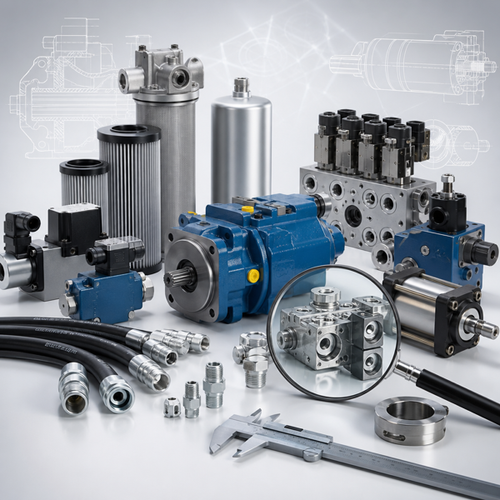
In September 2026, the field of Fluid Systems and Components for General Use sees the introduction of two pivotal international standards. These freshly published documents set new benchmarks for both the efficiency of pump-based booster sets and the precision of hydraulic fluid testing. For professionals across engineering, manufacturing, quality management, procurement, and research, these standards are game-changers—impacting everything from energy consumption to calibration integrity in fluid systems.
Overview
Fluid systems are the backbone of countless industrial sectors, responsible for powering processes in buildings, manufacturing plants, transportation, and energy infrastructure. The accuracy, reliability, efficiency, and safety of these systems are governed by rigorous international standards. As new technologies emerge and demands for sustainability intensify, staying updated with the latest specifications is vital.
This article covers two September 2026 standards:
- EN 17038-3:2026: Focused on the methods for qualification and energy efficiency measurement of rotordynamic pump booster sets.
- ISO/TR 6049:2026: Detailing procedures for certifying the calibration materials essential for particle counter accuracy in hydraulic fluid power systems.
You’ll learn what these standards require, who they apply to, the technical innovations they contain, and how they will affect your compliance strategies and operational practices.
Detailed Standards Coverage
EN 17038-3:2026 – Qualification of Energy Efficiency Index for Booster Sets
Pumps – Methods of qualification of the Energy Efficiency Index for rotordynamic pump units – Part 3: Testing and calculation of energy efficiency index (EEI) of booster sets
This European Standard, published by CEN, defines a robust framework for assessing the energy efficiency of booster sets—either as single pump units or assemblies of multiple pumps arranged in parallel. Targeting installations up to 150 kW hydraulic power with a minimum rated flow of 6 m³/h, it delivers comprehensive methods for testing, calculation, and verification of the Energy Efficiency Index (EEI) for systems pumping clean water within buildings.
Key Requirements and Specifications
- Scope: Applies to booster sets intended for open-loop clean water pumping in building services. Sets below 6 m³/h must use pumps compliant with EN 17038-2.
- Test Methods: Establishes standardized performance tests per EN ISO 9906—covering test bench setup, instrumentation, steady-state measurement, and environmental controls.
- Calculation Procedures: Introduces detailed methodologies for determining average electric power input, reference pressure control curves, and flow-time profiles. The use of a semi-analytical model (SAM) allows for precise modeling of pump performance under variable and fixed speed conditions.
- Measurement Uncertainty: Imposes strict criteria for measurement uncertainty, requiring high-accuracy flow rate, pressure, and power input instrumentation.
- Documentation: Mandates comprehensive recordkeeping of testing conditions, adjustments (e.g., deactivation of expansion tanks or jockey pumps), and control curve settings for audit and compliance.
Who Should Comply
- Manufacturers and suppliers of pump booster sets
- Mechanical and building service engineers
- Testing and certification bodies
- Facility managers overseeing water distribution systems
- Procurement officers and compliance managers responsible for energy performance
Practical Implications
- Performance Benchmarking: A harmonized EEI facilitates direct comparison across different booster set designs and providers.
- Regulatory Compliance: Provides a pathway for alignment with European ecodesign directives and national energy efficiency regulations.
- Market Advantage: Third-party verification and transparent EEI ratings can enhance product reputation and buyer confidence.
- Implementation: Adopting the new testing procedures may require investments in instrumentation and staff training, but will yield long-term operational and sustainability benefits.
Key highlights:
- Standardizes EEI testing for all qualifying booster sets
- Equips professionals to meet ecodesign and market requirements
- Builds transparency and comparability across the industry
Access the full standard:View EN 17038-3:2026 on iTeh Standards
ISO/TR 6049:2026 – Certifying Calibration Material for Hydraulic Fluid Particle Counters
Hydraulic fluid power — Procedures used to certify the standard reference material SRM 2806d used in ISO 11171
This ISO Technical Report, spearheaded by ISO/TC 131 and the United States National Institute of Standards and Technology (NIST), lays out the detailed procedures behind the certification of calibration material SRM 2806d. This reference material is critical to the primary calibration of automatic particle counters (APCs) used in hydraulic fluid power applications. SRM 2806d sets the benchmark for cleanliness and particle counting accuracy in fluid systems, which underpins the reliability and safety of hydraulic equipment across multiple sectors.
What Does This Standard Cover?
- Calibration Fluid Composition: Details the composition of SRM 2806d—a suspension of SAE 5–80 μm test dust in MIL-PRF-5606 hydraulic fluid, traceable to the International System of Units (SI).
- Certification Process: Outlines the dual-phase process: material production and statistical acceptance (by both manufacturer and NIST), and the official NIST certification via an interlaboratory study (ILS) and scanning electron microscopy (SEM) for size distribution verification.
- Homogeneity and Stability Testing: Utilizes advanced statistical data analysis to confirm the consistent performance of SRM 2806d across production batches and over time, including accelerated aging and contamination checks.
- Consensus Value Determination: Establishes consensus values for particle concentration using data from global multi-laboratory collaboration, ensuring international comparability and traceability.
Who Needs to Comply?
- Hydraulic equipment and filter manufacturers
- Laboratories providing calibration or contamination analysis
- Quality management and contamination control professionals
- Aerospace, automotive, marine, and energy sector engineers
- Research institutions specializing in fluid power systems
Practical Implications
- Traceable Calibration: Guarantees APC performance meets global regulatory and manufacturer requirements for particle size and concentration measurement.
- Enhanced Reliability: Reduces the risk of hydraulic failures due to fluid contamination—helping to minimize downtime, maintenance costs, and safety incidents.
- Regulatory Readiness: Aligns with ISO 11171 and supports global harmonization of fluid cleanliness standards.
- Cross-Industry Confidence: Multisector users can trust instrument calibration and data integrity, boosting quality assurance and customer satisfaction.
Key highlights:
- Defines transparent, SI-traceable certification for calibration standards
- Supports rigorous interlaboratory comparability and quality assurance
- Underpins all critical particle monitoring activities in hydraulic systems
Access the full standard:View ISO/TR 6049:2026 on iTeh Standards
Industry Impact & Compliance
The influence of these new standards will be felt widely across the fluid systems sector. Organizations are now provided with clearer metrics for comparing system efficiencies and the tools to ensure, verify, and demonstrate fluid cleanliness.
Business Implications
- Competitive Edge: Early adopters will benefit from improved product offerings, compliance with procurement specifications, and reputational gains.
- Regulatory Deadlines: Enforcement of these standards may be tied to product certifications and public procurement requirements in Europe and globally—timely compliance is crucial.
- Operational Risk Reduction: By formalizing testing and verification, organizations minimize costly system failures and warranty claims tied to energy inefficiency or equipment contamination.
Compliance Considerations
- Companies must align internal test labs and documentation processes to new test procedures and criteria.
- Certification bodies will reference these standards for future product type-approval and ongoing quality audits.
- Supply chain impact: Sourcing from certified component manufacturers is becoming a requirement for many end users.
Benefits of Adoption
- Reduced lifecycle costs due to energy efficiency
- Enhanced reliability for mission-critical systems
- Demonstrable compliance to clients, regulators, and third parties
Risks of Non-Compliance
- Potential exclusion from regulated or public sector markets
- Increased downtime or failures due to undetected contamination
- Higher energy bills and missed sustainability targets
Technical Insights
Common Technical Requirements
Both standards emphasize the need for:
- High precision in measurement and calibration
- Rigorous statistical analysis and data integrity
- Documentation and transparency for auditability
- Traceability to recognized international units and methods
Implementation Best Practices
- Align Equipment and Processes: Invest in compliant test benches, APCs, and documentation systems as outlined in each standard.
- Train Personnel: Ensure test engineers and quality teams are versed in new procedures, measurement tolerances, and reporting formats.
- Third-Party Engagement: Leverage accredited laboratories and certification bodies for independent verification.
- Continuous Monitoring: Adopt ongoing verification routines—especially with reference materials and calibration standards subject to periodic stability checks.
Testing and Certification Considerations
- Use only certified SRM 2806d as the calibration benchmark for hydraulic fluid particle counters to ensure ISO 11171 compliance.
- For booster sets, ensure control system configuration, run-in procedures, and steady-state measurement meet the updated requirements.
- Maintain comprehensive records of all tests, calibrations, and procedural adjustments.
Conclusion / Next Steps
The September 2026 publication of EN 17038-3 and ISO/TR 6049 marks a significant leap forward in both energy and contamination control for fluid systems and components. Organizations poised for continued success will be those that promptly integrate these international best practices—adapting test methods, investing in competency, and leveraging new benchmarks to showcase performance.
Key takeaways:
- Upgrade your product testing and documentation to meet the latest EEI and calibration material standards
- Evaluate your current compliance status and plan for transition ahead of regulatory deadlines
- Use these standards for product differentiation, risk mitigation, and operational excellence
Recommendations:
- Download official standards and review them in detail
- Initiate gap assessments in your current testing and calibration workflows
- Train teams and update SOPs to reflect new requirements
Stay ahead in the fluid systems industry by keeping your standards knowledge current—visit iTeh Standards for the latest publications and guidance.
Categories
- Latest News
- New Arrivals
- Generalities
- Services and Management
- Natural Sciences
- Health Care
- Environment
- Metrology and Measurement
- Testing
- Mechanical Systems
- Fluid Systems
- Manufacturing
- Energy and Heat
- Electrical Engineering
- Electronics
- Telecommunications
- Information Technology
- Image Technology
- Precision Mechanics
- Road Vehicles
- Railway Engineering
- Shipbuilding
- Aircraft and Space
- Materials Handling
- Packaging
- Textile and Leather
- Clothing
- Agriculture
- Food technology
- Chemical Technology
- Mining and Minerals
- Petroleum
- Metallurgy
- Wood technology
- Glass and Ceramics
- Rubber and Plastics
- Paper Technology
- Paint Industries
- Construction
- Civil Engineering
- Military Engineering
- Entertainment