


May 2026: New Standard Advances High Dynamic Range Imaging Technology
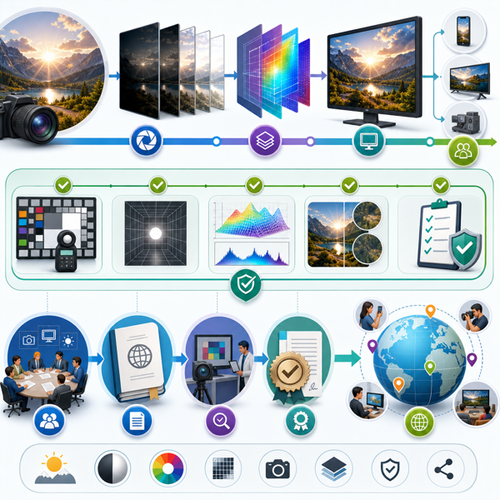
In May 2026, the world of image technology saw a significant leap forward with the publication of the latest international standard dedicated to high dynamic range and wide colour gamut (HDR/WCG) still image encoding. The newly released ISO 22028-5:2026 presents a comprehensive framework for storing, manipulating, and transmitting digital still images with unprecedented colour accuracy, brightness, and consistency. For professionals in photography, graphic design, and digital imaging, this single standard brings enhanced clarity and interoperability, redefining expectations for digital image quality.
Overview
The image technology sector drives innovation across industries by enabling high-fidelity visuals, graphical content creation, and digital archiving. As displays, cameras, and software progress, maintaining consistency of image representation across devices becomes a foundational requirement. International standards play a crucial role: they ensure that creators, developers, manufacturers, and service providers speak the same technical language, making reliable image interchange possible.
In this article, we’ll break down the latest HDR/WCG still image standard issued in May 2026, who it affects, its technical foundations, and how your organization can benefit by adopting it early.
Detailed Standards Coverage
ISO 22028-5:2026 – High Dynamic Range and Wide Colour Gamut Encoding for Still Images
Photography and graphic technology — Extended colour encodings for digital image storage, manipulation and interchange — Part 5: High dynamic range and wide colour gamut encoding for still images (HDR/WCG)
This new edition of the ISO 22028 series specifically addresses the need for a standardized approach to encoding digital still images with high dynamic range (HDR) and wide colour gamut (WCG). The standard:
- Defines both baseline and extended colour encoding methods for HDR/WCG images
- Specifies mandatory and optional metadata for colour reproduction and content description
- Establishes reference viewing conditions for consistent image display
- Aligns its methods with ITU-R BT.2100-3 to ensure interoperability with video and display ecosystems
Scope and Applicability
ISO 22028-5:2026 provides technical requirements for:
- Digital still image storage, manipulation, and exchange workflows
- Professional imaging devices such as advanced cameras and displays
- Content creators, software developers, and graphic technologists
By clearly instructing how HDR/WCG images must be encoded, stored, and interpreted, the standard enables faithful color reproduction and seamless transmission between different platforms and devices.
Key Requirements and Specifications
- Colour Space: Uses ITU-R BT.2100-3 system colorimetry for RGB primaries and D65 white point, ensuring global compatibility
- Encoding Precision: Supports 10- and 12-bit coding per component for higher fidelity
- Transfer Functions: Mandates either the Hybrid Log-Gamma (HLG) or Perceptual Quantizer (PQ) system—widely adopted approaches to HDR encoding
- Metadata: Stipulates detailed metadata for image characteristics, mastering display information, and scene- or display-referred states
- Reference Environment: Defines standard reference viewing conditions (e.g., lighting, display specifications)
- Compatibility: Fully backward-compatible with previous ISO 22028 series standards and related ITU and SMPTE specifications
Who Needs to Comply?
- Camera and display manufacturers (consumer and professional segments)
- Imaging software vendors
- Colour scientists and video/graphic technology researchers
- Content production studios and photo libraries investing in next-generation imagery
Organizations aiming for industry leadership, cross-platform compatibility, or regulatory compliance will especially benefit from aligning with this specification.
Practical Implications for Implementation
- Interoperability: Devices and software conforming to ISO 22028-5:2026 enable reliable image exchange and rendering across HDR/WCG-capable displays and media
- Future-Proofing: Compliance ensures readiness for ongoing advances in imaging technology and display hardware
- User Experience: End-users gain richer, more immersive visuals by leveraging standardized HDR/WCG content
- Content Integrity: Proper metadata implementation aids archiving, content management, and automated workflows
Notable Changes from Previous Editions
- Upgrades the previous technical specification ISO/TS 22028-5:2023 to a full international standard
- Expands detail on metadata handling for device and content description
- Aligns reference display and viewing environment parameters for improved industry consistency
- Strengthens requirements for encoding methods, ensuring compatibility with leading HDR video ecosystems
Key highlights:
- Standardizes both baseline and advanced HDR/WCG still image encodings
- Provides explicit metadata and environmental references for end-to-end fidelity
- Aligns methods with ITU-R BT.2100-3 for broad ecosystem support
Access the full standard:View ISO 22028-5:2026 on iTeh Standards
Industry Impact & Compliance
The adoption of ISO 22028-5:2026 is a game-changer for all stakeholders in digital imaging and graphic technology. For businesses, the benefits of implementing this standard are immediate and strategic:
- Enhanced Interoperability: Easy exchange and display of images across devices and media—reducing rework and ensuring consistent visual branding
- Built-in Compliance: Fulfilling customer, regulatory, or procurement requirements—especially in competitive fields like advertising, media production, and digital archiving
- Lower Risk: Reduces the likelihood of colour mismatches, loss of detail, or inconsistencies when moving content between platforms
- Client Assurance: Organizations can assure clients and partners of world-class colour accuracy and image quality
Compliance Considerations and Timelines: Most organizations integrating or certifying HDR/WCG-capable equipment and workflows should plan for staged adoption:
- Assessment: Review existing hardware and software for current compatibility
- Gap Analysis: Identify areas (metadata handling, transfer functions) requiring updates
- Implementation: Develop, test, and deploy compliant workflows or release software/firmware updates
- Certification and Training: Ensure teams are familiar with the new requirements
Risks of Non-Compliance include:
- Incompatibility with emerging industry workflows
- Customer dissatisfaction due to inconsistent image display
- Barriers to entering new HDR/WCG-enabled markets
Technical Insights
Common Technical Requirements
- Colour Primaries and White Point: Adherence to ITU-R BT.2100-3 parameters (e.g., Red: x=0.708, y=0.292; Green: x=0.170, y=0.797; Blue: x=0.131, y=0.046; White: D65)
- Precision: Support for both 10-bit and 12-bit component encoding—accommodates professional and consumer use cases
- Coding Formats: Non-constant luminance Y′, C′B, C′R baseline; both full and narrow video data ranges (with clear quantization level requirements)
- Transfer Functions:
- Hybrid Log-Gamma (HLG) for adaptive dynamic range mapping
- Perceptual Quantizer (PQ) for precise, display-referred brightness encoding
Metadata Implementation
- Mandatory Data: Device characteristics, reference display, reference white, colour volume, HDR reference white luminance
- Optional Data: Mastering display information, scene-referred states, application-specific content descriptors
- Interoperability: CICP (Coding-Independent Code Points) metadata ensures accurate interpretation on different platforms
Testing and Certification Considerations
- Establish test cases covering both HLG and PQ transfer functions
- Validate correct metadata generation and processing across all devices
- Ensure reference display calibration and adherence to viewing environment standards
- Run cross-platform interoperability tests between hardware and software solutions
Implementation Best Practices
- Integrate HDR/WCG encoding early in the image creation workflow—minimizing data loss
- Automate metadata population where feasible
- Train teams on reference environment and display calibration to maximize standard benefits
Conclusion / Next Steps
With the release of ISO 22028-5:2026, the digital imaging field gains a robust, future-ready foundation for HDR and wide colour gamut still images. Organizations adopting this standard will be equipped for greater quality, interoperability, and technological leadership in the years ahead.
Key takeaways:
- Industry-wide alignment on colour encoding and metadata for advanced imagery
- Improved user experience and device compatibility
- Reduced compliance risk and increased customer confidence
Recommended Actions:
- Review your current image workflows and capability against the requirements of ISO 22028-5:2026
- Engage with technical and compliance teams to develop an adoption roadmap
- Monitor future updates and related standards for continued alignment
Explore this and other newly published standards on iTeh Standards and stay ahead in the rapidly evolving world of image technology.
Categories
- Latest News
- New Arrivals
- Generalities
- Services and Management
- Natural Sciences
- Health Care
- Environment
- Metrology and Measurement
- Testing
- Mechanical Systems
- Fluid Systems
- Manufacturing
- Energy and Heat
- Electrical Engineering
- Electronics
- Telecommunications
- Information Technology
- Image Technology
- Precision Mechanics
- Road Vehicles
- Railway Engineering
- Shipbuilding
- Aircraft and Space
- Materials Handling
- Packaging
- Textile and Leather
- Clothing
- Agriculture
- Food technology
- Chemical Technology
- Mining and Minerals
- Petroleum
- Metallurgy
- Wood technology
- Glass and Ceramics
- Rubber and Plastics
- Paper Technology
- Paint Industries
- Construction
- Civil Engineering
- Military Engineering
- Entertainment