


May 2026: New Standards for Respiratory Therapy and Herbal Medicine in Health Care
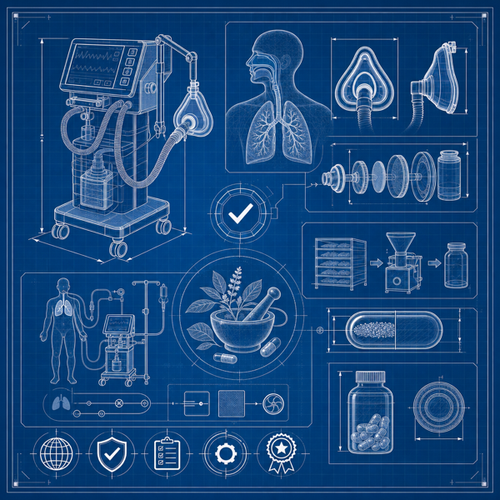
The health care technology sector sees significant advancements in May 2026 with the release of two influential international standards—one setting rigorous criteria for respiratory therapy equipment and the other harmonizing requirements for Ziziphus jujuba fruit in traditional Chinese medicine. These publications reflect ongoing global efforts to improve patient safety, product quality, and interoperability in both clinical and herbal product supply chains.
Overview / Introduction
Health care technology continues to evolve, underpinning patient care and safety across varied clinical and wellness settings. International standards play a crucial role in harmonizing product requirements and test methods, supporting regulatory alignment, and enabling global trade. In this article, you will learn about two new standards:
- One covering medical respiratory therapy tubing and connectors—foundational components in modern respiratory care.
- The other providing a unified framework for Ziziphus jujuba fruit as a herbal raw material in international trade and traditional Chinese medicine.
With these new releases, health care professionals, product manufacturers, quality managers, and procurement specialists can better assure compliance, facilitate market access, and promote best practices within their organizations.
Detailed Standards Coverage
ISO 24063:2026 - Traditional Chinese Medicine — Ziziphus Jujuba Fruit
Traditional Chinese Medicine — Ziziphus jujuba fruit
This standard establishes global requirements for the identification, quality, safety, and testing of Ziziphus jujuba fruit (also known as jujube, Chinese date, or Da Zao). Used both as a health food supplement and a key ingredient in traditional Chinese medicine, Ziziphus jujuba enjoys widespread recognition for its nutritional and medicinal properties. Internationally, variations in local standards often complicate cross-border trade and regulatory acceptance. ISO 24063:2026 fills this gap by harmonizing technical criteria, test methods, and labeling requirements, enabling consistency and safety for manufacturers, importers, and health practitioners worldwide.
Scope and Key Requirements
- Defines minimum requirements for Ziziphus jujuba fruit sold as herbal raw material for medicinal or food use.
- Includes criteria for morphological and microscopic identification, chemical composition (polysaccharides, heavy metals, pesticide residues, aflatoxins), and foreign matter.
- Stipulates moisture and total ash content to ensure purity and inhibit contamination.
- Provides validated test methods—thin-layer chromatography (TLC), microscopic examination, and chemical analyses—for verifying compliance.
Who Needs to Comply
- Herbal product manufacturers and processors
- Bulk ingredient suppliers and exporters
- Regulatory agencies evaluating imports/export of herbal raw materials
- Quality assurance and laboratory professionals in herbal medicine supply chains
Practical Implementation
Implementing ISO 24063:2026 assures supply chain partners and regulators of a product's authenticity, safety, and quality. The standard supports traceability, ensures accurate labeling, and reduces variation found in national pharmacopoeias. For organizations involved in the international trade of Ziziphus jujuba—and those wishing to promote its use in health supplements or traditional remedies—adherence is both a competitive asset and a compliance necessity.
Key highlights:
- Unified global standard replaces fragmented national specifications
- Comprehensive quality and safety assessment (e.g., heavy metals, aflatoxins)
- Harmonized test methods increase confidence in laboratory results
Access the full standard:View ISO 24063:2026 on iTeh Standards
EN ISO 17256:2026 - Anaesthetic and Respiratory Equipment: Respiratory Therapy Tubing and Connectors
Anaesthetic and respiratory equipment — Respiratory therapy tubing and connectors (ISO 17256:2024)
Proper design and safety of respiratory tubing and connectors are paramount for effective oxygen and medicinal gas delivery in hospitals and homecare. EN ISO 17256:2026 specifies critical requirements for tubing and connectors used to transfer respirable gases from gas supply devices to patient interfaces (face masks, cannulae, etc.). Harmonizing European and International safety criteria, this standard helps prevent dangerous misconnections, ensures device compatibility, and addresses the unique challenges of both clinical and home environments.
Scope and Key Specifications
- Applies to tubing and connectors used for oxygen, respirable air, and medicinal gas mixtures (e.g., oxygen/nitrous oxide, oxygen/helium).
- Sets out design requirements—such as dimensional tolerances, connector types, and materials—to reduce the risk of misconnections and enable reliable connections.
- Includes biocompatibility checks for all gas pathway materials.
- Introduces requirements for respiratory extension tubing and distinguishes between connectors at device and patient ends (including the R2 respiratory small-bore connector).
- Provides guidance on information supplied by manufacturers, packaging, labeling, and sterile supply chain requirements.
Who Needs to Comply
- Medical device manufacturers (especially those producing tubing, connectors, and patient interfaces)
- Procurement departments in healthcare facilities
- Clinical engineers and biomedical technicians
- Regulatory affairs specialists navigating CE marking or international approvals
Practical Implementation
This standard supports procurement decisions, product development, and conformity assessment by clarifying technical and documentation requirements. By mitigating misconnection risks and ensuring biocompatibility, EN ISO 17256:2026 directly impacts patient safety and regulatory compliance. Adopting its requirements helps streamline market approvals and demonstrates alignment with cutting-edge best practices.
Key highlights:
- Specified dimensions and connectors minimize misconnection hazards
- Material biocompatibility ensures safe gas pathways for patients
- Extension tubing and labeling requirements tailored for both healthcare and homecare use
Access the full standard:View EN ISO 17256:2026 on iTeh Standards
Industry Impact & Compliance
Business Impact
These standards deliver critical structure to worldwide manufacturing and sourcing for both respiratory therapy equipment and herbal medicines. For medical device producers, adhering to EN ISO 17256:2026 supports global market entry and improves patient safety by meeting harmonized European and International norms. Herbal suppliers and TCM manufacturers can ensure traceability, reduce product rejection, and demonstrate due diligence by meeting ISO 24063:2026 requirements.
Compliance Considerations and Timelines
- Medical devices certified after May 2026 must reference the new EN ISO 17256:2026 standard for regulatory acceptance in the EU and beyond.
- Herbal product shipments and bulk trading should conform to ISO 24063:2026 for smoother border and customs processing.
- Adopting these standards may require updates to quality management systems, supplier qualification procedures, and laboratory testing protocols.
Benefits
- Reduced risk of adverse events and recalls
- Smoother procurement and operational workflows
- Greater trust from regulators, patients, and customers
Risks of Non-Compliance
- Delayed market entry and regulatory penalties
- Increased scrutiny, product holds, or recalls
- Potential loss of competitive standing in international markets
Technical Insights
Common Technical Requirements
Both standards emphasize:
- Stringent material and product testing
- Clear, traceable labeling and documentation
- Validation of test methods to promote consistent results and reduce risk
Implementation Best Practices
For organizations managing transition or adoption of these standards:
- Gap Analysis: Assess current products and supplier certificates against the new standard requirements.
- Staff Training: Educate quality and procurement personnel on new criteria and implications.
- Supplier Evaluation: Update supplier qualification to demand conformity evidence.
- Document Control: Revise test protocols, manuals, and purchasing documents to align with standard requirements.
- Certification and Testing: Utilize accredited labs for the prescribed analyses (e.g., TLC, microscopic, biocompatibility assessment).
Testing and Certification Considerations
- For medical devices, ensure all gas-pathway materials undergo biocompatibility and performance testing as prescribed.
- Herbal suppliers must document batch results for moisture, ash, heavy metals, pesticides, and aflatoxins, using methods detailed in ISO 24063:2026.
- Both standards require traceable records and reporting, as well as comprehensive labeling to support end-user safety and regulatory checks.
Conclusion / Next Steps
The May 2026 publication of ISO 24063 and EN ISO 17256 marks a vital step in harmonizing quality, safety, and regulatory requirements for health care products on an international scale.
Key Takeaways:
- Global adoption of these standards strengthens trust and transparency in both clinical and herbal supply chains.
- Compliance is essential for market access, patient safety, and operational excellence.
- Immediate review of procurement, quality assurance, and manufacturing processes is recommended.
Recommendations:
- Organizations should download, study, and integrate these standards into their policies and workflows.
- Quality professionals and engineers should prioritize staff training and system updates aligned to these new requirements.
- Regularly visit authoritative resources like iTeh Standards for the latest updates and interpretative guidance.
Stay ahead in health care technology by integrating these internationally recognized standards—ensuring compliance, quality, and competitive advantage in a rapidly evolving global market.
Categories
- Latest News
- New Arrivals
- Generalities
- Services and Management
- Natural Sciences
- Health Care
- Environment
- Metrology and Measurement
- Testing
- Mechanical Systems
- Fluid Systems
- Manufacturing
- Energy and Heat
- Electrical Engineering
- Electronics
- Telecommunications
- Information Technology
- Image Technology
- Precision Mechanics
- Road Vehicles
- Railway Engineering
- Shipbuilding
- Aircraft and Space
- Materials Handling
- Packaging
- Textile and Leather
- Clothing
- Agriculture
- Food technology
- Chemical Technology
- Mining and Minerals
- Petroleum
- Metallurgy
- Wood technology
- Glass and Ceramics
- Rubber and Plastics
- Paper Technology
- Paint Industries
- Construction
- Civil Engineering
- Military Engineering
- Entertainment