

September 2026 Updates: New Standards for Healthcare Technology
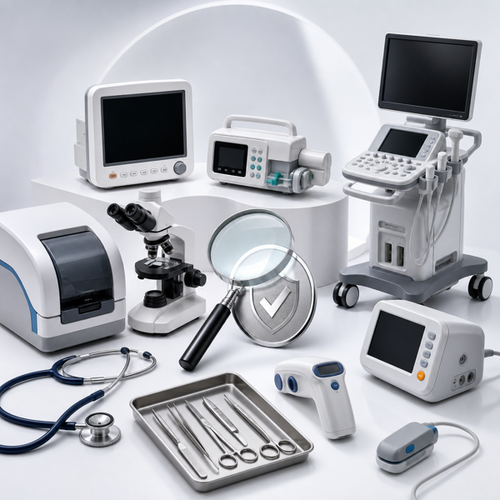
The healthcare technology sector saw a significant wave of standardization in September 2026, with four major international standards released. Covering a diverse array of technologies—from Traditional Chinese medicine instruments to dental polymers, and from electronic instructions for use (eIFU) for in vitro diagnostic (IVD) devices to advanced blood pressure monitors—these latest updates are poised to set new quality and safety benchmarks for manufacturers, practitioners, and regulators across the globe. Professionals working in medical device manufacturing, compliance, and product development will find these updates crucial for keeping pace with international best practices and regulatory demands.
Overview / Introduction
Healthcare technology is a rapidly evolving field, blending cutting-edge innovations with critical safety and performance requirements. International standards ensure that medical equipment and materials are not only effective but also safe and consistent across diverse healthcare settings. In this article, you’ll discover:
- The scope and technical features of the latest four standards published in September 2026
- Practical compliance tips for healthcare device stakeholders
- How these standards impact procurement, quality assurance, and regulatory affairs
Implementing these standards helps organizations reduce risk, streamline certification processes, and improve global market access in an increasingly interconnected healthcare landscape.
Detailed Standards Coverage
ISO/TS 25427:2026 - Traditional Chinese Medicine — Chuzhen Instruments
Traditional Chinese medicine — Chuzhen instruments
ISO/TS 25427:2026 sets out comprehensive requirements and test methods for non-disposable Chuzhen instruments, critical tools used globally in Traditional Chinese medicine for non-invasive therapies such as tapping, pressing, scraping, and rotating along acupoints and meridians. The standard aims to eliminate the market’s variation in design and quality, enhancing both patient safety and treatment efficacy.
Key requirements include:
- Structure and dimensions: Detailed specifications ensure uniformity and prevent undue sharpness or rough surfaces.
- Material properties: Recommends corrosion resistance, biocompatible materials (referencing ISO 10993-1, ISO 10993-5, etc.), and mandates cleaning and disinfection compatibility for reuse.
- Testing protocols: Mandates thorough testing on hardness, strength, roughness, abrasion resistance, and mass.
- Packaging and labeling: Prescribes primary and secondary packaging details, storage guidance, and clear instructions for practitioners.
- Exclusions: This specification does not apply to disposable, heat-storing, or electrically assisted instruments.
Target Audience: Medical device manufacturers, quality assurance professionals, importers, and regulators in Traditional Chinese medicine (TCM) markets.
Notable changes: This is a new specification, providing global clarity and harmonization where little existed before.
Key highlights:
- Standardizes reusable Chuzhen instrument safety and performance
- Covers detailed test methods for mechanical and biological properties
- Addresses global manufacturers and end-users for improved safety
Access the full standard:View ISO/TS 25427:2026 on iTeh Standards
ISO 10477:2026 - Dentistry — Polymer-based Crown and Veneering Materials
Dentistry — Polymer-based crown and veneering materials
The fifth edition of ISO 10477:2026 delivers revised requirements for the classification and assessment of polymer-based materials—commonly used to fabricate permanent dental crowns and veneers. The scope includes laboratory-fabricated restoratives and materials designed for both additive and subtractive manufacturing (e.g., 3D printing and milling).
Key requirements include:
- Material performance: Ensures adequate flexural strength, surface finish, depth of cure, water sorption, solubility, bond strength, and color stability.
- Testing protocols: Sets out rigorous sampling and test procedures, referencing ISO and CEN norms for consistency.
- Classification updates: Introduces new material types for additive (type 2 class 3) and subtractive (type 4) manufacturing, reflecting industry advances such as 3D-printed and milled polymers.
- Labeling and documentation: Fresh labeling, packaging, and instructions for use requirements ensure product traceability and safe deployment.
- Editorial and technical enhancements: The new edition aligns with the latest technological developments and harmonizes with the Vienna Agreement for global applicability.
Target Audience: Dental materials manufacturers, dental laboratories, procurement managers, quality managers, and regulatory authorities.
Notable changes from 2020 edition:
- Addition of standards for additive and subtractive manufacturing
- Strengthened requirements for color stability and bond strength
- Editorial clarity and expanded definitions
Key highlights:
- New classifications for 3D-printed and milled crown materials
- Enhanced test methods for durability and esthetic consistency
- Updated conformity criteria in line with latest dental technologies
Access the full standard:View ISO 10477:2026 on iTeh Standards
ISO 24884:2026 - Electronic Instructions for Use for In Vitro Diagnostic Medical Devices
Electronic instructions for use for in vitro diagnostic medical devices — Minimum required information and means of delivery
With the rising prevalence of digital user documentation, ISO 24884:2026 provides essential requirements and recommendations for the provision of eIFUs—electronic instructions for use—for in vitro diagnostic (IVD) medical devices. This standard is a crucial aid for both manufacturers and regulatory authorities who are shifting towards digital transformation in healthcare delivery.
Key requirements include:
- Means of eIFU delivery: Defines platforms (websites, embedded devices, QR codes) and file formats, ensuring wide, secure, and reliable access.
- Minimum required physical information: Spells out what must still be available in physical form (including indication that eIFU is available, product identification, and version control).
- Accessibility, security, and availability: Guidelines ensure the eIFU is accessible (including alternate access routes), kept secure, provides up-to-date information, and maintains version traceability.
- Regulatory context: References critical documents and aligns with IMDRF guidance for global harmonization, while noting that the actual IFU content is specified in ISO 18113.
Target Audience: IVD device manufacturers, software and IT staff, regulatory affairs, QA, and laboratory procurement.
Notable features:
- Addresses risk assessment for transition to digital-only IFU
- Strengthens transparency and version management for essential device information
- Supports both self-testing and professional-use IVD device markets
Key highlights:
- Detailed eIFU delivery and accessibility requirements
- Emphasis on data security, website quality, and content traceability
- Harmonized with global regulatory trends for digital documentation
Access the full standard:View ISO 24884:2026 on iTeh Standards
prEN IEC 80601-2-30:2025 - Medical Electrical Equipment: Automated Non-invasive Sphygmomanometers
Medical electrical equipment - Part 2-30: Particular requirements for the basic safety and essential performance of automated non-invasive sphygmomanometers
An essential standard for blood pressure monitoring, prEN IEC 80601-2-30:2025 revises the baseline safety and performance requirements for automated non-invasive sphygmomanometers (NIBP devices), essential for both clinical settings and home health environments.
Key requirements and updates:
- Clarified definitions: Improved distinction between neonate and infant measurement modes, ensuring more precise pediatric care.
- Operating function labeling: Revised terminology and interface labels for user clarity and regulatory compliance.
- Safety enhancements: Introduces robust requirements for monitoring equipment to prevent misuse of outdated (“stale”) data, addressing a critical risk in automated and connected devices.
- Updated references: Ensures compatibility with the latest versions of related safety and performance standards.
- Test and documentation protocols: Streamlines conformity testing on mechanical and accuracy aspects, including cuff pressure, electrical safety, and labeling.
- Digital connectivity: Annexes outline recommended features for API integration, supporting interoperability with electronic medical records and remote patient monitoring systems.
Target Audience: Medical device engineers, hospital technology managers, quality and safety officers, certification bodies, and manufacturers of blood pressure monitoring equipment.
Noteworthy enhancements:
- Expanded requirements for accuracy, operating modes, and patient safety
- API framework guidance for digital health integration
- Timelines set for a three-year transition to allow for industry adaptation
Key highlights:
- Enhanced pediatric and adult safety definitions and operation
- Data integrity and anti-misuse functions for digital monitoring
- Provisions for digital integration in remote health environments
Access the full standard:View prEN IEC 80601-2-30:2025 on iTeh Standards
Industry Impact & Compliance
New and updated standards in healthcare technology reduce the risk of product failures, enhance patient outcomes, and drive global harmonization of medical device regulations. Businesses and organizations should take the following into account:
- Compliance deadlines: Transitional periods—typically up to three years—allow organizations to adjust processes, retrain staff, and update documentation or digital infrastructure.
- Certification requirements: Certification by notified bodies will increasingly refer to these updated standards for product approvals and market entry.
- Market competitiveness: Adoption demonstrates a proactive commitment to quality, boosting trust with clients, regulatory authorities, and procurement agencies.
- Risk mitigation: Following internationally-recognized standards limits exposure to recalls, liability, and regulatory enforcement.
Failing to adopt or update practices according to the latest standards can result in regulatory delays, withdrawal of products, or reputational damage—especially as digital health systems and documentation become increasingly regulated across major markets.
Technical Insights
Despite their varied scopes, the following technical themes recur across these standards:
- Testing and verification: Rigorous procedures for mechanical, chemical, and biological safety (e.g., biocompatibility testing for TCM and dental materials) and metrological accuracy (e.g., sphygmomanometer calibration).
- Documentation: Universal emphasis on comprehensive labeling, user instructions (including digital IFUs), and traceability.
- Digital transformation: Both eIFU and advanced monitoring device standards require robust cybersecurity, access management, and real-time update capabilities for connected healthcare systems.
- Stakeholder collaboration: From material suppliers to device manufacturers and end-users, comprehensive stakeholder involvement is critical to implement and maintain compliance with these evolving standards.
Best practices for implementation:
- Map existing products and processes to new requirements
- Plan for risk assessment, especially with digital documentation and new operating modes
- Engage with early training and supplier requalification to maintain conformity
- Prioritize quality management system updates and documentation revision
- Leverage the standards to support bids, certifications, and regulatory submissions
Conclusion / Next Steps
September 2026 marked a pivotal month for healthcare technology standardization, ushering in increased safety, quality, and interoperability through four newly published standards. Organizations should:
- Review the detailed requirements of each standard relevant to their products
- Initiate gap analyses and develop transition plans for process improvement
- Train staff on new technical and documentation protocols
- Engage regulatory and certification bodies early to streamline market access
Stay ahead by integrating these standards into your quality management strategies, reducing compliance risks, and reinforcing your leadership in medical device innovation.
Explore all the latest standards on iTeh Standards:https://standards.iteh.ai
Categories
- Latest News
- New Arrivals
- Generalities
- Services and Management
- Natural Sciences
- Health Care
- Environment
- Metrology and Measurement
- Testing
- Mechanical Systems
- Fluid Systems
- Manufacturing
- Energy and Heat
- Electrical Engineering
- Electronics
- Telecommunications
- Information Technology
- Image Technology
- Precision Mechanics
- Road Vehicles
- Railway Engineering
- Shipbuilding
- Aircraft and Space
- Materials Handling
- Packaging
- Textile and Leather
- Clothing
- Agriculture
- Food technology
- Chemical Technology
- Mining and Minerals
- Petroleum
- Metallurgy
- Wood technology
- Glass and Ceramics
- Rubber and Plastics
- Paper Technology
- Paint Industries
- Construction
- Civil Engineering
- Military Engineering
- Entertainment