


June 2026 Brings New Standards in Health Care Technology
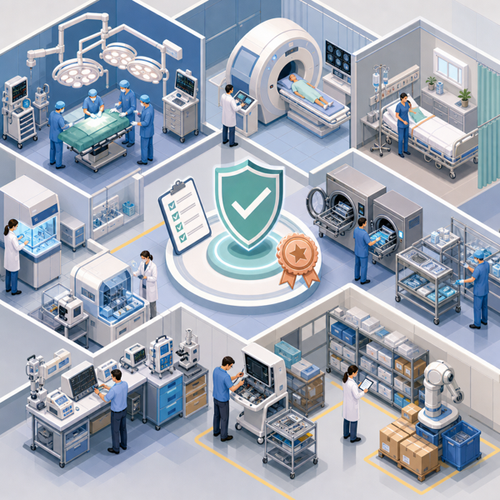
The landscape of health care technology standards continues to evolve rapidly, and June 2026 introduces major developments that promise to improve both patient safety and operational efficiency. This month sees the publication of two influential international standards: ISO/TS 17664-3:2026, setting out guidance on classifying reusable medical devices for cleaning, and ISO 10650:2026, establishing robust requirements for powered polymerization activators in modern dentistry. Both standards address critical processes in health care—from hospital sterilization workflows to the reliability of dental curing equipment—ensuring safer outcomes for patients and consistent performance for practitioners.
Overview / Introduction
Health care technology sits at the intersection of innovation, safety, and regulatory oversight. Effective standards play a foundational role in this complex sector, underpinning everything from device manufacturing and reprocessing to point-of-care treatment. This article provides health care professionals, quality managers, dental practitioners, engineers, and procurement specialists with a detailed overview of two newly published ISO standards. Readers will learn about:
- New approaches to grouping medical devices for cleaning
- Fresh requirements for dental polymerization activators
- Implementation strategies and compliance advice
- The impact of these standards on clinical operations and patient safety
Whether you work in medical device production, hospital operations, or clinical dentistry, staying current with international standards is essential for maintaining quality and compliance.
Detailed Standards Coverage
ISO/TS 17664-3:2026 - Guidance for Cleaning Classification of Reusable Medical Devices
Processing of Health Care Products — Information to be Provided by the Medical Device Manufacturer for the Processing of Medical Devices — Part 3: Guidance on the Designation of a Reusable Medical Device to a Cleaning Classification
This technical specification provides comprehensive guidance on how medical device manufacturers, as well as processing facilities, should assign cleaning classifications to reusable medical devices. Its goal is to create standardized, evidence-backed methodologies for grouping devices into product families and matching these to validated cleaning processes—streamlining workflows and supporting regulatory compliance.
The standard explains how to assess devices based on a set of core attributes, including geometric design, material composition, intended clinical use, and cleaning process type (manual or automated). By systematizing this assessment, medical device manufacturers can create clearer, more actionable instructions for use (IFU), while processing facilities can verify the suitability of established cleaning protocols for device reusability.
Other key features include dedicated classification categories for both manual (M1–M3) and automated (A1–A3) cleaning, detailed requirements for risk analysis, and considerations for cleaning validation and verification strategies. Notably, ISO/TS 17664-3:2026 intentionally excludes single-use and sterile-before-use devices, focusing exclusively on items intended for repeated processing.
Professionals involved in:
- Medical device design and manufacturing
- Hospital central sterile services (CSSDs)
- Clinical engineering and device reprocessing will benefit directly from adopting these guidelines.
Practical implications: Adhering to this standard simplifies the alignment of product-specific cleaning data with hospital reprocessing capabilities and helps identify master products for validation, reducing overall risks of improper cleaning.
Key highlights:
- Systematic approach to device classification for cleaning (product family > cleaning category)
- Risk analysis requirements for alternative cleaning methods
- Clarified differentiation between cleaning and microbiocidal processes
Access the full standard:View ISO/TS 17664-3:2026 on iTeh Standards
ISO 10650:2026 - Dentistry: Requirements for Powered Polymerization Activators
Dentistry — Powered Polymerization Activators
This third edition of ISO 10650 brings substantial updates to the specification and test methods for powered polymerization activators—essential equipment in contemporary dental practices for curing light-activated restorative materials and adhesives. The standard covers both quartz-tungsten-halogen (QTH) and LED lamps used at chairside for restorative and orthodontic applications, with a strict focus on wavelength performance (380 nm to 515 nm), design safety, and user information.
With explicit requirements for radiant exitance, design, electrical safety, and device marking, ISO 10650:2026 addresses essential safety and efficacy concerns. New classifications reflect technical advances, such as the introduction of powered activators connected directly to dental units (Type 3). The revision clarifies the risk of blue-light exposure and mandates that manufacturers supply information on protective filtering devices. Manufacturer-supplied instructions must now include version identifiers or revision dates, providing traceability and up-to-date guidance for users.
The standard is applicable to practitioners, dental clinics, and manufacturers utilizing or producing dental curing lights intended for clinical—not laboratory—use. Notably, laboratory-powered polymerization activators remain outside this document’s scope.
Practical implications: Adhering to ISO 10650:2026 ensures powered polymerization activators deliver consistent, safe light output, protecting patient health, improving the durability of dental restorations, and enhancing clinical results.
Key highlights:
- Refined test methods for radiant exitance in the defined spectral range
- Updated classification and detailed requirements for device marking, packaging, and manufacturer instructions
- Enhanced safety guidance for minimizing blue-light hazards
Access the full standard:View ISO 10650:2026 on iTeh Standards
Industry Impact & Compliance
Transformative Effects on Health Care Organizations
These two standards represent significant progress toward greater harmonization in the cleaning, processing, and use of advanced health care devices. By elevating clarity and establishing consensus-driven requirements, health care providers, manufacturers, and regulators can:
- Protect patients from preventable infections and treatment failures
- Simplify device lifecycle management and cleaning validation
- Ensure transparency and traceability through improved documentation
Compliance Considerations and Timelines
Adoption timelines may vary according to local regulatory requirements, contractual agreements, or individual organizational policies. Early adoption is recommended, as compliance supports:
- Streamlined procurement: Clearly defined product attributes and IFU requirements aid evaluation and implementation
- Reduced liability and risk: Demonstrating alignment with ISO standards strengthens legal defensibility and patient trust
- Continuous improvement: Ongoing updates in instructions and risk analyses support adaptive, resilient health care systems
Risks of Non-Compliance
Failure to implement these standards can expose organizations to significant regulatory repercussions, increased rates of device failure or cross-contamination, and reputational harm. Proactive adoption addresses these concerns and supports operational excellence.
Technical Insights
Common Technical Requirements
Across both standards, a commitment to measurable, auditable attributes emerges as a unifying theme. This includes:
- Objective device classification (by physical and clinical attributes)
- Documentation of cleaning or curing process validation
- Clear instructions for use (IFU) and requirements for traceability
Implementation Best Practices
- Gap analysis: Compare current processes and device inventories against new standard requirements
- Manufacturer engagement: Request updated IFUs, technical files, and compliance declarations from suppliers
- Staff training: Develop competency-based programs in cleaning validation, risk assessment, and safe device use
- Continuous monitoring: Institute regular audits and protocol reviews aligned with the latest ISO specifications
Testing and Certification Considerations
- Testing for polymerization activators should include spectrometer-based measurements as specified in ISO 10650
- Cleaning classification must rely on documented, reproducible validation for each product family per ISO/TS 17664-3
- Ensure traceable records of all validations, risk analyses, and process modifications for inspection or regulatory review
Conclusion / Next Steps
With the release of ISO/TS 17664-3:2026 and ISO 10650:2026, health care and dental professionals are equipped with up-to-date, practical standards for device cleaning and dental polymerization. Embracing these guidelines supports higher quality care, improved compliance, and safer clinical outcomes.
Key takeaways:
- Device manufacturers and clinical teams must align with new classification and validation expectations
- Risk analyses, documentation, and transparent instructions are critical
- Proactive engagement ensures ongoing compliance and operational benefits
Next steps for your organization:
- Review and integrate the new standards into relevant quality management systems
- Update procurement specifications and compliance checklists
- Train staff on new technical and operational requirements
- Visit iTeh Standards to access the latest international standards and stay ahead of regulatory changes
Explore these updates and empower your organization to meet the evolving standards of care.
Categories
- Latest News
- New Arrivals
- Generalities
- Services and Management
- Natural Sciences
- Health Care
- Environment
- Metrology and Measurement
- Testing
- Mechanical Systems
- Fluid Systems
- Manufacturing
- Energy and Heat
- Electrical Engineering
- Electronics
- Telecommunications
- Information Technology
- Image Technology
- Precision Mechanics
- Road Vehicles
- Railway Engineering
- Shipbuilding
- Aircraft and Space
- Materials Handling
- Packaging
- Textile and Leather
- Clothing
- Agriculture
- Food technology
- Chemical Technology
- Mining and Minerals
- Petroleum
- Metallurgy
- Wood technology
- Glass and Ceramics
- Rubber and Plastics
- Paper Technology
- Paint Industries
- Construction
- Civil Engineering
- Military Engineering
- Entertainment