

October 2026: New Safety and Quality Standards for Home, Leisure, and Tourism Equipment
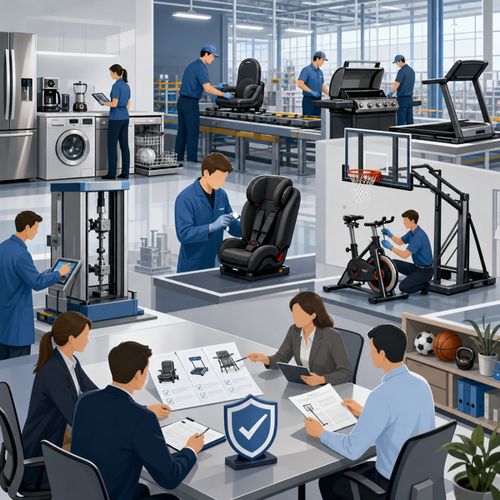
Every October, new international standards set the direction for safety, quality, and innovation in the home, leisure, and tourism industries. In October 2026, five new standards have been published focusing on equipment and environments essential to both domestic and commercial applications—from utility lighters and electric blankets to breast pumps and campsite facilities. Covering a broad range of everyday and specialized products, these standards directly impact manufacturers, service providers, regulators, and facility managers who are responsible for ensuring safety and quality in homes, public spaces, and commercial environments.
Overview / Introduction
The domestic and commercial equipment, entertainment, and sports sector is fundamental to comfortable living and enjoyable leisure. This rapidly-evolving field sees continual advancements in safety, energy efficiency, and inclusivity—driven largely by the development and revision of international standards. Compliance with these standards not only ensures customer safety and satisfaction but also streamlines market access and enhances competitiveness.
In this article, we explore the five new standards released in October 2026, providing insights on their scope, technical requirements, and practical impact. Readers will find actionable guidance tailored for industry professionals, compliance officers, engineers, procurement specialists, and anyone involved in product or service delivery in the domestic, leisure, or facilities sector.
Detailed Standards Coverage
ISO 22702:2026 - Utility Lighters — Safety Specifications
Utility lighters — Safety specifications
This standard sets comprehensive safety requirements for utility lighters, commonly used as grill lighters, fireplace lighters, gas matches, and similar devices. ISO 22702:2026 applies to all flame-producing consumer products of this type, with the intention to minimize risks in both normal usage and foreseeable misuse. The scope excludes matches and products intended solely for lighting cigars, pipes, or cigarettes.
Key specifications address flame generation and height, ease of flame-height adjustment, resistance to hazardous behaviors (such as spitting, sputtering, and flaring), requirements for flame extinction, and robust structural integrity. Detailed drop, temperature, burning, and fuel compatibility tests ensure lighters withstand common household and commercial stresses. The standard also places emphasis on explicit instruction manual guidelines, warning signs, and refill safety.
Who should comply:
- Manufacturers and suppliers of utility lighters
- Retailers and importers
- Safety auditors and quality managers focusing on consumer product safety
Implementation implications:
- Updated product testing before market release
- Improved product labeling and user documentation
- Enhanced risk assessment and post-market surveillance
Key highlights:
- Flame height control and consistency requirements
- Drop, heat, and cyclic burning resistance criteria
- Mandatory user instructions and refilling safety provisions
Access the full standard:View ISO 22702:2026 on iTeh Standards
IEC 60335-2-17:2022 - Safety of Flexible Electrical Heating Appliances
Household and similar electrical appliances – Safety – Part 2-17: Particular requirements for blankets, pads, clothing and similar flexible heating appliances
This standard defines safety criteria and test methods for electric blankets, pads, heated clothing, and other flexible heating devices for household or similar purposes. IEC 60335-2-17:2022 covers appliances with voltages up to 250 V, including both AC and DC or battery-powered models. Its reach extends to devices used in beauty parlors or workplaces with cold environments, and incorporates specific annexes addressing heated clothing and mattress safety.
The document establishes controls over electrical, mechanical, and fire hazards, focusing on protection from overheating, proper insulation, stability, and operational durability. New provisions align the standard with the foundational IEC 60335-1:2020, converting prior recommendations into strict normative requirements. Enhancements cover definition and verification of control units, updated drop and folding tests for flexible appliances, electrode breakage compliance criteria, and improved overheating and fire protection.
Who should comply:
- Manufacturers of electric blankets, pads, and heated clothing
- Quality and certification bodies
- Retailers, maintenance providers, and safety inspectors
Implementation implications:
- Refined quality assurance processes
- Additional or updated testing protocols
- Revisions to user instructions and product markings
Key highlights:
- Alignment with latest global electrical safety norms
- Overheating protection for user safety
- Updated test methods for various heating element constructions
Access the full standard:View IEC 60335-2-17:2022 on iTeh Standards
IEC 60335-2-125:2026 - Safety Requirements for Electric Breast Pumps
Household and similar electrical appliances – Safety – Part 2-125: Particular requirements for breast pump appliances for expressing breast milk
IEC 60335-2-125:2026 establishes essential safety obligations for household and similar-use breast pumps, including battery-powered, portable, and direct-current (DC) variants. The scope also covers breast pump appliances in non-home environments such as lactation support offices and outdoor use but excludes hospital-grade and strictly medical devices.
The standard prescribes detailed requirements for electrical safety, mechanical performance, labeling, user instructions, moisture resistance, and hygiene. It also addresses abnormal operations and directs special attention to surface temperatures and accessibility—critical for devices in contact with sensitive users. Alignment with IEC 60335-1 ensures compatibility across household electrical appliances, while cross-referencing medical device standards minimizes regulatory overlap.
Who should comply:
- Manufacturers and importers of personal and commercial-grade breast pumps
- Distributors and health/nutrition retailers
- Safety and compliance professionals in maternity and infant care sectors
Implementation implications:
- Enhancement of quality control and validation processes
- Review and update of user safety information
- Additional regulatory harmonization efforts in certain jurisdictions
Key highlights:
- Detailed criteria for surface temperature and hygiene
- Requirements for user instructions and product markings
- Special provisions for abnormal operating conditions
Access the full standard:View IEC 60335-2-125:2026 on iTeh Standards
IEC 60335-2-53:2026 - Safety for Sauna Heating Appliances and Infrared Cabins
Household and similar electrical appliances – Safety – Part 2-53: Particular requirements for sauna heating appliances and infrared cabins
IEC 60335-2-53:2026 is the authoritative resource for the safety of electric sauna heaters and infrared units, up to 20 kW, intended for home and public facilities such as communal saunas and hotels. The standard now integrates requirements for prefabricated sauna units, thermal storage functions, and humidifier units. It stipulates electrical protection, construction, labeling, mechanical and accessibility hazards, and resistance to environmental stress.
Notably, this edition aligns closely with the latest IEC 60335-1, introduces new surface temperature provisions for areas outside sauna rooms, and strengthens protective device and control specifications. The inclusion of additional test probes and test methods enhances assessment for live and moving part protection.
Who should comply:
- Manufacturers and installers of sauna heating and infrared appliances
- Spa, wellness, and hospitality facility operators
- Compliance and safety certifiers
Implementation implications:
- Upgrading and re-certifying sauna appliances
- Enhanced product documentation and training for installation
- Additional maintenance and periodic inspection protocols
Key highlights:
- Provisions for humidifier units and thermal storage heaters
- Accessibility and safety tests for users in home or public settings
- Comprehensive electrical and mechanical test methods
Access the full standard:View IEC 60335-2-53:2026 on iTeh Standards
ISO 18980:2026 - Campsite Facility and Service Requirements
Tourism and related services — Camping tourism — Requirements and recommendations for campsite facilities and services
ISO 18980:2026 delivers universal guidelines and specifications for campsite operators, touching every aspect of facility planning, safety, sustainability, accessibility, and service quality. This standard is wide-reaching, addressing not only campsites for tents and leisure vehicles but also sites with static or semi-permanent rental units, such as mobile homes or safari tents.
Covering layout and design, sanitation, inclusivity, communication, safety, and environmental management, the standard is both a framework for baseline compliance and a driver for continuous improvement. There is a strong focus on sustainability—mandating eco-friendly development, resource conservation, biodiversity protection, and environmental monitoring. Accessibility and inclusivity requirements ensure facilities serve all guests, including those with disabilities, seniors, and families.
Who should comply:
- Campsite owners and operators
- Hospitality industry professionals and regulators
- Facility designers and tourism consultants
Implementation implications:
- Facility upgrades for accessibility and sustainability
- Enhanced staff training and operational protocols
- Transparent communication and guest engagement
Key highlights:
- Sustainable site selection, waste, water, and energy management
- Comprehensive accessibility and guest safety provisions
- Staff requirements and service consistency
Access the full standard:View ISO 18980:2026 on iTeh Standards
Industry Impact & Compliance
The October 2026 standards set a new bar for safety, inclusivity, and sustainability in domestic and commercial equipment, entertainment, and sports. Regulatory compliance is no longer just a checkbox—it’s an operational imperative that protects consumers, enhances brand reputation, and paves the way for market expansion. Non-compliance exposes businesses to legal action, product recalls, reputational damage, and lost consumer trust.
For compliance:
- Manufacturers and service providers should align internal quality management systems with updated standards
- Training and documentation for staff and users must be current and clear
- Regulatory filings and certifications should reference the latest edition of these standards
- Product design and facility upgrades should be audited against the new requirements
Benefits of adopting these standards include:
- Enhanced customer trust and marketability
- Reduced liability and fewer safety incidents
- Easier access to international markets due to harmonized requirements
- Streamlined certification and audit pathways
Timeline considerations:
- Many regions allow a transitional period—from 12 to 36 months—to shift to new standards. However, early compliance is strongly advised to maintain competitiveness and ensure safety.
Technical Insights
Certain technical themes are prevalent across the October 2026 releases:
- Electrical safety and construction integrity: Emphasis on insulation, resistance to heat/fire, and protection against live parts.
- Mechanical strength and durability: Structural drop, bending, and cyclic operation tests feature strongly in appliance standards.
- User safety and warnings: More explicit instructions, labeling, warning signs, and the application of QR codes or digital information for risk mitigation.
- Sustainability and accessibility: Particularly in the facilities sector (e.g., campsites), environmental stewardship and inclusive design are obligatory.
Best practices for implementation:
- Conduct gap analysis between current practices and new standard requirements.
- Update product designs, processes, and facility layouts as needed.
- Revamp documentation and user information packages.
- Schedule third-party conformity assessments early.
- Provide targeted staff training on revised safety measures and operational procedures.
Testing and certification: Accredited test laboratories and certification bodies play a crucial role in verifying compliance. Organizations should select partners who are familiar with the latest IEC and ISO standards, and ensure ongoing monitoring for product or facility modifications.
Conclusion / Next Steps
The October 2026 round of standard publications delivers robust and essential updates impacting everything from household electrical safety to sustainable, accessible travel experiences. For industry professionals, the message is clear: aligning with these standards is fundamental to safety, operational excellence, and brand leadership.
Key takeaways:
- Proactive compliance ensures safer, higher-quality products and services
- Regular updates to internal policies, sourcing, training, and documentation are vital
- Early adoption fosters trust and facilitates market access
Recommended actions:
- Review the full text of each relevant standard on iTeh Standards
- Book training for technical and compliance staff
- Engage with certification bodies to schedule assessments
- Stay informed about forthcoming parts and related standards in this domain
For further information, access all new and updated standards directly through iTeh Standards, and stay ahead in ensuring product and facility safety, reliability, and excellence.
Categories
- Latest News
- New Arrivals
- Generalities
- Services and Management
- Natural Sciences
- Health Care
- Environment
- Metrology and Measurement
- Testing
- Mechanical Systems
- Fluid Systems
- Manufacturing
- Energy and Heat
- Electrical Engineering
- Electronics
- Telecommunications
- Information Technology
- Image Technology
- Precision Mechanics
- Road Vehicles
- Railway Engineering
- Shipbuilding
- Aircraft and Space
- Materials Handling
- Packaging
- Textile and Leather
- Clothing
- Agriculture
- Food technology
- Chemical Technology
- Mining and Minerals
- Petroleum
- Metallurgy
- Wood technology
- Glass and Ceramics
- Rubber and Plastics
- Paper Technology
- Paint Industries
- Construction
- Civil Engineering
- Military Engineering
- Entertainment