

September 2026: Essential Updates in Digital Imaging and Radiographic Film Digitization Standards
September 2026: Essential Updates in Digital Imaging and Radiographic Film Digitization Standards
The image technology landscape is seeing significant advancement with the publication of three new ISO standards in September 2026. These standards bring both high-precision guidance and tightened requirements to digital imaging—focusing on optical image stabilization measurement methods—and to non-destructive testing (NDT) through improved qualification of radiographic film digitisation systems. Organizations across photography, consumer electronics, industrial testing, and quality assurance must pay attention to these changes to maintain compliance, improve performance, and drive innovation.
Overview / Introduction
Image technology has become indispensable in fields ranging from everyday photography to high-stakes industrial non-destructive testing. The quality and reliability of digital images—whether captured on consumer cameras or digitized from radiographic film—directly influence decision-making, safety, product validation, and compliance.
International standards provide the essential foundation for ensuring consistency, performance, and interoperability across devices and processes. The newly released ISO standards covered in this article address:
- Objective assessment methods for optical image stabilization in digital cameras and mobile devices
- Quantitative measurement and quality control procedures for radiographic film digitisation
- Clearly defined minimum requirements for NDT film digitization systems
In this article, you’ll discover what each new standard brings to the industry, how technical requirements are evolving, and practical considerations for implementation and compliance.
Detailed Standards Coverage
ISO 20954-1:2026 - Digital Imaging — Measurement Method for Image Stabilization Performance — Part 1: Optical Systems
Digital imaging — Measurement method for image stabilization performance — Part 1: Optical systems
The latest edition of ISO 20954-1:2026 introduces a robust, standardized measurement method for assessing the optical image stabilization (OIS) performance of consumer digital cameras, camcorders, and mobile phones. This edition delivers methodological improvements that better reflect real-world conditions, ensuring fair and objective comparison of handheld blur compensation technologies among products.
What the Standard Covers
- Defines procedures for simulating vibrations in three rotational axes—yaw, pitch, and roll—using a vibration generator to replicate handheld camera movement.
- Specifies use of standardized test charts and environmental controls to achieve repeatable measurements.
- Outlines comprehensive camera settings and device mounting specifications to ensure consistent testing.
Key Requirements & Specifications
- Test Environment: Temperature (23±2°C); controlled humidity (30–70%).
- Vibration Simulation: Standardized vibration generator required; both high- and low-mass vibration waveforms defined based on device weight.
- Measurement Parameters: Blur evaluation at the center and periphery (60% image height) of the imaging sensor.
- Data Analysis: Image blur thresholds and conversion into 35mm film-equivalent values for universal benchmarking.
- Reporting: Detailed requirements for presenting test results and describing camera/lens combinations in documentation.
Who Needs to Comply
- Consumer digital camera manufacturers
- Mobile device OEMs with imaging capabilities (e.g., smartphones, tablets)
- Camcorder and imaging system makers
- Quality and R&D labs involved in image performance testing
Practical Implementation & Notable Changes
The second edition introduces roll axis consideration, which better simulates actual camera shake. Peripheral (off-center) image blur now also must be evaluated, reflecting growing demands for better wide-field stabilization in modern imaging devices. Adoption guarantees that marketing claims and product comparisons are rooted in objective, reproducible testing.
Key highlights:
- Simulates real handheld camera movement with yaw, pitch, and roll
- Applicable to both lenses and camera bodies with stabilization technology
- Updated blur measurement at both center and 60% image height
Access the full standard:View ISO 20954-1:2026 on iTeh Standards
ISO 14096-1:2026 - Non-Destructive Testing — Qualification of Radiographic Film Digitisation Systems — Part 1: Definitions, Quantitative Measurements of Image Quality Parameters, Standard Reference Film and Qualitative Control
Non-destructive testing — Qualification of radiographic film digitisation systems — Part 1: Definitions, quantitative measurements of image quality parameters, standard reference film and qualitative control
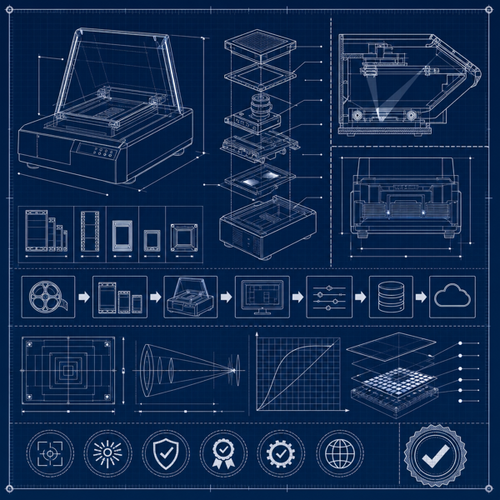
ISO 14096-1:2026 provides the foundation for qualifying film digitisation systems used in NDT, with rigorous procedures to evaluate the digitisation process that converts analog radiographic films into digital data. Its framework is indispensable for quality assurance, regulatory compliance, and reliability in industrial imaging.
What the Standard Covers
- Defines essential terminology for radiographic film digitization
- Details quantitative methods to measure critical image quality parameters:
- Spatial resolution
- Density range and contrast sensitivity
- Spatial linearity
- Modulation transfer function (MTF)
- Describes the use of a standard reference film—containing well-defined test targets—for system calibration and routine control
Key Requirements & Specifications
- Stepped Density Targets: For calibrating characteristic transfer curves and testing density range
- Spatial Resolution: Tests system performance down to a basic spatial resolution of 10 µm
- Density Contrast Sensitivity: Achievable down to 0.02 optical density for superior defect detection
- Film Size Capacity: Systems must accommodate films up to 350 × 430 mm
- Quality Control Protocols: Includes procedures for ongoing qualitative and quantitative system checks
Who Needs to Comply
- NDT service providers using radiographic film digitisation
- Industrial inspection labs in aerospace, automotive, energy, and manufacturing
- Developers and manufacturers of film digitizers and associated software
- Quality and compliance managers overseeing NDT processes
Practical Implementation & Notable Changes
This second edition integrates updated terminology, introduces tools for advanced calculation such as basic spatial resolution, and improves traceability through enhanced use of reference films. These advances support more precise system qualification and facilitate easier integration of system checks into software workflows.
Key highlights:
- Covers quantitative and qualitative assessment, from spatial resolution to contrast
- Standardizes the role of reference films for both calibration and ongoing QC
- Facilitates system software and manual integration for flexible quality control
Access the full standard:View ISO 14096-1:2026 on iTeh Standards
ISO 14096-2:2026 - Non-Destructive Testing — Qualification of Radiographic Film Digitisation Systems — Part 2: Minimum Requirements
Non-destructive testing — Qualification of radiographic film digitisation systems — Part 2: Minimum requirements
ISO 14096-2:2026 establishes the minimum requirements for radiographic film digitisation systems as applied to NDT, building on the measurement and evaluation procedures set out in Part 1.
What the Standard Covers
- Specifies three film-digitisation quality classes, catering to different industrial application needs
- Links digitisation requirements to the radiographic inspection context, factoring in:
- Radiation energy
- Material thickness
- Original film quality
- Ensures the digitized output retains sufficient fidelity for defect detection and documentation
Key Requirements & Specifications
- Quality Classes: Users select the appropriate class for the task, each defined by minimum required spatial resolution and density range
- Parameter Dependencies: Requirements are tailored to inspection parameters, aligning digitisation performance with critical NDT criteria
- Baseline Compliance: Ensures that digitisation does not degrade or obscure information necessary for reliable inspection and evaluation
- Reference and Measurement: Relies on the definitions and test procedures in ISO 14096-1 for traceability
Who Needs to Comply
- Industrial NDT labs and inspection bodies
- Manufacturers and integrators of film digitization solutions
- Quality engineers and technical managers in regulated industries (energy, chemicals, transportation, manufacturing)
Practical Implementation & Notable Changes
This edition clarifies the interplay between digitisation quality and NDT application class, introducing updated quality class parameters and ensuring alignment with the latest industry practices. Adoption is crucial to guarantee both compliance and reliable digital archiving of critical inspection data.
Key highlights:
- Defines minimum requirements tailored to NDT film digitization tasks
- Segregates quality into three classes for flexibility and targeted compliance
- Integrates seamlessly with the terminology and measurement protocols from Part 1
Access the full standard:View ISO 14096-2:2026 on iTeh Standards
Industry Impact & Compliance
The implications of these new standards are multifaceted and significant for organizations across the imaging technology spectrum.
How Businesses Are Affected
- Product Development: Manufacturers must update testing and documentation methods to conform with new measurement protocols, especially for newly launched digital cameras and imaging devices.
- Procurement & Qualification: Industrial users can now specify, purchase, and qualify equipment using harmonized, objective criteria, simplifying vendor comparisons.
- NDT Assurance: Adoption in industrial radiography ensures verifiable quality of digitized inspection records, simplifying audits and regulatory reviews.
Compliance Considerations & Timelines
- Regulatory bodies and clients will increasingly require that new devices or solutions be documented and tested according to these standards.
- Early adoption allows smoother audits, avoids costly remediation, and demonstrates commitment to industry best practices.
- Transition periods may be available, but organizations are advised to proactively schedule upgrades and staff training.
Benefits of Implementation
- Increased confidence in performance claims and inspection records
- Enhanced traceability and audit-friendliness
- Reduced risk of unnoticed defects or non-conforming products
- Improved marketability and competitive advantage for compliant products/services
Risks of Non-Compliance
- Potential regulatory and contractual penalties
- Loss of customer trust or competitive tenders
- Higher long-term costs due to non-conforming product recalls or re-testing
Technical Insights
Common Technical Requirements
Across these standards, several key themes emerge:
- Objective, Repeatable Measurement: Use of standardized equipment (vibration generators, calibrated test charts, reference films) is now central.
- Environmental Control: Strict requirements for temperature, humidity, and illumination to avoid confounding test results.
- Granular Data Analysis: Both central and peripheral image areas receive attention, as do both qualitative and quantitative system checks.
- Compatibility & Interoperability: Results are presented in widely recognized forms, ensuring meaningful cross-device comparison.
Implementation Best Practices
- Adopt or upgrade test equipment to meet the new vibration and environmental control requirements
- Update operating procedures and staff training to reflect the new measurement methodologies
- Integrate software-driven quality management systems for automated tracking of compliance data
- Conduct pilot studies or gap analyses to identify discrepancies between current practices and new standards
Testing & Certification Considerations
- Use third-party accredited laboratories for impartial verification of compliance, especially when customer documentation is required
- Ensure procedures for both initial qualification and routine quality control align with standard protocols
- Maintain up-to-date calibration of all reference materials—test charts, reference films, and vibration generators
Conclusion / Next Steps
The September 2026 releases of ISO 20954-1:2026, ISO 14096-1:2026, and ISO 14096-2:2026 represent significant steps forward for the imaging technology and industrial non-destructive testing communities. In an era defined by increasing demands for accuracy, reliability, and transparency, these standards ensure products and processes are measurable, comparable, and certifiable to a global benchmark.
Key takeaways:
- New, robust procedures for evaluating optical image stabilization and radiographic film digitisation
- Enhanced clarity, objectivity, and consistency in performance measurement and reporting
- Critical compliance requirements for manufacturers, laboratories, and end users
Recommendations:
- Review the full texts of all relevant standards to determine their applicability to your organization’s products or processes.
- Initiate a compliance assessment and prepare for any necessary transitions in testing, equipment, or training.
- Monitor future updates and consult with standards bodies to stay ahead of the curve.
Explore these new standards on iTeh Standards to ensure your organization’s image technology practices remain compliant, competitive, and future-ready.
Categories
- Latest News
- New Arrivals
- Generalities
- Services and Management
- Natural Sciences
- Health Care
- Environment
- Metrology and Measurement
- Testing
- Mechanical Systems
- Fluid Systems
- Manufacturing
- Energy and Heat
- Electrical Engineering
- Electronics
- Telecommunications
- Information Technology
- Image Technology
- Precision Mechanics
- Road Vehicles
- Railway Engineering
- Shipbuilding
- Aircraft and Space
- Materials Handling
- Packaging
- Textile and Leather
- Clothing
- Agriculture
- Food technology
- Chemical Technology
- Mining and Minerals
- Petroleum
- Metallurgy
- Wood technology
- Glass and Ceramics
- Rubber and Plastics
- Paper Technology
- Paint Industries
- Construction
- Civil Engineering
- Military Engineering
- Entertainment