


July 2026: New Guidance for Industrial Heating and Welding Standards
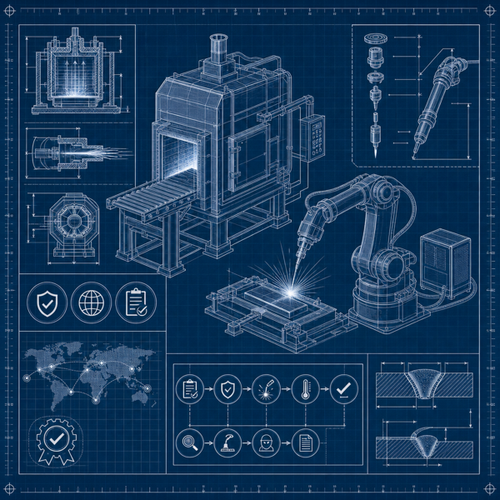
The landscape of manufacturing engineering standards continues to evolve, with July 2026 marking the release of two vital international standards: EN IEC 62395-2:2026 for electrical resistance trace heating systems and EN ISO 18491:2026 covering the measurement of arc energies in welding. These updates bring significant technical advancements and practical guidance for industry professionals seeking improved safety, consistency, and process control in their operations.
Overview
Manufacturing engineering sits at the intersection of innovation, productivity, and safety. Standards play a foundational role in ensuring that systems, components, and processes in this sector meet stringent safety, efficiency, and quality benchmarks. With the publication of two new standards in July 2026, organizations now have detailed guidance to:
- Design and maintain critical trace heating infrastructure
- Achieve more accurate and consistent welding process measurements
This article provides an expert breakdown of both standards, shedding light on their scope, requirements, and the tangible impact they bring to industrial and commercial environments. Whether you manage heating systems in a process plant or oversee welding quality in fabrication, these updates are essential reading.
Detailed Standards Coverage
EN IEC 62395-2:2026 - Application Guide for Electrical Resistance Trace Heating
Electrical resistance trace heating systems for industrial and commercial applications – Part 2: Application guide for system design, installation and maintenance
This comprehensive standard is the definitive source on the design, installation, maintenance, and repair of electrical resistance trace heating systems used in both industrial and commercial contexts. It is particularly essential for applications such as piping, vessels, roofs, snow melting systems, and underground energy storage. Importantly, it explicitly excludes installations in potentially explosive atmospheres, which remain governed by other standards.
Scope and Application
EN IEC 62395-2:2026 provides:
- Detailed recommendations for designing safe, reliable, and efficient trace heating solutions
- Guidance for both factory-fabricated and field-assembled units, whether using series, parallel, or surface heaters
- In-depth support for freeze protection, process temperature maintenance, roof and gutter deicing, floor warming, rail heating, and frost heave prevention
Designed to be used by trained and qualified personnel, the standard covers all major stages of the system life cycle:
- System design (including thermal and electrical design, control and monitoring, application-specific considerations)
- Installation best practices and required pre-commissioning tests
- Inspection, maintenance, and documentation for ongoing safety and performance
- Practical advice on repairs and fault location
Key Requirements and Specifications
Organizations implementing this standard must pay careful attention to technical elements such as:
- Selection of heaters based on installation type (surface, embedded, conduit)
- Calculation of heat loss, sheath temperature, and required safety factors
- Proper system and control design for specialized applications (e.g., sprinkler systems, safety showers, snow melting)
- Installation methods to minimize risks such as undue shadowing around sprinkler heads, which could impair fire safety
- Ongoing monitoring, visual and electrical evaluations, and appropriate documentation
Notably, this edition introduces expanded guidance and new illustrated figures for:
- Design considerations and mitigation techniques related to sprinkler system integration (to avoid spray shadowing)
- Trace heating solutions for emergency eyewash units and safety showers
- Enhanced maintenance schedules, repair methodologies, and commissioning best practices
Who Needs to Comply
- Engineering firms specifying or installing trace heating systems
- Maintenance teams in processing plants (chemical, power, pharmaceutical, food & beverage)
- Contractors and facility managers overseeing building heating systems
- Design professionals in industrial and commercial construction
Practical Implications
Adhering to EN IEC 62395-2:2026 ensures:
- Safer system operation under normal and extreme conditions
- Simplified regulatory and insurance compliance
- More consistent thermal performance and energy efficiency
- Reduced risk of failures, downtime, and costly repairs
Key highlights:
- Comprehensive application guidance for a wide range of industrial and commercial trace heating uses
- Technical updates for sprinkler systems and emergency safety infrastructure
- Lifecycle considerations from specification and installation to ongoing maintenance and repair
Access the full standard:View EN IEC 62395-2:2026 on iTeh Standards
EN ISO 18491:2026 - Measurement of Arc Energies in Welding
Welding and allied processes – Measurement of arc energies (ISO 18491:2026)
EN ISO 18491:2026 defines the essential procedures and parameters for measuring welding arc energy—a critical factor for quality assurance and process standardization in welding. With the growing complexity of welding equipment and the importance of precise energy control, this standard enables greater certainty and repeatability in welded joint performance.
Scope and Application
This standard:
- Provides protocols for measuring the parameters (e.g., arc voltage, current, energy) necessary to calculate arc energies in arc welding processes
- Applies to a broad spectrum of welding methods covered in ISO 4063, including traditional and advanced waveform technologies
- Ensures compliance with international guidelines referenced by ISO 15614 for welding procedure qualification and manufacturing audits
Technical Requirements
Key technical requirements include:
- Accurate measurement of arc voltage and current, even when using advanced welding power sources with complex waveforms
- Methods for determining total or average instantaneous energy delivered during welding
- Clear instructions for setting up measurement devices, data acquisition, and calibration (referencing IEC 60974-14 and related standards)
- Guidance on measuring welding speed and run length to support robust calculation of heat input
The standard also addresses the growing challenge of using traditional instruments—like TRMS clamp meters—when measuring non-sinusoidal waveforms produced by modern power sources. EN ISO 18491:2026 outlines best practices for instrument calibration and seeks to minimize variability between test and production measurements.
Who Needs to Comply
- Welding engineers and QA/QC inspectors
- Fabricators and manufacturers in sectors such as automotive, aerospace, energy, and shipbuilding
- Testing laboratories and certification bodies
- Anyone responsible for establishing or verifying Welding Procedure Specifications (WPS)
Practical Implications
Implementing this standard allows organizations to:
- Improve weld repeatability, reliability, and safety
- Align with global norms for documenting heat input and welding quality
- Reduce process errors and the risk of non-conformance
- Facilitate troubleshooting of welding issues arising from energy variability
Key highlights:
- Detailed methods for measuring arc energies in both traditional and advanced welding setups
- New annexes covering power source types, measurement approaches, and conversion factors
- Critical for compliance with quality management and international welding codes
Access the full standard:View EN ISO 18491:2026 on iTeh Standards
Industry Impact & Compliance
The July 2026 publication of these standards brings both opportunity and responsibility for organizations operating in industrial and commercial manufacturing. Key impacts include:
- Raised Safety and Performance Benchmarks: Trace heating systems and welding quality are critical to facility safety, operational uptime, and compliance. Both standards help reduce the likelihood of accidents, fires, energy waste, and regulatory breaches.
- Streamlined Compliance: Adoption of these standards facilitates third-party audits, certification, and insurance compatibility, while minimizing risk from outdated or inconsistent practices.
- Transition Timelines: Organizations are advised to review their current systems and procedures and plan for full compliance before the withdrawal dates of superseded standards (e.g., EN 62395-2:2013 for trace heating).
- Market Advantage: Using the latest methods and specifications enhances customer confidence, improves competitive positioning, and fosters a culture of continuous improvement.
Technical Insights
While these standards cover different engineering domains, several common technical themes emerge:
- Emphasis on Measurability and Documentation: Both standards specify careful documentation—from trace heating commissioning records to detailed welding procedure monitoring. Digital logs and traceability are increasingly essential.
- Installation and Personnel Qualifications: Only trained, qualified personnel should carry out installations (heating) and measurements (welding). Keeping staff certification current is vital.
- Calibration, Testing, and Validation: Both standards reference regular calibration, testing, and validation of measurement instruments—be it for commissioning trace heating lines or for collecting welding energy data.
- Risk Mitigation through Design: EN IEC 62395-2:2026's expanded sections on sprinkler system integration and safety installations demonstrate the sector’s move towards proactive risk management above minimum compliance.
Implementation Best Practices
- Early engagement with standard updates through industry workshops or training
- Periodic review of procedures and equipment against the latest requirements
- Close collaboration with suppliers, installers, and certifying bodies
- Investment in modern test equipment compatible with both traditional and advanced system requirements
Conclusion and Next Steps
The publication of EN IEC 62395-2:2026 and EN ISO 18491:2026 in July 2026 signals a renewed focus on precision, safety, and efficiency in manufacturing engineering. Whether you manage complex process heating systems or oversee welded assemblies, these standards will shape best practices for years to come.
Key takeaways for organizations:
- Review and align current procedures with the new guidance, especially for high-risk or critical infrastructure.
- Train relevant personnel on the technical updates and measurement requirements.
- Invest in updated tools and technologies to support compliance and efficient implementation.
Stay competitive and compliant:
- Explore the official standards on iTeh Standards for full documentation, technical support, and additional resources.
- Monitor upcoming changes in related areas of manufacturing engineering to maintain your edge.
For professionals committed to operational excellence, safety, and regulatory leadership, now is the time to embrace and implement these pivotal standards.
Categories
- Latest News
- New Arrivals
- Generalities
- Services and Management
- Natural Sciences
- Health Care
- Environment
- Metrology and Measurement
- Testing
- Mechanical Systems
- Fluid Systems
- Manufacturing
- Energy and Heat
- Electrical Engineering
- Electronics
- Telecommunications
- Information Technology
- Image Technology
- Precision Mechanics
- Road Vehicles
- Railway Engineering
- Shipbuilding
- Aircraft and Space
- Materials Handling
- Packaging
- Textile and Leather
- Clothing
- Agriculture
- Food technology
- Chemical Technology
- Mining and Minerals
- Petroleum
- Metallurgy
- Wood technology
- Glass and Ceramics
- Rubber and Plastics
- Paper Technology
- Paint Industries
- Construction
- Civil Engineering
- Military Engineering
- Entertainment