

August 2026: Updated Laser Safety Standard Enhances Protection for Hand-Held Laser Processing Machines
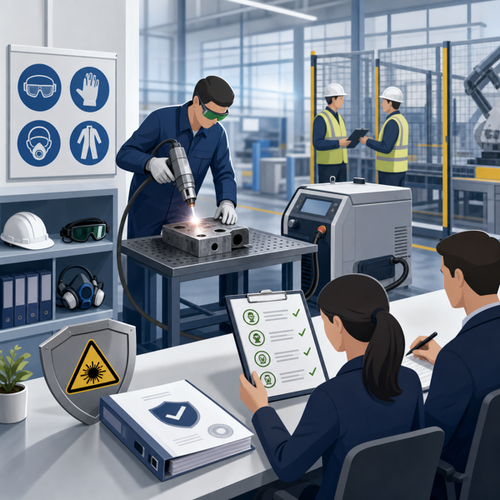
The August 2026 publication of ISO 11553-2:2026 marks a significant advancement in safety standards for organizations using hand-held or hand-operated laser processing machines. Professionals in environmental protection, health, and industrial safety now have new, more stringent guidelines to help minimize risks associated with laser equipment in diverse applications, such as manufacturing, restoration, and surface treatment. By addressing numerous hazards and incorporating detailed risk assessment measures, this standard empowers companies to better protect their workforce, equipment, and bystanders. This update is timely for compliance officers and quality managers striving to keep their operations safe, efficient, and in line with the latest regulatory expectations.
Overview / Introduction
Laser processing machines are essential in a multitude of industries—including automotive manufacturing, construction, electronics, and restoration. These machines bring efficiencies in tasks like welding, cutting, cleaning, and surface treatment, but also introduce inherent safety challenges due to high-energy laser radiation. International standards provide a critical foundation for controlling these hazards, ensuring that risks to workers and bystanders are minimized and that machinery operates safely under both normal use and foreseeable misuse.
The latest update, ISO 11553-2:2026, specifically addresses safety requirements for hand-held or hand-operated laser processing machines (HLMs). This standard defines comprehensive technical and procedural requirements, guides manufacturers and operators through risk assessment and mitigation, and establishes criteria for equipment performance and user training.
In this article, you'll find:
- An overview of the scope, structure, and key requirements of ISO 11553-2:2026
- Guidance on industry impacts and compliance strategies
- Technical insights for effective implementation and risk control
- Actionable recommendations for aligning with the new standard
Detailed Standards Coverage
ISO 11553-2:2026 – Safety of Machinery – Laser Processing Machines – Part 2: Safety Requirements for Hand-Held or Hand-Operated Laser Processing Machines
Full Title: Safety of machinery – Laser processing machines – Part 2: Safety requirements for hand-held or hand-operated laser processing machines
The newly revised ISO 11553-2:2026 provides comprehensive requirements for the safe design, operation, and maintenance of hand-held and manually guided laser processing machines. The standard targets all significant hazards related to these machines, including primary and secondary hazards resulting from laser radiation, mechanical and electrical faults, thermal exposure, hazardous substances, and ergonomic factors.
Scope and Applicability:
- Applies exclusively to laser processing machines where the laser head or workpiece is guided manually.
- Covers all-in-one HLM assemblies and devices where a hand-held laser processing head (HLH) is connected to an external laser source.
- Excludes remotely controlled devices (without direct manual guidance), machines without a drive system, medical or cosmetic lasers, and weapons applications.
Key Requirements and Specifications:
- Hazard Identification & Risk Assessment: Manufacturers are required to conduct a detailed, documented risk assessment early in the machine’s development cycle. This includes analyzing potential laser radiation exposure during setup, operation, maintenance, and decommissioning.
- Mechanical & Electrical Safety: Specific measures are outlined to avoid sharp edges, moving part hazards, and electrical contact. Enclosures must meet minimum ingress protection (IP) codes (IP 32 for indoor, IP 43 for outdoor use) to safeguard against environmental risks.
- Laser Radiation Control: Critical requirements address prevention of accidental emission, guided misdirection, fiber breakage, connector faults, or malfunctioning beam delivery systems. The standard mandates:
- Use of interlocks, beam stops, and emergency stop functions
- Monitoring for temperature and breakage in beam delivery systems
- Insulated HLH housings with design-tested resistance (Protective Exposure Limits, FEL/PEL)
- Controls to deactivate the laser if any component is out of specification
- Ergonomics & User Protection: Ergonomic design is required for portable devices, minimizing fatigue and maximizing operator comfort and safety. Information about safe operation, correct PPE usage, and emergency procedures must be provided.
- Personal Protective Equipment (PPE): Guidance includes the selection and validation of laser-specific PPE, such as safety glasses and gloves, according to the expected exposure risk.
- Environmental & Worksite Hazards: Requirements for fume extraction, fire prevention, and environmental controls are detailed, ensuring safe use in both indoor and outdoor settings.
- Labeling & Documentation: Machines must display standardized safety labels in line with ISO 3864-1, and provide thorough operation and maintenance manuals.
Notable Changes from the Previous Edition (ISO 11553-2:2007):
- Greater detail in hazard lists and requirements
- Reorganized clauses and new annexes for risk assessment, PPE selection, and control systems
- Expanded technical requirements for system integration, monitoring, and emergency response
- More stringent specifications on the interface between hand-held units and external laser assemblies
Practical Implications:
- Manufacturers must design HLMs with robust, fail-safe controls and safeguards
- Operators must be trained to recognize and respond to potential hazards
- Procurement teams should specify compliance to this standard for all new laser equipment acquisitions
Key highlights:
- Comprehensive risk assessment methodology required for every hand-held laser processing machine
- Mandates advanced engineering controls (interlocks, beam guards, monitored sensors)
- Detailed requirements for safety labeling, operator training, and documentation
Access the full standard:View ISO 11553-2:2026 on iTeh Standards
Industry Impact & Compliance
The adoption of ISO 11553-2:2026 redefines best practices for industries reliant on portable laser processing tools. The updated requirements impact a variety of professionals:
- Manufacturers & Integrators must revise design and production practices to meet expanded safety controls, perform exhaustive risk assessments, and include verified safety functions that withstand identified hazards.
- Users & Operators benefit from enhanced training, PPE guidance, and engineered controls that reduce the likelihood of direct laser exposure and secondary hazards (e.g., fumes, burns, electrical faults).
- Quality Managers & Compliance Officers should update safety management systems and procurement policies to reflect the latest standard, ensuring all equipment in operation meets or exceeds the new requirements.
Compliance Considerations and Timelines:
- The standard applies to all relevant machines manufactured after the publication date. Retroactive application is not required but strongly recommended for existing equipment.
- Organizations should review existing risk assessments, update operational and training procedures, and schedule audits to verify conformance.
Benefits of Adoption:
- Reduced risk of workplace injuries and regulatory penalties
- Improved employee protection and machine reliability
- Enhanced reputation and market access, demonstrating commitment to international safety norms
Risks of Non-Compliance:
- Potential for serious injury (blindness, burns, respiratory damage)
- Legal liabilities and compliance citations
- Increased insurance costs and reputational harm
Technical Insights
Common Technical Requirements:
- Redundant Safety Controls: Implementation of dual-channel safety systems, emergency stops, and hold-to-run switches to prevent unintentional activation.
- Continuous Monitoring: Temperature, position, and alignment sensors actively monitor the operational status of fiber cables, connectors, and laser heads.
- Passive & Active Shields: Engineering controls (like beam stops and laser-proof enclosures) are fundamental for both machine and workplace safety.
- Performance Levels (PLr): All safety-related parts of control systems must achieve defined minimum performance levels (PLr = d/c, as outlined in ISO 13849-1:2023), which correspond to the severity of risk for each function.
- EMC Compatibility: Machines must be tested and certified for electromagnetic compatibility, in line with IEC 61000 series requirements.
Implementation Best Practices:
- Conduct comprehensive, early-stage risk assessments for each machine design and modification.
- Integrate both technical controls (interlocks, monitored circuits) and procedural controls (user training, access policies).
- Regularly validate performance of all safety-critical functions using the prescribed performance levels.
- Maintain clear, accessible documentation and update training materials with each equipment change or new standard release.
- Audit workplace controls, PPE, and environmental systems routinely to ensure full compliance and operator safety.
Testing and Certification:
- Machine testing should include simulated fault conditions (fiber breakage, connector disconnection, component overheating)
- Certification must be aligned with third-party testing and local regulatory acceptance, reinforcing the international credibility of compliance
Conclusion / Next Steps
The update to ISO 11553-2:2026 advances the safety, performance, and regulatory alignment of hand-held laser processing machines for all sectors using these tools. By closing gaps in risk assessment, engineering controls, and operator protection, the new standard raises the bar for environmental protection and workplace safety.
Key takeaways:
- Review your organization's laser processing assets and update them to ensure full compliance with ISO 11553-2:2026
- Train engineers, operators, and safety managers on the new requirements
- Engage with accredited testing organizations to certify machinery compliance
- Continuously monitor for updates in standards to maintain best-in-class safety
For those involved in procurement, quality management, or facility operations, now is the time to:
- Explore the full text of the new standard
- Benchmark current operations against the updated requirements
- Implement a phased compliance plan
Stay ahead of changing regulations and secure your organization's reputation for safety. For additional guidance and access to the full ISO 11553-2:2026 document, visit:
Categories
- Latest News
- New Arrivals
- Generalities
- Services and Management
- Natural Sciences
- Health Care
- Environment
- Metrology and Measurement
- Testing
- Mechanical Systems
- Fluid Systems
- Manufacturing
- Energy and Heat
- Electrical Engineering
- Electronics
- Telecommunications
- Information Technology
- Image Technology
- Precision Mechanics
- Road Vehicles
- Railway Engineering
- Shipbuilding
- Aircraft and Space
- Materials Handling
- Packaging
- Textile and Leather
- Clothing
- Agriculture
- Food technology
- Chemical Technology
- Mining and Minerals
- Petroleum
- Metallurgy
- Wood technology
- Glass and Ceramics
- Rubber and Plastics
- Paper Technology
- Paint Industries
- Construction
- Civil Engineering
- Military Engineering
- Entertainment