


June 2026 Manufacturing Engineering Standards: Smart Manufacturing Use Cases, Tool Safety, and Data Integration
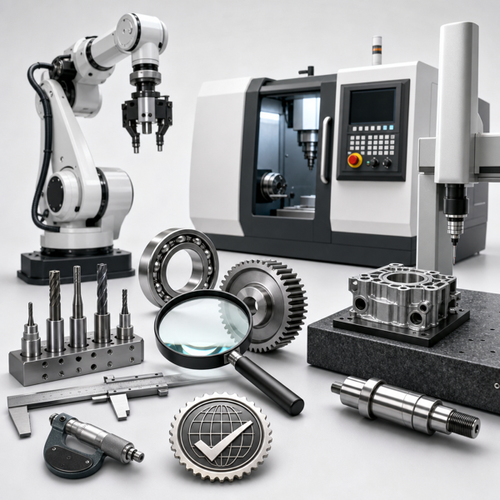
June 2026 Updates: Key International Standards in Manufacturing Engineering
June 2026 brings a significant wave of new standards to the manufacturing engineering sector, addressing the rapidly evolving landscape of smart manufacturing, equipment safety, and data integration. This part-2 article delves into five critical international standards published for manufacturing professionals, summarizing their technical content, requirements, and broader industrial impact. Whether you oversee quality, compliance, digital transformation, or operate advanced machinery, understanding these standards is crucial for operational excellence and regulatory alignment.
Overview / Introduction
Manufacturing engineering is the backbone of global industry, driving product innovation, efficiency, and safety. International standards in this sector play a pivotal role, establishing common frameworks for process optimization, worker protection, interoperability, and the integration of new technologies like industrial automation and digital twins.
In this article, you'll find:
- An accessible summary of five new standards published in June 2026
- Key requirements, scopes, and compliance insights for each
- The significance of unified smart manufacturing templates and terminology
- The latest safety benchmarks for critical machinery and tools
- Expert analysis linking standardization to practical business impact
Detailed Standards Coverage
IEC SRD 63459:2026 – Template for Smart Manufacturing Use Cases
Template for smart manufacturing use cases
Scope & Context:IEC SRD 63459:2026 sets a unified template for documenting smart manufacturing (SM) use cases. Developed by the IEC’s Smart Manufacturing systems committee, this standard streamlines the storage, search, comparison, and retrieval of use cases across standard development organizations (SDOs), consortia, and industry.
Key Requirements:
- Defines the structure for use case records (identification, scope/objectives, relationships, narrative, preconditions, scenario flow, info objects, requirements)
- Sets guidelines for consistent documentation, drawing from SM reference architectures, taxonomies, and terminology
- Supports cross-domain collaboration and easy interoperability of SM practices
Who Should Comply:
- Standards developers and technical committees
- Manufacturing organizations documenting/digitizing business processes
- Solution providers creating or sharing SM use cases
Practical Implications: Adopting this template enables organizations to:
- Harmonize their SM innovation efforts
- Benchmark use cases across industries, promoting knowledge sharing
- Facilitate standardization and uptake of new SM technologies
Key highlights:
- Unified format for global SM use case documentation
- Eases comparison and integration of use case libraries
- Basis for common repositories and collaborative platforms
Access the full standard:View IEC SRD 63459:2026 on iTeh Standards
IEC 62841-3-17:2026 – Safety of Transportable Table Masonry Saws
Electric motor-operated hand-held tools, transportable tools and lawn and garden machinery – Safety – Part 3-17: Particular requirements for transportable table masonry saws
Scope & Context: This standard addresses the safety requirements for transportable type 1, type 2, and type 4 table masonry saws used in cutting tiles, bricks, stone, and concrete blocks. It specifically covers saws with diamond cutting wheels up to 600 mm in diameter for type 1 and 2, and up to 260 mm for type 4.
Key Requirements:
- Details marking, protective measures, electrical and mechanical safety features
- Defines construction requirements (flanges, shields, handles, power supply constraints)
- Excludes bonded abrasive wheel tools, cut-off machines, and type-3 saws per EN 12418:2021
- Draws upon general safety clauses from IEC 62841-1:2014, with specific supplementations
Who Should Comply:
- Manufacturers of masonry saws and related portable cutting equipment
- Testing and certification bodies
- Construction and building material processing firms
Practical Implications: Manufacturers must update designs, safety labeling, and testing protocols to meet revised requirements. End-users benefit from improved operator safety and reliability, while compliance bodies obtain clearer criteria for product approval.
Key highlights:
- Sets a three-year (36-month) national adoption transition period
- Specifies precise marking and safety labeling for user awareness
- Advances operator protection against mechanical and electrical hazards
Access the full standard:View IEC 62841-3-17:2026 on iTeh Standards
IEC 62841-4-10:2026 – Safety Requirements for Pole-Mounted Pruners
Electric motor-operated hand-held tools, transportable tools and lawn and garden machinery – Safety – Part 4-10: Particular requirements for pole-mounted pruners
Scope & Context: This standard specifies safety and performance requirements for electrically powered, hand-held pole-mounted pruners used by a single operator to cut tree branches. Coverage includes designs with saw chains or reciprocating blades, except those covered by other parts of IEC 62841.
Key Requirements:
- Design constraints to ensure separation between handles and cutting elements
- Mandated safeguards to avoid unintentional contact
- Rigorous impact, endurance, and abnormal operation testing procedures
- Detailed requirements for labeling, operator instruction, and protective devices
Who Should Comply:
- Equipment manufacturers and importers of pole-mounted pruners
- Utility, landscaping, and arborist contractors
- Laboratories certifying hand-held electric tools
Practical Implications: Adherence reduces operator injury risk from kickback or accidental contact and ensures pruners withstand typical and exceptional stresses. National implementation follows a 36-month harmonization period.
Key highlights:
- Excludes scissors-type and certain battery-powered units (per regional adoption)
- Addresses mechanical, electrical, and labeling safety
- Implements harmonized requirements for market consistency
Access the full standard:View IEC 62841-4-10:2026 on iTeh Standards
IEC 62841-4-11:2026 – Safety Requirements for Edgers
Electric motor-operated hand-held tools, transportable tools and lawn and garden machinery – Safety – Part 4-11: Particular requirements for edgers
Scope & Context: This standard covers electrically-operated hand-held, walk-behind, and walk-beside edgers with blade-tip circle diameters not exceeding 305 mm, designed for vertical edge trimming in lawn and garden settings.
Key Requirements:
- Mechanical safety criteria addressing kinetic energy of cutting elements (>10 J)
- Excludes edgers with multiple-piece metallic rotating cutting accessories, trimmers, scissor-type cutters, and certain battery-based tools
- Requirements cover labeling, user instructions, mechanical strength, endurance, and abnormal operation scenarios
- Compliance with complementary clauses in IEC 62841-1:2014 and its amendment
Who Should Comply:
- Manufacturers/distributors of powered edgers
- Certification and testing organizations
- Professional landscaping and facility maintenance services
Practical Implications: Enforcement of this standard enhances end-user protection and ensures equipment reliability. Manufacturers must adapt construction, testing, and safety documentation per the updated criteria.
Key highlights:
- Mandates robust shield and guard mechanisms
- Incorporates user education through visible safety markings
- Aligns with harmonized adoption for international consistency
Access the full standard:View IEC 62841-4-11:2026 on iTeh Standards
ISO 15926-100:2026 – Vocabulary for Industrial Automation & Process Plant Lifecycle Data
Industrial automation systems and integration — Integration of life-cycle data for process plants including oil and gas production facilities — Part 100: Vocabulary
Scope & Context: ISO 15926-100:2026 offers a comprehensive vocabulary for all aspects of integrating life-cycle data in industrial automation and process plant management, including oil and gas installations. It supports the ISO 15926 suite by providing clear, harmonized terminologies for data modeling and exchange.
Key Requirements:
- Defines over a dozen term groups, including core concepts (asset, data, entity, process plant), data modeling principles, and classification systems
- Cross-references with related ISO/IEC standards and terminology resources
- Focuses solely on terminology; reference data and data model entities are covered in other standards of the ISO 15926 series
Who Should Comply:
- Automation system designers, integrators, and engineers
- Information management professionals in capital-intensive industries
- Standard developers and enterprise architects working in plant lifecycle management
Practical Implications: Using the unified vocabulary reduces misunderstandings, improves data integration, and streamlines the deployment of digital twins, model-based engineering, and cross-system interoperability projects.
Key highlights:
- Multi-discipline glossary tailored for industrial data integration
- Essential foundation for process plant digitalization, especially in oil & gas sectors
- Facilitates accurate standards alignment across global project teams
Access the full standard:View ISO 15926-100:2026 on iTeh Standards
Industry Impact & Compliance
The release of these standards reflects the manufacturing sector’s drive towards safer, smarter, and more consistent operations. Compliance with the latest benchmarks offers:
- Improved workforce safety, especially when operating or maintaining complex power tools and equipment
- Accelerated adoption of smart manufacturing, process digitalization, and industrial automation
- Cross-border and cross-industry harmonization of practices, crucial for multinational enterprises and supply chain partners
- Support for regulatory approval and market acceptance through adherence to recognized best practices
Compliance tips:
- Assess current equipment and documentation practices against the new standards
- Update internal testing, labeling, operator instruction, and maintenance procedures
- Prepare for the multi-year (typically 36 months) transition period for national and regional enforcement
- Provide training on the latest safety requirements and terminology
Technical Insights
Common technical threads across these June 2026 standards include:
- Use of defined templates (e.g., for smart manufacturing use cases) to ease interoperability and reduce ambiguity
- Enhanced safety provisions demanding robust shielding, controlled access to moving parts, and non-trivial endurance & abnormal operation testing
- Comprehensive labeling and user guidance, promoting clear risk communication on both user interfaces and documentation
- Strict requirements for materials, component quality, mechanical resistance, and electrical safety
Best Practices for Implementation:
- Involve cross-functional teams (engineering, safety, IT, training) early in the standard adoption process
- Schedule periodic internal audits to verify compliance throughout the transition period
- Where applicable, leverage digital platforms for SM use case management and lifecycle data integration
- Engage with certification/testing bodies promptly to align on new protocols and documentation
Testing and Certification Considerations:
- Ensure updated test procedures match amended or unique clauses of each standard
- Use third-party certification marks to signal compliance to customers and regulatory agencies
- Maintain thorough records of all compliance activities
Conclusion / Next Steps
The June 2026 edition of manufacturing engineering standards marks a milestone for the sector. From advancing smart manufacturing methodologies to reinforcing the safety of industrial tools and harmonizing data vocabulary, these updates will influence operational excellence and competitive positioning for years to come.
Key takeaways:
- Adopt the smart manufacturing use case template (IEC SRD 63459:2026) for seamless digital transformation
- Upgrade safety compliance for masonry saws, pruners, and edgers with the latest IEC 62841 standards
- Employ ISO 15926-100:2026’s vocabulary to unify data management efforts and support plant lifecycle integration
Recommendations:
- Immediately review how your operations align with the new requirements
- Strategize product or process updates for full compliance
- Leverage iTeh Standards’ platform to access the complete, authoritative texts and ongoing updates in manufacturing engineering
Keep your organization at the forefront—explore all the new manufacturing engineering standards for June 2026 on iTeh Standards.
Categories
- Latest News
- New Arrivals
- Generalities
- Services and Management
- Natural Sciences
- Health Care
- Environment
- Metrology and Measurement
- Testing
- Mechanical Systems
- Fluid Systems
- Manufacturing
- Energy and Heat
- Electrical Engineering
- Electronics
- Telecommunications
- Information Technology
- Image Technology
- Precision Mechanics
- Road Vehicles
- Railway Engineering
- Shipbuilding
- Aircraft and Space
- Materials Handling
- Packaging
- Textile and Leather
- Clothing
- Agriculture
- Food technology
- Chemical Technology
- Mining and Minerals
- Petroleum
- Metallurgy
- Wood technology
- Glass and Ceramics
- Rubber and Plastics
- Paper Technology
- Paint Industries
- Construction
- Civil Engineering
- Military Engineering
- Entertainment