


June 2026: New Standard Enhances Safety for Small Workboats in Inland Waterways
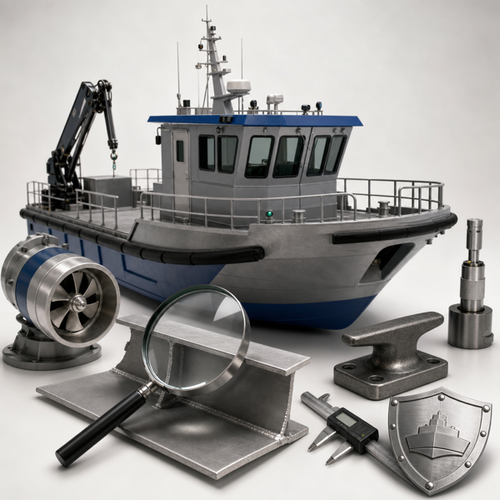
June 2026: New Standard Enhances Safety for Small Workboats in Inland Waterways
Safety, operational efficiency, and regulatory compliance in inland waterways have taken a significant leap forward with the publication of EN ISO 20650:2026. This new standard sets comprehensive requirements and robust test methods for small floating working machines, commonly used for tasks like extraction, lifting, sampling, and environmental maintenance on inland waters. Covering the latest advancements and international consensus, this standard represents a critical development for professionals involved in shipbuilding, marine structures, compliance, and equipment procurement.
Overview / Introduction
The field of Shipbuilding and Marine Structures is defined by its commitment to safety, innovation, and service reliability. Small floating working machines—boats less than 10 meters long with specialized equipment—play a vital role in construction, maintenance, and environmental protection activities on rivers, canals, and lakes. Standards like EN ISO 20650:2026 ensure these vessels meet stringent quality and safety benchmarks, protecting both personnel and the environment.
This article explores the new standard published in June 2026, offering:
- A detailed breakdown of its requirements
- Practical insights for implementation
- Compliance and certification strategies
- Impacts across the marine industry
Whether you're a marine engineer, vessel operator, procurement specialist, or compliance officer, understanding this standard is key to future-proofing your operations.
Detailed Standards Coverage
EN ISO 20650:2026 – Requirements and Test Methods for Small Floating Working Machines
Inland navigation vessels – Small floating working machines – Requirements and test methods (ISO 20650:2025)
Small floating working machines are essential assets for operational tasks on inland waterways. EN ISO 20650:2026 defines the minimum safety requirements and objective test procedures for these vessels, particularly those under 10 meters in length and less than 30 cubic meters in total volume. This category includes workboats configured for extraction, lifting, mowing, cleaning, and similar activities. Reliability and safety are paramount, both for crew wellbeing and the operational integrity of the vessel and equipment.
Scope and Applicability
- Applies to all small floating working machines used in, over, or on inland waters
- Relevant for vessels with a length of <10 meters and a combined hull volume under 30 m³
- Applicable regardless of whether the work equipment is permanently or temporarily installed
- Common users include water management agencies, marine contractors, engineering firms, harbor authorities, and environmental agencies
Key Requirements & Specifications
EN ISO 20650:2026 references a broad range of requirements, including:
- Structural Integrity: Mandates minimum hull thickness (e.g., 3mm for S 235 B steel), mathematical verification of strength and stability, and watertight collision and machinery bulkheads.
- Stability & Freeboard: Ensures at least 300mm residual safety clearance and freeboard.
- Sinking Resistance: Vessels must remain afloat with any single watertight compartment flooded, showing adequate residual buoyancy (≥100N per crew member).
- Noise & Visibility: Limits operational noise (75 dB(A) at 25m), requires alarm signals audible above ambient and mandates unobstructed helm station views.
- Manoeuvrability: Specifies performance benchmarks for steering and propulsion, including minimum speeds and control system design.
- Fire Protection: Engine rooms must be gas-tight, fireproof, and fitted with heat detectors, manual emergency stops, and firefighting systems.
- Engine and Fuel Systems: Comprehensive safety measures for engines running on diesel, LPG, or electric power, including quick-closing valves, fireproof tank installation, and vapor containment.
- Electrical Safety: Protection against shocks, short-circuits, excessive voltage, and ingress of water/foreign objects. IEC codes referenced for best practice wiring and installations.
- Workplace Safety: Workstations must be protected against falling, equipped with emergency exits, and reduce operator exposure to noise and vibration.
- Equipment: Specifies life-saving equipment (lifejackets, lifebuoys), required navigation lights, and marking/identification plate placement.
- Testing and Certification: Detailed protocols for visual inspections, measurements, strength verification, stability proofs, and systems performance checks prior to commissioning and during periodic audits.
- Owner’s Manual: Outlines operational bounds, testing procedures, and inspection schedules, plus documentation requirements for cranes and electric propulsion.
Who Needs to Comply?
- Shipbuilders and marine engineering firms designing or manufacturing small workboats
- Operators and owners managing fleets for inland navigation, environmental work, sampling, or maintenance
- Equipment fitters and refurbishment contractors
- Regulatory bodies conducting inspections
Practical Implementation Considerations
- Compliance requires multidisciplinary coordination—design, electrical, mechanical, and operational safety engineers
- All new builds must adhere to EN ISO 20650:2026 from the publication date, and retrofits/upgrades may trigger certain clauses if significant modifications are made
- Certification and periodic verification documentation should be maintained for regulatory inspections and insurance purposes
Key highlights:
- Mandates comprehensive safety and performance checks before vessels enter service
- Applies robust fire and electrical safety requirements, referencing global best practices (IEC/ISO standards)
- Addresses the surge in hybrid and electric propulsion for small vessels
Access the full standard:View EN ISO 20650:2026 on iTeh Standards
Industry Impact & Compliance
EN ISO 20650:2026 brings transformative impacts for the marine and inland waterway sector:
Risk Reduction: By stipulating verifiable safety criteria for hull integrity, fire protection, and emergency systems, the risk of operational incidents—including flooding, fire, or equipment failures—is greatly diminished.
Operational Excellence: Adherence ensures reliable vessel performance, reduced downtime, and extended equipment lifespan. This directly benefits water authorities, construction teams, and environmental organizations.
Global Market Access: Compliance aligns vessels with internationally recognized standards, facilitating cross-border operations, simplified procurement, and mutual recognition of testing and certification.
Legal and Insurance Requirements: Many regulatory regimes (within the EU and globally) are expected to reference EN ISO 20650:2026 for type approval and ongoing conformity—compliance may be a direct precondition for insurance validity and tender participation.
Compliance Considerations and Timelines:
- All relevant vessels built after June 2026 must comply
- Existing fleets should assess retroactive requirements, especially if being modified
- Timely documentation and testing is necessary for certification—start early to avoid delays in commissioning or inspection
Benefits of Adoption:
- Demonstrates duty-of-care and due diligence
- Enhances safety culture and reputation
- Reduces lifecycle costs due to fewer breakdowns and incidents
Risks of Non-Compliance:
- Increased risk of accidents or regulatory penalties
- Potential grounding or impounding of non-conforming vessels
- Higher insurance premiums or denied claims following incidents
Technical Insights
Across EN ISO 20650:2026, several common threads and best practices emerge:
- Structural and Stability Requirements: Mathematical verification of hull strength and vessel stability under working conditions. Testing incorporates worst-case loads for both permanent and temporary equipment attachments.
- Fire and Explosion Protection: Mandates use of fireproof engine room materials, heat detectors, and gas-tight bulkheads—beneficial in the era of LPG and electric propulsion.
- Noise Control: By enforcing maximum decibel levels and ergonomic workstation design, both crew safety and community relations are addressed.
- Electrical Installations: Switching and cabling systems must meet IEC standards for water ingress protection, overcurrent, and separation from fuel systems.
- Testing Regimen: Type and individual vessel testing involve:
- Managing manufacturer certificates
- Conducting visual and measurement inspections
- Proving hull strength and safety systems performance
- Functionally testing lifesaving and fire systems
- Ensuring electrical and control systems meet fault-tolerance standards
- Labeling and Documentation: Vessels must be durably marked and accompanied by a comprehensive owner's manual—critical during investigations, maintenance, and audits.
Implementation Best Practices:
- Establish a cross-disciplinary compliance team (design, safety, electrical, operations)
- Use checklists derived directly from the standard text for each commissioning
- Maintain an auditable log of all tests, modifications, and inspections
- Schedule ongoing training for crew and maintenance teams
Testing and Certification Considerations:
- Engage a notified body or qualified third-party for type testing and periodic inspections. This simplifies documentation and increases regulator trust.
- Document all deviations, even minor, with technical rationale and risk assessment
- Stay updated on related ISO/IEC reference standards—integration is usually incremental but can have major technical impact
Conclusion / Next Steps
EN ISO 20650:2026 marks a major advance in inland vessel safety and performance. Organizations operating, designing, or managing small floating working machines should urgently review their fleet and project plans against the new requirements. Key actions include:
- Download and study the full standard to understand all technical and operational clauses
- Initiate compliance audits and gap analyses for existing vessels and upcoming projects
- Update internal specifications, procurement checklists, and training programs
- Engage with regulators and certification bodies to streamline type testing and documentation
By adopting EN ISO 20650:2026, organizations can:
- Guarantee legal compliance and market access
- Protect employees and assets
- Lower long-term costs through risk reduction and increased reliability
Explore the full standard and stay updated with the latest industry requirements:View EN ISO 20650:2026 on iTeh Standards
Stay ahead—regularly monitor new publications and revisions on iTeh Standards for the most current guidance on shipbuilding and marine structures. As technology and regulation evolve, proactive engagement ensures ongoing excellence and safety in every marine operation.
Categories
- Latest News
- New Arrivals
- Generalities
- Services and Management
- Natural Sciences
- Health Care
- Environment
- Metrology and Measurement
- Testing
- Mechanical Systems
- Fluid Systems
- Manufacturing
- Energy and Heat
- Electrical Engineering
- Electronics
- Telecommunications
- Information Technology
- Image Technology
- Precision Mechanics
- Road Vehicles
- Railway Engineering
- Shipbuilding
- Aircraft and Space
- Materials Handling
- Packaging
- Textile and Leather
- Clothing
- Agriculture
- Food technology
- Chemical Technology
- Mining and Minerals
- Petroleum
- Metallurgy
- Wood technology
- Glass and Ceramics
- Rubber and Plastics
- Paper Technology
- Paint Industries
- Construction
- Civil Engineering
- Military Engineering
- Entertainment