

October 2026: New Standards Drive Materials Handling Equipment Safety and Performance
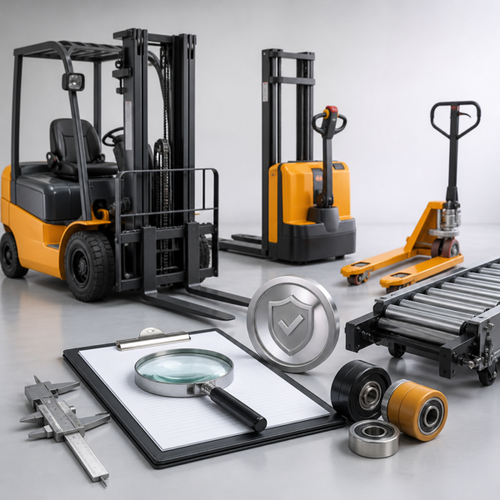
The landscape of materials handling equipment is undergoing significant transformation with the publication of five critical international standards in October 2026. These newly released documents address a range of topics, including safety requirements for rough-terrain variable-reach tractors, functional safety in earth-moving machinery, and updated guidance for limiting and indicating devices on cranes. Together, these standards provide enhanced clarity and rigor for manufacturers, operators, and safety managers across multiple industry segments.
As regulatory demands and operational risks evolve, adopting these standards is now crucial for achieving safer, more reliable, and compliant materials handling operations. This is Part 1 of a comprehensive two-part coverage, focusing on the first five standards introduced during this period.
Overview
Materials handling equipment forms the backbone of sectors such as construction, logistics, manufacturing, and mining. From lifting heavy loads in challenging terrain to ensuring machinery operates safely amid environmental extremes, industry professionals rely on robust standards to reduce risk and optimize equipment performance.
The new standards featured here cover:
- Safety and verification protocols for rough-terrain variable-reach tractors
- Essential devices for load limitation and performance indication in jib cranes
- Functional safety assessment and system design methodologies for earth-moving machinery
- Environmental performance tests for electronic and electrical safety components
Readers will gain key insights on requirements, target compliance groups, and actionable strategies to integrate these updates into daily operations.
Detailed Standards Coverage
EN 17968:2026 - Rough-Terrain Variable-Reach Tractors Safety and Verification
Rough-terrain variable-reach tractors – Safety requirements and verification for permanently mounted equipment
EN 17968:2026, developed by CEN, establishes comprehensive safety requirements and verification techniques for permanently mounted equipment (PME) on rough-terrain variable-reach tractors (RTVR tractors). The standard covers primary load-handling functions, including fork arms and permanently mounted attachments, while recognizing the diverse range of operational scenarios—both intended use and foreseeable misuse.
It excludes trucks and vehicles already addressed by existing standards, articulated or tracked machinery, or those primarily designed for other applications (e.g., earth moving, container handling). The document offers concrete requirements on:
- Prevention of unintended or unauthorized movement
- Protection against hazards such as crushing, shearing, trapping, noise, electric shock, and fire
- Controls and safety devices for engine, brakes, and stabilization
- Verification procedures including functional, structural, and load-holding tests
- Marking, instruction, and graphical warning symbols
Key highlights:
- Highly specific exclusions ensure targeted applicability
- Focuses on the operator’s station safety, visibility, and ergonomics
- Stringent verification methods ensure robust risk reduction
Access the full standard:View EN 17968:2026 on iTeh Standards
ISO 10245-4:2026 - Limiting and Indicating Devices for Jib Cranes
Cranes — Limiting and indicating devices — Part 4: Jib cranes
This latest edition in the ISO 10245 series defines rigorous requirements for limiting and indicating devices critical to the safe operation of jib cranes (excluding cantilever cranes). Drawing on updates aligned with ISO 10245-1, it mandates technologies to restrict or monitor loads, motions, and the operational environment.
Key systems covered include:
- Rated capacity limiters and indicators
- Motion and performance limiting devices
- Operational status recorders and event loggers
Stakeholders ranging from equipment designers to facility safety managers must ensure that jib cranes comply with these device requirements. Proper implementation helps prevent overloads, structural failures, and unsafe operation.
Key highlights:
- Event data recording for traceability and safety analysis
- Covers both new installations and retrofits for greater standard alignment
- Harmonized with broader crane machinery regulations
Access the full standard:View ISO 10245-4:2026 on iTeh Standards
ISO 19014-1:2026 - Functional Safety Methodology for Earth-Moving Machinery
Earth-moving machinery — Functional safety — Part 1: Methodology to determine safety-related parts of the control system and performance requirements
Setting a foundation for safety-critical controls, ISO 19014-1:2026 introduces a robust methodology for determining the required performance level (MPLr) of safety-related parts of control systems within earth-moving machinery.
For designers and manufacturers, the standard outlines:
- Classification of hazards, risk assessment processes, and exposure evaluation
- Systematic approach (MCSSA) to analyze machine control system safety and verify protective measures
- Clear guidance on identifying safety control systems (SCS) versus standard controls
- Linkage with subsequent parts (e.g., ISO 19014-2, -3, -4, -5) for a holistic safety management strategy
This methodology ensures a harmonized process to define, achieve, and validate functional safety, promoting global acceptance and interoperability.
Key highlights:
- Structured process flowcharts for consistent risk assessment
- Deep integration of performance level calculation
- Ensures alignment with ISO 12100 and functional safety best practices
Access the full standard:View ISO 19014-1:2026 on iTeh Standards
ISO 19014-2:2026 - Hardware and Architecture for Safety-Related Control Systems
Earth-moving machinery — Functional safety — Part 2: Design and evaluation of hardware and architecture requirements for safety-related parts of the control system
ISO 19014-2:2026 addresses the requirements for the design and evaluation of hardware and architecture within safety-control systems (SCS) in earth-moving equipment. Applicable to electrical, hydraulic, and mechanical components, the standard provides detailed procedures for assessing the machine performance level achieved (MPLa).
Operators and system integrators must:
- Ensure diagnostic coverage for both electronic and non-electronic systems
- Evaluate mean time to dangerous failure (MTTFd), category classifications, and fail-safe states
- Adhere to requirements for compatibility with other functional safety standards (e.g., ISO 13849)
- Combine multiple SCSs strategically to meet or exceed the required performance level (MPLr)
This encourages resilient, validated safety control architectures, lowering the risk of system failures or undetected hazards.
Key highlights:
- Comprehensive diagnostic coverage for mixed-technology systems
- Category and redundancy classification for robust performance
- Best-practice examples and compatibility checks included
Access the full standard:View ISO 19014-2:2026 on iTeh Standards
ISO 19014-3:2026 - Environmental Performance and Testing of Safety System Components
Earth-moving machinery — Functional safety — Part 3: Environmental performance and test requirements of electronic and electrical components used in safety-related parts of the control system
With the growing complexity of electronic control systems, ISO 19014-3:2026 sets benchmark requirements for the environmental qualification of safety-critical electronics and electrics. The standard covers mandatory tests to verify component resilience against dust, chemicals, salt spray, vibration, temperature extremes, shock, and electromagnetic disturbances.
For manufacturers and testing laboratories, compliance ensures that system failures are minimized—even in harsh conditions—and that safety integrity is maintained throughout the equipment’s operational life.
Key highlights:
- Categorized functional status levels for systematic validation
- Prescribed test methods for a full spectrum of environmental challenges
- Encourages global harmonization for cross-border equipment deployment
Access the full standard:View ISO 19014-3:2026 on iTeh Standards
Industry Impact & Compliance
The introduction of these five standards transforms how businesses approach both new equipment design and the modernization of existing machinery fleets. Key industry impacts include:
- Enhanced operational safety, reducing accident rates and downtime
- Improved global market access, thanks to harmonized requirements
- Clearer risk assessment and documentation, supporting due diligence and regulatory inspections
- Easier integration of new technologies, such as automated diagnostics and event data recording
Compliance timelines will vary depending on equipment type and jurisdiction, but organizations are encouraged to:
- Audit current equipment and processes against the new requirements
- Update procurement and design specifications
- Provide training for engineering and maintenance teams
Non-compliance can lead to liability exposure, increased insurance costs, and loss of certification or operating licenses.
Technical Insights
Across these standards, several technical requirements stand out as pivotal for organizations seeking leadership in safety and efficiency:
- Rigorous risk assessment (ISO 19014 series), ensuring a deep understanding of potential hazards and required safety functions
- Multifaceted system design, integrating hardware redundancy, diagnostic coverage, and environmental robustness
- Structured verification processes, including both functional and environmental testing, to establish reliability benchmarks
- Comprehensive operator information, ensuring clear instructions, labeling, and graphical warnings
Best practices for implementation include:
- Early involvement of multidisciplinary teams (design, safety, operations)
- Proactive testing—beyond minimum requirements—to strengthen compliance
- Continuous monitoring and event logging to feed ongoing safety improvements
- Documentation of every stage, from risk assessment to post-deployment review
Testing and certification are critical—third-party validation is often required, and keeping records that align with standard references will ease the audit process.
Conclusion and Next Steps
The October 2026 release of these five international standards marks a major evolution in the materials handling equipment sector. Organizations that act quickly to analyze these changes and integrate requirements into their operational workflows will benefit from improved safety, greater compliance confidence, and a competitive edge in global markets.
Key takeaways:
- Each standard addresses pressing safety and performance topics relevant to rough-terrain vehicles, cranes, and earth-moving machines
- Functional safety—spanning risk assessment, hardware integrity, and environmental testing—is central throughout
- Professional engagement, cross-functional training, and timely equipment upgrades are essential for full compliance
Recommendations:
- Review each standard in detail and conduct an internal compliance gap analysis
- Liaise with certification bodies to schedule any necessary testing or recertification
- Stay informed—subscribe to updates and part 2 coverage at iTeh Standards
Explore these new standards for full technical content, and position your organization ahead of regulatory and operational changes in the dynamic world of materials handling equipment.
Categories
- Latest News
- New Arrivals
- Generalities
- Services and Management
- Natural Sciences
- Health Care
- Environment
- Metrology and Measurement
- Testing
- Mechanical Systems
- Fluid Systems
- Manufacturing
- Energy and Heat
- Electrical Engineering
- Electronics
- Telecommunications
- Information Technology
- Image Technology
- Precision Mechanics
- Road Vehicles
- Railway Engineering
- Shipbuilding
- Aircraft and Space
- Materials Handling
- Packaging
- Textile and Leather
- Clothing
- Agriculture
- Food technology
- Chemical Technology
- Mining and Minerals
- Petroleum
- Metallurgy
- Wood technology
- Glass and Ceramics
- Rubber and Plastics
- Paper Technology
- Paint Industries
- Construction
- Civil Engineering
- Military Engineering
- Entertainment