

September 2026: Essential Updates for Materials Handling Equipment Standards
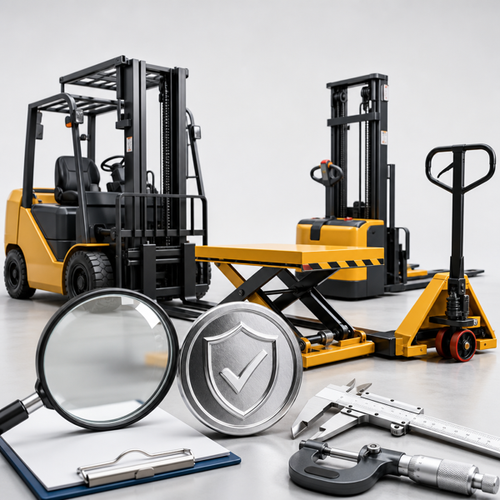
Key Materials Handling Equipment Standards Released in September 2026
As the landscape of materials handling continues to evolve, September 2026 marks an important milestone with the publication of two pivotal European standards. These standards—EN 14238:2026, addressing cranes and manually controlled load manipulators, and EN 18121:2026, focused on steel rack protection—set new benchmarks in operational safety and performance for a range of sectors, including manufacturing, warehousing, and logistics. This article presents detailed insights into each standard, spotlighting their scope, major requirements, industry impact, and actionable steps for compliance.
Overview
The Field of Materials Handling Equipment
Materials handling equipment is fundamental to modern industry, enabling efficient movement, storage, and control of goods across diverse settings—from warehouses and factories to distribution centers and production lines. With workplace safety, automation, and robustness under increasing scrutiny, the development and adoption of current international standards is vital. Such standards offer manufacturers, operators, and facility managers credible guidance on technical execution, operational safety, risk mitigation, and maintenance protocols.
Why Standards Matter
Adherence to up-to-date standards ensures:
- Safer work environments
- Reduced equipment downtime
- Optimized maintenance regimes
- Streamlined compliance with European Directives (such as the Machinery Directive)
In this article, you will gain practical insights into:
- What’s new and significant in EN 14238:2026 and EN 18121:2026
- How these standards affect your operations
- Strategies for compliance and risk management
Detailed Standards Coverage
EN 14238:2026 - Cranes: Manually Controlled Load Manipulators
Cranes – Manually Controlled Load Manipulators
EN 14238:2026 is a comprehensive standard specifying the requirements for manually controlled load manipulators—specialized crane devices powered by energy sources other than human power, designed to assist operators in the handling and precise placement of loads. The standard is relevant for manufacturers, integrators, and users in industries where ergonomic, safe, and efficient material movement is essential.
Scope and Applicability: EN 14238:2026 applies to manually controlled load manipulators, while explicitly excluding mechanically operated balancers based on springs, counterweights, manipulating robots, and applications involving extreme environmental conditions or high-risk loads (such as molten metals or corrosive substances). It also omits hazards tied to construction, transport, decommissioning, and those occurring during the lifting of persons.
Key Requirements and Specifications:
- The standard mandates rigorous mechanical strength assessments (per EN 13001 series), including static and fatigue strength calculations for both steel and non-steel structures.
- Establishes stringent criteria for safety-related components (hydraulic, pneumatic, and electrical), referencing harmonized standards EN ISO 4413, EN ISO 4414, and EN 60204-32.
- Controls and safety functions—such as emergency stop devices and dual-mechanism controls to prevent accidental release of loads—are strictly defined.
- Marking, warning signs, operating instructions, and regular maintenance protocols are required to ensure ongoing compliance and safety.
- Includes specific stability criteria, such as design calculations to prevent overturning, and mandatory coefficients for load suspension elements (e.g., chains, ropes, hooks), with minimum safety factors ranging from 4x to 7x the working load limit (WLL).
- Testing, inspection, and noise emission assessment protocols are outlined, including both verification by calculation and physical testing.
Target Audience:
- Crane and manipulator manufacturers
- Facilities managers and logistics operators
- Health and safety professionals
- Maintenance providers
- Organizations seeking to align with European Machinery Directive requirements
Key highlights:
- Defines comprehensive safety measures and risk reduction for all significant hazards related to load manipulators
- Integrates harmonized reference standards (e.g., EN 13001, EN ISO 13849-1) for structural and control safety
- Prescribes mandatory emergency stop and anti-drift functions
- Enhanced focus on compatibility and labeling for load attachments and operator instructions
- Supersedes previous edition (EN 14238:2009) with extended technical coverage and updated references
Access the full standard:View EN 14238:2026 on iTeh Standards
EN 18121:2026 - Free-Standing Steel Rack Protection for Adjustable Pallet Racking
Design and Use of Free-Standing Steel Rack Protection for Adjustable Pallet Racking – Upright Protectors and Frame Barriers – Requirements and Test Methods
EN 18121:2026 sets out detailed requirements and testing protocols for free-standing and floor-fixed steel upright protectors and frame barriers used in adjustable pallet racking systems. These components are not physically connected to the racks and are designed to mitigate the risk of accident or structural damage due to impacts from mechanical handling equipment such as forklift trucks.
Scope and Applicability: This standard is targeted towards operators and designers of storage and warehousing systems utilizing adjustable pallet racking. It excludes rack-connected protection devices, as well as ancillary protective equipment such as guide rails, traffic route devices, or fall protections.
Key Requirements and Specifications:
- Precise definitions and performance requirements for frame barriers and upright protectors, including:
- Minimum 300 mm height above floor
- Correct placement to ensure that even after deformation under impact, the upright remains protected
- High-visibility coloring and/or striping
- Specifications for optional and combined use of frame barriers (with upright protectors) for corner and passageway protection
- Detailed test methods for mechanical performance, failure loads, deformation, and protection efficacy
- Requirements for installation instructions, regular inspection, maintenance, and staff training (aligned with EN 15635)
- Protocols for clearances, proper placement, and documentation to enable retrofit and future compliance
Target Audience:
- Warehouse operators and storage equipment managers
- Rack and storage system manufacturers
- Facility safety and health officers
- Procurement and quality management specialists
Key highlights:
- Establishes uniform design and installation criteria for rack protection
- Specifies impact and failure testing methods, including categorization of acceptable damage levels
- Emphasizes regular inspection and maintenance guidance to maximize safety and lifespan
- Supports risk assessment-based deployment of protection elements (e.g., where mechanical handling equipment traffic is most intense)
Access the full standard:View EN 18121:2026 on iTeh Standards
Industry Impact & Compliance
The publication of these two standards brings significant enhancements to workplace safety, risk management, and operational efficiency across materials handling environments. For organizations involved in the design, manufacture, or operation of cranes, manipulators, or storage facilities, adopting these updated standards is both a legal and strategic necessity.
Industry-Wide Impacts:
- Enhanced Worker Safety: Robust requirements minimize the risk of accidents during routine handling and in high-traffic warehouse areas.
- Regulatory Alignment: Both standards are harmonized with EU directives—especially the Machinery Directive—simplifying due diligence and compliance reporting for businesses trading within or with the European market.
- Reduced Damage and Downtime: Clear guidance on design, maintenance, and inspection leads to equipment longevity and reduced incidents of costly structural repairs or operational shutdowns.
- Asset Protection: Improved design and correct installation of rack protection significantly lower the risks of racking collapse or goods loss.
Compliance Considerations and Timelines:
- Both EN 14238:2026 and EN 18121:2026 should be applied immediately to newly manufactured equipment and newly designed facilities.
- Organizations are typically expected to update their safety management systems, procurement specifications, and internal audit checklists to account for new requirements within one year of publication.
- Non-compliance may expose businesses to heightened risks of regulatory penalties, insurance challenges, and reputational harm.
Business Benefits of Adoption:
- Fewer lost workdays due to injury
- Lower insurance and liability costs
- Demonstrated commitment to safety culture and operational excellence
- Potential for better commercial terms with customers requiring certified facilities and equipment
Technical Insights
Common Technical Requirements Across Both Standards:
- Safety Margins: Both standards emphasize rigorous design factors (e.g., multiplication factors for load suspension elements and clear deformation/failure thresholds for barriers).
- Testing Protocols: Mandatory protocols for type, individual, and inspection-based verification, including mechanical, structural, and functional tests.
- Marking and Documentation: Clear requirements for product marking, installation instructions, and maintenance records.
- Ongoing Inspection: Regular checks and scheduled maintenance must be documented, with scheduled intervals determined by risk assessments and usage patterns.
Implementation Best Practices:
- Early Integration in Design: Include applicable standards at the earliest design and specification phases for cranes, manipulators, and storage facilities.
- Operator Training: Ensure comprehensive training covering new safety measures (e.g., correct emergency stop usage and careful operation around protected zones).
- Maintenance Planning: Develop maintenance schedules aligned with instructions from manufacturer handbooks, including pre-use checks and annual inspections.
- Risk Assessment: Conduct risk analyses to determine the most effective application of protectors and barriers, considering traffic flow, potential impact zones, and operator behavior.
Testing and Certification:
- For load manipulators: Proof of strength and stability must be established via calculation or type testing as per EN 13001 series and related references.
- For rack protection: Frame barriers and upright protectors must undergo mechanical performance and impact tests according to detailed procedures set out in EN 18121:2026.
- Facilities should retain full test reports, user manuals, and inspection logs as part of their quality and safety documentation.
Conclusion and Next Steps
September 2026’s release of EN 14238:2026 and EN 18121:2026 marks a significant advancement for the materials handling sector. Adhering to these new standards delivers vital improvements in safety, asset protection, and regulatory compliance.
Key Takeaways:
- Review newly published standards for relevance to your operations and assets
- Update procurement and design specifications to reflect new requirements
- Provide training for operators and inspection staff
- Schedule regular audits and maintenance against the latest guidelines
Recommendations: Organizations involved in the design, installation, maintenance, or use of cranes and racking systems should:
- Obtain official copies of the standards for internal reference
- Assess current practices against new requirements
- Plan an internal awareness campaign for affected teams
For the full, authoritative text of both standards and regular updates on materials handling equipment requirements, explore iTeh Standards:
Stay ahead: Make standards compliance a core of your safety and operational excellence strategy.
Categories
- Latest News
- New Arrivals
- Generalities
- Services and Management
- Natural Sciences
- Health Care
- Environment
- Metrology and Measurement
- Testing
- Mechanical Systems
- Fluid Systems
- Manufacturing
- Energy and Heat
- Electrical Engineering
- Electronics
- Telecommunications
- Information Technology
- Image Technology
- Precision Mechanics
- Road Vehicles
- Railway Engineering
- Shipbuilding
- Aircraft and Space
- Materials Handling
- Packaging
- Textile and Leather
- Clothing
- Agriculture
- Food technology
- Chemical Technology
- Mining and Minerals
- Petroleum
- Metallurgy
- Wood technology
- Glass and Ceramics
- Rubber and Plastics
- Paper Technology
- Paint Industries
- Construction
- Civil Engineering
- Military Engineering
- Entertainment