

October 2026: New Standard EN 10132 for Cold Rolled Narrow Steel Strip in Metallurgy
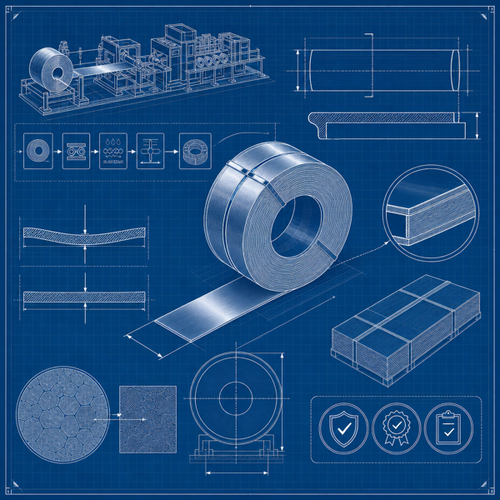
The metallurgical industry receives a significant update this October 2026 with the publication of EN 10132:2021, addressing technical delivery conditions for cold rolled narrow steel strip intended for heat treatment. This newly consolidated European standard brings together and replaces four previous documents, providing comprehensive requirements and practical guidelines for manufacturers, quality managers, and engineers working with steel strip products across a spectrum of industrial applications. The latest revision reflects evolving technological, quality, and compliance demands within modern steel production and processing.
Overview / Introduction
Metallurgy, the science and technology of metals, underpins many industries, from automotive and construction to precision manufacturing. Standards in this discipline define accepted specifications, ensuring material quality, safety, and fitness for purpose. The newly published EN 10132:2021 delivers a single, unified standard for cold rolled narrow steel strip—critical in applications such as heat treatment, spring manufacturing, and precision parts.
This article guides you through what’s new in EN 10132:2021, clarifying technical requirements, revised classifications, compliance implications, and what the new guidelines mean for businesses in metallurgical and related sectors.
Detailed Standards Coverage
EN 10132:2021 – Cold Rolled Narrow Steel Strip for Heat Treatment
Cold Rolled Narrow Steel Strip for Heat Treatment – Technical Delivery Conditions
EN 10132:2021, developed by CEN, sets out the technical delivery conditions for cold rolled narrow steel strip made from non-alloy and alloy steels, produced in coils or cut lengths with rolling widths below 600 mm. The standard applies to:
- Case hardening steels (up to 10 mm thickness)
- Steels for quenching and tempering (up to 6 mm thickness, in various supplied conditions)
- Quenched and tempered steels (0.30 mm to 3.00 mm thickness)
Specifically, the standard serves industries utilizing cold rolled steel strips for general and special-purpose applications, including high-performance springs, precision components, and other engineered products requiring stringent heat treatment. It explicitly excludes cold rolled flat products covered by other standards such as EN 10139 and EN 10268.
Scope and Technical Provisions
EN 10132:2021 covers every aspect from ordering and classification to manufacturing, chemical and mechanical properties, and inspection routines. Key provisions include:
- Mandatory purchaser-supplied information: quantity, product form, tolerances, dimensions, steel grade designation, delivery condition, hardness/tensile specifications, and surface requirements.
- Manufacturing: All steels must be deoxidized; full traceability of cast products is required. Delivery conditions include annealed (+A), annealed and skin passed (+LC), cold rolled (+CR), and quenched and tempered (+QT).
- Chemical composition and mechanical properties are tightly defined; product analysis and mechanical testing must comply with specific tables referenced in the standard.
- Surface characteristics: Strict criteria govern surface appearance and finish for different delivery conditions, with clear options for rough, matte, or smooth finishes and special requirements for oxide or polished surfaces.
- Options and supplementary requirements: Purchasers may specify special edge types, additional testing, packaging, and marking protocols—highlighting the standard’s flexibility to end-user needs.
Key Changes from Previous Editions
As a consolidation, EN 10132:2021 merges four previous editions and introduces several substantive updates, including:
- Addition and removal of several steel grades in alignment with current industry practices
- Updated chemical composition and requirements referencing EN ISO 683-1 to EN ISO 683-3
- Revised mechanical property values for quenching, tempering, and spring steels
- Thorough revisions to surface characteristics and cleanliness requirements
- Mandatory use of inspection certificates (Type 3.1), improving quality verification
- Editorial updates to harmonize terminology and clarity across all sections
Compliance & Applicability
Compliance with EN 10132:2021 is crucial for manufacturers, suppliers, and users of cold rolled narrow steel strip in Europe and globally, particularly in the automotive, construction, tooling, and machinery sectors. The standard’s technical rigor ensures that steel strips meet critical performance and quality expectations necessary for heat-treated applications.
Key highlights:
- Comprehensive requirements for delivery, manufacturing, and testing
- Enhanced traceability and product identification throughout the supply chain
- Modernized steel grade selection and updated allowable property ranges
Access the full standard:View EN 10132:2021 on iTeh Standards
Industry Impact & Compliance
The introduction of EN 10132:2021 brings far-reaching benefits—and obligations—to organizations operating in the metallurgy sector:
- Consistency and Reliability: Adoption of the new standard ensures reliable, standardized product qualities across suppliers, reducing the risk of quality variances in critical components.
- Supply Chain Assurance: With traceability requirements and standardized inspection protocols, clients gain confidence in raw material provenance and performance, supporting both internal and external audit processes.
- Competitive Advantage: Early compliance signals a commitment to product excellence, positioning organizations to win contracts where modern, harmonized standards are prerequisites.
- Compliance Timelines: As this standard supersedes previous EN 10132 parts, businesses must update their procurement, specification, and quality control processes to align with the new requirements. Organizations should review existing inventory, revisit supplier agreements, and ensure in-house testing matches the revised criteria.
- Mitigating Non-Compliance Risks: Skipping adoption or failing to meet the updated specifications can jeopardize market access, invite costly recalls, or lead to reputational damage where end-user safety or product integrity is compromised.
Recommended actions:
- Review and update internal technical documentation and training materials
- Audit supplier certifications against EN 10132:2021
- Engage in gap analysis for existing processes and quality controls
Technical Insights
The standard’s technical requirements reflect best practices for material performance and end-use suitability in metallurgical applications. Some common technical features and implementation guidance include:
- Delivery and Processing Conditions: Selection among annealed, cold rolled, skin-passed, or quenched and tempered conditions affects both machinability and ultimate part performance. Choose delivery condition based on final application (e.g., springs require specific tensile and hardness ranges).
- Chemical and Mechanical Testing: Integrate product analysis, tensile and hardness testing into batch release protocols. Testing regimes must reference specific tables and tolerances in EN 10132:2021.
- Surface Quality Control: Employ surface roughness measurement and inspection checklists to ensure conformity with specified finishes, especially for appearance-critical or fatigue-sensitive applications.
- Certification and Documentation: Use of inspection certificate 3.1 is now mandatory, ensuring documentation follows EN 10204 and simplifying traceability for downstream users.
- Custom Orders and Special Requirements: Utilize supplementary options for special tolerances, additional testing, or enhanced cleanliness—customizing orders via the flexible provisions in Annex A.
Testing and Certification Best Practices:
- Establish clear acceptance and sampling criteria, as defined in the standard
- Maintain robust record-keeping for all certificates and inspection outcomes
- Partner with accredited laboratories for third-party property or surface verification as needed
Conclusion / Next Steps
The publication of EN 10132:2021 heralds an important advancement in the standardization of cold rolled narrow steel strip for heat treatment. Organizations are encouraged to familiarize themselves with the revised structure, update process documentation, and communicate with suppliers to ensure uninterrupted compliance. Staying current with this standard will help safeguard product quality, ease auditing, and enable trading in high-regulation markets.
To access the full details and implement the latest requirements within your operations, consult the complete standard and related guidance available via iTeh Standards. Stay engaged with ongoing developments in metallurgy standards to maintain your organization’s position at the forefront of industry best practices.
Categories
- Latest News
- New Arrivals
- Generalities
- Services and Management
- Natural Sciences
- Health Care
- Environment
- Metrology and Measurement
- Testing
- Mechanical Systems
- Fluid Systems
- Manufacturing
- Energy and Heat
- Electrical Engineering
- Electronics
- Telecommunications
- Information Technology
- Image Technology
- Precision Mechanics
- Road Vehicles
- Railway Engineering
- Shipbuilding
- Aircraft and Space
- Materials Handling
- Packaging
- Textile and Leather
- Clothing
- Agriculture
- Food technology
- Chemical Technology
- Mining and Minerals
- Petroleum
- Metallurgy
- Wood technology
- Glass and Ceramics
- Rubber and Plastics
- Paper Technology
- Paint Industries
- Construction
- Civil Engineering
- Military Engineering
- Entertainment