

New Natural Stone Testing Standard Released for Mining Sector – September 2026
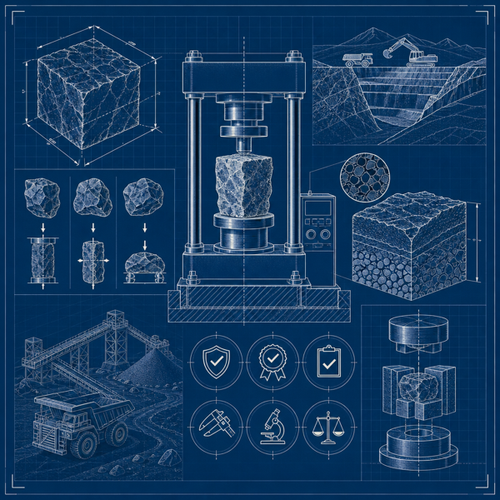
The mining and minerals sector receives a significant update this September 2026 with the introduction of a new European standard focused on natural stone testing. The newly published prEN 14579:2026 establishes advanced methodologies for determining the speed of sound propagation in natural stones, impacting quality procedures, resource evaluation, and safety protocols across the industry. This release provides mining professionals and engineers with critical tools for ensuring the durability and suitability of stone materials, addressing both laboratory and field (in situ) testing scenarios.
Overview
The mining and minerals sector, encompassing both extraction and processing of raw materials, is heavily reliant on standardized testing to maintain product integrity and operational safety. As construction, architecture, and infrastructure projects continue to demand higher standards of natural stone quality, robust test specifications become non-negotiable.
Published standards, like those from CEN, equip organizations with uniform guidelines for assessing material properties, enabling:
- Reliable quality comparisons across suppliers and sites
- Increased confidence in structural reliability
- Enhanced compliance with national and international regulations
In this article, we unpack the scope, application, and impact of the new prEN 14579:2026 standard, focusing on its technical requirements, compliance expectations, and practical implications for mining professionals.
Detailed Standards Coverage
prEN 14579 – Natural Stone Test Methods: Determination of Sound Speed Propagation
Natural stone test methods – Determination of sound speed propagation
The revised prEN 14579 document specifies the methodology for measuring the velocity of ultrasonic longitudinal waves as they propagate through natural stone. Critical for both laboratory and in situ (on-site) testing, this standard is essential for evaluating the internal integrity, homogeneity, and fitness for use in building and engineering projects.
Scope and Purpose:
- Specifies test methods for determining sound speed (pulse velocity) in a wide range of natural stones
- Applies to quarrying, mining operations, stone processors, and construction quality control
- Provides for both laboratory-prepared test specimens and direct on-site (in situ) assessments
Key Requirements and Specifications:
- Apparatus: Must include an electrical pulse generator, a transducer (20 kHz to 150 kHz recommended frequency range for most tasks), compatible transponder, amplifier, and precise electronic timing device
- Transducer Details: Selection of transducer frequency should suit the test specimen’s size and required measurement path length
- Performance Accuracy: Transit times to be accurate within ±0.1 µs; pulse onset rise time must not exceed one-quarter the natural period
- Sampling: At least 6 homogeneous specimens required for reliable averaging
- Preparation: Includes drying, dimensional control, and weighing to a high degree of precision
- Procedure: Details on correct placement of transducer and transponder, coupling methods, and measurement path calculation
- Result Expression: Standardized reporting of velocities, including solution for indirect transmission
Target Users:
- Mining and quarrying operations
- Natural stone processors
- Construction and infrastructure quality managers
- Independent testing laboratories
- Engineering consultancies
Practical Implications:
- Facilitates consistent evaluation of stone for use in high-stress environments (e.g., bridges, monuments, facades)
- Detects internal flaws, fissures, and water content variations, which significantly impact durability
- Supports traceable, replicable test results for procurement and certification processes
- Aligns test protocols between European and international suppliers
Notable Changes from Previous Version (EN 14579:2004):
- Includes new methods for using fixed-distance apparatus, simplifying measurement in certain practical settings
- Expanded recommendations for specimen preparation and handling
- Additional guidance in annexes on environmental and specimen features influencing results (such as water content, path length, fissures)
Key highlights:
- Suitable for both laboratory and in situ testing of natural stone
- Improved transducer frequency guidance increases test adaptability
- Enhanced reporting requirements for improved comparability
Access the full standard:View prEN 14579 on iTeh Standards
Industry Impact & Compliance
Why does sound speed propagation matter? The ability of natural stone to conduct ultrasonic waves provides insights into internal structure, density, presence of flaws, and moisture content. These aspects directly impact material performance under load, weathering, and time.
Adoption Benefits:
- Improved material acceptance and rejection decisions at the source
- Faster, more accurate quality assurance in both procurement and delivery
- Enhanced structural safety through early detection of problematic stone blocks
Compliance Considerations:
- Projects specifying European or international conformity now require compliance with prEN 14579 for sound propagation tests
- Updated methodologies may necessitate training for laboratory and field technicians
- Transition from EN 14579:2004 to the 2026 revision should be scheduled to avoid certification lapses
Timelines:
- The standard is effective for all new tests conducted from September 2026 onward
- Existing long-term supply contracts may need review for updated technical clauses
Risks of Non-Compliance:
- Increased potential for structural defects or premature failure
- Higher risk of contractual disputes or rejection at delivery inspection
- Loss of competitive standing for suppliers unable to demonstrate up-to-standard testing capability
Technical Insights
Common Technical Requirements
- Calibration of instruments for each test batch is crucial for traceable results
- Path length measurements must be precise, as even minor errors affect calculated velocities
- The coupling material (typically gel or paste) between transducer and stone should minimize signal loss
- Water content in specimens should be controlled and reported, due to its significant effect on sound speed
Implementation Best Practices
- Specimen Homogeneity: Ensure test specimens are sampled to represent the overall batch or geological unit
- Operator Training: Provide refresher courses on ultrasonic device use and result interpretation
- Environmental Monitoring: Maintain stable temperature and humidity during testing to enhance repeatability
Testing and Certification
- Use equipment compliant with the standard’s accuracy and frequency requirements
- Document all calibration, measurement, and specimen preparation steps in the final test report
- Engage accredited laboratories for third-party verification if project insurance or regulatory bodies require proof of standard compliance
Conclusion & Next Steps
With the September 2026 publication of prEN 14579:2026, the mining and natural stone industries gain an enhanced framework for reliable, repeatable, and internationally recognized sound propagation testing. These procedures directly improve product consistency, safety, and market acceptability—critical values for engineers and quality managers facing growing technical and regulatory demands.
Recommended Actions:
- Review and update internal test procedures to align with prEN 14579:2026
- Schedule training for laboratory technicians
- Engage with suppliers to ensure raw stone sourcing meets the updated standards
Stay ahead of industry trends and compliance requirements: review the full standard, and monitor future updates via iTeh Standards.
Categories
- Latest News
- New Arrivals
- Generalities
- Services and Management
- Natural Sciences
- Health Care
- Environment
- Metrology and Measurement
- Testing
- Mechanical Systems
- Fluid Systems
- Manufacturing
- Energy and Heat
- Electrical Engineering
- Electronics
- Telecommunications
- Information Technology
- Image Technology
- Precision Mechanics
- Road Vehicles
- Railway Engineering
- Shipbuilding
- Aircraft and Space
- Materials Handling
- Packaging
- Textile and Leather
- Clothing
- Agriculture
- Food technology
- Chemical Technology
- Mining and Minerals
- Petroleum
- Metallurgy
- Wood technology
- Glass and Ceramics
- Rubber and Plastics
- Paper Technology
- Paint Industries
- Construction
- Civil Engineering
- Military Engineering
- Entertainment