


July 2026 Mining Standards: Mobile Machinery Safety and Drilling Vocabulary Updates
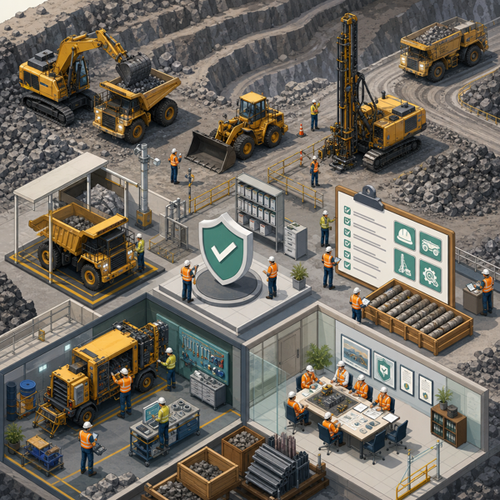
The mining and minerals industry saw the release of two major standards in July 2026, each addressing critical aspects of modern mining operations. The new CEN standard, FprEN 1009-6, introduces robust safety requirements for mobile machinery used in mineral processing, while ISO 22932-5:2026 offers professionals a comprehensive vocabulary on drilling and blasting. Together, these standards aim to boost operational safety, clarity, and compliance across mining sites worldwide.
Overview
The mining and minerals sector operates at the intersection of demanding physical environments and stringent regulatory expectations. Standards play a vital role in ensuring workplace safety, operational efficiency, and consistent terminology—especially as the industry adopts advanced equipment and integrates more complex processes.
This article explores the details and practical impacts of the latest July 2026 standards. Readers will learn:
- Key safety and functional requirements for mobile mineral processing machinery
- How a standardized vocabulary enhances drilling and blasting operations
- Compliance steps and industry-wide implications
- Practical insights into implementation, risk reduction, and best practices
Detailed Standards Coverage
FprEN 1009-6 – Mobile Machinery Safety Requirements
Machines for Mechanical Processing of Minerals and Similar Solid Materials – Safety – Part 6: Specific Requirements for Mobile Machinery
Scope & Overview:
FprEN 1009-6 is a pivotal addition to the EN 1009 series, targeting the safety of mobile machinery used in crushing, screening, feeding, and conveying minerals and related by-products. Applicable to sites processing cement, lime, gypsum, sand, gravel, ores, aggregates, coal, slags, and demolition waste, this standard clarifies requirements for compact, heavy, and extra-heavy mobile equipment. It applies when these machines are designed and manufactured after July 2026 and is complementary to the foundational parts of the EN 1009 family, overriding them where more stringent safety requirements are specified for mobile machinery.
Key Requirements & Specifications:
- Ensures machines are designed to minimize hazards throughout their lifecycle, including predictable misuse
- Details specific access, maintenance, and inspection provisions for different classes of mobile machinery
- Mandates emergency stop systems, pre-start warnings, and defined control modes (travel, setup, process)
- Requirements for operator stations and remote-control safety, lighting on-button activation points, and safeguards for noise/vibration
- Focus on clear documentation: Accompanying instructions, safety labels, pictograms, and performance declarations
Target Audience:
- Machinery manufacturers (mobile crushers, screeners, conveyors, feeders)
- Mining and mineral processing companies
- Health and safety managers
- Regulatory bodies and accident prevention organizations
- Maintenance and service providers
Practical Implementation: Integrating FprEN 1009-6 means a thorough review of existing designs and operational procedures. Manufacturers must update technical files, risk assessments, and user manuals. Operators will see enhancements in access systems, noise/vibration controls, and new emergency protocols.
Notable Changes:
- Enhanced distinctions for compact, heavy, and extra-heavy machinery, with tailored requirements for openings, access, and maintenance
- Mandatory safety verification procedures and recordkeeping
- Advanced safety-related control system criteria and comprehensive documentation of residual risks
Key highlights:
- Comprehensive mobile equipment safety—crushing, screening, conveying, and recycling
- Replaces and overrides previous requirements for mobile machines within the EN 1009 series
- Requires detailed documentation, user handbook storage, and enhanced emergency stop protocols
Access the full standard:View FprEN 1009-6 on iTeh Standards
ISO 22932-5:2026 – Mining Vocabulary: Drilling and Blasting
Mining — Vocabulary — Part 5: Drilling and Blasting
Scope & Overview:
ISO 22932-5:2026 standardizes the essential terms for drilling and blasting in mining, with a special focus on equipment, methods, safety measures, control systems, and operational concepts. By harmonizing terminology for everything from blastholes and drill strings to rock reinforcements and explosive operations, this standard strengthens industry communication and mitigates misunderstandings in technical documentation or compliance reporting.
Key Requirements & Provisions:
- More than 150 pages of terms covering drilling concepts, technologies, borehole structures, machinery parts, safety features, and blasting techniques
- Integrates references from ISO geotechnical, machinery, and safety standards for cross-domain clarity
- Definitions for operational modes, hazards, risk assessment, equipment components, environmental factors, and maintenance stages
- Clarifies distinctions between hand-held, automated, and remotely operated drilling systems
- Cross-references related standards, ensuring global consensus on usage
Target Audience:
- Mining engineers and drilling/blasting supervisors
- Equipment manufacturers (rigs, drills, blasting devices)
- Health and safety officers
- Training and compliance personnel
- Project managers, procurement teams, and research institutions
Practical Implications: Adopting ISO 22932-5:2026 enhances the accuracy of project specifications, training materials, procurement documents, and regulatory submissions. It benefits multinational mining operations by reducing ambiguities from translation or regional practices. Consistent terminology also streamlines onboarding and risk communication.
Notable Changes from Previous Editions:
- Updated and expanded vocabulary, replacing earlier editions like ISO 22932-5:2023 and ISO 18758-1:2018
- Clear definitions for new drilling methods, automation roles, risk zones, and environmental aspects
- Enhanced structure for easier reference, indexed terms for quick lookup
Key highlights:
- Over 100 essential terms and definitions for modern mining drilling and blasting
- Facilitates better cross-border compliance, training, and procurement
- Supports integration with ISO 18758 and other related safety standards
Access the full standard:View ISO 22932-5:2026 on iTeh Standards
Industry Impact & Compliance
The release of these two standards in July 2026 signals a significant step in risk mitigation, operational clarity, and international harmonization for the mining and minerals industry.
How do they affect mining businesses?
- Manufacturers must align design, safety systems, user manuals, and risk assessments for mobile machinery with far stricter criteria
- Operators and site managers gain clearer guidelines for worker safety, emergency procedures, and ongoing maintenance
- Training and HR teams can ensure all personnel use consistent terms and understand new protocols
- Procurement and quality managers benefit from unambiguous specifications when sourcing equipment or services worldwide
Compliance Considerations:
- FprEN 1009-6 compliance is required for all newly designed mobile machinery post-publication, with a transition period for inventory and operational updates
- ISO 22932-5:2026 should be adopted in all relevant technical, contractual, and training materials
- Organizations that operate internationally, or supply to cross-border projects, must especially prioritize these updates to avoid misunderstandings or regulatory issues
Benefits of Adoption:
- Fewer accidents and incidents thanks to precise safety protocols and equipment features
- Reduced legal and insurance risks
- Smoother procurement, project management, and regulatory approvals
- Improved global competitiveness through compliance and operational excellence
Risks of Non-compliance:
- Fines, operational shutdowns, or reputational damage following incidents or failed audits
- Communication errors causing delays, defects, or hazards during drilling, blasting, or equipment operation
Technical Insights
Both standards emphasize a move toward systematic risk management and clear communication:
Common Technical Themes:
- Hazard identification, machine safeguarding, and access/egress controls
- Routine and exceptional maintenance protocols, particularly for equipment used in harsh environments
- Need for robust documentation, proper use of safety labels and pictograms, and traceability of updates
Implementation Best Practices:
- Gap Assessment: Review current machinery, vocabulary usage, and documentation against new requirements
- Training: Update workforce knowledge on new terms, equipment features, and emergency actions
- Update Documentation: Technical files, handbooks, and signage should reference new standard clauses and terminology
- Certifications & Testing: Engage third-party assessors for safety system verification and compliance proof
- Continuous Review: Periodically reassess equipment and procedures to reflect evolving standards
Testing & Certification:
- FprEN 1009-6: Mandates validation of control systems, noise and vibration levels, operator safety, and procedural compliance
- ISO 22932-5: Encourages clarity in all operational, training, and technical materials; auditors may check use of standardized terms in safety and compliance reviews
Conclusion & Next Steps
July 2026 marks a turning point for organizations in mining and minerals. With new international standards on mobile machinery safety and standardized drilling/blasting vocabulary, companies have actionable benchmarks to upgrade safety, clarify operations, and maintain a global edge.
Key takeaways:
- FprEN 1009-6 sets the bar for mobile machinery safety in mineral processing, from design through operation
- ISO 22932-5:2026 solidifies a global technical language for drilling and blasting, supporting better training and regulatory compliance
- Early adoption ensures legal compliance, operational efficiency, and improved worker well-being
Recommendation: Organizations should download the full standards for detailed requirements (see above for direct access), conduct an internal compliance audit, update workforce training, and review machinery procurement or retrofitting plans. Stay engaged with future iTeh Standards publications for ongoing changes in the dynamic mining sector.
Explore more mining and minerals standards at iTeh Standards.
Categories
- Latest News
- New Arrivals
- Generalities
- Services and Management
- Natural Sciences
- Health Care
- Environment
- Metrology and Measurement
- Testing
- Mechanical Systems
- Fluid Systems
- Manufacturing
- Energy and Heat
- Electrical Engineering
- Electronics
- Telecommunications
- Information Technology
- Image Technology
- Precision Mechanics
- Road Vehicles
- Railway Engineering
- Shipbuilding
- Aircraft and Space
- Materials Handling
- Packaging
- Textile and Leather
- Clothing
- Agriculture
- Food technology
- Chemical Technology
- Mining and Minerals
- Petroleum
- Metallurgy
- Wood technology
- Glass and Ceramics
- Rubber and Plastics
- Paper Technology
- Paint Industries
- Construction
- Civil Engineering
- Military Engineering
- Entertainment