


June 2026: New Monitoring Standards for Nuclear Plant Safety and Ventilation
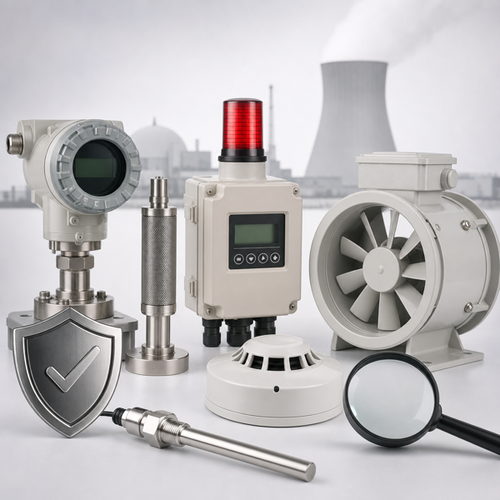
June 2026: New Monitoring Standards for Nuclear Plant Safety and Ventilation
The energy sector is seeing significant advancements in nuclear power plant safety and ventilation system standards this June. Five critical international standards have been published, emphasizing the importance of thorough condition monitoring and environmentally conscious testing methods. These updates play a pivotal role in ensuring operational safety, compliance, and longevity of vital energy infrastructure. This article summarizes the scope, requirements, and impact of these new standards in energy and heat transfer engineering.
Overview
The field of energy and heat transfer engineering is fundamental to the safe, efficient operation of contemporary power generation systems—especially nuclear facilities. International standards guide best practices, set regulatory expectations, and ensure systems operate reliably under all conditions.
This article, Part 2 of a 3-part series, focuses on five newly published standards in June 2026, covering:
- Condition monitoring methods for electrical equipment critical to nuclear safety
- Advanced, low-toxicity testing for ventilation systems in nuclear facilities
Professionals reading this summary will understand:
- What each new standard covers
- Major requirements and expected industry impact
- Who should take note and how to prepare for compliance
Detailed Standards Coverage
EN IEC/IEEE 62582-1:2026 – General Methods for Electrical Equipment Condition Monitoring
Nuclear power plants – Instrumentation and control important to safety – Electrical equipment condition monitoring methods – Part 1: General
This foundational document establishes the general principles and requirements for condition monitoring of electrical equipment in nuclear power plants. It is harmonized with the baseline IEC/IEEE 62582-1:2024, integrating industry lessons, aligning with international safety directives, and considering practical constraints faced by operators.
- Scope: Comprehensive coverage for identifying, measuring, and interpreting the condition of electrical components important to plant safety.
- Requirements: Identifies key indicators—chemical, physical, electrical—for assessing the health of polymeric and electronic components. Emphasizes using both destructive and non-destructive test methods.
- Stakeholders: Nuclear facility operators, instrumentation engineers, safety and compliance officers.
- Impact: Supports equipment qualification, life extension, and system reliability. Encourages evidence-based maintenance schedules and regulatory compliance.
- Revisions: Integrates results from IAEA-TECDOC-1825 and updates references to IEC/IEEE 60780-323, reflecting evolving industry best practice.
Key highlights:
- Uniform approach to condition monitoring across safety-critical systems
- Describes both general principles and practical tools for real-world application
- Lays groundwork for all subsequent condition monitoring standards in the series
Access the full standard:View EN IEC/IEEE 62582-1:2026 on iTeh Standards
EN IEC/IEEE 62582-2:2026 – Indenter Measurements for Cable and Polymer Assessment
Nuclear power plants – Instrumentation and control important to safety – Electrical equipment condition monitoring methods – Part 2: Indenter measurements
This standard provides a specific methodology for indenter modulus testing—measuring the mechanical properties (like hardness and aging) of cable insulation and other polymers. Directly adopted from IEC/IEEE 62582-2:2022, it enables reliable aging assessment without dismantling equipment.
- Scope: Focuses on indenter modulus determination for in-situ and lab-based evaluation of cable and polymer integrity.
- Requirements: Details standardized sampling, stabilization, probe geometry, force application, calibration, and reporting.
- Stakeholders: Maintenance teams, quality managers, laboratory personnel.
- Impact: Offers a reproducible, direct method to detect brittleness and degradation, facilitating proactive maintenance and failure prevention.
- Revisions: Streamlined scope and references, enhanced measurement reliability, and clarified calibration guidance.
Key highlights:
- Non-destructive, on-site methodology for rapid assessment
- Defined probe specifications and force application criteria
- Clear instructions for report generation and data interpretation
Access the full standard:View EN IEC/IEEE 62582-2:2026 on iTeh Standards
EN IEC/IEEE 62582-3:2026 – Elongation at Break (Tensile Testing for Condition Monitoring)
Nuclear power plants – Instrumentation and control important to safety – Electrical equipment condition monitoring methods – Part 3: Elongation at break
A crucial addition to the monitoring protocols, this standard covers the measurement of elongation at break—evaluating material ductility and resilience, especially in polymeric cables. Updated from IEC/IEEE 62582-3:2024, it brings the latest best practices for such destructive testing.
- Scope: Governs tensile elongation measurement for materials subject to thermal and environmental aging.
- Requirements: Covers sample preparation, dumb-bell and tubular specimen dimensions, tensile testing machine calibration, clamping, speed, and data logging.
- Stakeholders: Testing laboratories, reliability engineers, research institutions.
- Impact: Establishes critical baseline and trending data to predict material failure before it impacts safety.
- Revisions: Incorporates clarified procedures, up-to-date equipment calibrations, and improved reporting structure.
Key highlights:
- Standardized testing for accurate tracking of aging impact
- Ensures consistency for regulatory reporting and data comparability
- Supports longer component lifespans and safer operation through trending analysis
Access the full standard:View EN IEC/IEEE 62582-3:2026 on iTeh Standards
EN IEC/IEEE 62582-4:2026 – Oxidation Induction Techniques for Condition Monitoring
Nuclear power plants – Instrumentation and control important to safety – Electrical equipment condition monitoring methods – Part 4: Oxidation induction techniques
This part introduces advanced oxidation induction time (OIT/OITP) methods for assessing the degradation resistance of polymers used in critical safety applications. The focus is on early detection of oxidative aging, which can precede mechanical failure.
- Scope: Outlines procedures for differential scanning calorimetry (DSC)-based oxidation induction assessments.
- Requirements: Addresses instrument calibration, profile temperatures, gas flow rates, sample handling, and reporting.
- Stakeholders: Materials scientists, plant asset managers, lab technicians.
- Impact: Enables high-sensitivity detection of early-stage material degradation, guiding maintenance and timely replacements before loss of performance.
- Revisions: Introduces clearer baseline/interpreting thermograms, guidance for complex materials, and direct reporting examples.
Key highlights:
- Sensitive, lab-based tests for chemical stability and aging
- Better predictive maintenance planning for safety-critical systems
- Standard reporting formats for regulatory submission and trending
Access the full standard:View EN IEC/IEEE 62582-4:2026 on iTeh Standards
ISO 16659-3:2026 – Cyclohexane Gas Leakage Rate Testing for Iodine Traps
Ventilation systems for nuclear facilities — In-situ efficiency test methods for iodine traps with solid sorbent — Part 3: Cyclohexane gas leakage rate method
The ISO 16659-3:2026 standard introduces an environmentally conscious, non-radioactive in-situ testing method for assessing the leakage rate of iodine traps used in nuclear ventilation. By utilizing cyclohexane as a tracer, this approach minimizes hazard while delivering robust results.
- Scope: Defines requirements and procedures for field integrity tests using cyclohexane on iodine trap systems, assessing bypass leaks and ensuring installation quality.
- Requirements: Specifies tools (e.g., gas chromatographs, VOC detectors), tracer injection procedures, flow and humidity controls, data accuracy metrics, and safety for workers and the environment.
- Stakeholders: Nuclear facility ventilation system operators, environmental health and safety (EHS) officers, equipment suppliers.
- Impact: Facilitates safe testing in habitable areas (e.g., control rooms), helps verify installation and maintenance effectiveness, and supports regulatory documentation.
- Revisions: New method complements radioactive tracer tests, focusing on mechanical integrity and adopting green practices.
Key highlights:
- In-situ, low-toxicity testing applicable in occupied areas
- Supports comparable, reproducible results across facilities
- Simple integration with current acceptance and maintenance processes
Access the full standard:View ISO 16659-3:2026 on iTeh Standards
Industry Impact & Compliance
The June 2026 standards reshape how nuclear power and energy facilities approach equipment aging, environmental safety, and operational assurance:
- Regulatory Confidence: Uniform, evidence-based methodologies simplify audits, inspections, and long-term safety demonstrations.
- Streamlined Maintenance: Condition-based tools enable predictive strategies, limiting costly downtime and extending equipment lifespans.
- Compliance Deadlines: National standards bodies must implement these requirements by June 2027, with older conflicting standards to be withdrawn by June 2029. Early adoption is strongly recommended for seamless regulatory transition.
- Risk Reduction: Consistent condition monitoring and field test data help operators identify vulnerabilities before failure occurs—reducing unplanned outages and mitigating environmental risks.
- Stakeholder Assurance: Clear reporting, trending, and documentation protocols strengthen stakeholder confidence—from operators to regulators, and the general public.
Technical Insights
Common Requirements Across Standards
- Focus on measurement calibration, test reproducibility, and clear reporting procedures
- Integration of both destructive (e.g., elongation at break) and non-destructive (e.g., indenter, oxidation induction) tests
- Applicability to a range of polymeric and electrical components found in nuclear environments
Implementation Best Practices
- Early Assessment: Map existing equipment against the new standard requirements—prioritize safety-related assets.
- Training: Equip staff with up-to-date training on new measurement and reporting protocols.
- Quality Assurance: Integrate new testing methods into regular maintenance workflows and asset management programs.
- Certification Alignment: Prepare for certification evaluations by adopting new reporting formats and ensuring calibration traceability for all equipment.
Testing and Certification Considerations
- Regularly calibrate measurement instruments and document all procedures to meet audit requirements.
- Use standardized specimen preparation to ensure consistent results across multiple testing cycles.
- For ventilation system testing, ensure cyclohexane handling and sampling protocols align with worker and environmental safety requirements.
Conclusion / Next Steps
June 2026 brings transformative advances to energy and heat transfer engineering, especially in the context of nuclear facility safety. By rigorously updating condition monitoring and environmentally responsible testing standards, the industry is better equipped to ensure reliability, regulatory compliance, and long-term operational excellence.
Key Takeaways:
- New standards deliver comprehensive, harmonized frameworks for monitoring, testing, and safeguarding critical infrastructure
- Early adoption will benefit safety managers, engineers, procurement professionals, and researchers
- Proactive compliance strengthens both safety culture and regulatory positioning
Recommendations:
- Review and benchmark your facility's current procedures against the new standards
- Train staff on the specifics of monitoring and testing methodologies
- Integrate the standards into procurement specifications and maintenance schedules
Stay Informed: For full access to the detailed requirements, official guidance, and downloadable content, visit the iTeh Standards platform via the provided links. Monitor the next (part three) installment for more standards and ongoing updates in the energy and nuclear safety domain.
Categories
- Latest News
- New Arrivals
- Generalities
- Services and Management
- Natural Sciences
- Health Care
- Environment
- Metrology and Measurement
- Testing
- Mechanical Systems
- Fluid Systems
- Manufacturing
- Energy and Heat
- Electrical Engineering
- Electronics
- Telecommunications
- Information Technology
- Image Technology
- Precision Mechanics
- Road Vehicles
- Railway Engineering
- Shipbuilding
- Aircraft and Space
- Materials Handling
- Packaging
- Textile and Leather
- Clothing
- Agriculture
- Food technology
- Chemical Technology
- Mining and Minerals
- Petroleum
- Metallurgy
- Wood technology
- Glass and Ceramics
- Rubber and Plastics
- Paper Technology
- Paint Industries
- Construction
- Civil Engineering
- Military Engineering
- Entertainment