

October 2026: New Outdoor Lighting Standard to Curb Light Pollution for Construction and Building Projects
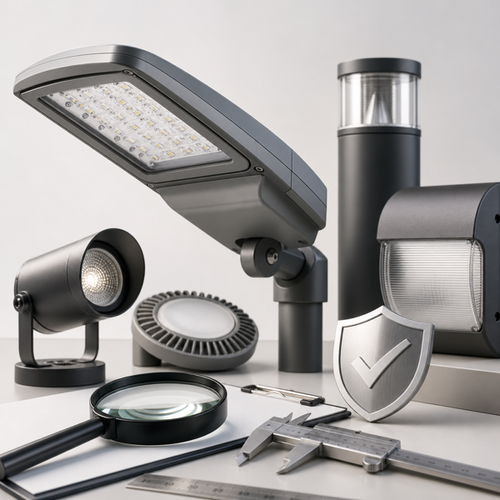
New developments in urban environments, infrastructure, and landscaping rely on effective outdoor lighting for usability, safety, and aesthetics. In October 2026, the European Committee for Standardization (CEN) published CEN/TS 18182:2026, a comprehensive new technical specification aimed at the assessment of obtrusive electrical light in outdoor spaces. This significant update brings a unified approach to evaluating and mitigating unwanted light spill and glare, ensuring better compliance, improved environmental outcomes, and enhanced quality in construction projects. This article provides an in-depth overview for professionals in the construction materials and building industry—explaining the relevance, scope, and practical implications of the latest standard, as well as compliance strategies and technical best practices.
Overview
The Construction Materials and Building sector is central to shaping modern environments, making it critical to balance effective outdoor illumination with the need to minimize negative impacts such as light pollution. Standards such as CEN/TS 18182:2026 are essential for facilitating sustainable design, protecting public health, enhancing urban experiences, and ensuring regulatory compliance. In this feature, you’ll learn about:
- The scope and core requirements of the new standard for outdoor lighting assessment
- Practical guides to compliance, verification, and environmental integration
- The technical methodologies now required and how they affect construction projects
- Key benefits for stakeholders and the wider community
Detailed Standards Coverage
CEN/TS 18182:2026 – Assessment of Obtrusive Electrical Light in Outdoor Spaces
Full Title: Light and lighting – Assessment of obtrusive electrical light in outdoor spaces
Standard Reference: CEN/TS 18182:2026
Published: 2026-10-21
Organization: CEN
Scope and Applicability: CEN/TS 18182:2026 lays out calculation and verification methods for evaluating the spill or intrusive light emanating from electric light sources in a variety of outdoor settings, including:
- Lighting installations for outdoor workplaces (per EN 12464-2)
- Road lighting systems (see CEN/TR 13201-1 and EN 13201 series)
- Outdoor sports fields and recreational areas (per EN 12193)
- Monument and architectural lighting
- Public parks, gardens, and residential outdoor spaces
- Luminous advertising and business signage outdoors
- Illuminated environments with translucent surfaces
Notably, the standard clarifies its exclusion of lighting within tunnels and underpasses, traffic signals, active road signs, and vehicle headlights. While the influence of atmospheric conditions isn’t addressable due to complexity, the comprehensive model covers spectral composition, room brightening at non-intentionally lit building openings, and glare effects.
Key Requirements & Specifications: CEN/TS 18182:2026 mandates:
- Use of detailed calculation methods for spill light and luminous flux in both design and installation stages
- Specific evaluation methods for small-scale lighting (under 1800 lumens source or 2250 lumens upward emission) and non-small-scale installations
- Distinction between upper and lower half-space luminous flux calculation
- Application of design-limited upper spill ratio, upward light ratio, and spectral component (notably, control of blue-rich lighting)
- Procedures for verifying spill light at property boundaries and specific points (windows, façade, etc.) using computation grids
- Special focus on controlling obtrusive light from advertising, business signage, and digital media displays
- Mandatory reporting and documentation requirements—supporting compliance and facilitating regulatory audit
- Requirements for on-site verification including equipment, measurement timing, and methodologies for both glare and room brightening
Target Audience for Compliance:
- Lighting designers and architects
- Urban planners and municipal authorities
- Facility managers for sports, public works, and heritage sites
- Residential and commercial developers
- Advertising companies and property managers
- Contractors responsible for external electrical installations
Practical Implications: The standard requires a systematic approach—integrated from the design phase—to prevent obtrusive spill light, glare, and color spectrum issues. Compliance will typically involve:
- Early-stage modeling of lighting installations to predict spill and glare
- Documented verification and periodic on-site measurement
- Specification of luminaire selection, positioning, shielding, inclination, and light spectrum based on application context
- Coordination with local regulations and authorities for project approvals
What’s New Compared to Predecessor Guidance:
- Detailed, prescriptive methods for both calculation and verification, including new tools for quantifying the impact of luminous signs and digital displays
- Direct integration of glare, color spectrum, and room brightening effects in the compliance framework
- Structured compliance and reporting processes aligned with evolving legislative requirements
Key highlights:
- Unified international approach to evaluating intrusive light in outdoor settings
- Detailed spill light calculation methods for diverse environments
- Integrated assessment for advertising, digital media, and monument illumination
Access the full standard:View CEN/TS 18182:2026 on iTeh Standards
Industry Impact & Compliance
How Does CEN/TS 18182:2026 Affect Construction and Building Projects?
- Project Approvals and Permits: Many planning authorities are likely to require conformance as a prerequisite for approval of new developments or major renovations involving outdoor lighting.
- Contractor and Supplier Requirements: Specifications for luminaire selection, installation geometry, shielding, and light spectrum compliance will guide procurement, supplier qualifications, and project management.
- Environmental Stewardship: Limiting light pollution is central to community acceptance and environmental sustainability, aiding initiatives such as dark-sky preservation, human health protection, and biodiversity conservation.
- Operational and Maintenance Impacts: Facilities will need ongoing measurement and validation, especially for installations with variable or adaptive lighting control.
- Binding Compliance Timelines: While the technical specification is subject to future conversion into a European Standard, organizations are advised to transition their practices accordingly during the provisional period (initially valid for three years, pending review and update).
Benefits of Adopting the Standard:
- Unified methodology for measurement and documentation
- Reduced risk of project delays originating from regulatory non-compliance
- Enhanced quality and usability for outdoor spaces
- Improved community relations and reduced complaint volumes
- Future-proofing against emerging environmental legislation
Risks of Non-Compliance:
- Rejection of development proposals or requirement for costly retrofit after installation
- Legal liability and reputational damage
- Increased operational costs due to additional site assessments and remedial actions
Technical Insights
Common Technical Requirements Across Lighting Applications:
- Spill Light Calculation: Determination of upward spill ratio (R_us), upward light ratio (R_UL), and mitigation strategies like shielding, aiming, and using fixtures with limited upward leakage
- Spectral Assessment: Measurement and limitation of blue-rich light to avoid ecological disruption and human circadian disturbance
- Glare Control: Quantification and control using luminance thresholds (L_max), observer positioning, and application-specific glare factors
- Room Brightening: Evaluation of indirect light entry into buildings, with factors for time-varying (alternating) light and color content
Best Practices for Implementation:
- Integrate Lighting Assessment Early: Carry out simulations and impact assessments during the preliminary design phase, using the computational grids and photometric models detailed in the standard.
- Select Compliant Luminaires: Opt for fixtures with tested shielding properties, proven photometric data, and controllable output.
- Document Everything: Maintain rigorous records of design assumptions, verification processes, and calculation outcomes—enabling easy demonstration of compliance.
- On-Site Verification: Use calibrated Imaging Luminance Measuring Devices (ILMD) and prescribed measurement setups following the standard’s annexes for accurate real-world validation.
- Coordinate With Local Regulations: Where local codes are stricter, harmonize the project approach to satisfy both international and local requirements.
Testing and Certification Considerations:
- Ensure measuring instruments meet the accuracy set out in referenced standards (e.g., ISO/CIE 19476:2014)
- Use third-party documentation or accredited laboratories for critical verification (especially for large or sensitive projects)
- Re-verify compliance after significant changes or upgrades to lighting systems
Conclusion & Next Steps
CEN/TS 18182:2026 sets a new benchmark for managing the impacts of outdoor lighting in construction, public spaces, and the built environment. By adopting its methods, organizations can expect improved project quality, minimized disputes, and enhanced value for clients and stakeholders.
Key takeaways:
- One standard for spill light, glare, and color spectrum control across all key outdoor lighting applications
- Emphasis on early design, measurement, and documentation
- Greater regulatory certainty and environmental stewardship benefits
Recommendations for Organizations:
- Review your current lighting design and compliance processes for alignment with CEN/TS 18182:2026
- Train project and design teams on the new requirements and measurement techniques
- Consult with compliance specialists and local authorities about transitioning to the new standard
- Use the iTeh Standards platform to access authoritative documents and stay informed about upcoming changes or conversion to full European standard status
Stay proactive—explore the technical specification in detail, update your project templates, and engage stakeholders early to ensure successful, compliant, and sustainable outdoor lighting outcomes.
For further details or to obtain the complete technical specification, professionals are encouraged to access:
View CEN/TS 18182:2026 on iTeh Standards
https://standards.iteh.ai/catalog/standards/cen/51304fc4-41c0-47ec-bc81-b87b7979f8c6/cen-ts-18182-2026
Categories
- Latest News
- New Arrivals
- Generalities
- Services and Management
- Natural Sciences
- Health Care
- Environment
- Metrology and Measurement
- Testing
- Mechanical Systems
- Fluid Systems
- Manufacturing
- Energy and Heat
- Electrical Engineering
- Electronics
- Telecommunications
- Information Technology
- Image Technology
- Precision Mechanics
- Road Vehicles
- Railway Engineering
- Shipbuilding
- Aircraft and Space
- Materials Handling
- Packaging
- Textile and Leather
- Clothing
- Agriculture
- Food technology
- Chemical Technology
- Mining and Minerals
- Petroleum
- Metallurgy
- Wood technology
- Glass and Ceramics
- Rubber and Plastics
- Paper Technology
- Paint Industries
- Construction
- Civil Engineering
- Military Engineering
- Entertainment