


July 2026: New ISO Standard Enhances Climate Testing for Paints and Coatings on Plastics
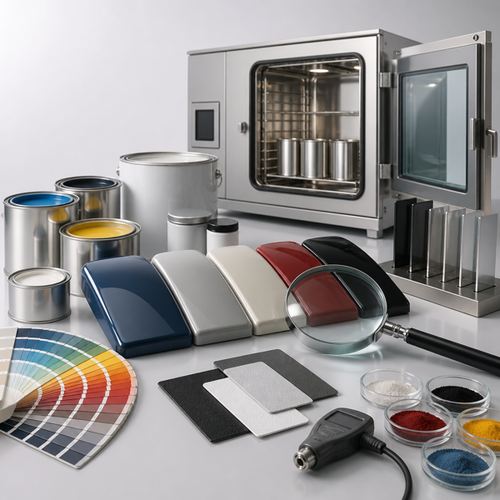
The paints and coatings sector has reached an important milestone in July 2026 with the publication of ISO 22785-3:2026, a comprehensive standard dedicated to climate testing of coatings on plastics and composite substrates. This update introduces rigorous protocols for evaluating coatings' durability and behavior under varying environmental conditions—crucial for industries demanding high performance and reliability from painted plastic components. With one new ISO standard released, manufacturers, quality managers, and product designers gain an essential reference for ensuring sustained coating quality and advancing compliance across a range of applications.
Overview / Introduction
The Paint and Colour Industries play a critical role in sectors ranging from automotive and aerospace to construction, consumer goods, and electronics. As the use of plastics and composite materials grows, ensuring coatings adhere reliably and maintain their properties under diverse environmental stresses has become increasingly significant. International standards provide an authoritative basis for quality assurance, regulatory compliance, and trade, aligning practices across global markets.
This article unpacks the latest developments with ISO 22785-3:2026, offering insights into its scope, key requirements, and practical implications for paint, varnish, and coating professionals. Whether you are responsible for testing, specification, procurement, or compliance, understanding this new standard is essential to maintain competitive edge and product integrity.
Detailed Standards Coverage
ISO 22785-3:2026 - Constant and Alternating Climate Testing for Coatings on Plastics
Paints and varnishes — Coatings on plastics and composites — Part 3: Constant climate and alternating climate testing
ISO 22785-3:2026 establishes methods for testing coatings applied to plastics, plastic composites, and similar substrates. It specifically addresses how plastics’ unique properties—such as lower thermal conductivity, different phase transitions, and distinct water absorption behavior—affect coating performance during and after exposure to environmental stress. The standard details test procedures for:
- Constant climate exposures: Including wet, dry, and condensing humidity conditions.
- Alternating climate cycles: Such as temperature and humidity alternations, including cold/warm and condensation cycles.
- Immersion tests: Evaluating performance under partial or complete water immersion.
What the Standard Covers
ISO 22785-3:2026 targets a variety of plastic substrates, from simple flat test specimens to three-dimensional components commonly used in automotive interiors, exteriors, and other critical applications. It specifies how the inherent characteristics of plastics—like thermal expansion, density, elasticity, and adhesive strength—impact the longevity and visual appearance of coatings when subjected to climate cycles.
Key Requirements and Specifications
- Defines precise test setups for simulating real-world environments: constant humidity, condensation, thermal cycling, and immersion.
- Requires evaluation of surface condition, gloss, color, and adhesion after exposure.
- Mandates consideration of substrate-specific effects, such as additive migration and substrate ageing, that can influence test outcomes.
- Provides terminology and references supporting harmonization with existing test methods for paints, varnishes, and related materials.
Who Needs to Comply
This standard is vital for:
- Paint and coating manufacturers supplying products for use on plastics/composites
- Automotive, electronics, consumer goods, and construction firms utilizing coated plastic parts
- Quality assurance, compliance, and R&D departments involved in product qualification
- Testing laboratories and certification bodies assessing coatings for environmental durability
Practical Implications for Implementation
By adapting climate exposure tests from metal-based standards and tailoring them for plastics, organizations achieve more accurate simulation of service life and failure modes for coated plastic parts. The standardized methods facilitate communication between suppliers and customers, streamline product development cycles, and support claims of compliance in international markets.
Notable Changes
- Consolidates climate testing protocols specifically for plastic and composite substrates, unlike earlier standards that focused mainly on metal substrates.
- Enhances clarity regarding plastic-specific phenomena (e.g., additive migration, phase transitions).
- Harmonizes terminology and reference structure for improved cross-industry interoperability.
Key highlights:
- Comprehensive methods for wet, dry, condensation, and alternating climate exposure
- Direct assessment protocols for surface, gloss, color, and adhesion degradation
- Focus on plastics’ specific influence on coating performance
Access the full standard:View ISO 22785-3:2026 on iTeh Standards
Industry Impact & Compliance
The adoption of ISO 22785-3:2026 marks a significant advancement for businesses operating in the paint and coatings supply chain. By aligning testing and quality assessment protocols with global best practices, organizations reduce the risk of premature coating failures, costly recalls, and reputational harm. Compliance positions manufacturers and suppliers as quality-focused partners in industries where reliability is non-negotiable—such as automotive, electronics, medical devices, and infrastructure.
Compliance considerations:
- Review in-house and supplier testing protocols to align with ISO 22785-3:2026.
- Update laboratory procedures and training for staff handling climate simulation and evaluation.
- Communicate changes in quality documentation and claims of conformance to clients and certification bodies.
- Set transition timelines that coordinate with product development and regulatory cycles.
Benefits of adoption:
- Demonstrable quality and durability to clients and certification partners
- Streamlined approval processes for new materials and formulations
- Reduced costs from unexpected field failures or warranty returns
Risks of non-compliance:
- Increased liability from premature coating degradation
- Competitive disadvantage due to lack of recognized quality credentials
- Barriers to entry in regulated or specification-driven markets
Technical Insights
Common technical requirements:
- Use of constant and alternating climate equipment capable of simulating specified humidity, temperature, and condensation conditions
- Accurate measurement and recording of substrate-specific properties (thermal conductivity, elasticity, etc.)
- Standardized assessment methods for visual and instrumental analysis of gloss, color, and adhesion
Implementation best practices:
- Collaborate with test laboratories experienced in climate simulation for plastics.
- Review material selection and part design in light of test outcomes—certain plastics may exhibit higher susceptibility to coating failures under specific climates.
- Integrate findings from climate tests into continuous improvement cycles for raw materials, formulation, and processing techniques.
Testing and certification considerations:
- Ensure traceability of sample preparation, conditioning, and test execution
- Document conformity and deviation from standard procedures, especially where adaptation is needed for novel materials
- Maintain alignment with other applicable ISO standards (e.g., ISO 4618, ISO 22785-1) for seamless certification and regulatory approval
Conclusion / Next Steps
With the publication of ISO 22785-3:2026 in July 2026, the Paint and Colour Industries now benefit from an advanced, unified framework for climate testing of coatings on plastics and composites. This brings direct value through improved quality control, optimized product development, and strengthened compliance strategies.
Key takeaways:
- Adopt ISO 22785-3:2026 testing protocols for all coated plastic and composite products.
- Educate lab and quality teams on updated procedures and requirements.
- Proactively communicate compliance with clients and certification partners.
Organizations are encouraged to explore the full standard, review internal practices, and stay ahead of evolving international requirements by leveraging world-class guidance available on iTeh Standards. Stay informed and ensure your coatings deliver the durability your markets demand.
Categories
- Latest News
- New Arrivals
- Generalities
- Services and Management
- Natural Sciences
- Health Care
- Environment
- Metrology and Measurement
- Testing
- Mechanical Systems
- Fluid Systems
- Manufacturing
- Energy and Heat
- Electrical Engineering
- Electronics
- Telecommunications
- Information Technology
- Image Technology
- Precision Mechanics
- Road Vehicles
- Railway Engineering
- Shipbuilding
- Aircraft and Space
- Materials Handling
- Packaging
- Textile and Leather
- Clothing
- Agriculture
- Food technology
- Chemical Technology
- Mining and Minerals
- Petroleum
- Metallurgy
- Wood technology
- Glass and Ceramics
- Rubber and Plastics
- Paper Technology
- Paint Industries
- Construction
- Civil Engineering
- Military Engineering
- Entertainment